Glicociência
Subcategorias de "Glicociência"
- Amino açúcares(108 produtos)
- Anticorpos Glico-Relacionados(284 produtos)
- Glicolípidos(46 produtos)
- Glicosaminoglicanos (GAGs)(55 produtos)
- Glicosídeos(419 produtos)
- Monossacáridos(6.622 produtos)
- Oligossacarídeos(3.701 produtos)
- Polissacáridos(505 produtos)
Foram encontrados 11034 produtos de "Glicociência"
Phenylmethyl N-[3-[[1-oxo-5-[[3,4,6-tri-O-acetyl-2-(acetylamino)-2-deoxy-β-D-galactopyranosyl]oxy]pentyl]amino]propyl]carbamate
CAS:Please enquire for more information about Phenylmethyl N-[3-[[1-oxo-5-[[3,4,6-tri-O-acetyl-2-(acetylamino)-2-deoxy-β-D-galactopyranosyl]oxy]pentyl]amino]propyl]carbamate including the price, delivery time and more detailed product information at the technical inquiry form on this page
Fórmula:C30H43N3O12Peso molecular:637.68 g/molMaltose
CAS:Please enquire for more information about Maltose including the price, delivery time and more detailed product information at the technical inquiry form on this page
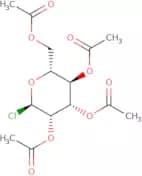
Fórmula:C12H22O11Peso molecular:342.3 g/mol2,3,4,6-Tetra-O-acetyl-a-D-mannopyranosyl chloride
CAS:2,3,4,6-Tetra-O-acetyl-a-D-mannopyranosyl chloride is a carbohydrate that has been modified by fluorination. It is used as an ingredient in the synthesis of saccharides and oligosaccharides. This product is synthesized by the reaction of 2,3,4,6-tetra-O-acetylmannose with chlorodifluoromethane in the presence of a base.Fórmula:C14H19ClO9Pureza:Min. 95%Cor e Forma:PowderPeso molecular:366.75 g/mol(Hydroxypropyl)methyl cellulose, viscosity 5 cP 80%-120%, 2% aqueous solution
CAS:Please enquire for more information about (Hydroxypropyl)methyl cellulose, viscosity 5 cP 80%-120%, 2% aqueous solution including the price, delivery time and more detailed product information at the technical inquiry form on this page
Pureza:Min. 95%4-Nitrobenzyl β-D-thiogalactopyranoside
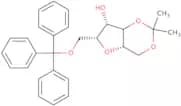
CAS:4-Nitrobenzyl b-D-thiogalactopyranoside is a synthetic glycosylation agent that can be used for the modification of saccharides and oligosaccharides. The product is available in different purity grades, custom synthesis, and custom modifications.Fórmula:C13H17NO7SPureza:Min. 95%Peso molecular:331.34 g/mol2,5-Anhydro-1,3-O-isopropylidene-6-O-trityl-D-glucitol
CAS:2,5-Anhydro-1,3-O-isopropylidene-6-O-trityl-D-glucitol is a complex carbohydrate that is synthesized by the modification of glucose. This product has been modified with methylation and glycosylation. 2,5-Anhydro-1,3-O-isopropylidene-6-O-trityl--D--glucitol is a white powder that is soluble in water and ethanol. It can be used for fluoroquinolone resistance studies, which are important for developing new antibiotics to combat bacterial infections.Fórmula:C28H30O5Pureza:Min. 95%Peso molecular:446.53 g/molWelan gum
CAS:Welan gum is a microbial polysaccharide produced by a species of Alcaligenes and shows interesting rheological properties of use in the oil and agricultural industries. The structure is similar to gellan based on repeating glucose, rhamnose and glucuronic acid units but with a single side chain of either an α-L-rhamnopyranosyl or an α-L-mannopyranosyl unit linked (1,3) to the 4-O-substituted β-D-glucopyranosyl unit in the backbone.Pureza:Viscosity >1700 CpCor e Forma:PowderD-Glucose-6-phosphate dipotassium salt hydrate
CAS:Glucose 6-phosphatase substrate
Fórmula:C6H11O9PK2·H2OPureza:Min. 95%Peso molecular:354.33 g/molDigalactosyldiacylglycerol - 10mg/ml in Chloroform-Methanol
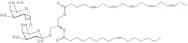
CAS:In plants and algae, the two main galactolipids, monogalactosyldiacyglycerol (MGDG) and digalactosyldiacyglycerol (DGDG), are synthesized by galactosyltransferases in the plastid envelope. They have been linked to the anti-inflammatory and cancer benefits of a green leafy vegetable diet in humans due to their ability to regulate the levels of free radicals like nitric oxide (NO)Fórmula:C51H84O15Pureza:Min. 95%Cor e Forma:PowderPeso molecular:937.2 g/mol3'-b-Sialyl-N-acetyllactosamine
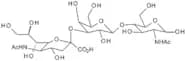
CAS:3'-b-Sialyl-N-acetyllactosamine is an oligosaccharide that is synthesized from L-arabinose and 3'-phosphoadenosine 5'-phosphosulfate. It has a high degree of purity and is custom synthesized to order. The CAS number for this product is 210418-18-1.Fórmula:C25H42N2O19Pureza:Min. 95%Cor e Forma:White PowderPeso molecular:674.6 g/mol2,3,4,6-Tetra-O-benzyl-D-galactono-1,5-lactone
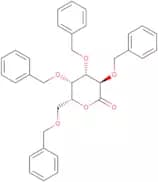
CAS:2,3,4,6-Tetra-O-benzyl-D-galactono-1,5-lactone is an aldehyde that has been synthesized from tert-butyl bromoacetate and ethynyl acetate in the presence of cesium carbonate. It is an exocyclic aldehyde that forms a cyclic ester with glycine. The synthetic pathway was stereoselective because the exocyclic double bond was only formed on one face of the molecule. This product can be used as an intermediate for the synthesis of glycine analogues and glycines.Fórmula:C34H34O6Pureza:Min. 95%Peso molecular:538.63 g/molDiosmetin-7-O-b-D-glucopyranoside
CAS:Diosmetin-7-O-b-D-glucopyranoside is a coumarin derivative that is found in the root of the Chinese herb Dioscorea tinctoria. It has been shown to have anti-inflammatory effects by inhibiting the expression of inflammatory genes, and it also has antioxidant properties. The chemical structure of diosmetin has been shown to be similar to protocatechuic acid, an important phenolic acid that can be found in wine and vinegar. Diosmetin has also been shown to inhibit mitochondrial apoptosis, which may contribute to its anti-cancer effects. Diosmetin has been shown to increase postprandial blood glucose levels in rats fed a high fat diet, and this effect may be due to its ability to inhibit peroxisome proliferator-activated receptor gamma (PPARγ) activity.Fórmula:C22H22O11Pureza:Min. 95%Cor e Forma:PowderPeso molecular:462.4 g/mol3-Acetamido-3,6-dideoxy-D-galactose
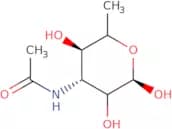
CAS:3-Acetamido-3,6-dideoxy-D-galactose is a monosaccharide with two functional groups. It has been shown to be bifunctional and can act as a glycosyl donor or acceptor. 3-Acetamido-3,6-dideoxy-D-galactose was isolated from the type strain of Streptomyces venezuelae. It is also found in fatty acids and some strains of bacteria, such as Bacillus megaterium. The biological properties of 3-acetamido--3,6-dideoxy--D--galactose have been studied using monoclonal antibodies, magnetic resonance spectroscopy (MRS), and 13C nuclear magnetic resonance spectroscopy (NMR).
Fórmula:C8H15NO5Pureza:Min. 95%Cor e Forma:PowderPeso molecular:205.21 g/molMonofucosyllacto-N-hexaose II
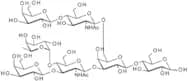
CAS:Monofucosyllacto-N-hexaose II is a tetraol that is used as a reagent in the synthesis of enantioenriched and synthetically tetrasaccharidic products. Monofucosyllacto-N-hexaose II can be obtained by the reaction of Grignard reagents with glucose or by stereoselective reduction of an alpha, beta unsaturated ketone. The presence of the glucose residue in Monofucosyllacto-N-hexaose II makes it an acceptor for esterification reactions. This compound has chiral centers due to its two stereogenic centers at C2 and C3, which are both beta positions on the glucose residue. Monofucosyllacto-N-hexaose II also has a free hydroxyl group at C5 that can be esterified to produce chiral esters.Fórmula:C46H78N2O35Pureza:Min. 95%Peso molecular:1,219.1 g/molTetradecyl b-D-maltopyranoside
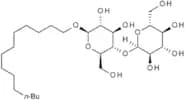
CAS:Tetradecyl b-D-maltopyranoside is a crystalline polymer of high molecular weight that is made up of repeating units of tetradecyl b-D-maltose. It has a lamellar morphology and can be sectioned with techniques such as electron microscopy, X-ray diffraction, and differential scanning calorimetry. Tetradecyl b-D-maltopyranoside is a metastable form of the compound. It has been found in nature in the form of the monomer unit, tetradecyl maltosyl (tetramethyleneglycol) b-d-maltoside. In order to produce this compound as a polymer, it must first be heated to about 160°C for several hours, which causes the monomers to assemble into chains of tetrahedrons. The properties of tetradecyl b-D-maltopyranoside depend on its environmentFórmula:C26H50O11Pureza:Min. 95 Area-%Cor e Forma:PowderPeso molecular:538.67 g/molD-Gluconic acid sodium salt
CAS:D-Gluconic acid sodium salt is a glycol ether that is used as an injection solution. It has been shown to have antibacterial efficacy against wild-type strains of bacteria such as Escherichia coli, Pseudomonas aeruginosa, and Staphylococcus aureus. The in vitro antimicrobial action of D-gluconic acid sodium salt was found to be due to its ability to inhibit bacterial growth by interfering with the synthesis of DNA. D-Gluconic acid sodium salt also has been shown to have antihypertensive effects in rats through the inhibition of angiotensin II type 1 receptor (AT1) signaling pathway and erythrocyte proliferation. This drug also has been shown to bind benzalkonium chloride and x-ray diffraction data show that it is crystalline in nature. The analytical method for determining the concentration of D-gluconic acid sodium salt is by electrochemical impedance
Fórmula:C6H11NaO7Pureza:Min. 95%Cor e Forma:White PowderPeso molecular:218.14 g/mol2-Deoxy-D-glucono-1,5-lactone
CAS:2-Deoxy-D-glucono-1,5-lactone is a crystalline compound that is isolated from the hydrolysis of D-gluconic acid. This compound has been found to be a diastereoisomeric product with a lactone ring and an epimerization process. It can also be synthesized by reacting epichlorohydrin with potassium hydroxide in the presence of a hydroxy group. 2DG is an elimination product of 2-deoxyglucose and has been shown to have antihyperglycemic effects due to its ability to inhibit glucose synthesis in the liver and muscle cells. This compound also inhibits protein synthesis in bacteria, which may lead to cell death.
Fórmula:C6H10O5Pureza:Min. 95%Peso molecular:162.14 g/mol6'-Sialyllactose-BSA
Sialyllactose-BSA is a complex carbohydrate that is used in the synthesis of saccharides. It has been modified with fluorination to create a 6'-sialyllactose-BSA, which is a monosaccharide. This product can be custom synthesized and it's purity is high. The product can be methylated or glycosylated, and it has been click-modified for fluorescence labeling.Pureza:Min. 95%Cor e Forma:PowderPeso molecular:72,318 g/molD-Arabinose-5-phosphate
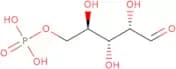
CAS:D-Arabinose-5-phosphate is an intermediate in the pentose phosphate pathway. It is synthesized from D-xylulose-5-phosphate by xylitol dehydrogenase. D-Arabinose-5-phosphate inhibits the enzyme xylitol dehydrogenase, which converts xylulose to d-xylulose, and thus prevents the formation of 5-hydroxyisoxazole phosphate, a precursor to the synthesis of NADPH. In this way, it blocks the synthesis of NADPH, which is essential for aerobic metabolism. This inhibition leads to a decrease in ATP production and consequently cell death.Fórmula:C5H11O8PPureza:Min. 95%Peso molecular:230.11 g/mol1,2,3,4-Tetra-O-acetyl-β-D-glucuronide methyl ester
CAS:Building block for chemical modification of GlcU, including glucuronylation
Fórmula:C15H20O11Pureza:Min. 97 Area-%Cor e Forma:PowderPeso molecular:376.31 g/mol
![Phenylmethyl N-[3-[[1-oxo-5-[[3,4,6-tri-O-acetyl-2-(acetylamino)-2-deoxy-β-D-galactopyranosyl]oxy]…](/_next/image/?url=https%3A%2Fstatic.cymitquimica.com%2Fproducts%2F3D%2Fthumb-webp%2FMP184464.webp&w=3840&q=75)