Glicociência
A glicociência é o estudo dos carboidratos e seus derivados, bem como das interações e funções biológicas em que participam. Este campo de pesquisa é crucial para compreender uma ampla variedade de processos biológicos, incluindo o reconhecimento celular, a sinalização, a resposta imune e o desenvolvimento de doenças. A glicociência tem aplicações importantes na biotecnologia, na medicina e no desenvolvimento de novos medicamentos e terapias. Na CymitQuimica, oferecemos uma ampla seleção de produtos de alta qualidade e pureza para pesquisa em glicociência. Nosso catálogo inclui monossacarídeos, oligossacarídeos, polissacarídeos, glicoconjugados e reagentes específicos, projetados para apoiar os pesquisadores em seus estudos sobre a estrutura, função e aplicações dos carboidratos em sistemas biológicos. Esses recursos são destinados a facilitar descobertas científicas e aplicações práticas em diversas áreas das biociências e da medicina.
Subcategorias de "Glicociência"
- Amino açúcares(108 produtos)
- Anticorpos Glico-Relacionados(282 produtos)
- Glicolípidos(46 produtos)
- Glicosaminoglicanos (GAGs)(55 produtos)
- Glicosídeos(419 produtos)
- Monossacáridos(6.624 produtos)
- Oligossacarídeos(3.682 produtos)
- Polissacáridos(503 produtos)
Foram encontrados 11046 produtos de "Glicociência"
Ordenar por
Pureza (%)
0
100
|
0
|
50
|
90
|
95
|
100
2-Acetamido-2-deoxy-D-glucopyranosyl serine
CAS:<p>2-Acetamido-2-deoxy-D-glucopyranosyl serine is a compound that belongs to the class of coumarins and monosaccharides. It contains a nitro group and a heterocycle, making it a unique and versatile molecule. This compound has been studied for its various properties, including its interaction with liver microsomes and its ability to undergo crystallization. Additionally, 2-Acetamido-2-deoxy-D-glucopyranosyl serine has shown promising effects on TGF-beta activation and has been found to inhibit aldehyde formation in trichloroacetic acid solutions. This compound also exhibits interactions with other molecules such as pyrazine, ofloxacin, and famotidine. Its diverse characteristics make it an intriguing compound for further research and potential applications in various fields.</p>Fórmula:C11H20N2O8Pureza:Min. 95%Cor e Forma:White PowderPeso molecular:308.29 g/molN-Acetylmuramic acid 6-phosphate
CAS:<p>N-Acetylmuramic acid 6-phosphate is a molecule that belongs to the class of compounds known as nucleotide phosphates. It is an intermediate in the biosynthesis of peptidoglycan, which is a major component of bacterial cell walls. N-Acetylmuramic acid 6-phosphate is synthesized from ATP and N-acetylmuramic acid by hydrolysis. The reaction mechanism for this transformation involves an imine intermediate, which can be formed through the action of two molecules of ATP and one molecule of N-acetylmuramic acid. This reaction is catalyzed by an enzyme called heterocyst. The enzyme kinetics for this transformation are influenced by many factors, including temperature, pH, and substrate concentration.</p>Fórmula:C11H20NO11PPureza:Min. 95%Peso molecular:373.25 g/mol2,3,4,6-Tetra-O-benzyl-5-thio-D-glucono-1,5-lactone
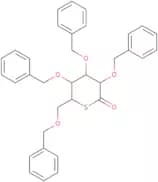
CAS:<p>2,3,4,6-Tetra-O-benzyl-5-thio-D-glucono-1,5-lactone is a complex carbohydrate that can be modified with methylation and glycosylation. It is a saccharide that can be modified by fluorination and click modification. This compound is synthesized by the polymerization of allose in the presence of an enzyme to produce 2,3,4,6-tetra-O-(benzyloxymethyl)-5-thio--D--glucono--1,5--lactone.</p>Fórmula:C34H34O5SPureza:Min. 95%Peso molecular:554.7 g/mol3,6’-Disinapoyl sucrose
CAS:<p>3,6’-Disinapoyl sucrose is a saponin that has been shown to be neuroprotective and antidepressant. It is also able to increase the absorption of drugs in the gastrointestinal tract. 3,6’-Disinapoyl sucrose was found to have neurotrophic effects on neurons and inhibit glutamate-induced excitotoxicity. 3,6’-Disinapoyl sucrose has been shown to inhibit the mineralocorticoid receptor in vitro and may be useful as an antihypertensive agent. 3,6’-Disinapoyl sucrose can be used for clinical use in the treatment of depression and other neurological disorders such as Alzheimer's disease.</p>Fórmula:C34H42O19Pureza:Min. 95%Cor e Forma:PowderPeso molecular:754.69 g/mol6-deoxy-6-mercapto-gamma-cyclodextrin,octakis
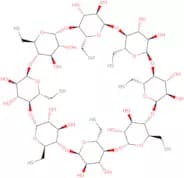
CAS:<p>6-Deoxy-6-mercapto-gamma-cyclodextrin, octakis (Methyl 6DG) is a novel and unique sugar with two methyl groups on the C6 hydroxyl position. It has been synthesized from glucose by a click modification reaction and can be used as an alternative to 6DG for the production of oligosaccharides and polysaccharides. The high purity of Methyl 6DG makes it suitable for use in analytical research, such as fluorescence resonance energy transfer measurements.</p>Fórmula:C48H80O32S8Pureza:Min. 95%Peso molecular:1,425.66 g/molN-5-Carboxypentyl-1-deoxygalactonojirimycin
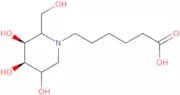
CAS:<p>N-5-Carboxypentyl-1-deoxygalactonojirimycin is an inhibitor of glycolipid hydrolase and a potential drug for the treatment of lysosomal storage disorders. N-5-Carboxypentyl-1-deoxygalactonojirimycin is derived from the natural product galactonojirimycin, which has been shown to inhibit glycolipid hydrolase in vitro. The compound was developed by modifying the peptide sequence to increase its affinity for the enzyme. N-5-Carboxypentyl-1-deoxygalactonojirimycin displays a higher affinity for glycolipid hydrolase than galactonojirimycin, and it also has a greater inhibitory effect on this enzyme.<br>N-5-Carboxypentyl-1-deoxygalactonojirimycin is</p>Fórmula:C12H23NO6Pureza:Min. 95%Cor e Forma:White PowderPeso molecular:277.31 g/mol2,3-O-Isopropylidene-L-glyceraldehyde - 50% DCM solution
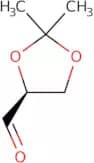
CAS:<p>2,3-O-Isopropylidene-L-glyceraldehyde (2,3-OIPA) is a synthetic compound that was developed as an alternative to paraformaldehyde for the synthesis of enantiopure compounds. It has been used in metathesis reactions and catalysed the conversion of β-unsaturated ketones to enantiopure products. 2,3-OIPA also has significant cytotoxic activity against a range of human cancer cell lines. This compound can be used in asymmetric syntheses to produce chiral molecules with a high degree of optical purity.</p>Fórmula:C6H10O3Pureza:Min. 95%Cor e Forma:Colorless PowderPeso molecular:130.14 g/mol1,3,4,6-Tetra-O-acetyl-2-azido-2-deoxy-D-galactopyranose
CAS:<p>1,3,4,6-Tetra-O-acetyl-2-azido-2-deoxy-D-galactopyranose is a carbohydrate that has been shown to bind to the lectin domain of the human insulin receptor. This binding is thought to modulate the activity of this protein. The carbohydrate has also been shown to inhibit the uptake of galactose by pancreatic beta cells in vitro. 1,3,4,6-Tetra-O-acetyl-2-azido-2-deoxy-D-galactopyranose is postulated to have anti cancer properties and may be used as a blocker for tumor growth.</p>Fórmula:C14H19N3O9Pureza:Min. 95%Cor e Forma:White PowderPeso molecular:373.32 g/mol2-Deoxy-2-fluoro-D-fucose
<p>2-Deoxy-2-fluoro-D-fucose is a custom synthesis, which is a complex carbohydrate. It has CAS No. and polysaccharide modification and can be methylated, glycosylated, or fluorinated. The molecular weight of this product is high purity and it can be used as a sugar or carbohydrate. Click modification is possible with 2-deoxy-2 fluoro-D-fucose.</p>Fórmula:C6H11FO4Pureza:Min. 95%Cor e Forma:PowderPeso molecular:166.15 g/molOctyl D-glucopyranoside
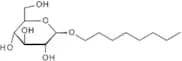
CAS:<p>Octyl D-glucopyranoside is a glucoside that is used as an analytical reagent. It has been shown to have detergent properties and can be used for the extraction of proteins. Octyl D-glucopyranoside also has a high binding affinity for guanine nucleotides, protein, and glycol ethers. The rate constant for the reaction between octyl D-glucopyranoside with the guanine nucleotide was found to be 0.25 x 10^(-5) s^(-1). This product can be used in biochemical research and chromatographic analysis.</p>Fórmula:C14H28O6Pureza:Min. 98 Area-%Cor e Forma:White PowderPeso molecular:292.37 g/molGlobotriose-sp-biotin
<p>Globotriose-sp-biotin is a custom synthesis that contains a fluorinated, methylated, and modified monosaccharide. It is a synthetic oligosaccharide with glycosylation at the reducing end. Globotriose-sp-biotin can be used in the modification of polysaccharides and complex carbohydrates to improve their bioactivity. This product has a CAS number of 127798-73-5 and is listed as an Oligosaccharide under Glycosylations in the Carbohydrate section.</p>Pureza:Min. 95%Cor e Forma:PowderGlyco-diosgenin
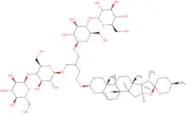
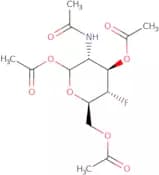
CAS:<p>Glyco-diosgenin is an amphipathic molecule that has been found to stabilize proteins. It has the potential to be developed as a drug target for stabilizing proteins in cells. Glyco-diosgenin was synthesized by chemical modification of diosgenin, which is a steroidal saponin found in plants. The chemical modification that occurred at the 3-hydroxyl position of glyco-diosgenin produced a more effective molecule due to increased solubility and decreased toxicity. The protein stabilization properties of glyco-diosgenin have been shown by cryo-electron microscopy on plant cells, titration calorimetry, and functional studies on various proteins.</p>Fórmula:C56H92O25Pureza:Min. 97 Area-%Cor e Forma:PowderPeso molecular:1,165.31 g/mol2-Acetamido-1,3,6-tri-O-acetyl-2,4-dideoxy-4-fluoro-D-glucopyranose
CAS:<p>2-Acetamido-1,3,6-tri-O-acetyl-2,4-dideoxy-4-fluoro-D-glucopyranose is a high purity synthetic glycosylate with a custom synthesis. It is an oligosaccharide that has been modified for fluorination and methylation. This product is used as an intermediate in the production of complex carbohydrates.</p>Fórmula:C14H20FNO8Pureza:Min. 95%Cor e Forma:PowderPeso molecular:349.31 g/molD-Gluconic acid sodium salt
CAS:<p>D-Gluconic acid sodium salt is a glycol ether that is used as an injection solution. It has been shown to have antibacterial efficacy against wild-type strains of bacteria such as Escherichia coli, Pseudomonas aeruginosa, and Staphylococcus aureus. The in vitro antimicrobial action of D-gluconic acid sodium salt was found to be due to its ability to inhibit bacterial growth by interfering with the synthesis of DNA. D-Gluconic acid sodium salt also has been shown to have antihypertensive effects in rats through the inhibition of angiotensin II type 1 receptor (AT1) signaling pathway and erythrocyte proliferation. This drug also has been shown to bind benzalkonium chloride and x-ray diffraction data show that it is crystalline in nature. The analytical method for determining the concentration of D-gluconic acid sodium salt is by electrochemical impedance</p>Fórmula:C6H11NaO7Pureza:Min. 95%Cor e Forma:White PowderPeso molecular:218.14 g/molGlobotriaosylsphingosine
CAS:<p>Globotriaosylsphingosine is dramatically increased in plasma of classically affected male Fabry patients and plasma and tissues of Fabry mice. Globotriaosylsphingosine was shown to be an inhibitor of α-galactosidase A activity. Furthermore, exposure of smooth muscle cells, but not fibroblasts, to globotriaosylsphingosine at concentrations observed in plasma of patients promotes proliferation. It was suggested that measurement of circulating globotriaosylsphingosine would be useful to monitor Fabry disease and may contribute to a better understanding of the disorder.</p>Fórmula:C36H67NO17Pureza:Min. 95%Cor e Forma:PowderPeso molecular:785.91 g/molD-Melibiose anhydrous
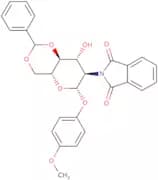
CAS:<p>D-Melibiose anhydrous is a disaccharide that is used as an excipient in the pharmaceutical industry. It has been shown to be an active enzyme, which may be due to its ability to sequester galactose. D-Melibiose anhydrous has a redox potential of -0.2 V, indicating that it has a high number of oxidizable groups. The molecular weight of this sugar is 324.14 g/mol, and it has a polarizability of 0.16 D, which classifies it as a polyol with hydrogen bonding properties. This sugar is not soluble in water but can be dissolved in ethanol or propylene glycol. D-Melibiose anhydrous also has carbohydrate properties and may be considered a sugar alcohol because it contains six carbon atoms and one oxygen atom.</p>Fórmula:C12H22O11Pureza:Min. 95%Cor e Forma:PowderPeso molecular:342.3 g/mol4-Methoxyphenyl 4,6-O-benzylidene-2-deoxy-2-phthalimido-β-D-glucopyranoside
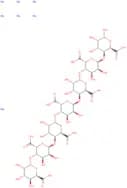
CAS:<p>4-Methoxyphenyl 4,6-O-benzylidene-2-deoxy-2-phthalimido-b-D-glucopyranoside is an organic compound with the formula C13H14N4O8. It is a white solid that is soluble in water, methanol and ethanol. The compound has been synthesized using Click chemistry, fluorination, glycosylation, and methylation of the sugar. It has also been modified with an oligosaccharide and monosaccharide to form a complex carbohydrate.</p>Fórmula:C28H25NO8Pureza:Min. 98 Area-%Cor e Forma:PowderPeso molecular:503.51 g/molL-Heptaguluronic acid heptasodium
CAS:<p>Please enquire for more information about L-Heptaguluronic acid heptasodium including the price, delivery time and more detailed product information at the technical inquiry form on this page</p>Fórmula:C42H58O43•Na7Pureza:Min. 95%Peso molecular:1,411.81 g/molN-Trimethylchitosan
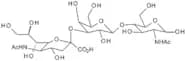
CAS:<p>Quaternization of the primary amine in N-Trimethylchitosan increases the water solubility of chitosan and keeps chitosan soluble over a wide pH range. N-Trimethylchitosan is soluble in water and ethanol, making it ideal for use in biotechnology applications.The degree of quaternization is 30-70%</p>Pureza:Min. 90%3'-b-Sialyl-N-acetyllactosamine
CAS:<p>3'-b-Sialyl-N-acetyllactosamine is an oligosaccharide that is synthesized from L-arabinose and 3'-phosphoadenosine 5'-phosphosulfate. It has a high degree of purity and is custom synthesized to order. The CAS number for this product is 210418-18-1.</p>Fórmula:C25H42N2O19Pureza:Min. 95%Cor e Forma:White PowderPeso molecular:674.6 g/mol