Glicociência
A glicociência é o estudo dos carboidratos e seus derivados, bem como das interações e funções biológicas em que participam. Este campo de pesquisa é crucial para compreender uma ampla variedade de processos biológicos, incluindo o reconhecimento celular, a sinalização, a resposta imune e o desenvolvimento de doenças. A glicociência tem aplicações importantes na biotecnologia, na medicina e no desenvolvimento de novos medicamentos e terapias. Na CymitQuimica, oferecemos uma ampla seleção de produtos de alta qualidade e pureza para pesquisa em glicociência. Nosso catálogo inclui monossacarídeos, oligossacarídeos, polissacarídeos, glicoconjugados e reagentes específicos, projetados para apoiar os pesquisadores em seus estudos sobre a estrutura, função e aplicações dos carboidratos em sistemas biológicos. Esses recursos são destinados a facilitar descobertas científicas e aplicações práticas em diversas áreas das biociências e da medicina.
Subcategorias de "Glicociência"
- Amino açúcares(108 produtos)
- Anticorpos Glico-Relacionados(282 produtos)
- Glicolípidos(46 produtos)
- Glicosaminoglicanos (GAGs)(55 produtos)
- Glicosídeos(419 produtos)
- Monossacáridos(6.622 produtos)
- Oligossacarídeos(3.682 produtos)
- Polissacáridos(503 produtos)
Foram encontrados 11041 produtos de "Glicociência"
Ordenar por
Pureza (%)
0
100
|
0
|
50
|
90
|
95
|
100
L-Heptaguluronic acid heptasodium
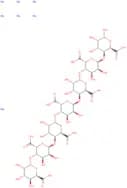
CAS:<p>Please enquire for more information about L-Heptaguluronic acid heptasodium including the price, delivery time and more detailed product information at the technical inquiry form on this page</p>Fórmula:C42H58O43•Na7Pureza:Min. 95%Peso molecular:1,411.81 g/mol6-Deoxy-6-iodo-D-glucose
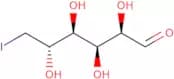
CAS:<p>6-Deoxy-6-iodo-D-glucose is a glucose analog that can be used as a bypassed substrate for the study of d-glucose metabolism in diabetic patients. 6-Deoxy-6-iodo-D-glucose has been shown to be an acceptable substrate for animal cells and can be used for the study of glucose uptake in the pancreas. This analog does not require insulin for uptake, which may help to elucidate the role of insulin resistance in diabetes. The use of 6-deoxy-6-[18F]fluoroethyl D-[1,2]-glucose ([18F]FDG) as an optical imaging agent has also been studied.</p>Fórmula:C6H11IO5Pureza:Min. 95 Area-%Cor e Forma:PowderPeso molecular:290.05 g/mol2-Deoxy-D-glucono-1,5-lactone
CAS:<p>2-Deoxy-D-glucono-1,5-lactone is a crystalline compound that is isolated from the hydrolysis of D-gluconic acid. This compound has been found to be a diastereoisomeric product with a lactone ring and an epimerization process. It can also be synthesized by reacting epichlorohydrin with potassium hydroxide in the presence of a hydroxy group. 2DG is an elimination product of 2-deoxyglucose and has been shown to have antihyperglycemic effects due to its ability to inhibit glucose synthesis in the liver and muscle cells. This compound also inhibits protein synthesis in bacteria, which may lead to cell death.</p>Fórmula:C6H10O5Pureza:Min. 95%Peso molecular:162.14 g/molBlood group B trisaccharide 8-methoxycarbonyloctyl ester
CAS:<p>8-methoxycarbonyl ester of Gal-a1-3(Fuc-a1-2)Gal</p>Fórmula:C28H50O17Pureza:Min. 95%Cor e Forma:PowderPeso molecular:658.69 g/molLipid IVa
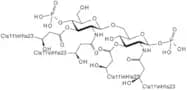
CAS:<p>Lipid IVA is a tetra-acylated precursor molecule of lipid A which is a component of lipopolysaccharides (LPS) on the outer membrane of gram-negative bacteria. On the innate immune cells of hosts there are toll-like receptor 4 (TLR4) and MD-2 which recognize LPS. This recognition event ultimately leads to the activation of NFκB which in turn results in pro-inflammatory cytokine production. Studies have suggested lipid A in Escherichia coli to be an agonist for both mouse and human TLR4, while lipid IVA can induce species specific TLR4 responses. For example for horse and mouse TLR4 and MD-2, Lipid IVA is an agonist where as it is an antagonist for TLR4 and MD-2 in humans.</p>Fórmula:C68H130N2O23P2Pureza:One Main SpotCor e Forma:White PowderPeso molecular:1,405.7 g/molMonofucosyllacto-N-hexaose II
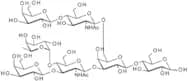
CAS:<p>Monofucosyllacto-N-hexaose II is a tetraol that is used as a reagent in the synthesis of enantioenriched and synthetically tetrasaccharidic products. Monofucosyllacto-N-hexaose II can be obtained by the reaction of Grignard reagents with glucose or by stereoselective reduction of an alpha, beta unsaturated ketone. The presence of the glucose residue in Monofucosyllacto-N-hexaose II makes it an acceptor for esterification reactions. This compound has chiral centers due to its two stereogenic centers at C2 and C3, which are both beta positions on the glucose residue. Monofucosyllacto-N-hexaose II also has a free hydroxyl group at C5 that can be esterified to produce chiral esters.</p>Fórmula:C46H78N2O35Pureza:Min. 95%Peso molecular:1,219.1 g/molWelan gum
CAS:<p>Welan gum is a microbial polysaccharide produced by a species of Alcaligenes and shows interesting rheological properties of use in the oil and agricultural industries. The structure is similar to gellan based on repeating glucose, rhamnose and glucuronic acid units but with a single side chain of either an α-L-rhamnopyranosyl or an α-L-mannopyranosyl unit linked (1,3) to the 4-O-substituted β-D-glucopyranosyl unit in the backbone.</p>Pureza:Viscosity >1700 CpCor e Forma:Powder2,3-Di-O-benzyl-6-O-tert-butyldimethylsilyl-γ-cyclodextrin
<p>This gamma-cyclodextrin (γ-CD) derivative is a modified cyclic oligosaccharide composed of eight glucose units, featuring a larger cavity size than α- and β-cyclodextrins. This structural characteristic allows γ-CDs to form inclusion complexes with a wider range of guest molecules, making it particularly versatile in various industries. In the food sector, it is used as a carrier and stabilizer for flavors, fat-soluble vitamins, and polyunsaturated fatty acids, protecting volatile compounds from evaporation. In pharmaceuticals, it enhances the solubility and bioavailability of poorly water-soluble drugs and, thanks to its larger ring size, allows for the encapsulation of larger molecules or even entire drug molecules. γ-CDs and derivatives are also used for environmental remediation and, in analytical chemistry, for the extraction and concentration of target substances.</p>Fórmula:C208H288O40SI8Pureza:Min. 95%Peso molecular:4,475.79 g/molCornuside
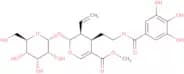
CAS:<p>Cornuside is a natural compound that is found in the fruits of Cornus. It is a dihydrochalcone, which has been shown to have hypoglycemic effects and inhibit the activity of 5-hmf. Cornuside also inhibits the enzyme activities involved in energy metabolism, such as glucose-6-phosphate dehydrogenase and hexokinase. It has also been shown to have genotoxic properties and induce DNA damage. Cornuside may be useful for treating diabetes or cancer, but further research needs to be done before this can be confirmed.</p>Fórmula:C24H30O14Pureza:Min. 95%Cor e Forma:PowderPeso molecular:542.49 g/molOctyl D-glucopyranoside
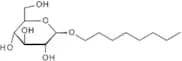
CAS:<p>Octyl D-glucopyranoside is a glucoside that is used as an analytical reagent. It has been shown to have detergent properties and can be used for the extraction of proteins. Octyl D-glucopyranoside also has a high binding affinity for guanine nucleotides, protein, and glycol ethers. The rate constant for the reaction between octyl D-glucopyranoside with the guanine nucleotide was found to be 0.25 x 10^(-5) s^(-1). This product can be used in biochemical research and chromatographic analysis.</p>Fórmula:C14H28O6Pureza:Min. 98 Area-%Cor e Forma:White PowderPeso molecular:292.37 g/molα-D-Thiomannose sodium
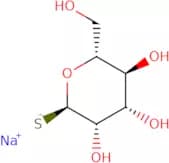
CAS:<p>A thio-sugar</p>Fórmula:C6H11O5SNaPureza:Min. 95 Area-%Cor e Forma:White PowderPeso molecular:218.21 g/molMethyl 2-deoxy-5-O-toluoyl-L-ribofuranoside
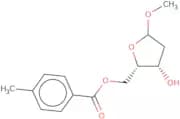
CAS:<p>Methyl 2-deoxy-5-O-toluoyl-L-ribofuranoside is a high purity, custom synthesis, methylated, Glycosylation and Oligosaccharide. It has CAS No. 676598-19-9 and is Glycosylated and Methylated. This complex carbohydrate is a synthetic, monosaccharide or saccharide that can be modified with fluorination, Click modification or glycosylation.</p>Fórmula:C14H18O5Pureza:Min. 95%Cor e Forma:Brown oil.Peso molecular:266.3 g/mol2-Aminophenyl β-D-glucuronide hydrochloride
CAS:<p>2-Aminophenyl b-D-glucuronide HCl is a custom synthesis chemical. It is a white to pale yellow crystalline powder. This compound has a molecular weight of 363.2 and it's chemical formula is C8H10N2O7Glucuronic acid. 2-Aminophenyl b-D-glucuronide HCl is used in the modification of oligosaccharides, polysaccharides, saccharides, carbohydrates, fluorination and complex carbohydrate. The purity of this chemical is high and it can be modified with monosaccharide or sugar.</p>Fórmula:C12H15NO7•HClPureza:Min. 95%Peso molecular:321.71 g/molMethyl 2-deoxy-L-ribofuranoside
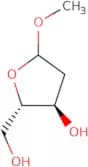
CAS:<p>Methyl 2-deoxy-L-ribofuranoside is an intermediate in the synthesis of l-arabinose. It can be obtained by the reaction of methyl 2,3-dideoxy-D-ribofuranoside with pivaloyl chloride. The antiviral activity of this compound has been shown by its ability to inhibit the replication of influenza A virus. Methyl 2-deoxy-L-ribofuranoside is a fluorinating agent that can be used for the synthesis of oligosaccharides and nucleosides. This intermediate also serves as a substrate for a number of organic reactions, including regioselective and stereoselective chlorination.</p>Fórmula:C6H12O4Pureza:Min. 95%Cor e Forma:PowderPeso molecular:148.16 g/mol1,3,4,6-Tetra-O-acetyl-2-O-benzyl-a-D-mannopyranose
CAS:<p>1,3,4,6-Tetra-O-acetyl-2-O-benzyl-a-D-mannopyranose (1) is a high purity monosaccharide that can be custom synthesized to meet the needs of your research. 1 is a synthetic compound that is fluorinated and glycosylated. It has been shown to be an efficient methylation and modification agent for saccharide synthesis. It also acts as a building block for oligosaccharides and complex carbohydrates.</p>Fórmula:C21H26O10Pureza:Min. 95%Peso molecular:438.43 g/molOctanoyl b-D-glucosylamine
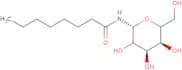
CAS:<p>Octanoyl b-D-glucosylamine is a synthetic compound that has been designed for use in the synthesis of complex carbohydrates. It is an octanoyl derivative of D-glucosamine, which is a sugar. This compound can be used for the modification of saccharides and polysaccharides, as well as sugars. It has been shown to be resistant to glycosylation and fluorination reactions.</p>Fórmula:C14H27NO6Pureza:Min. 95%Peso molecular:305.37 g/mol2-Acetamido-3,4,6-tri-O-acetyl-1-O-[(N-Cbz-aminoethoxy)ethoxy]-2-deoxy-β-D-galactopyranose
CAS:<p>2-Acetamido-3,4,6-tri-O-acetyl-1-O-[(N-Cbz-aminoethoxy)ethoxy]-2-deoxy-b-D-galactopyranose is a custom synthesis of a complex carbohydrate. It is a polysaccharide that contains fluorine and has been modified with methylation, glycosylation, click modification, and polysaccharide modifications. 2-Acetamido-3,4,6-tri-O -acetyl -1 -O-[(N -Cbz -aminoethoxy)ethoxy] -2 deoxy b D galactopyranose is also known as CAS No. 1261568 35 7 and it's molecular weight is 546.81 g/mol.</p>Fórmula:C26H36N2O12Pureza:Min. 95%Peso molecular:568.57 g/molN-Propionyl-D-glucosamine
CAS:<p>N-Propionyl-D-glucosamine is a sugar used in the synthesis of peptidoglycan, a structural component of bacterial cell walls. N-Propionyl-D-glucosamine is synthesized from formaldehyde and propionic acid. It is used as an antibiotic to treat bacterial infections caused by Gram-positive bacteria such as streptococci and staphylococci. N-Propionyl-D-glucosamine has also been shown to have anti-fungal properties against Candida albicans and Saccharomyces cerevisiae. The biosynthesis of this compound takes place through phosphorylation of the amide group on the sugar residue, which is catalyzed by a number of enzymes including phosphotransacetylase, acetate kinase, and phosphoenolpyruvate synthase. This process requires ATP, phosphate ions, ammonium ion, and water molecules.</p>Fórmula:C9H17NO6Pureza:Min. 95%Cor e Forma:White PowderPeso molecular:235.23 g/mol1-Deoxy-1-nitro-L-glucitol
CAS:<p>1-Deoxy-1-nitro-L-glucitol is a potent apoptosis-inducing compound that has shown promising results in cancer research. It is an analog of vanillin and nintedanib, two well-known cancer cell inhibitors. 1-Deoxy-1-nitro-L-glucitol has been shown to inhibit the activity of several kinases, including those involved in tumor growth and progression. In addition, it has been found to be effective against various types of cancer cells, including Chinese hamster ovary cells and human bladder cancer cells. This compound also exhibits synergistic effects with other anti-cancer drugs such as glimepiride and apomorphine. The presence of 1-Deoxy-1-nitro-L-glucitol in urine may serve as a potential biomarker for the diagnosis and monitoring of certain cancers.</p>Fórmula:C6H13NO7Pureza:Min. 95%Peso molecular:211.17 g/mol3,6-Di-O-acetyl-4-O-(2,3,4,6-tetra-O-acetyl-b-D-galactopyranosyl)-D-glucal
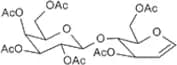
CAS:<p>3,6-Di-O-acetyl-4-O-(2,3,4,6-tetra-O-acetyl-b-D-galactopyranosyl)-D-glucal is a nacetyllactosamine that is structurally similar to the natural substrate for lactohexosaminidase. This compound inhibits the enzyme activity of this enzyme and other related enzymes. 3,6-Di-O-acetyl-4,6 D -glucal has been shown to inhibit endothelial cell growth in vitro. It also binds to the receptor on endothelial cells and blocks the signal pathways involved in cell growth. The glucose moiety of 3,6 Di O acetyl 4,6 D glucal inhibits lipases by binding to their active sites.</p>Fórmula:C24H32O15Pureza:Min. 95%Cor e Forma:White PowderPeso molecular:560.5 g/mol







![2-Acetamido-3,4,6-tri-O-acetyl-1-O-[(N-Cbz-aminoethoxy)ethoxy]-2-deoxy-β-D-galactopyranose](/_next/image/?url=https%3A%2Fstatic.cymitquimica.com%2Fproducts%2F3D%2Fthumb-webp%2FMA137616.webp&w=3840&q=75)