Glicociência
Subcategorias de "Glicociência"
- Amino açúcares(108 produtos)
- Anticorpos Glico-Relacionados(284 produtos)
- Glicolípidos(46 produtos)
- Glicosaminoglicanos (GAGs)(55 produtos)
- Glicosídeos(419 produtos)
- Monossacáridos(6.622 produtos)
- Oligossacarídeos(3.693 produtos)
- Polissacáridos(506 produtos)
Foram encontrados 11036 produtos de "Glicociência"
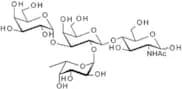
Blood Group B type II tetrasaccharide
CAS:Blood Group B type II tetrasaccharide is a carbohydrate that is synthesized by custom synthesis. It is a complex carbohydrate with a molecular weight of 909890-21-7. It has the chemical formula C6H14O6 and CAS No. 909890-21-7. Blood group B type II tetrasaccharide can be modified, methylated, glycosylated, and fluorinated. It is an oligosaccharide with a monosaccharide repeating unit that can be found in the blood group B type II antigen on erythrocytes. This saccharide has six sugar units (three glucose and three galactose) connected in a chain by alpha 1-3 glycosidic linkages. The sugar units are attached to each other by beta 1-4 glycosidic linkages.
Fórmula:C26H45NO20Pureza:Min. 95%Peso molecular:691.63 g/molRef: 3D-OB13921
Produto descontinuadoD-Xylonic acid lithium
CAS:D-Xylonic acid lithium salt is a redox potential regulator that belongs to the class of nucleotide phosphate. It has been shown to inhibit the transcriptional regulation of genes in Saccharomyces cerevisiae strain. D-Xylonic acid lithium salt inhibits the growth of bacteria by binding to a hydroxyl group on the surface of bacterial cells, which disrupts the cell membrane and causes cell death. This drug also has film-forming properties and can be used as a model system for studying glycolaldehyde, an intermediate in sugar metabolism.
Fórmula:C5H10O6•LiPureza:Min. 95%Peso molecular:173.07 g/molTopiramate didesacetal impurity
CAS:Topiramate didesacetal impurity is a Custom synthesis, Modification, Fluorination, Methylation, Monosaccharide, Synthetic compound. It is used in the production of saccharides and polysaccharides. The Carbohydrate has a variety of uses including food additives and sweeteners.
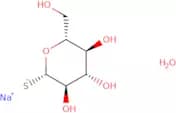
Fórmula:C6H13NO8SPureza:Min. 95%Peso molecular:259.24 g/molb-D-Thioglucose sodium salt hydrate
CAS:b-D-Thioglucose sodium salt hydrate is a complex carbohydrate that is used as an intermediate for the synthesis of oligosaccharides and polysaccharides. It is also used in the modification of saccharide chains, such as glycosylation, and for the preparation of fluorinated carbohydrates. b-D-Thioglucose sodium salt hydrate is high purity, with no detectable impurities or degradation products. It has been modified with fluorine to form a new chemical entity that has not been previously described in the literature.
Fórmula:C6H11NaO5S·H2OPureza:Min. 95%Peso molecular:236.22 g/molRef: 3D-MT02234
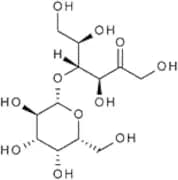
Produto descontinuadoLactulose - liquid
CAS:Lactulose is a non-absorbable sugar used in the treatment of constipation and hepatic encephalopathy. It is used by mouth for constipation and either by mouth or in the rectum for hepatic encephalopathy. It generally begins working after 8-12 hours, but may take up to 2 days to improve constipation.
Fórmula:C12H22O11Pureza:Min. 95%Peso molecular:342.3 g/molIvermectin monosaccharide
CAS:Ivermectin monosaccharide is a molecule that has been shown to have an inhibitory effect on the uptake of glucose by cyathostomes. This molecule does not bind to inulin, but it does bind to the receptor binding site for ivermectin. Ivermectin monosaccharide has been shown to have a high affinity for the receptor binding site and can be used as an alternative method for detecting low concentrations of ivermectin.
Fórmula:C41H62O11Pureza:Min. 95%Peso molecular:730.92 g/mol1,2,3,6-Tetra-O-benzoyl-5-thio-D-glucopyranose
1,2,3,6-Tetra-O-benzoyl-5-thio-D-glucopyranose is a monosaccharide that can be synthesized by the methylation of 1,2,3,6-tetra-O-(benzoyl) D-glucopyranose. The synthesis of this compound is accomplished by a click modification and the use of a fluoroquinolone to modify the sugar at C1. This compound has been shown to be an excellent substrate for polysaccharide and saccharide synthesis as well as fluorination. Purity levels are high with this product.
Pureza:Min. 95%4-Epi-daunosamine
CAS:4-Epi-daunosamine is a glycopeptide antibiotic that is used to treat infections caused by Gram-positive bacteria. It binds to the cell wall of these bacteria and inhibits the synthesis of new cell walls. This causes the cells to burst and die, which leads to bacterial death. 4-Epi-daunosamine has been shown to be effective against animal pathogens such as Streptococcus pneumoniae, Haemophilus influenzae, and Clostridium perfringens. 4-Epi-daunosamine also has a low level of toxicity in humans, but can cause adverse effects such as nausea and vomiting if taken in large doses.
Fórmula:C6H11NO3Pureza:Min. 95%Peso molecular:145.16 g/molD-Glucose 6-phosphate, disodium salt
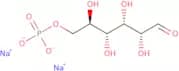
CAS:D-Glucose 6-phosphate, disodium salt is an antibiotic that is used to treat gram-negative bacterial infections. It binds to the bacterial ribosome and inhibits protein synthesis, which leads to cell death by inhibiting the production of proteins vital for cell division. This drug has been shown to be active against a wide range of bacteria, including resistant strains such as Escherichia coli and Salmonella typhimurium. D-Glucose 6-phosphate, disodium salt also has anti-inflammatory properties and can be used as an anti-bacterial agent in the treatment of typhoid fever.
Fórmula:C6H11O9Na2PPeso molecular:304.10 g/molEzetimibe hydroxy-b-D-glucuronide
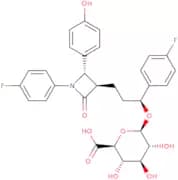
CAS:Ezetimibe hydroxy-b-D-glucuronide is an oligosaccharide that can be synthesized from the modified sugar, L-glucuronic acid. It has a molecular weight of 536 and is soluble in water and methanol. This compound has been used in the synthesis of glycosides, saccharides, and polysaccharides. The chemical name for this compound is 1-(2-hydroxyethyl)-3-(((4'-carboxybenzyl)oxy)carbonyl)-2,6-diazaoctane glucuronide. Ezetimibe hydroxy-b-D-glucuronide has been shown to increase the absorption of cholesterol and decrease low density lipoprotein (LDL) levels in the blood by inhibiting intestinal cholesterol absorption.
Fórmula:C30H29F2NO9Pureza:Min. 95%Peso molecular:585.55 g/molRef: 3D-ME09937
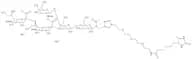
Produto descontinuadoGD2-Oligosaccharide-desthiobiotin
Desthiobiotin is a modified form of biotin that binds less tightly to biomolecules like proteins and carbohydrates than it does biotin, while still providing excellent specificity in affinity purification methods (Hirsch, 2002). The structure of GD2-oligosaccharide-desthiobiotin (sodium salt) comprises (GalNAcβ1,4Galβ1,4Glc) of its two sialic acids linked α2,3/α2,8 to the central galactose residue (Ledeen, 2009). The desthiobiotin is attached β to position 1 of the reducing glucose moiety. GD2 ganglioside is expressed at a low concentration in the central nervous system, nerves, skin melanocytes and stem cells in healthy adults. On the other hand, GD2 ganglioside is overexpressed in a number of tumors including: neuroblastoma, melanoma, small cell lung carcinoma and brain tumors. Recently, GD2 ganglioside has been found in low concentration on breast cancer stem cells (CSC) that possess: self-renewal properties (division without disrupting the undifferentiated state) and tumor-initiating capabilities. It has been suggested that GD2 ganglioside may be developed as an effective target antigen for CSC immunotherapy (Fleurence, 2017).
Fórmula:C65H106N10O37·2NaPureza:Min. 95%Cor e Forma:PowderPeso molecular:1,665.56 g/molRef: 3D-OO76165
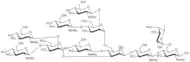
Produto descontinuadoNGA5FB N-Glycan
NGA5FB is a custom synthesis, modification, and fluorination of a glycan. It is a monosaccharide with a methylation and click modification on the terminal glucose. This glycan is synthesized with an oligosaccharide saccharide that contains a complex carbohydrate. The CAS No. for this product is 2279-97-0.
Pureza:Min. 95%Hesperetin 3'-O-beta-D-glucuronide
CAS:Hesperetin 3'-O-beta-D-glucuronide is a glycosylate that is obtained by the glycosylation of hesperidin. Hesperetin 3'-O-beta-D-glucuronide is a sugar with a glycosylation site at the C3 position of the aglycone. It has shown to be an efficient inhibitor of Triglyceride Synthetase, which reduces triglycerides in the body. Hesperetin 3'-O-beta-D-glucuronide also has been shown to inhibit insulin release and increase insulin sensitivity in vitro.
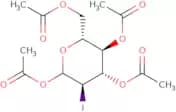
Fórmula:C22H22O12Pureza:Min. 95%Peso molecular:478.4 g/mol1,3,4,6-Tetra-O-acetyl-2-deoxy-2-iodo-a-D-glucopyranose
CAS:1,3,4,6-Tetra-O-acetyl-2-deoxy-2-iodo-a-D-glucopyranose is a sugar molecule that is used to measure the efficiency of glycosidases. It has been shown to be an efficient site-specific inhibitor for glycosidases and analogues. This compound has been shown to inhibit the activity of glycoconjugates and glycan synthesis by interfering with the binding sites on enzymes such as endoglycosidase H. 1,3,4,6-Tetra-O-acetyl-2-deoxy-2-iodo-(1→4)-a-[alpha]-D-[beta]-D-[alpha]-glucopyranoside is an analog of this compound that can be used in place of it for specific purposes.Fórmula:C14H19IO9Pureza:Min. 95%Peso molecular:458.2 g/molRef: 3D-MT10328
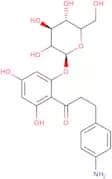
Produto descontinuado4-Aminophlorizin
CAS:4-Aminophlorizin is a chemical compound that inhibits the uptake of azide by red blood cells. It has been shown to be effective against intestinal parasites and trophozoites. 4-Aminophlorizin is a potent inhibitor of the membrane system, which may be due to its interaction with the semenza, or membrane protein.
Fórmula:C21H25NO9Pureza:Min. 95%Peso molecular:435.42 g/molRef: 3D-MA17827
Produto descontinuadoMirabegron N-glucuronide
CAS:Mirabegron is a drug that is used to treat overactive bladder. Mirabegron N-glucuronide is the major metabolite of mirabegron, which has been shown to be excreted in urine. This metabolite can be detected using a validated assay and can be measured using a mass spectrometer. The concentration of mirabegron N-glucuronide in the blood sample was measured at various timepoints after administration of mirabegron. Pharmacokinetic studies were performed in humans and human liver tissue, giving information on how long it takes for the drug to reach its maximum concentration in the body and how long it stays there before being eliminated.
Pureza:Min. 95%Ref: 3D-MM59497
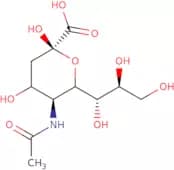
Produto descontinuadoN-Acetyl-L-neuraminic acid
CAS:N-Acetyl-L-neuraminic acid is a glycosylation compound that is an important component of the cell wall of Gram negative bacteria. It is used in the synthesis of polysaccharides and in the formation of complex carbohydrates. N-Acetyl-L-neuraminic acid has been studied for its potential use as a drug delivery agent due to its ability to inhibit the activity of enzymes such as α-mannosidase, which can lead to tumor metastasis. This compound can be synthesized using methylation, fluorination, and click chemistry, or custom synthesized by ordering specific monosaccharides. N-Acetyl-L-neuraminic acid can also be modified with acetate groups to create an acetylated form for use in chemical analysis or as a substrate for enzymatic reactions.
Fórmula:C11H19NO9Pureza:Min. 95%Peso molecular:309.27 g/molRef: 3D-MA64798
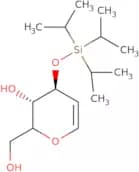
Produto descontinuado3-O-Triisopropylsilyl-D-galactal
3-O-Triisopropylsilyl-D-galactal is a carbohydrate that belongs to the group of sugars. It is an oligosaccharide with a complex structure, which is synthesized from D-galactal by treatment with triisopropylsilyl chloride in pyridine. 3-O-Triisopropylsilyl-D-galactal is used as a reagent for the methylation and glycosylation of proteins and nucleic acids. This compound has been shown to inhibit the enzyme carboxypeptidase A, which may be due to its ability to act as an inhibitor of carbohydrate binding. 3-O-Triisopropylsilyl-D-galactal has also been shown to bind specifically to erythrocyte membranes, suggesting that it could be used as a potential diagnostic marker for glycogen storage diseases.
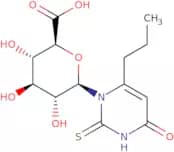
Fórmula:C15H30O4SiPureza:Min. 95%Peso molecular:302.48 g/molPropylthiouracil N-b-D-glucuronide
CAS:Propylthiouracil N-b-D-glucuronide is a glycosylation product of propylthiouracil, which is the active form of this drug. It has been shown to inhibit thyroid hormone synthesis by binding to the enzyme thyroid peroxidase. Propylthiouracil N-b-D-glucuronide is used in the treatment of thyrotoxicosis, and can also be used as an antithyroid agent for hyperthyroidism. It is chemically synthesized from propylthiouracil with a glycosyl group added at the C3 position on the thiourea ring by glycosyltransferases. This compound has also been fluorinated and polysaccharided, modified and saccharided, oligosaccharided or sugar, synthetic or monosaccharide, custom synthesis or high purity.
Fórmula:C13H18N2O7SPureza:Min. 95%Peso molecular:346.36 g/molRef: 3D-MP16842
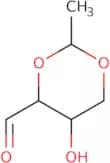
Produto descontinuado2,4-O-Ethylidene-D-erythrose
CAS:2,4-O-Ethylidene-D-erythrose is a trimerization product of glyoxal and acetaldehyde. It is an aldehyde that can be used as a precursor to other compounds. The hydrated form of 2,4-O-ethylidene-D-erythrose has been rationalized by the mesoxalic acid and water molecules to form the trimer. This compound can be produced from the glycolaldehyde and sulfoxide in an oxidation reaction with hydrogen peroxide. The acetylation of 2,4-O-ethylidene-D-erythrose produces isoxazolidines which are stereoselective.
Fórmula:C6H10O4Pureza:Min. 95%Peso molecular:146.14 g/mol