Glicociência
Subcategorias de "Glicociência"
- Amino açúcares(108 produtos)
- Anticorpos Glico-Relacionados(282 produtos)
- Glicolípidos(46 produtos)
- Glicosaminoglicanos (GAGs)(55 produtos)
- Glicosídeos(419 produtos)
- Monossacáridos(6.624 produtos)
- Oligossacarídeos(3.682 produtos)
- Polissacáridos(504 produtos)
Foram encontrados 11047 produtos de "Glicociência"
Ethyl 3-O-benzyl-4,6-O-benzylidene-D-thiomannopyranoside
CAS:Ethyl 3-O-benzyl-4,6-O-benzylidene-D-thiomannopyranoside is a custom synthetic glycosylated compound that is used in the synthesis of oligosaccharides and polysaccharides. This product has a high purity and is modified with fluorine to increase its stability. The CAS number for this product is 173935-67-6.Fórmula:C22H26O5SPureza:Min. 95%Cor e Forma:PowderPeso molecular:402.5 g/molBlood group H tetraose type II
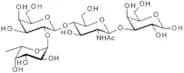
CAS:Core antigen fragment in ABO blood group systemFórmula:C26H45NO20Pureza:Min. 95%Cor e Forma:PowderPeso molecular:691.63 g/molEthyl 3-O-benzyl-4,6-O-benzylidene-2-deoxy-2-N-phthalamido-a-D-thioglucopyranoside
CAS:Ethyl 3-O-benzyl-4,6-O-benzylidene-2-deoxy-2-N-phthalamido-a-D-thioglucopyranoside is a custom synthesis of a complex carbohydrate made up of saccharides. This compound is an oligosaccharide with four monosaccharides and two other saccharides. It has been shown to be a potent inhibitor of bacterial growth in the presence of various antibiotics, including penicillin G, erythromycin, tetracycline, and ampicillin. It also inhibits the growth of fungi by binding to their cell walls and disrupting membrane integrity.Pureza:Min. 95%Methyl 3,4-di-O-benzyl-a-D-mannopyranoside
CAS:Methyl 3,4-di-O-benzyl-a-D-mannopyranoside is a synthetic compound that belongs to the class of oligosaccharides. It is a sugar that has a complex carbohydrate structure with a glycosylated and methylated sugar. The compound is custom synthesized and is used as a reagent in glycosylation reactions. Methyl 3,4-di-O-benzyl-a-D-mannopyranoside can be used for click modification of proteins, polypeptides, and carbohydrates.Fórmula:C21H26O6Pureza:Min. 95%Peso molecular:374.43 g/molAllyl 6-o-allyl-α-D-galactopyranoside
CAS:Allyl 6-o-allyl-α-D-galactopyranoside is a medicinal compound with potential anticancer properties. It is an analog of α-D-galactopyranoside and has been shown to inhibit the activity of protein kinases, which are enzymes involved in cell signaling and regulation. This inhibition can lead to apoptosis, or programmed cell death, in cancer cells. Allyl 6-o-allyl-α-D-galactopyranoside has been studied extensively in Chinese medicine as a potential inhibitor of tumor growth and has also been found in human urine. This compound holds great promise as a natural alternative for cancer treatment and warrants further investigation into its therapeutic potential.
Fórmula:C12H20O6Pureza:Min. 95%Peso molecular:260.28 g/mol4-(Methylnitrosamino)-1-(3-pyridyl)-1-butanol-N-b-D-glucuronide
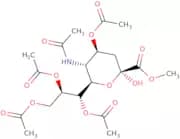
CAS:4-(Methylnitrosamino)-1-(3-pyridyl)-1-butanol-N-b-D-glucuronide is a glycosylated, modified sugar with a fluorinated methyl group. It is synthesized in the laboratory and does not occur naturally. The sugar moiety of this compound contains an oligosaccharide that consists of a complex carbohydrate, including saccharides, monosaccharides, and polysaccharides. This modification can be done by click chemistry or by other methods. 4-(Methylnitrosamino)-1-(3-pyridyl)-1-butanol-N-b-D-glucuronide is high purity and modification products are available upon request.Fórmula:C16H23N3O8Pureza:Min. 95%Peso molecular:385.37 g/mol4,7,8,9-Tetra-O-acetyl-N-acetyl-D-neuraminic acid methyl ester
CAS:4,7,8,9-Tetra-O-acetyl-N-acetyl-D-neuraminic acid methyl ester is a modified form of sialic acid. This compound is a glycosylation product that has been modified with methyl groups and fluorine atoms. The fluorination of the molecule increases its stability and prevents it from being hydrolyzed by enzymes such as β-galactosidase. 4,7,8,9-Tetra-O-acetyl-N-acetyl-D-neuraminic acid methyl ester is often used in the synthesis of polysaccharides and oligosaccharides for medical purposes. This compound can be custom synthesized for research purposes or to meet special requirements.
Fórmula:C20H29NO13Pureza:Min. 95%Cor e Forma:White to off-white solid.Peso molecular:491.44 g/molMethyl 3-acetamido-2-chloro-2,3-dideoxy-a-D-altropyranoside
CAS:Methyl 3-acetamido-2-chloro-2,3-dideoxy-a-D-altropyranoside is a high purity and custom synthesis Glycosylation product. It is a synthetic sugar that is used in the modification of complex carbohydrates. Methyl 3-acetamido-2-chloro-2,3-dideoxy-a-D-altropyranoside can be synthesized by fluorination and methylation of glycosylates or saccharides.Fórmula:C9H16ClNO5Pureza:Min. 95%Peso molecular:253.68 g/molMethyl a-L-idopyranosiduronic acid 2-sulfate sodium salt
Methyl a-L-idopyranosiduronic acid 2-sulfate sodium salt is a custom synthesis that is an oligosaccharide. It is a complex carbohydrate with Oligosaccharide CAS No. and it has been modified by saccharide, Methylation, and Glycosylation. This product has high purity and is fluorinated. This product is synthetic and can be used for click modification.Fórmula:C7H10O10Na2SPureza:Min. 95%Peso molecular:332.19 g/mol2,6-Deoxyfructosazine
CAS:2,6-Deoxyfructosazine is a type of fructosamine that is derived from inulin. It is used as a matrix for chromatography. The 2,6-deoxyfructosazine molecule has a low molecular weight and can be easily separated from the other components of the plant material by means of chromatography. This compound can also be extracted with ether and then concentrated to produce a product with an analytical yield of up to 98%. The product can then be purified by recrystallization or sublimation. The reaction time required for this process varies depending on the type of solvent used and whether or not it is heated. For example, when using ether as the solvent, the reaction time ranges between 30 minutes to 1 hour at 45 degrees Celsius. However, when using chloroform as the solvent, the reaction time ranges between 3 hours to 5 hours at 40 degrees Celsius.Fórmula:C12H20N2O7Pureza:Min. 95%Cor e Forma:PowderPeso molecular:304.3 g/molD-(+)-Melezitose dihydrate
CAS:D-(+)-Melezitose dihydrate is a potent inhibitor of cancer cell growth. It has been shown to inhibit the proliferation of Chinese hamster ovary cells and human bladder cancer cells in vitro. D-(+)-Melezitose dihydrate is also found in urine samples from cancer patients, suggesting that it may be a potential biomarker for cancer diagnosis. This compound has been identified as an analog of indirubin, which is known to have anti-tumor properties. D-(+)-Melezitose dihydrate has been shown to induce apoptosis in cancer cells by inhibiting protein kinases, including the kinase inhibitors and tumor suppressor proteins. Additionally, this compound has demonstrated anticancer activity against a variety of tumors, making it a promising candidate for future cancer therapies.Fórmula:C18H36O18Pureza:Min. 95%Peso molecular:540.5 g/molD-[1-13C]Xylose
CAS:D-[1-13C]Xylose is a carbon source that is used to study the metabolism of glycolytic carbon in cells. It has been labeled with 13C and can be used as a tracer for the study of the distribution of metabolites, including glucuronic acid, mannose, and xylose. This can be done by nuclear magnetic resonance (NMR) spectroscopy or by using a magnetic resonance spectroscopy technique. The use of D-[1-13C]xylose has been shown to be an effective way to label cryptococcus neoformans cells in order to understand their metabolism.
Fórmula:C5H10O5Pureza:Min. 95%Peso molecular:151.12 g/mol1,2-O-Ethylidene b-D-mannopyranose
CAS:1,2-O-Ethylidene b-D-mannopyranose is a complex carbohydrate that is synthesized from the modification of mannose with 1,2-O-ethylidene b-D-mannopyranose. This modification can be accomplished by either methylation or glycosylation. Modification of mannose with 1,2-O-ethylidene b-D-mannopyranose has been shown to increase the stability of the molecule and improve its resistance to degradation. The methylation of mannose with 1,2-O-ethylidene b-D-mannopyranose has been shown to produce a variety of derivatives that may have potential applications in drug design and cancer treatment. This complex carbohydrate is an important component in many saccharides and polysaccharides. It has also been used as a fluorinating agent in organic synthesis.
Fórmula:C8H14O6Pureza:Min. 95%Peso molecular:206.2 g/mol3',4'-O-Carbonyl-6,6'-di-O-tert-butyldiphenylsilyl lactal
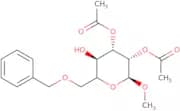
CAS:3',4'-O-Carbonyl-6,6'-di-O-tert-butyldiphenylsilyl lactal is a synthetic oligosaccharide that has been modified with a click modification. It is comprised of 3 different monosaccharides, one saccharide, and one carbonyl group. This carbohydrate is synthesized from the natural sugar D-ribose, which is modified with an O-tert-butyldiphenylsilyl lactal. The synthesis begins with the addition of a methyl group to the sugar's primary hydroxyl group. Then the sugar is reacted with fluorine gas to form an ether bond between the sugar's primary hydroxyl and its secondary hydroxyl. The final step in the synthesis involves glycosylation of the terminal hydroxyl groups on each monosaccharide.Fórmula:C45H54O10Si2Pureza:Min. 95%Peso molecular:811.08 g/mol6-O-Benzyl-2,3-di-O-acetyl-methyl-a-D-glucopyranoside
CAS:6-O-Benzyl-2,3-di-O-acetyl-methyl-a-D-glucopyranoside is a high purity synthetic compound with a CAS number of 162284. It is a carbonyl sugar that has been modified with fluorination and methylation. The 6 position of the glucose monosaccharide has been acetylated to give an O6 benzyl group. This compound is used for glycosylation and click chemistry modifications.Fórmula:C18H24O8Pureza:Min. 95%Peso molecular:368.38 g/mol2,3,4-Tri-O-acetyl-6-deoxy-a-D-glucopyranosyl trichloroacetimidate
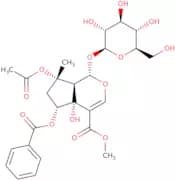
CAS:2,3,4-Tri-O-acetyl-6-deoxy-a-D-glucopyranosyl trichloroacetimidate is a glycoconjugate that can be synthesized from 2,3,4 tri-O-acetyl-6 deoxyglucose and N-(2,2,2,-trichloroethyl)glycine. It has been shown to be useful for the synthesis of glycosidically bound fluorides. This chemical is an intermediate in the synthesis of saccharide and oligosaccharide derivatives with click modifications. It is also used as a reagent for the modification of polysaccharides with fluorination complexes. The high purity of this compound makes it suitable for use in custom synthesis.Fórmula:C14H18Cl3NO8Pureza:Min. 95%Peso molecular:434.65 g/mol6-O-Benzoylphlorigidoside B
CAS:6-O-Benzoylphlorigidoside B is a natural product that belongs to the class of iridoid glycosides. It is found in plants such as callicarpa, which are members of the asterid clade. 6-O-Benzoylphlorigidoside B was isolated from iridoid glycosides in leaves of Formosana, a plant family native to Taiwan. This compound has been shown to have anti-inflammatory and anti-ulcer activities, as well as potential antiviral activity against herpes simplex virus type 1 (HSV1) and Epstein-Barr virus (EBV).Pureza:Min. 95%N-Fmoc-N-(2-acetamido-3,4,6-tri-O-acetyl-2-deoxy-a-D-glucopyranosyl)-L-asparagine
N-Fmoc-N-(2-acetamido-3,4,6-tri-O-acetyl-2-deoxy-a-D-glucopyranosyl)-L-asparagine is a methylated saccharide that is used in the synthesis of polysaccharides. This product is an N,N'-diacetylchitobiose derivative with an acetamido group at C5 and a 2,6 diacetylated glucopyranoside at C1. It has been modified on the primary amine to introduce a Click reaction with a maleimide. The product is available in high purity and can be custom synthesized with different modifications such as glycosylation or fluorination.Fórmula:C34H39N3O13Pureza:Min. 95%Peso molecular:679.69 g/molCalcium α-D-isosaccharinate
CAS:Please enquire for more information about Calcium α-D-isosaccharinate including the price, delivery time and more detailed product information at the technical inquiry form on this page
Fórmula:C12H24O12•CaPureza:Min. 95%Peso molecular:400.39 g/molGlucose pentasulfate potassium
CAS:Glucose pentasulfate potassium is a synthetic, fluorinated sugar that can be used as a building block for the synthesis of glycoconjugates. It is also used in the modification of saccharides and oligosaccharides, and in click chemistry to produce complex carbohydrates. Glucose pentasulfate potassium is soluble in water, which makes it suitable for use in chemical reactions. The compound has been assigned CAS number 359435-44-2.Fórmula:C6H7K5O21S5Pureza:Min. 95%Cor e Forma:PowderPeso molecular:770.92 g/molGlobotriaosylceramide
CAS:Globotriaosylceramide (Gb3) is a glycolipid that has been shown to be an activator of the protein growth factor-β1. It is involved in the regulation of tumor cell proliferation and may have potential as a biomarker for cancer. Gb3 is also a drug transporter and it has been shown to have long-term efficacy in the treatment of sarcoidosis. Gb3 has been found in high concentrations in patients with HIV infection, suggesting that it may play a role in HIV replication. Studies have also shown that Gb3 may be involved in cardiac pathology and its structural analysis can help in understanding its function. Symptoms or conditions associated with elevated levels of globotriaosylceramide include: • Carcinoma • Cardiac disease • Infectious diseases • HIV infectionFórmula:C53H99NO18Pureza:Min. 95%Peso molecular:1,038.35 g/mol2-Deoxy-3,4,6-tri-O-pivaloyl-D-glucopyranosyl azide
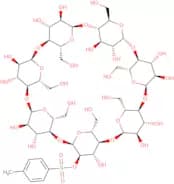
CAS:2-Deoxy-3,4,6-tri-O-pivaloyl-D-glucopyranosyl azide is a drug that regulates the blood pressure. It is an oral hypoglycaemic agent that has been shown to lower blood sugar levels in patients with type 2 diabetes mellitus. The drug is metabolized in the liver by cytochrome p450 enzymes and can cause interactions with drugs such as lisinopril, which are metabolized by these enzymes. 2DGPA has been shown to be effective at lowering blood pressure in a low-dose group of patients with essential hypertension. The signal peptide sequence was detected in the protein sequencing of a biological sample from rats treated with 2DGPA. This drug also reduces natriuretic peptide levels and has a rate constant of 4s−1M−1s−1.Fórmula:C21H35N3O7Pureza:Min. 95%Peso molecular:441.53 g/molMono-2-O-(p-toluenesulfonyl)-b-cyclodextrin hydrate
CAS:This beta-cyclodextrin (β-CD) derivative is a functionalized cyclic oligosaccharide composed of seven glucose units, characterized by a hydrophilic exterior and a lipophilic cavity (bigger than α-CD and smaller than γ-CDs), which allows it to encapsulate various guest molecules. This structural feature facilitates its use in multiple applications, including pharmaceuticals, food enhancement, and cosmetics. In the pharmaceutical industry, it enhances the solubility and stability of poorly water-soluble drugs, improving their bioavailability and efficacy while also masking unpleasant tastes. The food sector utilizes it as a stabilizer for flavors, colors, and nutrients, extending shelf life by protecting sensitive ingredients from degradation. In cosmetics, it serves as a complexing agent for fragrances and active components, ensuring their stability and controlled release. Its use expands to many other fields, including nanotechnology for drug delivery systems, environmental remediation for extracting organic pollutants, textiles for slow-release fragrances, and analytical chemistry for chiral separation.Fórmula:C49H76O37S•(H2O)xPureza:Min. 97 Area-%Cor e Forma:PowderPeso molecular:1,289.17 g/molO-(2-Acetamido-3,4,6-tri-O-acetyl-D-glucopyranosylidene)amino N-phenyl carbamate
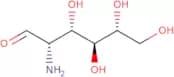
CAS:O-(2-Acetamido-3,4,6-tri-O-acetyl-D-glucopyranosylidene)amino N-phenyl carbamate (3,4,6-OAAC) is a custom synthesis that can be modified with fluorination and methylation. 3,4,6OAAC is an oligosaccharide that contains a saccharide with glycosylation. The saccharides in the oligosaccharide are polysaccharides and complex carbohydrates.Fórmula:C21H25N3O10Pureza:Min. 95%Peso molecular:479.44 g/mol2-Amino-2-deoxy-D-altrose
CAS:2-Amino-2-deoxy-D-altrose (2AD) is a molecule with the chemical formula C6H14N2O4. It belongs to the class of compounds known as uronic acids. 2AD is an acetylated molecule that has been structurally studied by X-ray crystallography and NMR spectroscopy. The molecule contains a ring of six carbon atoms, two of which are epoxide groups. The nature of this compound is glycosidic, with focus on hexamethylphosphoramide and diamino oligosaccharides. 2AD has been shown to have anti-inflammatory activities in animals, but its exact mechanism of action remains unknown. This compound may act through a ring-opening reaction or by inhibiting prostaglandin synthesis.
Fórmula:C6H13NO5Pureza:Min. 95%Peso molecular:179.17 g/mol5-Thio-D-lactose
5-Thio-D-lactose is a monosaccharide that has been synthesized and modified to contain fluorine atoms. This synthetic sugar is used in the glycosylation of polysaccharides in the synthesis of complex carbohydrates. 5-Thio-D-lactose is also used for click modification and methylation reactions. 5-Thio-D-lactose can be used as a reference standard for carbohydrate analysis by gas chromatography, mass spectrometry, nuclear magnetic resonance, or infrared spectroscopy.
5-Thio-D-lactose is available at high purity (99%+) and with custom synthesis upon request.Pureza:Min. 95%Heptamaloxyloglucan
CAS:Heptamaloxyloglucan is an analog of marbofloxacin that has been shown to inhibit tumor growth and induce apoptosis in cancer cells. This compound acts as a kinase inhibitor, blocking the activity of enzymes involved in cell division and proliferation. Heptamaloxyloglucan has also been found to have anticancer properties, inhibiting the growth of cancer cells and inducing apoptosis through various mechanisms. In addition, this compound has been shown to be effective in treating urinary tract infections caused by gram-negative bacteria such as Escherichia coli and Proteus mirabilis. Heptamaloxyloglucan may also have potential therapeutic applications for other diseases such as hypertension, as it has been found to be a potent inhibitor of ACE (angiotensin-converting enzyme) activity.Fórmula:C40H70O33Pureza:75%MinPeso molecular:1,079 g/molO-(2-Azido-4,6-O-benzylidene-2-deoxy-a-D-galactopyranosyl)-N-[(9H-fluoren-9-ylmethoxy)carbonyl]-L-threonine tert-Butyl Ester
CAS:The compound is an O-linked glycosylation site-specifically modified oligosaccharide. The modification is a methylation of the hydroxyl group on the 2-position of the sugar moiety. The carbohydrate is a polysaccharide that has been fluorinated at one or more positions. It has CAS No. 195976-07-9 and was synthesized by glycosylation and methylation of L-threonine tert-butyl ester with D-galactopyranosyl chloride in presence of 4,6-O-(2,3,4,6-tetraisopropoxybenzoyl)-D-galactopyranosyl chloride (TIPB) and sodium hydrogen carbonate (NaHCO).Fórmula:C36H40N4O9Pureza:Min. 95%Peso molecular:672.72 g/molD-Lyxose-1-C-D
CAS:Please enquire for more information about D-Lyxose-1-C-D including the price, delivery time and more detailed product information at the technical inquiry form on this page
Fórmula:C5H10O5Pureza:Min. 95%Peso molecular:151.14 g/molAgarodecaose
Agarose is a polysaccharide found in red algae, typically Gelidium and Gracilaria. It is a strictly alternating polysaccharide of α-1,3 linked D-galactose and β-1,4 linked L-3,6 anhydrogalactose with occasional sulfation at position 6 of the anhydrogalactose residue. Agaro-oligosaccharides result from cleavage at galactose residues and neoagaro-oligosaccharides from cleavage at 3,6-anhydro residues. A number of publications have suggested that agarodecaose has properties that include: anti-microbial, antiviral, prebiotic, anti-tumoral, immunomodulatory, anti-inflammatory, glucosidase inhibitory, and hepatoprotective properties.Fórmula:C66H102O51Pureza:Min. 95%Cor e Forma:SolidPeso molecular:1,711.49 g/mol2-Acetamido-1,3,4,6-tetra-O-acetyl-2-deoxy-5-thio-a-D-glucopyranose
CAS:2-Acetamido -1,3,4,6-tetra-O-acetyl-2-deoxy-5-thio-a-D-glucopyranose is a custom synthesis. It is an oligosaccharide and polysaccharide. It is a carbohydrate that has been modified by fluorination and a click modification. The complex carbohydrate contains one monosaccharide sugar. 2AATG can be used in the synthesis of other carbohydrates.
Fórmula:C16H23NO9SPureza:Min. 95%Peso molecular:405.42 g/molLauryl glucose neopentyl glycol
CAS:Lauryl glucose neopentyl glycol is a sugar that is used in the synthesis of glycoconjugates. It is synthesized from lauryl alcohol and neopentyl glycol. Lauryl glucose neopentyl glycol can be modified with fluorine, glycosylation, methylation, or modification. This compound has been shown to have anti-inflammatory properties and to inhibit the growth of prostate cancer cells.Fórmula:C31H60O12Pureza:Min. 95%Peso molecular:624.8 g/mol[(1S,2S)-2-((3S,5S)-5-Amino-3,4,6-trihydroxy-tetrahydro-pyran-2-yl)-1,2-dihydroxy-ethyl]-phosphonic acid (compound D)
[(1S,2S)-2-((3S,5S)-5-Amino-3,4,6-trihydroxy-tetrahydro-pyran-2-yl)-1,2-dihydroxy-ethyl]phosphonic acid (compound D) is a methylated phosphonic acid that has a sugar group at the C5 position. It is an oligosaccharide that contains a saccharide or carbohydrate moiety attached to the phosphate group of the molecule. This complex carbohydrate is synthesized from a monosaccharide and sugar. The synthesis process involves fluorination and modification of the sugar group.Pureza:Min. 95%Cor e Forma:SolidDehydroclindamycin
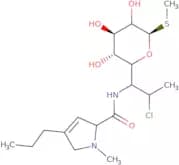
CAS:Dehydroclindamycin is a semisynthetic antibiotic that belongs to the class of antibiotics known as lincosamides. It is used in clinical treatment for bacterial infections. Dehydroclindamycin acts by interfering with the bacterial ribosome and prevents the formation of proteins required for cell division. This drug may be susceptible to degradation by hydrolysis or oxidation, which can lead to impurities. Dehydroclindamycin is produced by hydrogenation of clindamycin hydrochloride using a Raney nickel catalyst, followed by chromatography. The spectrum of dehydroclindamycin consists of antibacterial activity against gram-positive bacteria such as Staphylococcus aureus and Enterococcus faecalis and gram-negative bacteria such as Escherichia coli and Klebsiella pneumoniae.
Fórmula:C18H31ClN2O5SPureza:Min. 95%Peso molecular:422.97 g/molMethyl 1-(4'-tert-butyldimethylsilyl-6-hydroxyraloxifene)-2,3,4-tri-O-acetyl-b-D-glycopyranuronate
CAS:Methyl 1-(4'-tert-butyldimethylsilyl-6-hydroxyraloxifene)-2,3,4-tri-O-acetyl-b-D-glycopyranuronate is a modified carbohydrate. It is a synthetic saccharide that has been modified with methylation, fluorination and saccharide synthesis. This product can be custom synthesized and is available in high purity. Methyl 1-(4'-tert-butyldimethylsilyl-6-hydroxyraloxifene)-2,3,4-tri-O-acetyl-b-D--glycopyranuronate can be used in glycosylation reactions as well as Click modification reactions. CAS No: 174264–49–4.Fórmula:C46H55NO13SSiPureza:Min. 95%Peso molecular:890.08 g/molFA2B N-Glycan
CAS:FA2B N-glycan also know as asialo, agalacto, core-fucosylated, bisected, bi-antennary N-linked glycan.Pureza:Min. 95%Peso molecular:1,667 g/molDisialyloctasaccharide
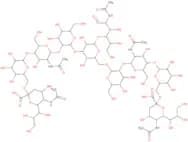
CAS:Disialyloctasaccharide is a sialylated glycan that is found in human serum. It is a diagnostic marker for cancer, and has been shown to be elevated in women with breast cancer. Disialyloctasaccharide can also be used as a biomarker for depression. The amino acid sequence of this glycan has been determined, and it has been shown that the protein glycosylation of disialyloctasaccharide is quantified by measuring the relative amount of sialic acid residues in the molecule. Disialyloctasaccharide can be used as a biomarker for eukaryotes, including yeast and mammals. This glycan also has anti-tumor activity, which may be due to its ability to bind to receptors on tumor cells.Fórmula:C76H125N5O57Pureza:Min. 95%Cor e Forma:PowderPeso molecular:2,020.81 g/mol2,3,4-Tri-O-acetyl-b-D-xylopyranosyl-Fmoc-L-serine
2,3,4-Tri-O-acetyl-b-D-xylopyranosyl-Fmoc-L-serine is a carbohydrate which is modified by fluorination and methylation. It is a complex carbohydrate that can be custom synthesized to include saccharide or oligosaccharide. 2,3,4-Tri-O-acetyl-b-D-xylopyranosyl Fmoc L serine has CAS No. 1807631–35–0 and molecular weight of 703. It also has high purity and custom synthesis capabilities.Fórmula:C29H31NO12Pureza:Min. 95%Peso molecular:585.56 g/molNistose trihydrate
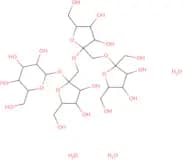
CAS:Nistose trihydrate is a polysaccharide that is found in the cell walls of plants, including inulin and d-biotin. It has been shown that nistose trihydrate can be used as an additive to mammalian cells to improve enzymatic reactions. In addition, nistose trihydrate can be used as a food additive to reduce cholesterol levels and modulate blood sugar levels. Nistose trihydrate also has antimicrobial activity against staphylococcus, which are gram-positive bacteria.
Fórmula:C24H42O21•3H2OPureza:Min. 95%Peso molecular:720.6 g/molN-D-Glucopyranosyl-5-aminosalicylic acid
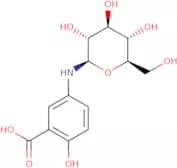
CAS:5-Aminosalicylic acid (5-ASA) is an anti-inflammatory drug that belongs to the class of drugs called nonsteroidal anti-inflammatory drugs (NSAIDs). 5-ASA is an acidic compound that is a metabolite of salicylic acid. It is used in the treatment of rheumatoid arthritis, osteoarthritis, and other inflammatory diseases. The preparation of 5-ASA involves homogenizing liver tissue and then extracting it with water. This extract can be chromatographed using preparative high performance liquid chromatography (HPLC) or spectroscopically analyzed by mass spectrometry. 5-ASA has been shown to have hepatoprotective effects in rats when given at a dose of 400 mg/kg body weight by intraperitoneal injection.
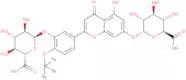
Fórmula:C13H17NO8Pureza:Min. 95%Peso molecular:315.28 g/molDiosmetin-d3-3,7-O-di-Glucuronide
CAS:Produto ControladoDiosmetin-d3-3,7-O-di-Glucuronide is a white to off-white powder that is soluble in water. It is a synthetic compound that can be used as a sugar or carbohydrate modification. It has been shown to be useful for the synthesis of complex carbohydrates and polysaccharides. This product can also be used in click chemistry, methylation, and fluoroination.Fórmula:C28H25D3O18Pureza:Min. 95%Peso molecular:655.53 g/molL-Glycero-D-manno heptose peracetate
L-Glycero-D-manno heptose peracetate is a custom make to order saccharide.
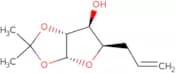
Pureza:Min. 95%5,6,7-Trideoxy-1,2-O-isopropylidene-a-D-xylo-hept-6-enofuranose
CAS:5,6,7-Trideoxy-1,2-O-isopropylidene-a-D-xylohept-6enofuranose is a natural homologue of guanine. It is an analog that has been shown to be a mitogen activated protein (MAP) kinase activator in the presence of pyridine. This compound also activates guanosine triphosphatase and has repolarizing effects on cardiac muscle cells. 5,6,7-Trideoxy-1,2-O-isopropylidenea-[D]-xylohept-[6]enofuranose binds to the catalytic site of guanosine triphosphatase and causes a conformational change that results in increased enzyme activity. 5,6,7-Trideoxy-[1]2--isopropylidene--[A]-D--xylohept-[6Fórmula:C10H16O4Pureza:Min. 95%Peso molecular:200.23 g/molUzarigenin digitaloside
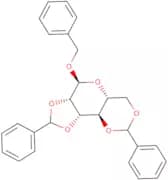
CAS:Uzarigenin digitaloside is a glycoside that belongs to the group of cardiac glycosides. It is derived from digitoxigenin and uzarigenin, which are present in the roots of Digitalis lanata. Uzarigenin digitaloside has been shown to have effects on cardiac muscle tissue, inhibiting the production of cAMP and cGMP and thereby reducing the activity of protein kinases and phosphodiesterase. This leads to an increase in intracellular levels of calcium ions, which in turn activates the myofilaments that contract the heart muscle cells.Pureza:Min. 95%Benzyl 2,3:4,6-di-O-benzylidene-a-D-mannopyranoside
CAS:The benzyl 2,3:4,6-di-O-benzylidene-a-D-mannopyranoside is a synthetic fluorinated carbohydrate. It is a complex carbohydrate that is synthesized by glycosylation and methylation of the sugar. The CAS number for this compound is 58650-53-6. This product can be custom synthesized to meet your specifications.Fórmula:C27H26O6Pureza:Min. 95%Peso molecular:446.49 g/molBenzyl 2-acetamido-3,4-di-O-benzyl-2-deoxy-a-D-galactopyranoside
Benzyl 2-acetamido-3,4-di-O-benzyl-2-deoxy-a-D-galactopyranoside is a custom synthesis. It is an oligosaccharide with a CAS number and a complex carbohydrate. The modification of the saccharide includes methylation, glycosylation, and click modification. Carbohydrates are sugar molecules that are polymers of monosaccharides.
Pureza:Min. 95%Methyl 3,4-O-isopropylidene-L-threonate
CAS:Methyl 3,4-O-isopropylidene-L-threonate is a chromatographic chiral compound that is synthesized by the reaction of malonate and aspartyl amide. This product can be used to determine the stereochemistry of other chiral compounds. It is an endocannabinoid that has been found to have anti-inflammatory activities in animals. Methyl 3,4-O-isopropylidene-L-threonate has also been shown to have antiobesity effects in mice fed a high fat diet and may be used as a synthetic carbohydrate replacement for diabetics.
Fórmula:C8H14O5Pureza:Min. 95%Peso molecular:190.19 g/molDecyl 4-O-b-D-lactopyranosyl-b-D-lactopyranoside
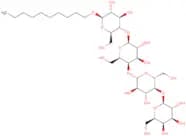
CAS:Decyl 4-O-b-D-lactopyranosyl-b-D-lactopyranoside is a high purity, custom synthesis, glycosylated oligosaccharide. It has been modified with Click chemistry to incorporate a fluorine atom on the sugar ring. This complex carbohydrate has a CAS No. of 1858224-00-6 and is synthesized by methylation and fluorination reactions. Decyl 4-O-b-D-lactopyranosyl-b-D-lactopyranoside can be used in biomedical research as a model for glycans and glycolipids, as well as in industrial applications such as food production.Fórmula:C34H62O21Pureza:Min. 95%Peso molecular:806.84 g/mol3,6-Di-O-benzyl-D-glucal
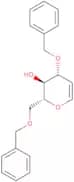
CAS:3,6-Di-O-benzyl-D-glucal is a substrate for the enzyme fatty acid hydroxylase. This enzyme catalyzes the hydroxylation of fatty acids to produce hydroxy fatty acids and 3,6-di-O-benzyl-D-glucal. The stereoselective nature of this enzyme has been shown using microscopy to examine the reaction time in both monolayers and bilayers. The kinetics of this reaction have also been analyzed by kinetic analysis. It is thought that this reaction takes place in the cytosol, although it may also occur in mitochondria or chloroplasts.Fórmula:C20H22O4Pureza:Min. 95%Peso molecular:326.39 g/mol





![D-[1-13C]Xylose](/_next/image/?url=https%3A%2Fstatic.cymitquimica.com%2Fproducts%2F3D%2Fthumb-webp%2FVCA84921.webp&w=3840&q=75)







![O-(2-Azido-4,6-O-benzylidene-2-deoxy-a-D-galactopyranosyl)-N-[(9H-fluoren-9-ylmethoxy)carbonyl]-L-…](/_next/image/?url=https%3A%2Fstatic.cymitquimica.com%2Fproducts%2F3D%2Fthumb-webp%2FMA60609.webp&w=3840&q=75)



![[(1S,2S)-2-((3S,5S)-5-Amino-3,4,6-trihydroxy-tetrahydro-pyran-2-yl)-1,2-dihydroxy-ethyl]-phosphoni…](/_next/image/?url=https%3A%2Fstatic.cymitquimica.com%2Fproducts%2F3D%2Fthumb-webp%2FMA28843.webp&w=3840&q=75)