Glicociência
Subcategorias de "Glicociência"
- Amino açúcares(108 produtos)
- Anticorpos Glico-Relacionados(284 produtos)
- Glicolípidos(46 produtos)
- Glicosaminoglicanos (GAGs)(55 produtos)
- Glicosídeos(419 produtos)
- Monossacáridos(6.622 produtos)
- Oligossacarídeos(3.693 produtos)
- Polissacáridos(506 produtos)
Foram encontrados 11036 produtos de "Glicociência"
2-epi-(-)-emtricitabine
CAS:2-epi-(-)-emtricitabine is an analog of the nucleoside cytidine, which inhibits the phosphorylation and subsequent degradation of deoxycytidine kinase, thereby blocking the production of the viral DNA polymerase. The compound also inhibits tyrosine kinases, which are enzymes that play a vital role in cell signaling. This inhibition may contribute to its antiviral activity. 2-epi-(-)-emtricitabine has been shown to inhibit human immunodeficiency virus (HIV) replication in vitro and in vivo. It is a prodrug that is converted to emtricitabine, its active form, by deoxycytidine kinase and then hydrolyzed by esterases. 2-epi-(-)-emtricitabine has been shown to be effective against hepatitis B virus and cancer cells.
Fórmula:C8H10FN3O3SPureza:Min. 95%Peso molecular:247.25 g/molRef: 3D-ME16711
Produto descontinuado1,3-a-1,6-a-D-Mannotriosyl trichloroacetimidate
1,3-α-D-mannopyranosyl trichloroacetimidate (1,3-α-DMTCA) is a fluorinated monosaccharide that is used as a building block for the synthesis of oligosaccharides and polysaccharides. The synthesis of 1,3-α-DMTCA involves the reaction of α,β-unsaturated chloral hydrate with mannose in aqueous solution. This produces an intermediate product that undergoes glycosylation with glycosylation reagents like glycosyl chloride to yield 1,3-α-DMTCA. The chemical structure of 1,3-α-DMTCA can be modified by various reactions including methylation or click modification. 1,3 DMTCA is also available as a high purity material.
1,3 α - D - mannosyltetrahydrochlorofonuimidoksylPureza:Min. 95%1,4:3,6-Dianhydro-5-nitro-D-glucitol
CAS:Isosorbide is a naturally occurring sugar alcohol (polyol) that is found in small quantities in many plants and fruits. It is used as a pharmaceutical drug to treat angina pectoris, congestive heart failure, and high blood pressure. Isosorbide has been shown to inhibit the activity of matrix metalloproteinases (MMPs), which are enzymes that degrade extracellular matrix proteins. This effect may be beneficial for patients with disorders such as arthritis. Isosorbide also increases nitric oxide production, leading to vasodilation and improved blood flow. The therapeutic effect of isosorbide has been demonstrated in experimental models using mice with congestive heart failure due to myocardial infarction or chronic heart disease. Pharmacological treatment of these animals with isosorbide resulted in an improvement of left ventricular function, reduction of myocardial fibrosis, and reduced levels of cardiac markers.
Fórmula:C6H9NO6Pureza:Min. 95%Peso molecular:191.14 g/molRef: 3D-MD09906
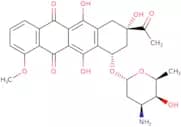
Produto descontinuadoDaunorubicin
CAS:Anthracycline antibiotic with potent anti-tumoral activity. The compound interferes with DNA replication and RNA transcription since it intercalates between the base pairs of nucleic acids. It also inhibits the topoisomerase II, proteasome and generates free radicals, which leads to cell death of treated cells. Moreover, daunorubicin triggers apoptosis trough the stimulation of ceramide synthesis. It has been used as chemotherapy agent for the treatment of myeloid leukaemia (AML) and acute lymphocytic leukaemia (ALL).
Fórmula:C27H29NO10Pureza:Min. 95%Peso molecular:527.52 g/molPalatinose monohydrate
CAS:Palatinose monohydrate is a hydrogenated form of the natural disaccharide palatinose. It is often used as a solid catalyst in pharmaceutical preparations and has been shown to have a lower molecular weight than sucrose. Palatinose monohydrate may have beneficial effects on postprandial plasma glucose, protein data, and lipid metabolism. The hydrogenation process also produces fatty acids that are less reactive than those found in other sugars. Amine groups are also reduced in palatinose monohydrate, which may improve its taste. Palatinose monohydrate is not toxic at high doses and has been shown to be safe for use in toxicity studies. Surface methodology has been used to characterize the surface properties of palatinose monohydrate crystals, which can be used as a model for other sugar crystals.
Fórmula:C12H24O12Pureza:Min. 95%Peso molecular:360.31 g/molRef: 3D-ICA02413
Produto descontinuado2-Acetamido-1,3,4,6-tetra-O-acetyl-2-deoxy-5-thio-a-D-glucopyranose
CAS:2-Acetamido -1,3,4,6-tetra-O-acetyl-2-deoxy-5-thio-a-D-glucopyranose is a custom synthesis. It is an oligosaccharide and polysaccharide. It is a carbohydrate that has been modified by fluorination and a click modification. The complex carbohydrate contains one monosaccharide sugar. 2AATG can be used in the synthesis of other carbohydrates.
Fórmula:C16H23NO9SPureza:Min. 95%Peso molecular:405.42 g/mol1, 4- Anhydro- 3- deoxy-D- threo- pentitol
CAS:1,4-Anhydro-3-deoxy-D-threo-pentitol is a custom synthesis of a monosaccharide. The structure consists of a hydrogen attached to the oxygen on the anomeric carbon which is then substituted with fluorine. The hydroxyl group on C1 is methylated and then reduced to form a hemiacetal linkage with the C6 hydroxyl group. This product can be used in glycosylation reactions to produce complex carbohydrates.
Fórmula:C5H10O3Pureza:Min. 95%Peso molecular:118.13 g/molHM Pectin
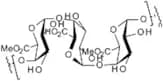
CAS:Pectins are regarded as linear chains of α-1,4-linked D-galacturonic acid, a homogalacturonan (pectic acid). In the products of commerce, the degree of methylation has a vital influence on the properties of pectin, especially the solubility and gel forming characteristics. Commercial high methoxy (HM) pectin has > 70% of hydroxyl groups methyl esterified. HM pectin forms gels in the presence of sucrose and for this reason it is used in jams often in combination with other fruits.
Pureza:(%) Min. 85%Cor e Forma:PowderRef: 3D-YH158538
Produto descontinuadoTopiramate didesacetal impurity
CAS:Topiramate didesacetal impurity is a Custom synthesis, Modification, Fluorination, Methylation, Monosaccharide, Synthetic compound. It is used in the production of saccharides and polysaccharides. The Carbohydrate has a variety of uses including food additives and sweeteners.
Fórmula:C6H13NO8SPureza:Min. 95%Peso molecular:259.24 g/molGal[2346Ac]b(1-3)GlcN3[46Bzd]-b-MP
Gal[2346Ac]b(1-3)GlcN3[46Bzd]-b-MP is a custom synthesis that has been modified with fluorination, methylation, and modification. The product contains a monosaccharide, oligosaccharide, saccharides, and complex carbohydrates.
Fórmula:C34H39N3O15Pureza:Min. 95%Peso molecular:729.68 g/molRef: 3D-OG60595
Produto descontinuadoAllyl 4,6-O-benzylidene-b-L-glucopyranoside
Allyl 4,6-O-benzylidene-b-L-glucopyranoside is a carbohydrate that is synthesized from allyl alcohol and glucose. It is a complex carbohydrate made up of two different saccharides. This product can be custom synthesized to meet your needs. Allyl 4,6-O-benzylidene-b-L-glucopyranoside has been modified by fluorination, methylation and glycosylation. It has the CAS number 133394-02-0 and can be synthesized at high purity levels.
Fórmula:C16H20O6Pureza:Min. 95%Peso molecular:308.33 g/molRef: 3D-MA45752
Produto descontinuadoAzo-Xyloglucan
Dyed and soluble azo-xyloglucan (tamarind) is used for the measurement of enzyme activity, research, biochemical enzyme assays and in vitro diagnostic analysis. It is a soluble chromogenic substrate for the assaying of endo-cellulase.
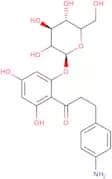
Pureza:Min. 95%4-Aminophlorizin
CAS:4-Aminophlorizin is a chemical compound that inhibits the uptake of azide by red blood cells. It has been shown to be effective against intestinal parasites and trophozoites. 4-Aminophlorizin is a potent inhibitor of the membrane system, which may be due to its interaction with the semenza, or membrane protein.
Fórmula:C21H25NO9Pureza:Min. 95%Peso molecular:435.42 g/molRef: 3D-MA17827
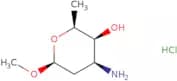
Produto descontinuadoMethyl b-L-daunosaminide HCl
CAS:Methyl b-L-daunosaminide HCl is a glycoconjugate that has been custom synthesized by our team. It is a complex carbohydrate that has been modified with glycosylation and methylation groups. Methyl b-L-daunosaminide HCl is an oligosaccharide that contains multiple saccharides linked together in a specific order. It is also fluorinated at the C4 position, which makes it more stable in water. Methyl b-L-daunosaminide HCl has high purity, making it suitable for use in the modification of other compounds or as a research tool for studying glycosylations.
Fórmula:C7H15NO3·HClPureza:Min. 95%Peso molecular:197.66 g/molRef: 3D-MM04967
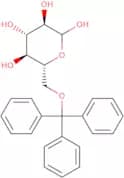
Produto descontinuado6-O-Trityl-D-glucose
CAS:6-O-Trityl-D-glucose is a sugar derivative that is synthesized by reacting 6,6'-dichloro-1,1'-binaphthyl with D-glucose. It has been used as a model for the stereospecific hydrolysis of polystyrene catalyzed by lipase. The reactive carbonyl group in the molecule allows for substitution reactions to occur at the hydroxyl groups and yields are dependent on the substituent effects.
Fórmula:C25H26O6Pureza:Min. 95%Cor e Forma:White To Off-White SolidPeso molecular:422.47 g/molRef: 3D-MT16885
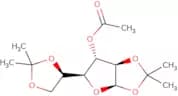
Produto descontinuado3-O-Acetyl-1,2:5,6-di-O-isopropylidene-a-D-galactofuranose
CAS:3-O-Acetyl-1,2:5,6-di-O-isopropylidene-a-D-galactofuranose is a synthetic modified oligosaccharide with a molecular weight of 591.3 g/mol. It has been shown to inhibit the growth of various bacterial strains in the lab and can be used as an antibiotic for bacterial infections. 3-O-Acetyl-1,2:5,6-di-O-isopropylidene galactofuranose is a monosaccharide composed of two acetyl groups and one isopropylidene group. Its glycosylation and methylation patterns are also known.
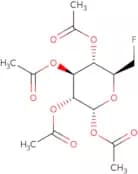
Fórmula:C14H22O7Pureza:Min. 95%Peso molecular:302.32 g/mol1,2,3,4-Tetra-O-acetyl-6-deoxy-6-fluoro-a-D-glucopyranose
CAS:1,2,3,4-Tetra-O-acetyl-6-deoxy-6-fluoro-a-D-glucopyranose is a synthetic sugar that contains four acetyl groups and one fluorine atom. It can be used for the synthesis of oligosaccharides and glycosylations. This product is custom synthesized according to customers' requirements, with high purity and good quality.
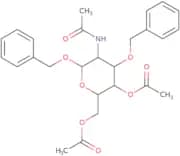
Fórmula:C14H19FO9Pureza:Min. 95%Peso molecular:350.29 g/mol1,3-o-Dibenzyl-N-acetyl-β-D-glucosamine 4,6-diacetate
CAS:Please enquire for more information about 1,3-o-Dibenzyl-N-acetyl-β-D-glucosamine 4,6-diacetate including the price, delivery time and more detailed product information at the technical inquiry form on this page
Fórmula:C26H31NO8Pureza:Min. 95%Peso molecular:485.5 g/molRef: 3D-QCA49323
Produto descontinuadoSennoside C
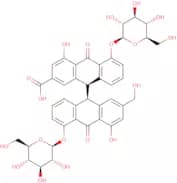
CAS:Sennoside C is a bioactive phytochemical extracted from the leaves of Eclipta prostrata. It has been shown to have anti-tumor and anti-inflammatory properties. Sennoside C has also been found to be effective in treating autoimmune diseases, including psoriasis and rheumatoid arthritis. Sennoside C is a low-energy compound that binds with fatty acids to form a bound form. This bound form can be hydrolyzed by sodium hydroxide solution to release free sennosides, which are anthraquinone glycosides that can be used for the treatment of skin conditions such as eczema and dermatitis.
Fórmula:C42H40O19Pureza:Min. 95%Cor e Forma:SolidPeso molecular:848.76 g/molRef: 3D-MS74107
Produto descontinuado2,3,4,6-Tetra-O-acetyl-b-D-glucopyranosyl-N-Fmoc-L-serine pentafluorophenyl ester
CAS:2,3,4,6-Tetra-O-acetyl-b-D-glucopyranosyl-N-Fmoc-L-serine pentafluorophenyl ester is a glycosylation agent that can be used in the synthesis of complex carbohydrates. It has been shown to react with various sugars and polysaccharides to form polymers. This chemical has also been used for the click modification of polymers and as a fluorinating agent in the synthesis of saccharides. 2,3,4,6-Tetra-O-acetyl-b-D-glucopyranosyl -N--Fmoc--L--serine pentafluorophenyl ester is soluble in water and organic solvents. It has been shown to be stable at high temperatures (up to 200°C) and is highly reactive.
Fórmula:C38F5H34NO14Pureza:Min. 95%Peso molecular:823.68 g/mol1,3:1,4 b-Glucotriose (A)
CAS:1,3:1,4 b-Glucotriose (A) is a custom synthesis that is available with a purity of ≥98%. It is a fluorinated polysaccharide with a complex structure that can be modified to produce different variations. The methylation status of the compound can be customized as well. This product is an oligosaccharide and polysaccharide sugar that contains one glucose unit. It has been synthesized from the monosaccharide sugar and it can be used for chemical modification or for research purposes.
Fórmula:C18H32O16Pureza:Min. 95%Cor e Forma:White PowderPeso molecular:504.44 g/molNGA5FB N-Glycan
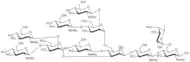
NGA5FB is a custom synthesis, modification, and fluorination of a glycan. It is a monosaccharide with a methylation and click modification on the terminal glucose. This glycan is synthesized with an oligosaccharide saccharide that contains a complex carbohydrate. The CAS No. for this product is 2279-97-0.
Pureza:Min. 95%Phenyl a-L-thiorhamnopyranoside
CAS:Phenyl a-L-thiorhamnopyranoside is a monosaccharide that is synthesized by the methylation of alpha-D-glucose. It is a custom synthesis that is used in the synthesis of oligosaccharides, polysaccharides, and sugar drugs. Phenyl a-L-thiorhamnopyranoside can be fluorinated to create an active form that has antibacterial activity. This compound has shown no signs of toxicity in animal studies and has been used as a food additive.
Fórmula:C12H16O4SPureza:Min. 95%Peso molecular:256.32 g/mol2-Bromoethyl a-L-fucopyranoside
This compound is a modification of the 2-bromoethyl a-L-fucopyranoside. It is an oligosaccharide that is a carbohydrate. It is made up of many monosaccharides, which are sugar molecules linked together. This modified carbohydrate has been synthesized from other carbohydrates and then fluorinated to make it more stable.
Pureza:Min. 95%3'-N-Glycolylneuraminyl-D-lactose sodium salt
3'-N-Glycolylneuraminyl-D-lactose sodium salt is a carbohydrate that has been modified by the addition of glycosylation, methylation and fluorination. It belongs to the group of complex carbohydrates and is a monosaccharide. 3'-N-Glycolylneuraminyl-D-lactose sodium salt can be used for the synthesis of oligosaccharides and polysaccharides, such as cellulose, chitin and glycogen. This product is high purity, custom synthesis and synthetic.
Pureza:Min. 95%(-)-Lyoniresinol 9'-O-glucoside
CAS:This chemical is a custom synthesis of (-)-Lyoniresinol 9'-O-glucoside. The chemical is a modification of (-)-Lyoniresinol 9'-O-glucoside and fluorinated at the C2 position. It is also methylated on the C3 position. The chemical is synthesized by click chemistry, which involves the use of copper(II) ions as catalysts to generate covalent bonds between two molecules. This chemical has been shown to be an oligosaccharide with saccharide chains that are linked together by glycosylation. There are six sugar residues in this compound: glucose, galactose, rhamnose, xylose, glucuronic acid, and mannitol. This compound has CAS number 143236-02-6 and molecular weight of 881.5 g/mol (CAS No.).
Fórmula:C28H38O13Pureza:Min. 95%Peso molecular:582.59 g/molD-Ribose-2,3,4,5-13C4
CAS:D-Ribose-2,3,4,5-13C4 is a complex carbohydrate with saccharide units. It is synthesized by the chemical modification of D-ribose. This product can be used to modify or methylate glucose and other carbohydrates. It has been shown to inhibit the formation of amyloid plaques in Alzheimer's disease, which may be due to its ability to reduce nitric oxide and reactive oxygen species levels. The purity of this product is at least 98%.
Fórmula:C5H10O5Pureza:Min. 95%Peso molecular:154.1 g/molRef: 3D-DUA50623
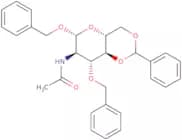
Produto descontinuado2-Acetamido-1,3-di-O-benzyl-4,6-O-benzylidene-2-deoxy-b-D-glucopyranoside
CAS:2-Acetamido-1,3-di-O-benzyl-4,6-O-benzylidene-2-deoxy-b-D-glucopyranoside is a modification of a carbohydrate. It is a complex carbohydrate that has been synthesized by custom synthesis. It is an oligosaccharide with high purity and monosaccharides methylated at the hydroxyl group. The glycosylation and polysaccharide have been synthesized with fluorination and saccharides.Fórmula:C29H31NO6Pureza:Min. 95%Peso molecular:489.56 g/molRef: 3D-MA06754
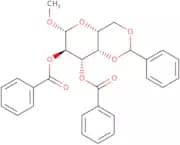
Produto descontinuadoMethyl 2,3-di-O-benzoyl-4,6-O-benzylidene-b-D-galactopyranoside
CAS:Methyl 2,3-di-O-benzoyl-4,6-O-benzylidene-b-D-galactopyranoside is a custom synthesis that belongs to the class of complex carbohydrates. This compound is an oligosaccharide or a polysaccharide that has been modified by methylation and glycosylation. The modification of this saccharide with methyl groups allows for fluorination which is a click modification. Methyl 2,3-di-O-benzoyl-4,6-O-benzylidene b -D galactopyranoside is synthesized via glycosylation followed by fluorination. This product can be used as a research chemical or in other applications.
Fórmula:C28H26O8Pureza:Min. 95%Peso molecular:490.5 g/mol(2R,3R,4S,5R,6S)-3,4,5-Trihydroxy-2-hydroxymethyl-7,9-diaza-1-oxa-spiro[4,5]decane-10-one-8-thione
CAS:(2R,3R,4S,5R,6S)-3,4,5-Trihydroxy-2-hydroxymethyl-7,9-diaza-1-oxa-spiro[4,5]decane-10-one-8-thione is a custom synthesis of a polysaccharide. It has been modified to include fluorination and methylation. The monosaccharides present are glucose and galactose. This polysaccharide also has a saccharide linkage to an oligosaccharide that contains glycosylation sites for sugar groups.
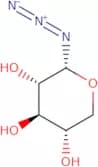
Fórmula:C8H12N2O6SPureza:Min. 95%Peso molecular:264.26 g/mola-D-Xylopyranosyl azide
CAS:a-D-Xylopyranosyl azide is a sugar that can be synthesized from the reaction of 1,2-dichloroethane with 2,3,4,6-tetra-O-acetyl-a-D-xylopyranose. This compound has a high purity and can be custom synthesized to order. It is used in glycosylation reactions to modify saccharides and oligosaccharides. It has been shown to be useful for click modification and fluorination reactions.
Pureza:Min. 95%Ref: 3D-MX44941
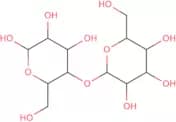
Produto descontinuadoMaltose solution
CAS:The maltose solution we offer is a 20% solution in water and of high purity and can be customized to meet your needs.
Fórmula:C12H22O11Pureza:Min. 95%Peso molecular:342.3 g/molNefopam glucuronide
Nefopam is a compound that has been used as an analgesic and antipyretic. It is structurally related to the benzodiazepine class of drugs, but is not chemically equivalent to any other known drug. Nefopam has a low therapeutic index and can cause severe toxic effects in overdose. The most common adverse effects of nefopam are dizziness, drowsiness, headache, nausea and vomiting. An overdose can lead to death by respiratory paralysis or cardiac arrest.
Fórmula:C23H27NO7Pureza:Min. 95%Peso molecular:429.46 g/molRef: 3D-MN46697
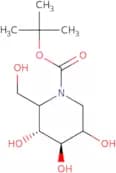
Produto descontinuadoN-Boc-1,5-imino-D-glucitol
CAS:N-Boc-1,5-imino-D-glucitol is a complex carbohydrate that is synthesized by the N-Boc protection group. It is an oligosaccharide with a molecular weight of about 190 daltons and it can be modified at the C1 position to produce various saccharides. N-Boc-1,5-imino-D-glucitol has been shown to be effective as a glycosylation agent for protein modification and for its ability to form stable complexes with other complex carbohydrates. This compound has also been used in the synthesis of polysaccharides and as a fluorination reagent.
Fórmula:C11H21NO6Pureza:Min. 95%Peso molecular:263.29 g/molRef: 3D-MB16638
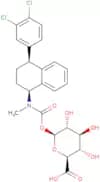
Produto descontinuadoSertraline carbamoyl glucuronide
CAS:Sertraline is a selective serotonin reuptake inhibitor (SSRI) that is used primarily in the treatment of depression and anxiety. It inhibits the serotonin transporter protein, making more serotonin available for binding to postsynaptic receptors. Sertraline also has a minor inhibitory effect on norepinephrine and dopamine reuptake, but its primary function is as a selective serotonin reuptake inhibitor. The major metabolite of sertraline is sertraline carbamoyl glucuronide, which is formed through glucuronidation by UGT2B7. This metabolite has been found to be bifurcated with one half being excreted in urine and the other half being excreted in faeces. The half that undergoes urinary excretion has been shown to have a half-life of 24 hours whereas the other half has a much shorter half-life of 2 hours. Carbamoylation of sertraline may
Fórmula:C24H25Cl2NO8Pureza:Min. 95%Peso molecular:526.36 g/molRef: 3D-MS16854
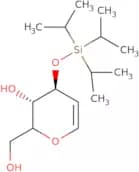
Produto descontinuado3-O-Triisopropylsilyl-D-galactal
3-O-Triisopropylsilyl-D-galactal is a carbohydrate that belongs to the group of sugars. It is an oligosaccharide with a complex structure, which is synthesized from D-galactal by treatment with triisopropylsilyl chloride in pyridine. 3-O-Triisopropylsilyl-D-galactal is used as a reagent for the methylation and glycosylation of proteins and nucleic acids. This compound has been shown to inhibit the enzyme carboxypeptidase A, which may be due to its ability to act as an inhibitor of carbohydrate binding. 3-O-Triisopropylsilyl-D-galactal has also been shown to bind specifically to erythrocyte membranes, suggesting that it could be used as a potential diagnostic marker for glycogen storage diseases.
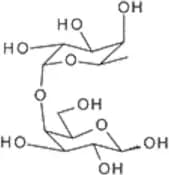
Fórmula:C15H30O4SiPureza:Min. 95%Peso molecular:302.48 g/mol4-O-(α-L-Fucopyranosyl)-D-galactopyranose
CAS:4-O-(a-L-Fucopyranosyl)-D-galactopyranose is a glycosidic sugar that has an alpha-1,3 linkage and a galactose residue. The sequence of this sugar is the same as that of D-galactose. 4-O-(a-L-Fucopyranosyl)-D-galactopyranose belongs to the group of carbohydrates. It is found in plants, animals, or fungi and can be used as a precursor for the synthesis of many other compounds.
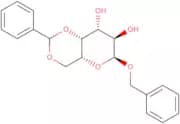
Fórmula:C12H22O10Pureza:Min. 95%Cor e Forma:PowderPeso molecular:326.3 g/molBenzyl 4,6-O-benzylidene-a-D-galactopyranoside
CAS:4,6-O-Benzylidene-a-D-galactopyranoside is an artificial sweetener that has a high purity and can be custom synthesized. This compound is also known as an oligosaccharide or complex carbohydrate. It is a member of the saccharide family, which includes monosaccharides and disaccharides. 4,6-O-Benzylidene-a-D-galactopyranoside is a sugar that has been modified by glycosylation and methylation. This product has CAS No. 57783-86-5 and can be found in the Glycosides section of the Chemical Directory.
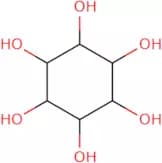
Fórmula:C20H22O6Pureza:Min. 95%Peso molecular:358.39 g/molMyo-inositol-d6
CAS:Myo-inositol-d6 is a stable isotope of myo-inositol. It is used to monitor the biosynthesis of myo-inositol in yeast cells. Myo-inositol is a carbohydrate that has regulatory functions in yeast cells. Myo-inositol-d6 can be used as an extracellular bioassay for determining the uptake and intracellular distribution of myo-inositol in mammalian cells.
Fórmula:C6H12O6Pureza:Min. 95%Cor e Forma:PowderPeso molecular:186.19 g/molRhamnolipids C12-C12
CAS:rhamose based 'green' surfactant
Fórmula:C30H56O9Pureza:Min. 95%Peso molecular:560.77 g/mol1-Deoxy-L-ribose
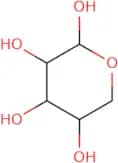
CAS:1-Deoxy-L-ribose is a metabolite of acetone. It is a monosaccharide that contains one less oxygen atom than its parent compound. 1-Deoxy-L-ribose is found in the urine and blood of humans and animals. In animals, it can be synthesized from glucose by the enzyme ribose 1-phosphate reductase. This reaction requires an energy source such as ATP or NADH to reduce ribose 1,5-bisphosphate to 1,4-dihydroxyacetone phosphate, which then undergoes spontaneous dehydration to form 1-deoxy-D-ribose.
Fórmula:C5H10O4Pureza:Min. 95%Peso molecular:134.13 g/molFructose-L-tryptophan
CAS:Please enquire for more information about Fructose-L-tryptophan including the price, delivery time and more detailed product information at the technical inquiry form on this page
Fórmula:C17H22N2O7Pureza:Min. 95%Peso molecular:366.37 g/molRef: 3D-MR58621
Produto descontinuadoDecyl glucose neopentyl glycol
CAS:Decyl glucose neopentyl glycol is a molecule that is commonly used in cell-based assays to measure the hydrogen peroxide release by cells. It is also used to transport hydrogen peroxide, which is a reactive oxidative species, intracellularly and extracellularly. Decyl glucose neopentyl glycol has been shown to have a range of different isoforms in cellular systems. This allows it to be used as an effective fluorescent marker for the detection of hydrogen peroxide mediated events.
Fórmula:C35H68O12Pureza:Min. 95%Peso molecular:680.91 g/molMethyl b-D-thioxylopyranoside
CAS:Methyl b-D-thioxylopyranoside is a synthetic sugar that is used in the synthesis of saccharides and oligosaccharides. It is also used to modify saccharides, such as glucosamine, by adding methyl groups to the sugar's hydroxyl group. Methyl b-D-thioxylopyranoside can be used for glycans with high purity and high yield. This product does not contain any other substances except for water and ethanol. The chemical formula for this product is C6H8O6.
Pureza:Min. 95%Undecyl b-D-maltopyranoside
CAS:Undecyl b-D-maltopyranoside is a cell culture reagent that belongs to the group of monomers. It is used in the synthesis of dodecyl maltoside and is also used as a substrate for bacterial enzymes. Undecyl b-D-maltopyranoside has been shown to inhibit the activity of leukotriene A4 hydrolase, an enzyme involved in the metabolism of leukotrienes. This product has been shown to be effective in chromatographic separation of metal ions from other components. Undecyl b-D-maltopyranoside can also be used for solubilizing peptides and proteins, including those that are neutral or have a low pH. This product is also used as a substrate for recombinant monoclonal antibodies and viral coat proteins.
Fórmula:C23H44O11Pureza:Min. 95%Cor e Forma:PowderPeso molecular:496.59 g/molRef: 3D-DU05738
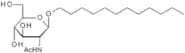
Produto descontinuadoDodecyl 2-acetamido-2-deoxy-b-D-glucopyranoside
CAS:Dodecyl 2-acetamido-2-deoxy-b-D-glucopyranoside is a synthetic glycosylate which has the potential to be used for the synthesis of various oligosaccharides and polysaccharides. It has a high purity and can be modified with various functional groups such as fluorination, methylation, acetylation, and click chemistry. Dodecyl 2-acetamido-2-deoxy-b-D-glucopyranoside is currently being researched as a treatment for cancer.
Fórmula:C20H39NO6Pureza:Min. 95%Peso molecular:389.53 g/molMaltotriose
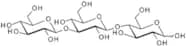
CAS:Shortest chain oligosaccharide that can be classified as a maltodextrin. A component of liquid glucose (a commercial sweetener composed of glucose, maltose, maltotriose and maltotetrose).
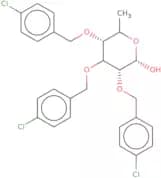
Fórmula:C18H32O16Pureza:Min. 90.0 Area-%Peso molecular:504.45 g/mol2,3,5-Tri-O-p-chlorobenzyl-L-fucopyranoside
CAS:2,3,5-Tri-O-p-chlorobenzyl-L-fucopyranoside is a modified sugar and an effective inhibitor of the glycosidase enzymes. It has been shown to inhibit the synthesis of glycogen in vitro. 2,3,5-Tri-O-p-chlorobenzyl-L-fucopyranoside is a major component of commercially available agarose gel electrophoresis buffers and is also used for modification of proteins by click chemistry. The compound can be custom synthesised with a high degree of purity and can be fluorinated for use in mass spectrometry.
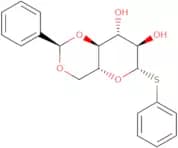
Fórmula:C27H27Cl3O5Pureza:Min. 95%Peso molecular:537.86 g/molPhenyl 4,6-O-benzylidene-β-D-thioglucopyranoside
CAS:Phenyl 4,6-O-benzylidene-b-D-thioglucopyranoside is a biodegradable compound that has been shown to be effective in the treatment of cancer. This agent is synthesized by the reaction of c1-6 alkyl with benzaldehyde and thioglycolic acid in the presence of sodium borohydride. Phenyl 4,6-O-benzylidene-b-D-thioglucopyranoside emits light when it interacts with oxygen. This compound can be used for the treatment of tumors due to its ability to inhibit the proliferation of cancer cells. Phenyl 4,6-O-benzylidene-b-D-thioglucopyranoside has also been shown to reduce cardiac injury and improve blood pressure by inhibiting tyrosine kinase and increasing paracrine activity.Fórmula:C19H20O5SPureza:Min. 95%Cor e Forma:PowderPeso molecular:360.42 g/molRef: 3D-MP04366
Produto descontinuado





![Gal[2346Ac]b(1-3)GlcN3[46Bzd]-b-MP](/_next/image/?url=https%3A%2Fstatic.cymitquimica.com%2Fproducts%2F3D%2Fthumb-webp%2FOG60595.webp&w=3840&q=75)





![(2R,3R,4S,5R,6S)-3,4,5-Trihydroxy-2-hydroxymethyl-7,9-diaza-1-oxa-spiro[4,5]decane-10-one-8-thione](/_next/image/?url=https%3A%2Fstatic.cymitquimica.com%2Fproducts%2F3D%2Fthumb-webp%2FMT01909.webp&w=3840&q=75)