Glicociência
A glicociência é o estudo dos carboidratos e seus derivados, bem como das interações e funções biológicas em que participam. Este campo de pesquisa é crucial para compreender uma ampla variedade de processos biológicos, incluindo o reconhecimento celular, a sinalização, a resposta imune e o desenvolvimento de doenças. A glicociência tem aplicações importantes na biotecnologia, na medicina e no desenvolvimento de novos medicamentos e terapias. Na CymitQuimica, oferecemos uma ampla seleção de produtos de alta qualidade e pureza para pesquisa em glicociência. Nosso catálogo inclui monossacarídeos, oligossacarídeos, polissacarídeos, glicoconjugados e reagentes específicos, projetados para apoiar os pesquisadores em seus estudos sobre a estrutura, função e aplicações dos carboidratos em sistemas biológicos. Esses recursos são destinados a facilitar descobertas científicas e aplicações práticas em diversas áreas das biociências e da medicina.
Subcategorias de "Glicociência"
- Amino açúcares(108 produtos)
- Anticorpos Glico-Relacionados(282 produtos)
- Glicolípidos(46 produtos)
- Glicosaminoglicanos (GAGs)(55 produtos)
- Glicosídeos(419 produtos)
- Monossacáridos(6.624 produtos)
- Oligossacarídeos(3.682 produtos)
- Polissacáridos(503 produtos)
Foram encontrados 11046 produtos de "Glicociência"
Ordenar por
Pureza (%)
0
100
|
0
|
50
|
90
|
95
|
100
Monosialyllacto-N-hexaose
<p>Monosialyllacto-N-hexaose is a high purity, custom synthesis sugar that belongs to the group of oligosaccharides. This carbohydrate is modified with fluorination and glycosylation, which are Click modifications. Monosialyllacto-N-hexaose has a CAS number of 68638-04-3. This product is available for purchase in bulk quantities.</p>Fórmula:C51H85N3O39Pureza:Min. 95%Peso molecular:1,364.22 g/mol2,3:4,5-Di-O-isopropylidene-D-arabinose
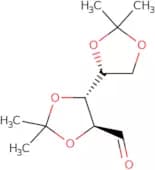
CAS:Synthetic building blockFórmula:C11H18O5Pureza:Min. 95%Cor e Forma:Colorless PowderPeso molecular:230.26 g/molUDP-GalNAc disodium salt
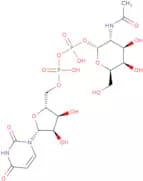
CAS:Substrate for N-acetylgalactosaminyltransferasesFórmula:C17H25N3Na2O17P2Pureza:Area-% Min. 95 Area-%Cor e Forma:White PowderPeso molecular:651.32 g/molBlood group H type II trisaccharide
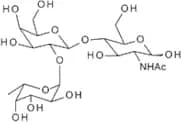
CAS:Core antigen fragment in ABO blood group systemFórmula:C20H35NO15Pureza:Min. 95%Cor e Forma:White PowderPeso molecular:529.5 g/mol1,6:3,4-Di-O-anhydro-2-O-benzyl-b-D-altropyranose
CAS:1,6:3,4-Di-O-anhydro-2-O-benzyl-b-D-altropyranose is a custom synthesis of a high purity glycosylation sugar. It is synthesized by methylation and click modification of the starting material 1,6:3,4-Di-O-(2′,3′,4′,5′)-tri-O-(benzyl)b D -altropyranose. The product is a complex carbohydrate that has been shown to be effective in inhibiting the growth of bacteria.Pureza:Min. 95%Allyl b-D-glucopyranoside
CAS:<p>Allyl b-D-glucopyranoside is a sweet and stable sugar that is used in the production of food and pharmaceutical products. It is sourced from corn starch or rice starch. Allyl b-D-glucopyranoside has been shown to be more efficient than chloride when added to tandospirone citrate, a herbal medicine, for the prevention of gastric ulcers. This sugar has also been used in clinical use as an additive in medicines such as alginic acid.</p>Fórmula:C9H16O6Pureza:Min. 98 Area-%Cor e Forma:White Off-White PowderPeso molecular:220.22 g/molMaltodextrin, dextrose equivalent 10-15
CAS:Ex starch-partial hydrolysis,food ingredient, moderatly sweet, easily digestedCor e Forma:Powder2-Chloro-4-nitrophenyl 2-azido-2-deoxy-b-D-galactopyranoside
CAS:<p>2-Chloro-4-nitrophenyl 2-azido-2-deoxy-b-D-galactopyranoside is a synthetic compound. It has been shown to be an inhibitor of glycosylation by blocking the terminal step of glycosylation, which is the formation of a covalent bond between a sugar and an amino acid. The compound has been used in click chemistry to methylate saccharides.</p>Fórmula:C12H13ClN4O7Pureza:Min. 95%Peso molecular:360.71 g/molNAcDGJ
<p>NAcDGJ is a glycosylation-derived, synthetic, complex carbohydrate with methylation, click modification, fluorination, saccharide and sugar modifications. NAcDGJ has shown to have anticancer activity in vitro and in vivo. This compound can be custom synthesized with high purity and CAS number.</p>Pureza:Min. 95%D-Celloheptaose
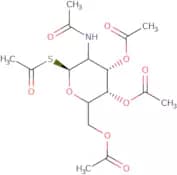
CAS:<p>D-Celloheptaose is a modified glycosylated oligosaccharide. It is synthesized by the methylation of D-cellotriose with 3-aminopropyl-trimethoxysilane and the subsequent reaction with bromoethanol. The product is purified by fractional crystallization from methanol to give a white crystalline solid. This product has CAS No. 52646-27-2 and is soluble in methanol, ethanol, water, acetone and chloroform.</p>Fórmula:C42H72O36Pureza:Min. 95 Area-%Cor e Forma:PowderPeso molecular:1,153.02 g/mol2-Acetamido-1,3,4,6-tetra-O-acetyl-2-deoxy-β-D-thioglucopyranose
CAS:2-Acetamido-1,3,4,6-tetra-O-acetyl-2-deoxy-β-D-thioglucopyranose is a synthetic monosaccharide that belongs to the group of complex carbohydrates. It has CAS No. 10043-46-6 and is used in glycosylation reactions. The fluorination of the sugar can be done by using a Click modification or methylation reaction. This product has been custom synthesized and can be ordered with high purity.Fórmula:C16H23NO9SPureza:Min. 95%Cor e Forma:Off-White PowderPeso molecular:405.42 g/molUDP-6-azido-6-deoxy-D-galactose triethylammonium
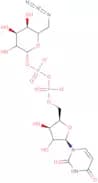
CAS:UDP-6-azido-6-deoxy-D-galactose triethylammonium salt (UDP-6AzGal) is an analogue of UDP-Galactose, where the primary hydroxyl group is replaced with an azide. UDP-6AzGal was confirmed to act as a galactotransferase substrate after it was used in an in vitro glycosylation reaction on lysates from HEK 293TH cells overexpressing ceramide galactosyltransferase. UDP-6AzGal was also used as a label to visualise glycosylation patterns in developing zebrafish embryos.Fórmula:C15H21N5O16P2•(C6H16N)2Pureza:Min. 95%Cor e Forma:Clear LiquidPeso molecular:793.69 g/molPullulan
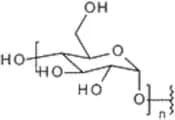
CAS:<p>Pullulan is a polysaccharide that is made up of D-glucose units linked in a beta-1,6 configuration. Pullulan has been used as a model system to study the molecular mechanisms of intramolecular hydrogen transfer reactions. The process optimization of pullulan production was studied using skin cells and structural analysis. This polymer is also used in food hydrocolloids, where it can be used to control the phase transition temperature. Pullulan has also been shown to have anti-angiogenic effects on liver cells and water vapor absorption properties.</p>Fórmula:(C6H12O5)n1,2,3,4-Tetra-O-acetyl-6-deoxy-6-fluoro-D-galactopyranose
CAS:<p>1,2,3,4-Tetra-O-acetyl-6-deoxy-6-fluoro-D-galactopyranose is a synthetic sugar that is used in glycosylation reactions. It is a monosaccharide that was fluorinated to form a glycoside with the 6′ position of the hexose ring. This product has been shown to be useful for click modification of proteins and other complex carbohydrates. It can be used in methylation and monosaccharide synthesis.</p>Fórmula:C14H19FO9Pureza:Min. 95%Peso molecular:350.29 g/mol(2S, 3R, 4R, 5S) -2- (Hydroxymethyl) - 3, 4, 5- piperidinetriol
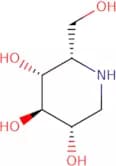
CAS:<p>(2S, 3R, 4R, 5S) -2- (Hydroxymethyl) - 3, 4, 5- piperidinetriol is a naturally occurring metabolite of the amino acid tryptophan. It is a structural analog of glucosylceramide and has been shown to have inhibitory properties against β-glucosidase. Structural studies have shown that this compound has similar stereoselective properties as the natural product glucosylceramide. This compound was also found to be a competitive inhibitor of amines and a non-competitive inhibitor of β-glucosidase.</p>Fórmula:C6H13NO4Pureza:Min. 95%Peso molecular:163.17 g/molLacto-N-difucohexaose IV
<p>Lacto-N-difucohexaose IV is a pentasaccharide with a lacto-n-difucohexaose backbone that has been shown to have inhibitory activities against human red blood cells. This pentasaccharide is a glycosaminoglycan, which is a type of carbohydrate that consists of an oligosaccharide and protein. Lacto-N-difucohexaose IV specifically binds to the antigen on the surface of human red blood cells, inhibiting their proliferation. The pentasaccharide is also known as Hansson's hapten or Hapten IV. The pentasaccharides are found in group O blood and are not found in groups A, B, or AB.</p>Fórmula:C38H65NO29Pureza:Min. 95%Peso molecular:999.91 g/mol2,3,5-Tri-O-benzyl-1-O-(4-nitrobenzoyl)-D-arabinofuranose
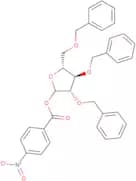
CAS:2,3,5-Tri-O-benzyl-1-O-(4-nitrobenzoyl)-D-arabinofuranose is an organic compound that belongs to the group of furan derivatives. The configuration of this molecule was determined to be (2S,3S) by the use of stereoselective synthesis. It can be synthesized from a benzaldehyde and a ribofuranosyl chloride with a yield of about 95%. This compound has been shown to react with azides in a catalytic transfer reaction yielding yields of up to 100%.Fórmula:C33H31NO8Pureza:Min. 95%Cor e Forma:PowderPeso molecular:569.6 g/mol1,4-β-D-Xylotriitol
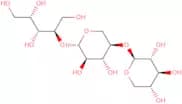
CAS:<p>1,4-B-D-Xylotriitol is a synthetic carbohydrate that has been modified with fluorine. The use of the methylation reaction enables the synthesis of oligosaccharides with up to six glucose units. This product is available in high purity and can be custom synthesized to meet specific needs. 1,4-B-D-Xylotriitol is used for glycosylation reactions and may be useful for modifying carbohydrates and saccharides.</p>Fórmula:C15H28O13Pureza:Min. 95%Peso molecular:416.38 g/molCalcium-D-arabonate
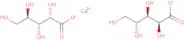
CAS:<p>Calcium-D-arabonate is a fatty acid that is used as a functional ingredient in the food industry. It has been shown to increase the rate of reactions, such as glycosidic bond cleavage and polymerization, by acting as an oxidation catalyst. This product also has a high molecular weight and can be used to modify the structure of polymers. Calcium-D-arabonate is often used in model systems because it reacts with other substances at a pH optimum of 6.0-7.5.</p>Fórmula:C5H9O6CaPureza:Min. 98%Cor e Forma:White PowderPeso molecular:185.16 g/molGD1a-Ganglioside sodium
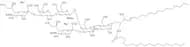
CAS:GD1a (shown as sodium salt) is one of the major gangliosides in neuronal and glial membranes. It has a core tetrasaccharide structure (Galβ1,3GalNAcβ1,4Galβ1,4Glc) with sialic acids linked α2,3/α2,8 to the inner galactose residue, α2,3 to the outer galactose residue and ceramide linked β to position 1 on the reducing terminal glucose residue (Ledeen, 2009). It interacts with myelin-associated glycoprotein (MAG) and is essential for long-term axon-myelin stability. It plays a role in viral infection as it is a receptor for viral glycoproteins in rotavirus and paramyxovirus 1. The hexasaccharide GD1a moiety was also found on a glycoprotein that acts as a receptor for adenovirus type 37. GD1a ganglioside also interacts with botulinum neurotoxin and is crucial for its entry into cells (Kolter, 2012).Fórmula:C84H148N4O39·xNaPureza:Min. 95%Cor e Forma:White PowderPeso molecular:1,838.08 g/molColominic acid sodium salt
CAS:<p>Colominic acid (polysialic acid) is a linear small polysaccharide containing α-2,8-linked sialic acid (neurominic acid) with (n = 8 to >100) residues. Polysialic acid is an unusual post translational modification polysaccharide that is widely expressed in nature in bacterial capsules, fish, sea urchin eggs, embryonic tissues, amphibians, animal and human brains, and in a various cancers. The major carrier of polysialic acids in mammals is the neural cell adhesion molecule (a glycoprotein that belongs to the immunoglobulin superfamily).Average molecular weight for this product is :50000-60000</p>Pureza:Min. 98 Area-%Cor e Forma:White Off-White PowderMethyl β-L-arabinopyranoside
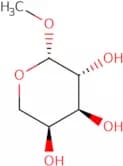
CAS:<p>Methyl β-L-arabinopyranoside is a stereochemically pure monosaccharide that has been used to calibrate and quantify the conformational, stereochemical, and spectrometric methods. Methyl β-L-arabinopyranoside has a conformation that is restricted by the presence of an α-hydroxyl group at C2. The chloride ion can be used to monitor this conformation. The diameter of methyl β-L-arabinopyranoside can be measured with a micropipette and monitored using an aerosol detector. Methyl β-L-arabinopyranoside can also be quantified by mass spectrometry or spectrophotometry. The conformational, stereochemical, and spectrometric methods have been calibrated using methyl β-L-arabinopyranoside as a standard to determine their accuracy in measuring the size of other molecules.</p>Fórmula:C6H12O5Pureza:Min. 95%Cor e Forma:White Off-White PowderPeso molecular:164.16 g/mol3,4:5,6-Di-O-Isopropylidene-7-deoxy-D- glycero- L- gulo- heptitol
3,4:5,6-Di-O-Isopropylidene-7-deoxy-D-glycero-L-guloheptitol is a carbohydrate that is a modification of the sugar glucose. It is also an oligosaccharide composed of three monosaccharides and one disaccharide. 3,4:5,6-Di-O-Isopropylidene-7-deoxy-Dglycero--Lguloheptitol has CAS No. 58418–92–1. This product can be custom synthesized to meet your needs and is available in high purity. The methylation and glycosylation are two click modifications that can be done to this product.Pureza:Min. 95%(3R,4R)-2-Methyl-2,3,4,5-tetrahydroxypentane
<p>(3R,4R)-2-Methyl-2,3,4,5-tetrahydroxypentane is a synthetic compound. It is a glycosylation reagent that can be used to modify the sugar moiety in oligosaccharides and complex carbohydrates. (3R,4R)-2-Methyl-2,3,4,5-tetrahydroxypentane is also used for fluorination reactions and click chemistry modifications. This product has been shown to have high purity and can be custom synthesized. The CAS number for this compound is 36610-02-6.</p>Pureza:Min. 95%N-Acetylneuraminic acid dimer disodium salt
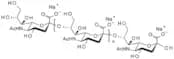
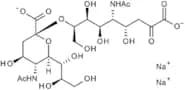
CAS:<p>Intermediate in synthesis of ganglioside GD2</p>Fórmula:C22H34N2O17·2NaPureza:Min. 95 Area-%Cor e Forma:White PowderPeso molecular:644.49 g/mol2,3,4,6-Tetra-O-acetyl-a-D-glucopyranosyl azide
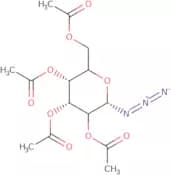
CAS:<p>This compound is a custom synthesis. It is used to synthesize complex carbohydrates, such as oligosaccharides and polysaccharides. This product has been modified with methylation and glycosylation. It is a carbohydrate that is classified as a saccharide. The CAS number for this product is 20379-61-7. This product has high purity, with the purity being over 99%. This product has been fluorinated and synthesized using Click chemistry.</p>Fórmula:C14H19N3O9Pureza:Min. 95%Cor e Forma:PowderPeso molecular:373.32 g/molMethyl 2-acetamido-2-deoxy-a-D-galactopyranoside
CAS:Methyl 2-acetamido-2-deoxy-a-D-galactopyranoside is a metabolite of the drug 6-fluoro-3-indoxyl-beta-D-galactopyranoside. It has been shown to induce apoptosis in cells, which is mediated by the activation of caspase 3 and cleavage of poly(ADP)ribose polymerase (PARP). Methyl 2-acetamido-2-deoxy-a-D-galactopyranoside also induces transcriptional regulation and decreases the expression of proteins that are involved in cell proliferation. These effects have been seen in clinical pathology, including cancer and infectious diseases. This metabolite binds to mouse monoclonal antibodies, which are used as a diagnostic tool for several types of cancer. The electrochemical impedance spectroscopy technique has demonstrated that methyl 2 acetamido 2 deoxy a D galactopyranoside inhibitsFórmula:C9H17NO6Pureza:Min. 98 Area-%Cor e Forma:White PowderPeso molecular:235.23 g/mol3,5-Di-O-lauryl-D-xylofuranose
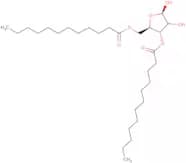
CAS:<p>3,5-Di-O-lauryl-D-xylofuranose is a custom synthesized monosaccharide that is used as a raw material for the synthesis of complex carbohydrates. It has been modified with fluorine and methyl groups to produce 3,5-di-O-lauryl-D-xylofuranose. This compound can be used in the production of polysaccharides or saccharides. The chemical name for this compound is 3,5-di-O-[(9Z)-hexadecenyl]-2-(1E,3E)-dioxaheptalene.</p>Fórmula:C29H54O7Pureza:Min. 95%Peso molecular:514.73 g/molAllyl 2,3,4-tri-O-acetyl-b-D-galacturonide methyl ester
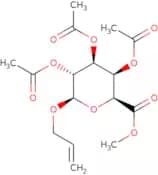
CAS:<p>Allyl 2,3,4-tri-O-acetyl-b-D-galacturonide methyl ester is a synthetic monosaccharide that is custom synthesized for use in modifying complex carbohydrates. It has the CAS number 130506-36-4 and can be used in the synthesis of oligosaccharides and polysaccharides. This chemical may be fluorinated to give a fluorinated carbohydrate, which may then be methylated to produce an allyl 2,3,4-tri-O-acetyl-b-D-galacturonide methyl ester. Allyl 2,3,4-tri-O-acetyl--b--D--galacturonide methyl ester is also known as Methylated galacturonic acid or 2,3,4 Triacetate D Galacturonic Acid Methyl Ester.</p>Fórmula:C16H22O10Pureza:Min. 95%Cor e Forma:White to off-white solid.Peso molecular:374.34 g/molD-Tagatose
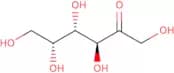
CAS:<p>Low-calorie sweetener; additive in detergents, cosmetics, and pharmaceuticals</p>Fórmula:C6H12O6Pureza:Min. 99 Area-%Cor e Forma:PowderPeso molecular:180.16 g/mol2-Azidomethyl-2-deoxy-3,4-O-isopropylidene-4-C-methyl-L-ribono-1.5-lactone
<p>2-Azidomethyl-2-deoxy-3,4-O-isopropylidene-4-C-methyl-L-ribono-1.5-lactone is a modification of the sugar molecule ribose. It is synthesized by the methylation of 2,6 anhydroglucose with formaldehyde and sodium azide in methanol. This modification prevents the formation of cyclic hemiacetals and epimerization reactions that may occur during glycosylation or polysaccharide formation. 2A diol has been used as a model for oligosaccharides, carbohydrates, and complex carbohydrates. It is highly purified, has a CAS number, and can be used in custom synthesis projects.</p>Pureza:Min. 95%2,3,4,6-Tetra-O-acetyl-a-D-galactopyranosyl bromide - 2% CaCO3
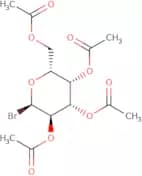
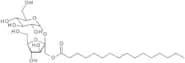
CAS:Donor for Koenigs-Knorr type galactosylation and other anomeric substitutionsFórmula:C14H19BrO9Pureza:One SpotCor e Forma:PowderPeso molecular:411.2 g/molSucrose palmitate
CAS:The ‘tallowate’ esters are probably the best known derivatives of sucrose and many attempts have been made to commercialise them in order to exploit their excellent surfactant functionalities. The most functional products are the mono- and diesters of the tallow acids (stearic, palmitic, oleic) with hydrophile-lipophile balance (HLB) values that lend themselves to surfactant applications in foods and cosmetics. They also have other uses, for example in coating fruits with a semipermeable membrane that acts as a preservative. Manufacturing economics have prevented these products from mass production and they remain in niche applications.Fórmula:C28H52O12Pureza:(%) Min. 90.0%Cor e Forma:White PowderPeso molecular:508.72 g/mol2-Amino-4-hydroxy-1,4-butanedioic acid
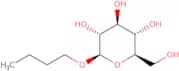
2-Amino-4-hydroxy-1,4-butanedioic acid is a synthetic monosaccharide with the chemical formula HOOCCH(NH)COH. It has an empirical formula of CHNO and a molecular weight of 146.14 g mol−1. 2-Amino-4-hydroxy-1,4-butanedioic acid is soluble in water and has no odor or taste. This product can be used for Glycosylation, Oligosaccharide, sugar, Synthetic, Fluorination, Custom synthesis, Methylation, Monosaccharide, Polysaccharide and saccharide modification. 2-Amino-4 hydroxy butanedioic acid can also be used as a building block in Click modification reactions.Fórmula:C4H7NO5Pureza:Min. 95%Peso molecular:149.1 g/molButyl b-D-glucopyranoside
CAS:Butyl b-D-glucopyranoside is a fluorinated monosaccharide that is used in the synthesis of oligosaccharides and polysaccharides. It is also used as a synthetic sugar for glycosylation, methylation, and click modification reactions. Butyl b-D-glucopyranoside has been shown to be stable under both acidic and basic conditions and has a CAS number of 5391-18-4.Fórmula:C10H20O6Pureza:Min. 95%Cor e Forma:White PowderPeso molecular:236.26 g/molλ-Carrageenan
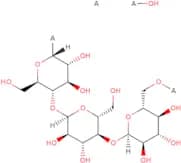
CAS:Lambda-Carrageenan is a non-gelling sulphated galactan extracted from red seaweed (typically Gigartina stellata and Chondrus crispus). The structure of all carrageenans consists of a strictly alternating masked repeating unit of 1,3-linked α-D-galactose and 1,4-linked β-D-galactose. λ-Carrageenan has the α-linked unit 2-6-disulphated and the β-linked unit is 2-sulphated. The image was kindly provided by Prof Mike Guiry from Cork who runs ‘The Seaweed Site’.Cor e Forma:PowderPeso molecular:1140.92(2R, 3R, 4R, 5R) -3, 4- Dihydroxy- 2, 5- bis(hydroxymethyl) -1- pyrrolidinepropanoic acid
CAS:2, 5-Bis(hydroxymethyl)-1-pyrrolidinepropanoic acid is a sugar that has the chemical formula HOCCH(OH)CHCOH. It is synthesized by the Click modification of 2, 5-dihydroxy-1-pyrrolidinepropanoic acid. The most common use of this compound is in glycosylation reactions, which are used to modify complex carbohydrates.Pureza:Min. 95%N-(Benzyl malonoate-1-yl)-2-amino-2-deoxy-3,5:6,7-di-O-isopropylidene-D-glycero-D-ido-heptono-1.4-lactone
N-(Benzyl malonoate-1-yl)-2-amino-2-deoxy-3,5:6,7-di-O-isopropylidene-D-glycero-D-idoheptono -1.4 -lactone is a synthetic compound that has been modified with fluorination and methylation. It is a monosaccharide that has been synthesized through a click modification and glycosylation. The CAS number for this compound is not available but it is classified as an oligosaccharide and saccharide. This carbohydrate has an average molecular weight of 647.1 g/mol and the structure contains 16 carbons, 36 hydrogens, 1 oxygen, and 2 nitrogens.Pureza:Min. 95%Inulin - from chicory
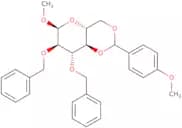
CAS:Inulin is a prebiotic dietary fibre with a mildly sweet taste that promotes digestive health by supporting growth of healthy and balanced microbiota. In diagnostics, inulin is used for determining the glomerular filtration rate in functional kidney testing. Chemically, inulin is a chain of fructose molecules terminated at the reducing end with glucose. Thus, inulin is a fructan consisting of linear chains of β-(2,1) linked fructose residues, terminated at the reducing end by an α-D-(1,2)-glucopyranoside moiety. It has a degree of polymerization typically between 2 and 60 (5). The β-(2,1) bond in inulin resists digestion in the gastrointestinal tract and is therefore responsible for its lower caloric value and beneficial effects on colon microbiota. A more functional form of inulin is produced by removing all fractions with chain lengths lower than 10.Pureza:(Uv) Min. 95%Cor e Forma:White PowderMethyl 2,3-di-O-benzyl-4,6-O-(4-methoxybenzylidene)-a-D-glucopyranoside
CAS:Methyl 2,3-di-O-benzyl-4,6-O-(4-methoxybenzylidene)-a-D-glucopyranoside is a monosaccharide that is used as a building block for the synthesis of complex carbohydrates. It has been modified with fluorination, methylation and glycosylation. Methyl 2,3-di-O-benzyl-4,6-O-(4-methoxybenzylidene)-a-D-glucopyranoside can be synthesized using custom synthesis or high purity. This product has CAS No. 94902 60 0 and is available in high purity.Fórmula:C29H32O7Pureza:Min. 95%Peso molecular:492.57 g/mol4-Chloro-2-cyclopentylphenyl b-D-galactopyranoside
CAS:4-Chloro-2-cyclopentylphenyl b-D-galactopyranoside is a synthetic monosaccharide with a methylated, fluorinated, and glycosylated backbone. It is often used as an artificial sweetener or sugar substitute in foods and beverages. The saccharide can be modified to contain one or more click modifications and/or polysaccharides. This product has been custom synthesized for high purity.Fórmula:C17H23ClO6Pureza:Min. 95%Cor e Forma:PowderPeso molecular:358.81 g/molGQ3-Oligosaccharide
GQ3 oligosaccharide is the carbohydrate moiety in the GQ3 ganglioside. Breast cancer cells MCF-7 were found to express a complex pattern of neutral and sialylated glycosphingolipids from the globo- and ganglio-series, including unusual tetrasialylated and pentasialylated lactosylceramide derivatives, and GQ3 (II3Neu5Ac4-Gg2Cer) (Steenackers, 2012).Fórmula:C56H86N4O43Na4Pureza:Min. 95%Peso molecular:1,595.24 g/mol2-Azido-2-deoxy-3,5-O-benzylidene-L-lyxono-1,4-lactone
<p>2-Azido-2-deoxy-3,5-O-benzylidene-L-lyxono-1,4-lactone is a simple carbohydrate that is modified by fluorination. It is synthesized from the saccharide D-(+)-ribose and has the CAS No. 57400-91-5. This molecule can be methylated and glycosylated to produce a variety of structures with different properties. 2A2DLAL can also be modified by click chemistry, which is a reaction that produces covalent bonds between two molecules in a single step without using any catalysts or solvents.</p>Pureza:Min. 95%(2R, 3R, 3aS, 9aR) -2, 3, 3a, 9a-Tetrahydro- 3- hydroxy- 2- (hydroxymethyl) - 3a- methyl- 6H- Furo[2', 3':4, 5] oxazolo[3, 2- a] pyr imidin- 6- one,
<p>This compound is a custom synthesis. It is an oligosaccharide that has a CAS number. The molecular weight of this compound is 5,871. This product is a sugar that contains glycosylation and methylation modifications, as well as click chemistry modifications. The purity of this product is high, with a purity level of 99%. This product also contains fluorination on the alpha-carbon atom in the 2 position.</p>Pureza:Min. 95%4-Methoxyphenyl 2,3,6-tri-O-benzoyl-b-D-galactopyranoside
CAS:<p>The 4-methoxyphenyl 2,3,6-tri-O-benzoyl-b-D-galactopyranoside (4MP) is a coagulation factor that inhibits the activity of coagulation factors Xa and IIa. The compound has been shown to be reactive with the detection methods used for other coagulation factors. The sensitivity of 4MP to detection was assessed using a battery of detection methods. 4MP was found to be more reactive than other compounds studied with regard to the use of an immunoassay for detection. This compound has hepatotoxic effects and can cause cell death in vitro. Cell culture studies show that 4MP causes membrane permeabilization and cellular uptake by bacteria.</p>Fórmula:C34H36O7Pureza:Min. 95%Cor e Forma:White to off-white solid.Peso molecular:556.24614-Acetamido-4-deoxy-D-glucose
CAS:<p>4-Acetamido-4-deoxy-D-glucose is a custom synthesis of a monosaccharide that is modified with fluorine and methyl groups. It is synthesized by the Click modification, which involves the addition of an azide to an alkyne in a copper catalyzed reaction. 4-Acetamido-4-deoxy-D-glucose can be used as a building block for complex carbohydrate synthesis. 4-Acetamido-4-deoxy-D-glucose has shown effectiveness against fluoroquinolone resistance, as well as activity against methicillin resistant Staphylococcus aureus (MRSA) and Clostridium perfringens.</p>Fórmula:C8H15NO6Pureza:Min. 95%Cor e Forma:PowderPeso molecular:221.21 g/molUDP-2-Acetamido-2,4-dideoxy-4-fluorogalactose
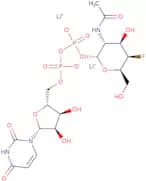
CAS:UDP-2-Acetamido-2,4-dideoxy-4-fluorogalactose is a Custom synthesis of a Modification, Fluorination, Methylation, Monosaccharide, Synthetic, Click modification and Oligosaccharide. It is an oligosaccharide with a saccharide and polysaccharide sugar. The Carbohydrate is a complex carbohydrate that has been shown to have anticancer properties in vitro. UDP-2-acetamido-2,4-dideoxy-4-fluorogalactose has been shown to inhibit the growth of cancer cells without harming healthy cells. This can be attributed to its ability to induce apoptosis in cancer cells by inhibiting DNA synthesis and RNA transcription.Fórmula:C17H24FLi2N3O16P2Pureza:Min. 95%Peso molecular:621.21 g/molTelmisartan acyl-b-D-glucuronide
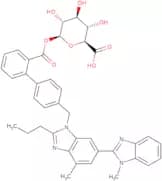
CAS:<p>Telmisartan acyl-b-D-glucuronide is a drug metabolite that is formed by the conjugation of telmisartan with glucuronic acid. Telmisartan acyl-b-D-glucuronide is activated in vivo and reversibly inhibits the enzyme creatine kinase, which is involved in the metabolism of creatine to creatinine. The effective dose for this compound has been shown to be 10 mg/kg (orally) in humans. Telmisartan acyl-b-D-glucuronide has been shown to be an at1 receptor antagonist and may have some antihypertensive effects via modulation of ion channels. This drug also appears to have some proliferative effects on cells that are inhibited by radiation.</p>Fórmula:C39H38N4O8Pureza:Min. 95%Cor e Forma:Off-White PowderPeso molecular:690.74 g/molPhenyl 2-azido-2-deoxy-b-D-thioglucopyranoside
<p>Phenyl 2-azido-2-deoxy-b-D-thioglucopyranoside is a sugar that has the ability to form glycosidic bonds with other sugars. This compound is a fluorinated carbohydrate and can be custom synthesized. Phenyl 2-azido-2-deoxy-b-D-thioglucopyranoside is also methylated and glycosylated, which gives it high purity. It has a CAS number and is an Oligosaccharide.</p>Pureza:Min. 95%3'-Sulfated Lewis X sodium salt
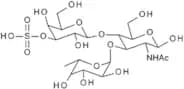
CAS:3'-Sulfated Lewis X sodium salt is a synthetic carbohydrate with a sulfate group on the 3' position of the sugar. It is a selective blocker of E-selectin, a type of selectin that plays an important role in inflammation and tissue injury. The binding site for 3'-sulfated Lewis X sodium salt is the cavity at the end of the selectin molecule, which has a hydrophobic region. This cavity can be blocked by hydrophobic moieties such as sulfates, fatty acids, or steroids. 3'-Sulfated Lewis X sodium salt has been shown to be effective in treating inflammatory conditions such as asthma and arthritis.Fórmula:C20H34NSO18NaPureza:Min. 95%Cor e Forma:White PowderPeso molecular:631.55 g/mol