Antimicrobianos
Os antimicrobianos são agentes que destroem ou inibem o crescimento de microrganismos, incluindo bactérias, vírus, fungos e parasitas. Esses compostos são essenciais na prevenção e tratamento de infecções, desempenhando um papel crucial na medicina, agricultura e indústria alimentícia. Na CymitQuimica, oferecemos uma ampla gama de antimicrobianos de alta qualidade e pureza, adequados para diversas aplicações científicas e industriais. Nosso catálogo inclui antibióticos, antifúngicos, antivirais e desinfetantes, todos projetados para atender às necessidades de pesquisa e desenvolvimento, bem como para aplicações clínicas e de produção. Com nossos produtos, os profissionais podem garantir a eficácia e a segurança no controle de infecções e na proteção da saúde pública.
Subcategorias de "Antimicrobianos"
- Antibióticos(4.131 produtos)
- Antifúngicos(909 produtos)
- Antiparasitários(703 produtos)
- Antivíricos(766 produtos)
Foram encontrados 2424 produtos de "Antimicrobianos"
Ordenar por
Pureza (%)
0
100
|
0
|
50
|
90
|
95
|
100
Beauvericin
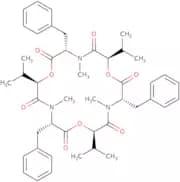
CAS:<p>Beauvericin is a cyclic peptide that is isolated from the fungus Fusarium. It has been shown to have antimicrobial activity against bacteria, as well as a variety of other biological properties. Beauvericin has been shown to inhibit mitochondrial membrane potential and induce toxicity in some animal models. Beauvericin also inhibits protein synthesis and causes cell death by inhibiting DNA polymerase activity. This compound is active against cancer cells, including HL-60 cells, which are derived from human lymphocytes and are used as a model for leukemia. Beauvericin can be extracted from an ETOA extract of the fungus Fusarium oxysporum; this extract has shown anti-cancer effects in vitro assays.</p>Fórmula:C45H57N3O9Pureza:Min. 95%Peso molecular:783.95 g/molTrans-tetradecenyl acetate
CAS:<p>Trans-tetradecenyl acetate is a synthetic pheromone, which is an analog of a naturally occurring insect sex pheromone. It is derived from synthetic organic chemistry processes that aim to replicate the molecular structure of pheromones produced by insects. The mode of action involves mimicking the natural pheromone signals used by female insects to attract males. By dispersing trans-tetradecenyl acetate into the environment, it disrupts the mating communication between the sexes, leading to a reduction in successful mating events and, consequently, a decrease in pest population over time.</p>Fórmula:C16H30O2Pureza:Min. 95%Peso molecular:254.41 g/molCefazolin, Antibiotic for Culture Media Use Only
CAS:Cefazolin is a semi-synthetic, non-beta lactam antibiotic used for the treatment of a variety of bacterial infections. It inhibits cell wall synthesis by binding to one or more of penicillin-binding proteins (PBPs), which are bacterial transpeptidases that crosslink peptidoglycan strands. Cefazolin binds to PBPs present on the surface of all Gram-negative bacteria as well as many Gram-positive bacteria. It is not effective against methicillin-resistant staphylococcus and MRSA unless combined with another antibiotic such as vancomycin or flucloxacillin. A study showed that cefazolin can decrease inflammation and tumor necrosis factor-beta levels in pregnant women with systemic inflammatory disease. It has been tested in the development of an anti-inflammatory agent for use in patients with autoimmune diseases such as rheumatoid arthritis and lupus erythe.Fórmula:C14H14N8O4S3Peso molecular:454.51 g/mol(3R,4R)-A2-32-01
CAS:(3R,4R)-A2-32-01 is an innovative insecticide, which is a synthetic product derived from intensive research in entomology and organic chemistry. It operates by targeting the neurological pathways of specific insect pests, leading to rapid cessation of feeding and, ultimately, death. This mode of action is highly selective, affecting only targeted pest species while minimizing impact on non-target organisms such as beneficial pollinators.Fórmula:C19H27NO2Pureza:Min. 95%Peso molecular:301.4 g/molDuocarmycin sa
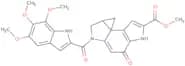
CAS:<p>Duocarmycin SA is an antitumor antibiotic, which is derived from the natural products of Streptomyces bacteria. This compound exhibits its mode of action through the alkylation of DNA, specifically binding within the minor groove. The alkylation process preferentially targets adenine-thymine-rich regions, leading to irreversible DNA damage and subsequent inhibition of DNA replication. Such interaction results in the induction of apoptosis in rapidly dividing cells.</p>Fórmula:C25H23N3O7Pureza:Min. 95%Peso molecular:477.5 g/mol7,8-Didemethyl-8-hydroxy-5-deazariboflavin
CAS:<p>7,8-Didemethyl-8-hydroxy-5-deazariboflavin is a cofactor often referred to as a deazaflavin. It is a derivative of riboflavin and is primarily sourced from methanogenic archaea. These microorganisms are found in anaerobic environments and play a crucial role in the process of methanogenesis.</p>Fórmula:C16H17N3O7Pureza:Min. 95%Peso molecular:363.32 g/molPNU 103017
CAS:PNU 103017 is an experimental neuroprotective compound, which is a derivative of pharmacological agents developed for neurological research. It is sourced through synthetic modification processes aimed at enhancing specific receptor interactions in the central nervous system. Its mode of action involves targeting and modulating specific neurotransmitter receptors, such as the sigma receptors, which play a crucial role in neuronal signaling and protection against excitotoxicity.Fórmula:C28H28N2O5SPureza:Min. 95%Peso molecular:504.6 g/molTadalafil-N-ethyl
CAS:Tadalafil-N-ethyl is a synthetic compound derived from Tadalafil, a well-known phosphodiesterase type 5 (PDE5) inhibitor. This product is chemically synthesized through pharmaceutical processes involving ethylation, enhancing its pharmacological profile for research purposes. Its mode of action primarily involves the selective inhibition of the PDE5 enzyme, leading to an increased concentration of cyclic guanosine monophosphate (cGMP) in the corpus cavernosum. This results in vasodilation and increased blood flow, facilitating penile erection.Fórmula:C23H21N3O4Pureza:Min. 95%Peso molecular:403.4 g/molMarbofloxacin hydrochloride
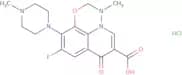
CAS:Marbofloxacin hydrochloride is a synthetic, broad-spectrum antibacterial agent. It is derived from the fluoroquinolone class, which is known for its potent activity against a variety of bacterial pathogens. The mode of action of marbofloxacin hydrochloride involves the inhibition of bacterial DNA gyrase and topoisomerase IV, enzymes critical for DNA replication, transcription, and repair processes. This inhibition disrupts bacterial cell division and ultimately leads to cell death.Fórmula:C17H20ClFN4O4Pureza:Min. 95%Peso molecular:398.8 g/molPF 1022A
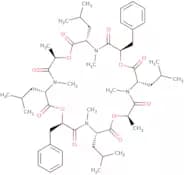
CAS:<p>PF 1022A is a cyclooctadepsipeptide, which is a type of cyclic peptide composed of amino acids and hydroxy acids. It is derived from the fermentation products of the fungus *Mycelia sterilia*, a member of the *Rosellinia* genus. Its mode of action involves disrupting glutamate-gated chloride channels in parasitic nematodes, which leads to paralysis and eventual death of the parasite.</p>Fórmula:C52H76N4O12Pureza:Min. 95%Peso molecular:949.18 g/molValidamycin (technical)
CAS:<p>Validamycin (technical) is an antifungal agent, which is a natural product derived from the actinomycete Streptomyces hygroscopicus. This compound functions through a specific mode of action by inhibiting the enzyme trehalase, crucial for the breakdown of trehalose into glucose. Consequently, this disruption in the carbohydrate metabolism weakens fungal structure and growth.</p>Fórmula:C20H35NO13Pureza:Min. 95%Peso molecular:497.5 g/molBafilomycin C1
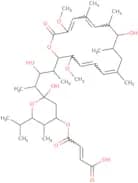
CAS:<p>Bafilomycin C1 is a macrolide antibiotic, which is derived from the bacterium Streptomyces sp. Its mode of action involves the inhibition of vacuolar H+-ATPase (V-ATPase), an enzyme complex responsible for acidifying various intracellular compartments. This inhibition disrupts pH regulation within cells, affecting numerous cellular processes such as protein degradation and trafficking.</p>Fórmula:C39H60O12Pureza:Min. 95%Peso molecular:720.9 g/molSartorypyrone B
CAS:Sartorypyrone B is a secondary metabolite, which is isolated from certain fungal species, including those in the genus **Aspergillus**. This compound is part of a class of natural products known as polyketides, characterized by their diverse structural complexity and bioactivity. The mode of action of Sartorypyrone B involves the inhibition of microbial growth and disruption of cellular processes, making it a compound of interest in antibacterial and anticancer research.Fórmula:C30H42O7Pureza:Min. 95%Peso molecular:514.6 g/mol4-Epianhydrotetracycline
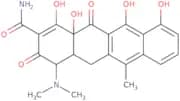
CAS:<p>4-Epianhydrotetracycline is a chemical compound that is a derivative of tetracycline, a well-known antibiotic. It is primarily a byproduct arising from the chemical degradation of tetracycline antibiotics, occurring under acidic or basic conditions. The source of this compound is the structural transformation of tetracycline, resulting in an altered molecular configuration.</p>Fórmula:C22H22N2O7Pureza:Min. 95%Peso molecular:426.4 g/molCephamycin C
CAS:<p>Cephamycin C is a cephalosporin antibiotic, which is a type of β-lactam antibiotic. It is derived from the fermentation process of certain Streptomyces species and other actinomycetes. Its mode of action involves inhibiting bacterial cell wall synthesis by binding to penicillin-binding proteins (PBPs). This inhibition disrupts the structural integrity of the bacterial cell wall, leading to cell lysis and death.</p>Fórmula:C16H22N4O9SPureza:Min. 95%Cor e Forma:PowderPeso molecular:446.4 g/molEgcg octaacetate
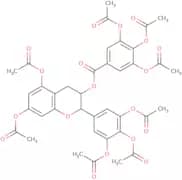
CAS:Please enquire for more information about Egcg octaacetate including the price, delivery time and more detailed product information at the technical inquiry form on this pageFórmula:C38H34O19Pureza:Min. 95%Peso molecular:794.7 g/molFludazonium chloride
CAS:<p>Fludazonium chloride is a quaternary ammonium compound, which is chemically synthesized. It functions primarily as an antibacterial agent by disrupting microbial cell membranes, leading to cell lysis and death. This compound is particularly effective against a broad spectrum of bacteria due to its ability to interact with phospholipid bilayers.</p>Fórmula:C26H20Cl5FN2O2Pureza:Min. 95%Peso molecular:588.7 g/molBlasticidin S
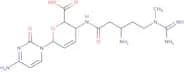
CAS:Blasticidin S is an antibiotic, which is derived from the bacterium *Streptomyces griseochromogenes*. It operates by inhibiting protein synthesis in both prokaryotic and eukaryotic cells. This inhibition is achieved by interfering with the peptide bond formation in the ribosome, thus preventing the elongation of the polypeptide chain. Blasticidin S is particularly useful in molecular biology and cell culture applications, where it is employed to selectively kill non-transformed cells. This allows for the maintenance and expansion of cells that have been stably transfected with a blasticidin resistance gene, thereby ensuring the selection and propagation of cells with the desired genetic modifications. Its precise mechanism and specific action make Blasticidin S a valuable tool for researchers working on gene expression studies, recombinant protein production, and other genetic engineering endeavors.Fórmula:C17H26N8O5Pureza:Min. 95%Peso molecular:422.4 g/molDecoyinine
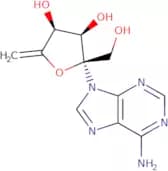
CAS:Decoyinine is an antibiotic compound, which is derived from the bacterium *Streptomyces hygroscopicus*. Its mode of action involves the inhibition of guanine nucleotide synthesis. By targeting the biosynthesis pathway of nucleotides, Decoyinine effectively impedes the growth and proliferation of bacterial cells.Fórmula:C11H13N5O4Pureza:Min. 95%Peso molecular:279.25 g/molSarecycline Hydrochloride
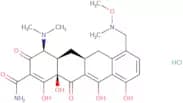
CAS:Sarecycline Hydrochloride is a narrow-spectrum tetracycline antibiotic with action on bacterial protein synthesis inhibition and is used for treating moderate to severe acne vulgaris.Fórmula:C24H30ClN3O8Pureza:Min. 95%Cor e Forma:PowderPeso molecular:523.96 g/mol