Antimicrobianos
Os antimicrobianos são agentes que destroem ou inibem o crescimento de microrganismos, incluindo bactérias, vírus, fungos e parasitas. Esses compostos são essenciais na prevenção e tratamento de infecções, desempenhando um papel crucial na medicina, agricultura e indústria alimentícia. Na CymitQuimica, oferecemos uma ampla gama de antimicrobianos de alta qualidade e pureza, adequados para diversas aplicações científicas e industriais. Nosso catálogo inclui antibióticos, antifúngicos, antivirais e desinfetantes, todos projetados para atender às necessidades de pesquisa e desenvolvimento, bem como para aplicações clínicas e de produção. Com nossos produtos, os profissionais podem garantir a eficácia e a segurança no controle de infecções e na proteção da saúde pública.
Subcategorias de "Antimicrobianos"
- Antibióticos(4.126 produtos)
- Antifúngicos(874 produtos)
- Antiparasitários(699 produtos)
- Antivíricos(764 produtos)
Foram encontrados 2423 produtos de "Antimicrobianos"
Ordenar por
Pureza (%)
0
100
|
0
|
50
|
90
|
95
|
100
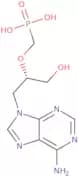
(S)-HPMPA
CAS:<p>(S)-HPMPA is a nucleotide analogue, which is a chemically synthesized compound designed to mimic nucleotides. It acts as both an antiviral and an antitumor agent, sourced primarily through synthetic chemistry involving the modification of naturally occurring nucleotide structures. The mode of action of (S)-HPMPA involves mimicking natural substrates of various viral polymerases and cellular enzymes, thereby inhibiting viral DNA synthesis and disrupting the replication cycle of DNA viruses. Additionally, it can interfere with certain cellular pathways contributing to its antitumor effects.</p>Fórmula:C9H14N5O5PPureza:Min. 95%Peso molecular:303.21 g/molSebuthylazine-2-hydroxy
CAS:<p>Sebuthylazine-2-hydroxy is a selective pre-emergent herbicide, which is a derivative of the sym-triazine compound family synthesized through chemical processes. It functions primarily as a soil-acting agent that inhibits photosynthesis by binding to the D1 protein in the photosystem II complex, thereby disrupting the electron transport chain. This biochemical action effectively curtails the growth of susceptible weed species by preventing their development, particularly annual grasses and broadleaf weeds.</p>Fórmula:C9H17N5OPureza:Min. 95%Peso molecular:211.26 g/molAmicoumacin C
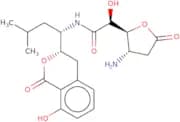
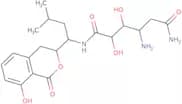
CAS:<p>Amicoumacin C is a biological product derived from certain strains of the Bacillus species, specifically fermented by Bacillus subtilis. It is recognized as a potent antibiotic compound, noted for its ability to inhibit bacterial protein synthesis, primarily by interacting with the 30S ribosomal subunit, thereby hindering the translation process.</p>Fórmula:C20H26N2O7Pureza:Min. 95%Peso molecular:406.43 g/molHalauxifen
CAS:<p>Halauxifen is a synthetic herbicide, which is a product of chemical synthesis used in agricultural practices. Derived from advanced chemical research and development, its primary source is a laboratory setting where it is engineered to exhibit specific properties for plant management.</p>Fórmula:C13H9Cl2FN2O3Pureza:Min. 95%Peso molecular:331.12 g/molBacitracin B1
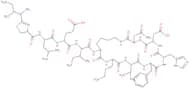
CAS:<p>Bacitracin B1 is a polypeptide antibiotic and is used for the treatment of bacterial infections. Its mode of action is similar to bacitracin.</p>Fórmula:C65H101N17O16SPureza:90%MinCor e Forma:PowderPeso molecular:1,408.67 g/mol4-Hydroxyvoriconazole
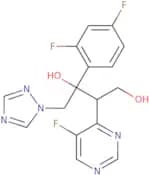
CAS:<p>Metabolite of voriconazole; sterol 14?-demethylase inhibitor</p>Pureza:Min. 95%Amphotericin A
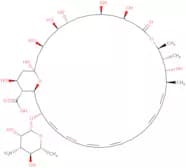
CAS:<p>Amphotericin A is a polyene macrolide antibiotic, which is derived primarily from the soil bacterium *Streptomyces nodosus*. This compound functions by binding to ergosterol, an essential component of fungal cell membranes. This binding creates pores in the membrane, increasing its permeability and ultimately leading to cell death. Unlike its more widely used counterpart Amphotericin B, Amphotericin A is less frequently utilized but is critical in the study and understanding of antifungal activity.</p>Fórmula:C47H75NO17Pureza:Min. 95%Peso molecular:926.09 g/molAmicoumacin A
CAS:<p>Amicoumacin A is an antibiotic compound, which is derived from the bacterium Bacillus subtilis. This natural source is known for its production of a variety of biologically active compounds that contribute to its utility in numerous scientific contexts. The mode of action of Amicoumacin A involves the inhibition of bacterial protein synthesis by targeting the ribosomal subunit. Specifically, it interferes with the translation process, effectively disrupting the growth and proliferation of susceptible bacterial strains.<br><br>Amicoumacin A is primarily utilized in research settings to study bacterial resistance mechanisms, as well as to explore novel antibacterial therapies. Its application in scientific research extends to examining its potential synergistic effects with other antimicrobial agents, and it serves as a model compound for understanding ribosomal inhibition. The study of Amicoumacin A not only contributes to the broader field of antibiotic development but also offers insights into the molecular interactions that underlie bacterial protein synthesis and antibiotic resistance. This compound's unique properties make it an important subject of investigation for microbiologists and pharmacologists alike, emphasizing its relevance in the ongoing battle against antibiotic-resistant pathogens.</p>Fórmula:C20H29N3O7Pureza:Min. 95%Cor e Forma:PowderPeso molecular:423.46 g/molNigericin sodium - from Streptomyces hygroscopicus
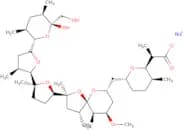
CAS:<p>Membrane pore-forming agent; H+, K+, Pb2+ ionophore; polyether antibiotic</p>Fórmula:C40H67O11NaPureza:Min. 95%Cor e Forma:White PowderPeso molecular:746.94 g/molSTAADIUM™ GalactoZide II
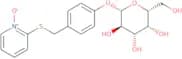
CAS:<p>STAADIUMTM GalactoZide II is a targeted inhibitor for β-galactosidase producing bacteria. The antibacterial activity of STAADIUMTM GalactoZide II is triggered by the enzyme β-galactosidase which is produced by E.coli (EHEC), thermophilic lactic acid bacteria, and other coliform bacteria. STAADIUMTM GalactoZide II can help to selectively inhibit the growth of E. coli in complex bacterial cultures and canbe used in microbiome studies, food control, environmental safety, hygiene, and clinical diagnostics. STAADIUMTM GalactoZide II is not compatible with some experimental conditions, e.g. pH indicators such as neutral red, indigo stains, and possibly H2S staining. STAADIUMTM GalactoZide II can be added as an enzyme-specific selective supplement to agar plates and as an enrichment agent to broth culture.</p>Fórmula:C18H21NO7SPureza:Min. 95 Area-%Cor e Forma:PowderPeso molecular:395.43 g/molPotassium clavulanate
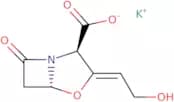
CAS:<p>Potassium clavulanate is a beta-lactamase inhibitor and an antibacterial agent. The presence of potassium clavulanate in culture media inhibits the activity of beta-lactamases, which are enzymes that confer resistance to penicillin and other beta-lactam antibiotics. It also has been shown to be active against bacterial infections such as tuberculosis, sepsis, and pneumonia, where it can inhibit the growth of bacteria by interfering with their ability to form cell walls. Potassium clavulanate is also used as an antimicrobial agent for blood culture technique and antimicrobial treatment.</p>Fórmula:C8H8NO5·KPureza:Min. 95%Cor e Forma:White PowderPeso molecular:237.25 g/mol2-Methyl-4-isothiazolin-3-one hydrochloride
CAS:<p>Methyl-4-isothiazolin-3-one HCl, also known as MIT hydrochloride is often used as a preservative in personal care products and other industrial applications. The product has shown to act as an antimicrobial and antifungal agent.</p>Fórmula:C4H6ClNOSPureza:Min. 99 Area-%Peso molecular:151.62 g/molCefsulodin sodium salt (SCE-129), Antibiotic for Culture Media Use Only
CAS:<p>Cefsulodin sodium salt is a beta lactam antibiotic in the third-generation cephalosporin family that inhibits penicillin-binding proteins (PBPs) to disrupt bacterial cell wall synthesis.</p>Fórmula:C22H19N4NaO8S2Pureza:Min. 97.0 Area-%Peso molecular:554.53 g/molTobramycin, Antibiotic for Culture Media Use Only
CAS:Produto Controlado<p>Tobramycin is used to treat severe infections with gram-negative bacteria and it is often applied in combination with beta-lactams. It has similar antimicrobial effects to gentamicin and is effective against all Enterobacteriacae, but more effective than gentamicin against P. aeruginosa, which is why it is often used for gentamicin-resistant strains, especially in the case of cystic fibrosis.</p>Fórmula:C18H37N5O9Pureza:Min. 97 Area-%Peso molecular:467.51 g/molTicarcillin disodium salt - 80%
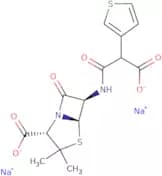
CAS:<p>Ticarcillin disodium salt is a beta-lactam antibiotic that has in vitro activity against Gram-positive and Gram-negative bacteria. Ticarcillin is active against penicillinase-producing strains of Staphylococcus aureus, Enterobacter aerogenes, Proteus mirabilis, Escherichia coli, Pseudomonas aeruginosa, Klebsiella pneumoniae, Serratia marcescens, Streptococcus pyogenes, Streptococcus faecalis, and Streptococcus pneumoniae. Furthermore, it inhibits transpeptidase activity of the cell wall of bacteria which prevents peptidoglycan synthesis. It is bactericidal for many bacteria at low concentrations.</p>Fórmula:C15H14N2Na2O6S2Pureza:Min. 90 Area-%Cor e Forma:PowderPeso molecular:428.4 g/molRef: 3H-HE4005
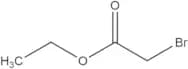
Produto descontinuadoEthyl Bromoacetate
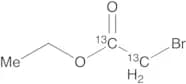
CAS:Fórmula:C4H7BrO2Cor e Forma:Clear Colourless to Yellow OilPeso molecular:167.0Ethyl Bromoacetate-1,2-13C2
CAS:Fórmula:C2C2H7BrO2Cor e Forma:Clear Colourless OilPeso molecular:168.991-Ethyl-6-fluoro-7-(piperazin-1-yl)quinolin-4(1H)-one
CAS:<p>1-Ethyl-6-fluoro-7-(piperazin-1-yl)quinolin-4(1H)-one is a fluoroquinolone antibiotic, which is a synthetic derivative sourced from the quinolone family. This compound functions by targeting bacterial DNA gyrase and topoisomerase IV, which are crucial enzymes involved in the replication and transcription of bacterial DNA. By inhibiting these enzymes, the antibiotic effectively disrupts DNA replication in susceptible bacterial strains, leading to cell death.</p>Fórmula:C15H18FN3OPureza:Min. 95%Peso molecular:275.32 g/molRef: 3D-ADA00182
Produto descontinuadoCephalexin hydrate, Antibiotic for Culture Media Use Only
CAS:<p>Please enquire for more information about Cephalexin hydrate, Antibiotic for Culture Media Use Only including the price, delivery time and more detailed product information at the technical inquiry form on this page</p>Fórmula:C16H19N3O5SPureza:Min. 95.0 Area-%Peso molecular:365.41 g/molRef: 3D-Q-200819
Produto descontinuadoPerfluorodecanephosphonic acid
CAS:<p>Perfluorodecanephosphonic acid is a fluorinated organic compound, which is synthesized through the controlled polymerization of fluorinated precursors. It is characterized by its unique perfluorinated alkyl chain and a phosphonic acid group, providing a distinctive combination of hydrophobic and functional properties. Its mode of action involves the strong adsorption onto surfaces through the phosphonic acid moiety, allowing the formation of highly stable self-assembled monolayers (SAMs).</p>Fórmula:C10H2F21O3PPureza:Min. 95%Peso molecular:600.06 g/molRef: 3D-CCA29926
Produto descontinuadoAbacavir sulfate
CAS:<p>Abacavir sulfate is a pharmaceutical compound classified as a nucleoside reverse transcriptase inhibitor (NRTI), which is derived from synthetic sources. Its mode of action involves the inhibition of the reverse transcriptase enzyme, essential for the replication of HIV. By incorporating itself into the viral DNA chain during replication, Abacavir effectively halts the process, preventing further multiplication of the virus within the host cells.<br><br>This antiretroviral medication is primarily used in the management and treatment of human immunodeficiency virus (HIV-1) infections. Abacavir sulfate is a critical component in highly active antiretroviral therapy (HAART), contributing to the reduction of viral load, enhancing immune function, and improving the long-term clinical outcomes in patients living with HIV. Its application in combination therapies has been instrumental in transforming HIV from a fatal disease into a manageable chronic condition.</p>Fórmula:C14H18N6O·H2O4SPureza:Min. 95%Peso molecular:384.41 g/molRef: 3D-RIA69907
Produto descontinuadoChevalone E
CAS:<p>Chevalone E is a specialized nematicide, which is derived from natural plant sources. Its mode of action is based on disrupting the normal physiological processes of nematodes, thereby inhibiting their ability to infect and damage host plants. Chevalone E is particularly valued for its ability to target a broad range of nematode species, making it an effective tool in integrated pest management strategies.</p>Fórmula:C26H38O4Pureza:Min. 95%Peso molecular:414.6 g/molRef: 3D-QCC45194
Produto descontinuado