Antimicrobianos
Os antimicrobianos são agentes que destroem ou inibem o crescimento de microrganismos, incluindo bactérias, vírus, fungos e parasitas. Esses compostos são essenciais na prevenção e tratamento de infecções, desempenhando um papel crucial na medicina, agricultura e indústria alimentícia. Na CymitQuimica, oferecemos uma ampla gama de antimicrobianos de alta qualidade e pureza, adequados para diversas aplicações científicas e industriais. Nosso catálogo inclui antibióticos, antifúngicos, antivirais e desinfetantes, todos projetados para atender às necessidades de pesquisa e desenvolvimento, bem como para aplicações clínicas e de produção. Com nossos produtos, os profissionais podem garantir a eficácia e a segurança no controle de infecções e na proteção da saúde pública.
Subcategorias de "Antimicrobianos"
- Antibióticos(4.132 produtos)
- Antifúngicos(897 produtos)
- Antiparasitários(702 produtos)
- Antivíricos(764 produtos)
Foram encontrados 2423 produtos de "Antimicrobianos"
Ordenar por
Pureza (%)
0
100
|
0
|
50
|
90
|
95
|
100
Leptomycin B
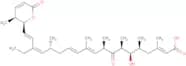
CAS:<p>Leptomycin B is a bacterial secondary metabolite, which is derived from the bacterium Streptomyces sp. This compound is a potent nuclear export inhibitor with a mechanism of action that targets and inhibits the export receptor CRM1 (Chromosomal Maintenance 1), also known as Exportin 1. By binding irreversibly to CRM1, Leptomycin B prevents the nuclear export of proteins and RNA, disrupting the nuclear-cytoplasmic transport essential for cell function.</p>Fórmula:C33H48O6Pureza:Min. 95%Peso molecular:540.73 g/mol7-epi-Clindamycin 2-phosphate
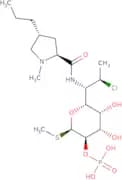
CAS:<p>7-epi-Clindamycin 2-phosphate is a semisynthetic antibiotic derivative, which is sourced from chemical modifications of the natural antibiotic lincomycin. This compound operates by inhibiting bacterial protein synthesis. It achieves this by binding to the 50S subunit of the bacterial ribosome, thereby obstructing the translocation steps in protein elongation.</p>Fórmula:C18H34ClN2O8PSPureza:Min. 95%Cor e Forma:White to off-white solid.Peso molecular:504.96 g/molNatamycin
CAS:<p>Natamycin is a polyene macrolide antifungal agent with action on fungal cell membranes by binding to sterols and is used for treating fungal infections and as a food preservative.</p>Fórmula:C33H47NO13Pureza:Min. 95 Area-%Cor e Forma:PowderPeso molecular:665.73 g/molFlucloxacillin
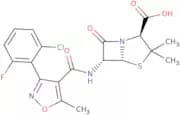
CAS:<p>Flucloxacillin is a beta-lactam antibiotic, which is derived from the penicillin family. It is synthetically produced through chemical modification to enhance its stability against beta-lactamase enzymes. The mode of action of flucloxacillin involves inhibiting bacterial cell wall synthesis. It binds to penicillin-binding proteins (PBPs) located inside the bacterial cell wall, which in turn inhibits the transpeptidation or cross-linking of peptidoglycan chains. This action leads to cell lysis and ultimately, bacterial death.</p>Fórmula:C19H17ClFN3O5SPureza:Min. 95%Peso molecular:453.87 g/molNikkomycin Z from streptomyces tendae
CAS:<p>Nikkomycin Z is an antifungal agent, which is a secondary metabolite isolated from the bacterium Streptomyces tendae. This compound functions as a competitive inhibitor of chitin synthase, an essential enzyme responsible for the synthesis of chitin, a vital component of the fungal cell wall. By inhibiting this enzyme, Nikkomycin Z disrupts the structural integrity of the fungal cell wall, leading to impaired growth and cell lysis in susceptible fungi.</p>Fórmula:C20H25N5O10Pureza:Min. 95%Peso molecular:495.4 g/molSpiramycin I
CAS:<p>Spiramycin I is a macrolide antibiotic with action on bacterial protein synthesis inhibition and is used for treating toxoplasmosis and bacterial infections.</p>Fórmula:C43H74N2O14Pureza:Min. 95 Area-%Cor e Forma:White PowderPeso molecular:843.05 g/molSTAADIUM™ PeptiZide L-Pyr
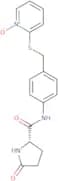
CAS:<p>STAADIUMTM PeptiZide L-Pyr is a targeted inhibitor for pyroglutamyl-aminopeptidase-producing bacteria. The antibacterial activity of STAADIUMTM PeptiZide L-Pyr is triggered by the enzyme pyroglutamyl aminopeptidase (a.k.a. pyrase or pyrrolidonyl peptidase) that is present, not only in bacteria, but also in archaea, plants and animals. STAADIUMTM PeptiZide can be used to suppress the growth of Citrobacter freundii on diagnostic agar plates for Salmonella. L-pyrrolidonyl peptidase activity has also been exploited to distinguish Enterococcus species and Streptococcus pyogenes from other Streptococaceae species. More details in the application notes document.</p>Fórmula:C17H17N3O3SPureza:Min. 95 Area-%Cor e Forma:PowderPeso molecular:343.41 g/molParitaprevir
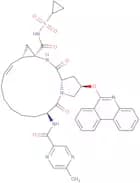
CAS:<p>Paritaprevir is an antiviral medication, which is derived from chemical synthesis with its action targeting the hepatitis C virus (HCV). It operates primarily as a protease inhibitor, specifically targeting the NS3/4A protease, an essential enzyme for HCV replication. By inhibiting this protease, Paritaprevir effectively disrupts the viral life cycle, preventing the virus from maturing and proliferating within the host cells.</p>Pureza:Min. 95%Ceftriaxone sodium
CAS:<p>Ceftriaxone sodium is a third-generation cephalosporin antibiotic with action on bacterial cell wall synthesis and is used for treating severe bacterial infections like meningitis and pneumonia.</p>Fórmula:C18H18N8Na2O7S3Pureza:Min. 84 Area-%Cor e Forma:White Yellow PowderPeso molecular:600.56 g/molBacampicillin Hydrochloride
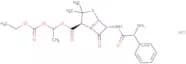
CAS:Bacampicillin Hydrochloride is an aminopenicillin antibiotic and is used for the treatment of bacterial infections. It is a prodrug that is converted to ampicillin in the body, which then inhibits bacterial cell wall synthesis.Fórmula:C21H28ClN3O7SPureza:Min. 95%Cor e Forma:PowderPeso molecular:501.98 g/molCeftizoxime
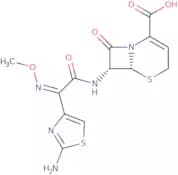
CAS:<p>Ceftizoxime is a third-generation cephalosporin antibiotic with action on bacterial cell wall synthesis and is used for treating respiratory tract infections, urinary tract infections, and gonorrhea.</p>Fórmula:C13H13N5O5S2Pureza:Min. 95%Cor e Forma:PowderPeso molecular:383.41 g/molMonensin
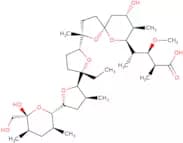
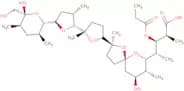
CAS:<p>Monensin is a polyether ionophore antibiotic, which is derived from the fermentation of the bacterium *Streptomyces cinnamonensis*. It operates by disrupting ion transport across biological membranes, primarily by facilitating the exchange of sodium and potassium ions. This ionophore action alters the osmotic balance in target cells, leading to their destabilization and death, particularly in Gram-positive bacteria and certain protozoa.</p>Fórmula:C36H62O11Pureza:Min. 95%Peso molecular:670.87 g/molPefloxacin-d3
CAS:Produto ControladoPefloxacin-d3 is a deuterated fluoroquinolone antibiotic, which is a synthetic derivative of pefloxacin utilized primarily for research purposes. This compound is chemically modified to include deuterium atoms, a stable isotope of hydrogen, thus offering unique properties essential for precise quantitative analysis in pharmacokinetic studies.Fórmula:C17H17D3FN3O3Pureza:Min. 95%Peso molecular:336.38 g/molDoripenem
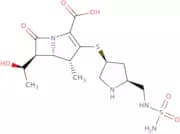
CAS:<p>Doripenem is a carbapenem antibiotic with action on bacterial cell wall synthesis and is used for treating complicated bacterial infections like intra-abdominal infections and urinary tract infections.</p>Fórmula:C15H24N4O6S2Pureza:Min. 95%Cor e Forma:White PowderPeso molecular:420.51 g/molAmpicillin-sulbactam
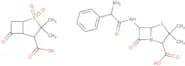
CAS:Ampicillin-sulbactam is a combination antibiotic, which is a pharmaceutical product derived from the penicillin class of beta-lactam antibiotics. Its source involves semi-synthetic processes, combining ampicillin with sulbactam. The mode of action of this compound is through the inhibition of bacterial cell wall synthesis. Ampicillin specifically binds to penicillin-binding proteins, thereby disrupting the cross-linking process essential for maintaining cell wall structural integrity, leading to bacterial lysis. Sulbactam functions as a beta-lactamase inhibitor, enhancing the efficacy of ampicillin by preventing its degradation by beta-lactamase enzymes produced by certain resistant bacterial strains.Fórmula:C25H31N3O9S2Pureza:Min. 95%Peso molecular:581.7 g/molLaidlomycin
CAS:<p>Laidlomycin is an ionophore compound with a mode of action that disrupts ion gradients in bacterial cells. It is used as a feed additive to improve feed efficiency in cattle.</p>Fórmula:C37H62O12Pureza:Min. 95%Peso molecular:698.88 g/molSisomicin sulfate
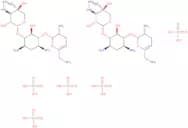
CAS:<p>Sisomicin sulfate is a sulfate salt form of sisomicin with similar action and applications as sisomicin.</p>Fórmula:C19H37N5O7·5H2SO4Pureza:Min. 95%Cor e Forma:PowderPeso molecular:1,385.45 g/molAmoxicillin
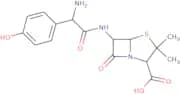
CAS:<p>Amoxicillin is an aminopenicillin antibiotic and is used for the treatment of various bacterial infections. It works by inhibiting the synthesis of bacterial cell wall mucopeptides, leading to cell lysis and death</p>Fórmula:C16H19N3O5SPureza:Min. 95%Cor e Forma:PowderPeso molecular:365.41 g/molOleandomycin
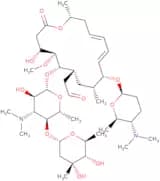
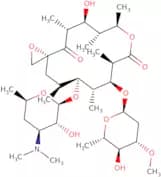
CAS:<p>Oleandomycin is a macrolide antibiotic, which is derived from the bacterium *Streptomyces antibioticus*. This antibiotic functions by binding to the 50S subunit of the bacterial ribosome, thereby inhibiting protein synthesis. The interruption of this essential process ultimately leads to the cessation of bacterial growth and replication.</p>Fórmula:C35H61NO12Pureza:Min. 95%Cor e Forma:White PowderPeso molecular:687.86 g/molPuberulic acid
CAS:Puberulic acid is a fungal metabolite that exhibits significant antimicrobial properties. It is derived from certain species of the Penicillium genus, a well-known source of various bioactive compounds. The mode of action of puberulic acid involves the disruption of microbial cell wall synthesis, leading to inhibited growth and eventual cell death of targeted microorganisms.Fórmula:C8H6O6Pureza:Min. 95%Peso molecular:198.13 g/mol