Antimicrobianos
Subcategorias de "Antimicrobianos"
- Antibióticos(4.506 produtos)
- Antifúngicos(940 produtos)
- Antiparasitários(808 produtos)
- Antivíricos(1.058 produtos)
Foram encontrados 2643 produtos de "Antimicrobianos"
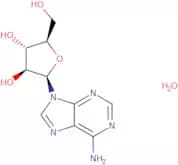
Vidarabine monohydrate
CAS:Vidarabine monohydrate is an antiviral agent with action on viral DNA polymerase to inhibit replication and is used for treating herpes simplex virus infections and varicella-zoster virus infections.Fórmula:C10H13N5O4·H2OPureza:(¹H-Nmr) Min. 95 Area-%Cor e Forma:White Off-White PowderPeso molecular:285.26 g/molMaribavir
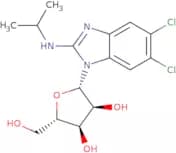
CAS:Potent antiviral against HCMV and Epstein-Barr virus (EBV)
Fórmula:C15H19Cl2N3O4Pureza:Min. 95%Peso molecular:376.24 g/molOxibendazole-amine hydrochloride
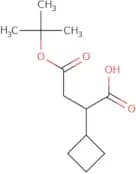
CAS:Oxibendazole-amine hydrochloride is a synthetic anthelmintic compound, which is a derivative of benzimidazole, known for its broad-spectrum efficacy against various helminths. It primarily acts by disrupting the polymerization of tubulin into microtubules, effectively impairing essential cellular structures and functions within parasitic worms, leading to their death.
Fórmula:C10H13N3O•HClPureza:Min. 95%Cor e Forma:PowderPeso molecular:227.69 g/molTenofovir alafenamide (free base)
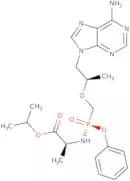
CAS:Tenofovir alafenamide (free base) is a prodrug of tenofovir with action on viral reverse transcriptase to block replication and is used for treating HIV/AIDS and chronic hepatitis B with improved safety profile.Fórmula:C21H29N6O5PPureza:Min. 97 Area-%Cor e Forma:PowderPeso molecular:476.47 g/molClindamycin 3-phosphate
CAS:Clindamycin 3-phosphate is an antibiotic prodrug, which is a derivative of clindamycin. It is semisynthetic with a synthetic origin, derived by chemically modifying the natural compound lincomycin obtained from the bacterium *Streptomyces lincolnensis*. The mode of action of Clindamycin 3-phosphate involves the inhibition of bacterial protein synthesis. It binds to the 50S subunit of the bacterial ribosome, thereby interfering with the translocation step in protein elongation, ultimately leading to the suppression of bacterial growth.Fórmula:C18H34ClN2O8PSPureza:Min. 95%Cor e Forma:White To Off-White SolidPeso molecular:504.96 g/molCeftobiprole medocaril sodium
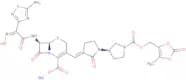
CAS:Ceftobiprole medocaril sodium is a broad-spectrum cephalosporin antibiotic, which is a synthetically derived prodrug of ceftobiprole. Upon administration, ceftobiprole medocaril is rapidly converted into its active form, ceftobiprole, by the body's endogenous esterases. The mode of action involves binding to penicillin-binding proteins (PBPs) in the bacterial cell wall, leading to the inhibition of cell wall synthesis and ultimately the death of the bacteria. This action is effective against a wide range of gram-positive and gram-negative bacteria, including methicillin-resistant Staphylococcus aureus (MRSA) and penicillin-resistant Streptococcus pneumoniae.
Fórmula:C26H26N8O11S2NaPureza:Min. 95%Peso molecular:713.65 g/molSancycline hydrochloride
CAS:Sancycline hydrochloride is a tetracycline antibiotic, which is derived from the natural fermentation process of Streptomyces bacteria. The mechanism of action involves the inhibition of protein synthesis by bindin directly to the 30S ribosomal subunit, thereby preventing the attachment of aminoacyl-tRNA to the A site of the ribosome. This action effectively halts the growth of bacteria by impeding protein production, making it bacteriostatic rather than bactericidal.Fórmula:C21H23ClN2O7Pureza:Min. 95%Peso molecular:450.87 g/molRetrocyclin-1 trifluoroacetate salt
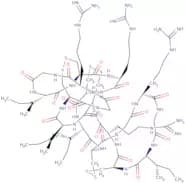
CAS:Retrocyclin-1 trifluoroacetate salt is a synthetic antimicrobial peptide, which is derived from humanized sequences based on the theta-defensin family, originally found in certain primates. Retrocyclin-1 is particularly notable for its circular structure which contributes to its stability and biological activity. The peptide is produced through a process of solid-phase peptide synthesis, designed to mimic the native cyclic conformation of natural theta-defensins.Fórmula:C74H128N30O18S6Pureza:Min. 95%Peso molecular:1,918.4 g/mol3-Formyl rifamycin
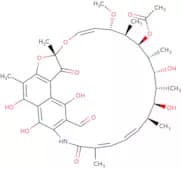
CAS:3-Formyl rifamycin is an intermediate in the synthesis of rifampicin that has been used to develop rifamycin derivatives with antibiotic activity. Rifampicin is aa anti-tuberculosis drug that inhibits bacterial DNA replicationFórmula:C38H47NO13Pureza:Min. 99 Area-%Cor e Forma:Red PowderPeso molecular:725.78 g/molCecropin A
CAS:Cecropin A is an antimicrobial peptide, which is derived from the immune systems of insects, specifically moths. It displays potent antimicrobial properties through its ability to disrupt bacterial cell membranes, leading to cell lysis and death. This peptide primarily targets Gram-negative bacteria but is also effective against some Gram-positive strains. Cecropin A has garnered significant scientific interest due to its potential applications in developing new antimicrobial agents, particularly in the face of increasing antibiotic resistance. By integrating Cecropin A into therapeutic strategies, researchers aim to broaden the spectrum of antimicrobial options available for use in both clinical and agricultural settings, offering a promising avenue for future drug development.Fórmula:C184H313N53O46Pureza:Min. 95%Peso molecular:4,003.78 g/molLeptomycin B
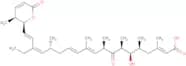
CAS:Leptomycin B is a bacterial secondary metabolite, which is derived from the bacterium Streptomyces sp. This compound is a potent nuclear export inhibitor with a mechanism of action that targets and inhibits the export receptor CRM1 (Chromosomal Maintenance 1), also known as Exportin 1. By binding irreversibly to CRM1, Leptomycin B prevents the nuclear export of proteins and RNA, disrupting the nuclear-cytoplasmic transport essential for cell function.
Fórmula:C33H48O6Pureza:Min. 95%Peso molecular:540.73 g/molGentamicin C2 sulfate
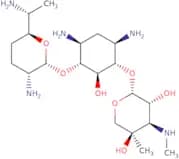
CAS:Gentamicin C2 sulfate is an aminoglycoside antibiotic with action on bacterial protein synthesis inhibition and is used for treating severe bacterial infections.
Fórmula:C20H41N5O7Pureza:(%) Min. 90%Cor e Forma:PowderPeso molecular:463.57 g/molNocardamine
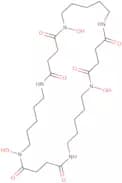
CAS:Nocardamine is a siderophore-based antioxidant, which is naturally derived from the soil-dwelling actinobacteria known as Streptomyces. Its primary mode of action involves the chelation of metal ions, effectively sequestering them and preventing metal-catalyzed oxidation reactions. By binding to iron and other transition metals, Nocardamine mitigates oxidative stress at a cellular level, which could otherwise contribute to cellular damage and dysfunction.
Fórmula:C27H48N6O9Pureza:Min. 95%Peso molecular:600.71 g/molCarumonam
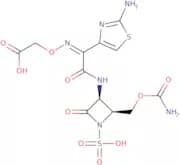
CAS:Carumonam is a synthetic monobactam antibiotic, which is derived from chemically modifying aztreonam to enhance its antimicrobial properties. Its source is entirely synthetic, allowing for precise structural modifications to target specific bacterial pathogens. The mode of action involves the inhibition of bacterial cell wall synthesis. Carumonam binds to penicillin-binding proteins (PBPs) on the surface of bacterial cell walls, disrupting the peptidoglycan cross-linking process necessary for cell wall strength and integrity. This action results in bacterial cell lysis and death, making it effective against a range of Gram-negative bacteria.Fórmula:C12H14N6O10S2Pureza:Min. 95%Peso molecular:466.41 g/molOleandomycin
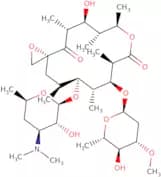
CAS:Oleandomycin is a macrolide antibiotic, which is derived from the bacterium *Streptomyces antibioticus*. This antibiotic functions by binding to the 50S subunit of the bacterial ribosome, thereby inhibiting protein synthesis. The interruption of this essential process ultimately leads to the cessation of bacterial growth and replication.
Fórmula:C35H61NO12Pureza:Min. 95%Cor e Forma:White PowderPeso molecular:687.86 g/molPuberulic acid
CAS:Puberulic acid is a fungal metabolite that exhibits significant antimicrobial properties. It is derived from certain species of the Penicillium genus, a well-known source of various bioactive compounds. The mode of action of puberulic acid involves the disruption of microbial cell wall synthesis, leading to inhibited growth and eventual cell death of targeted microorganisms.Fórmula:C8H6O6Pureza:Min. 95%Peso molecular:198.13 g/molFengycin
CAS:Fengycin is a cyclic lipopeptide from Bacillus subtilis acts as a biosurfactant and antifungal. As a fungicide, it has a mode of action that involves the formation of ion channels in the fungal lipid membrane, leading to membrane leakage This activity is negatively correlated to cholesterol levels, and may explain why mammalian cells, with higher cholesterol present, are not sensitive to fengycin.Fórmula:C72H110N12O20Pureza:Min. 90 Area-%Cor e Forma:PowderPeso molecular:1,463.71 g/molGramicidin S hydrochloride
CAS:Gramicidin S hydrochloride is a cyclic peptide antibiotic, which is a derivative of the naturally occurring antibiotic gramicidin S. It is sourced from Bacillus brevis, a type of soil bacterium. This peptide operates through a unique mode of action, whereby it disrupts bacterial cell membranes. By integrating into the lipid bilayer, it increases membrane permeability, leading to leakage of essential ions and molecules, and ultimately causing cell death.Fórmula:C60H92N12O10•(HCl)2Pureza:90%MinPeso molecular:1,214.37 g/molGentamicin B
CAS:Gentamicin B is an aminoglycoside antibiotic, which is derived from the bacterium Micromonospora. This derivative exhibits its mode of action by binding to the 30S subunit of the bacterial ribosome, disrupting protein synthesis. As a result, it causes misreading of mRNA, ultimately leading to cell death, thereby exhibiting bactericidal effects.Fórmula:C19H38N4O10Pureza:Min. 95%Peso molecular:482.5 g/molLinearmycin A
CAS:Linearmycin A is an antibiotic compound, which is a secondary metabolite produced by the bacterium Streptomyces sp. Its mode of action involves disrupting bacterial protein synthesis, leading to the inhibition of bacterial growth. This compound exhibits strong efficacy against various Gram-positive and some Gram-negative bacteria, making it valuable in microbiological research.Fórmula:C64H101NO16Pureza:Min. 95%Peso molecular:1,140.5 g/mol