Antimicrobianos
Subcategorias de "Antimicrobianos"
- Antibióticos(4.145 produtos)
- Antifúngicos(910 produtos)
- Antiparasitários(711 produtos)
- Antivíricos(768 produtos)
Foram encontrados 2429 produtos de "Antimicrobianos"
Aureonitol
CAS:Aureonitol is a fungal metabolite, which is sourced from specific species of fungi, primarily within the Aspergillus and Penicillium genera. This is a naturally occurring compound that functions as an antibiotic, disrupting the biosynthesis processes within certain microorganisms. It achieves this action by inhibiting key enzymes involved in cell wall formation or by interfering with nucleic acid pathways, thereby impeding the growth and proliferation of bacterial cells.Fórmula:C13H18O2Pureza:Min. 95%Peso molecular:206.28 g/molPuromycin-D3
CAS:Puromycin-D3 is a deuterium-labeled antibiotic, which is synthetically derived from the bacterium *Streptomyces alboniger*, with three hydrogen atoms replaced by deuterium. Its mode of action involves the inhibition of protein synthesis by mimicking the aminoacyl end of tRNA, causing premature chain termination during translation on ribosomes. This mechanism specifically targets growing peptides in cells, making it a valuable tool for studying protein synthesis.Fórmula:C22H26D3N7O5Pureza:Min. 95%Peso molecular:474.53 g/molSisunatovir hydrochloride
CAS:Sisunatovir hydrochloride is an antiviral agent, which is a synthetic compound with a mechanism of action specifically targeting the respiratory syncytial virus (RSV). As a potent inhibitor, Sisunatovir hydrochloride interferes with the viral replication process by binding to a specific protein essential for the virus's ability to replicate within host cells.Fórmula:C23H23ClF4N4OPureza:Min. 95%Peso molecular:482.9 g/molPivmecillinam hydrochloride
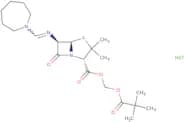
CAS:Pivmecillinam hydrochloride is an antibacterial prodrug, which is derived from the source compound mecillinam, a beta-lactam antibiotic. It functions by inhibiting bacterial cell wall synthesis, specifically targeting the penicillin-binding protein 2 (PBP2). This affinity leads to a weakening of the bacterial cell wall, causing cell lysis and death, particularly in gram-negative bacteria.Fórmula:C21H33N3O5S·HClPureza:Min. 95%Peso molecular:476.03 g/molBiotinyl tobramycin amide
CAS:Biotinyl tobramycin amide is a biotinylated form of the antibiotic tobramycin, which is derived from the actinobacterium Streptomyces tenebrarius. It features a tobramycin core, a potent aminoglycoside antibiotic, chemically linked to biotin. This modification allows for the specific attachment to avidin or streptavidin-labeled probes due to the strong biotin-streptavidin interaction, facilitating various labeling and detection techniques in research.Fórmula:C28H51N7O11SPureza:Min. 95%Peso molecular:693.81 g/molSisunatovir
CAS:Sisunatovir is an antiviral agent, which is a small-molecule compound with specificity designed to inhibit the fusion process of the respiratory syncytial virus (RSV). This small-molecule inhibitor is synthetically derived, with its action targeting the F (fusion) protein of the virus. The mechanism of action involves preventing the viral fusion with host cell membranes, thereby blocking entry and subsequent replication within the host cells.Fórmula:C23H22F4N4OPureza:Min. 95%Peso molecular:446.4 g/molRifampicin, Antibiotic for Culture Media Use Only
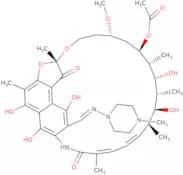
CAS:Rifampicin is a drug that inhibits protein synthesis in bacteria and is used to treat tuberculosis. Rifampicin binds to the beta subunit of the bacterial RNA polymerase, inhibiting transcription and translation. It has been shown to inhibit the acetylcholine receptor function in rats, which may be related to its antituberculosis activity. Histopathological studies have shown that rifampicin inhibits the growth of human tumors in mice, including lung cancer, breast cancer, and leukemia. The drug is also being studied for its potential use in treating Alzheimer's disease. The pharmacokinetics and oral bioavailability of rifampicin have been studied and Rifampicin has been shown to be an effective anti-tuberculosis drug.Fórmula:C43H58N4O12Pureza:Min. 90.0 Area-%Peso molecular:822.94 g/molRef: 3D-R-6000
-Unit-ggA consultar1gA consultar1kgA consultar100gA consultar250gA consultar500gA consultarSordarin sodium salt
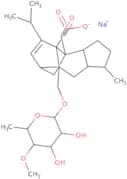
CAS:Sordarin sodium salt is an antifungal agent, characterized as a semisynthetic derivative produced from the fermentation products of filamentous fungi, specifically belonging to the phylum Ascomycota. This compound exerts its effects by selectively inhibiting fungal protein synthesis. It achieves this by obstructing the function of elongation factor 2 (EF-2), an essential component of fungal ribosomal activity, thereby disrupting the translational elongation step of protein synthesis.
Fórmula:C27H39NaO8Pureza:Min. 95%Peso molecular:514.58 g/molEthyl 6-fluoro-7-benzofurancarboxylate
CAS:Ethyl 6-fluoro-7-benzofurancarboxylate is a synthetic organic compound, belonging to the class of ester derivatives, which is primarily used in chemical research and potential pharmaceutical development. This compound is synthesized through a series of organic reactions involving fluorination and esterification processes, originating from precursors of benzofuran derivatives.
Fórmula:C11H9FO3Pureza:Min. 95%Peso molecular:208.18 g/molDuocarmycin MA
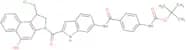
CAS:Duocarmycin MA is a cytotoxic compound, which is a derivative of natural products isolated from bacteria of the Streptomyces genus. Its mode of action involves the alkylation of DNA, leading to the cleavage of the DNA helix and ultimately resulting in cell apoptosis. This process is highly selective for adenine-thymine rich regions, allowing it to precisely target and disrupt cancerous cells.Fórmula:C34H31ClN4O5Pureza:Min. 95%Peso molecular:611.1 g/molClindamycin
CAS:Inhibitor of protein synthesis; lincosamide classFórmula:C18H33ClN2O5SPureza:Min. 95%Peso molecular:424.98 g/molFosfomycin calcium monohydrate
CAS:Fosfomycin calcium monohydrate is an antibacterial agent, derived from Streptomyces species. This compound functions as a structural analog of phosphoenolpyruvate, interfering with cell wall synthesis. Specifically, it targets and irreversibly inhibits the enzyme UDP-N-acetylglucosamine enolpyruvyl transferase (MurA), which is critical in the early stages of bacterial cell wall biosynthesis. This inhibition prevents the formation of peptidoglycan, leading to bacterial cell lysis.Fórmula:C3H7CaO5PPureza:Min. 95%Peso molecular:194.14 g/molPyflubumide-des(2-methyl-1oxopropyl)
CAS:Pyflubumide-des(2-methyl-1oxopropyl) is a selective miticide, which is synthesized through advanced chemical processes. Its mode of action involves inhibiting cellular respiration in spider mites, specifically targeting the activity of mitochondrial complex II. This disrupts the energy production pathway, leading to pest mortality.
Fórmula:C21H25F6N3O2Pureza:Min. 95%Peso molecular:465.4 g/molCyprazine-desisopropyl
CAS:Cyprazine-desisopropyl is a metabolite, which is a derivative form resulting from the biotransformation of cyromazine, an insect growth regulator. Cyromazine is originally sourced as a triazine-class pesticide, commonly used to control insect populations by disrupting their growth processes. Cyprazine-desisopropyl, similarly, impacts the development stages of target insect species.Fórmula:C6H8ClN5Pureza:Min. 95%Peso molecular:185.61 g/molPropicillin
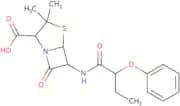
CAS:Propicillin is a broad-spectrum antimicrobial agent that has been shown to be effective against both gram-positive and gram-negative bacteria. Propicillin belongs to the group of nonsteroidal anti-inflammatory drugs. It is a particle that is soluble in water and lipid. Propicillin does not inhibit the growth of Streptococcus species, but does cause cell lysis by attaching to fatty acids on the surface of cells. Propicillin also inhibits microbial infection by inhibiting enzymes involved in fatty acid synthesis. The human serum pharmacokinetics of propicillin have been studied and found to be similar to those of ampicillin, which allows for use as an intravenous drug in humans. The pharmacokinetics, biochemical properties, and cellular mechanisms are complex, but it is known that propicillin binds to bacterial ribosomes and inhibits protein synthesis by binding to the peptidyl transferase centre on the ribosome.
Fórmula:C18H22N2O5SPureza:Min. 95%Peso molecular:378.4 g/molAqabamycin F
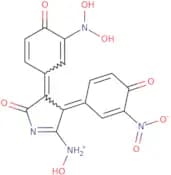
CAS:Aqabamycin F is a type of antibiotic compound, which is derived from marine natural sources, specifically from bacteria found in oceanic environments. This product is characterized by its unique molecular structure that offers potent antimicrobial properties. The mode of action of Aqabamycin F involves inhibiting essential bacterial enzymes, thus disrupting the cellular processes necessary for bacteria to survive and proliferate. This mechanism makes it effective against a wide range of bacterial pathogens, contributing to its potential in treating infections that are resistant to conventional antibiotics. Research into Aqabamycin F continues to explore its full spectrum of activity, offering insights into new therapeutic pathways for antibiotic-resistant bacterial infections. Its unique origin and molecular activity position Aqabamycin F as a promising candidate for addressing the growing challenge of antibiotic resistance.Fórmula:C16H11N4O8Pureza:Min. 95%Peso molecular:387.28 g/molPyrimorph
CAS:Pyrimorph is a fungicide, which is a synthetic compound with specific activity against oomycete pathogens. It belongs to the chemical class of morpholines. Its mode of action involves the disruption of the biosynthetic pathways essential for the survival and proliferation of oomycetes, leading to their effective inhibition. Pyrimorph specifically targets the biosynthesis of cellulose in the cell walls of these pathogens, inhibiting their capacity to multiply and cause disease.Fórmula:C22H25ClN2O2Pureza:Min. 95%Peso molecular:384.9 g/molGrazoprevir hydrate
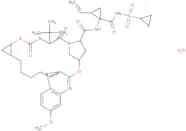
CAS:Grazoprevir hydrate is a direct-acting antiviral agent used in the treatment of hepatitis C virus (HCV) infections. It is a synthetic compound derived through targeted pharmaceutical synthesis aimed at inhibiting viral replication. This compound operates by selectively inhibiting the NS3/4A protease, an enzyme critically involved in the post-translational processing and replication of the HCV polyprotein. By blocking this protease, grazoprevir effectively disrupts the virus's life cycle, thereby reducing viral load in patients.
Fórmula:C38H52N6O10SPureza:Min. 95%Peso molecular:784.9 g/molA2ti-1
CAS:A2ti-1 is a specialized therapeutic agent, which is derived from recombinant DNA technology with the specific mode of action of targeting and modulating cytokine signaling pathways within the immune system. It is designed to interact with specific cytokine receptors, thereby inhibiting or modulating the downstream signaling cascades that are pivotal in the inflammatory response and immune regulation.Fórmula:C20H22N4O2SPureza:Min. 95%Peso molecular:382.5 g/molAcetoxypolygodial
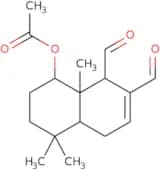
CAS:Acetoxypolygodial is a sesquiterpenoid compound, which is a naturally derived product from the roots of the plant Polygonum hydropiper. This compound exhibits its mode of action through its ability to disrupt microbial cell membranes, leading to increased permeability and eventual cell death. Its primary mechanism involves direct interaction with lipid bilayers, causing destabilization.Fórmula:C17H24O4Pureza:Min. 95%Peso molecular:292.4 g/mol