Antimicrobianos
Subcategorias de "Antimicrobianos"
- Antibióticos(4.503 produtos)
- Antifúngicos(939 produtos)
- Antiparasitários(807 produtos)
- Antivíricos(1.056 produtos)
Foram encontrados 2643 produtos de "Antimicrobianos"
Virginiamycin - Complex of M1+S1
CAS:Virginiamycin - Complex of M1+S1 is an antibiotic compound, which is derived from the actinobacterium Streptomyces virginiae. It functions through the inhibition of bacterial protein synthesis by binding to the 50S ribosomal subunit, thereby obstructing peptide bond formation and impeding microbial growth. The complex is composed of two major components: Virginiamycin M1 and Virginiamycin S1, which synergistically enhance antimicrobial efficacy.
Fórmula:C71H84N10O17Pureza:Min. 95%Peso molecular:1,349.48 g/mol1,4-Dihydro-2,3-benzodithiine
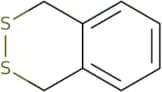
CAS:1,4-Dihydro-2,3-benzodithiine is a synthetic organic compound, which is often utilized in the field of material science and chemical research. It is derived from aromatic dithiins, characterized by a unique heterocyclic structure containing sulfur atoms within its ring system. The compound’s mode of action primarily involves its ability to partake in various cycloaddition reactions due to the electron-rich nature of the dithiine ring, which can facilitate interactions with electrophiles.
Fórmula:C8H8S2Pureza:Min. 95%Peso molecular:168.3 g/mol2-Methyl-4-isothiazolin-3-one
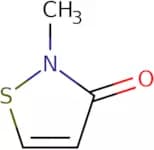
CAS:Produto Controlado2-Methyl-4-isothiazolin-3-one or MIT is a powerful antimicrobial and antifungal agent which is widely used in personal care products. It is also used in industrial applications as a preservative and antifouling agent.Fórmula:C4H5NOSPureza:Min. 96%Cor e Forma:Yellow PowderPeso molecular:115.15 g/molPiperacillin-d5
CAS:Piperacillin-d5 is a stable isotopically labeled antibiotic, which is synthesized chemically to incorporate deuterium atoms. It is derived from the β-lactam group of antibiotics, sharing properties with its non-labeled counterpart, piperacillin. The incorporation of five deuterium atoms allows researchers to use it as a tracer in various pharmacokinetic and metabolic studies without altering its biological activity.Fórmula:C23H22D5N5O7SPureza:Min. 95%Peso molecular:522.59 g/molOxfendazole
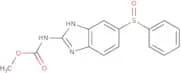
CAS:Oxfendazole is a benzimidazole anthelmintic with action on microtubule formation in parasitic worms and is used for treating gastrointestinal parasites in livestock.Fórmula:C15H13N3O3SPureza:Min. 98 Area-%Cor e Forma:White PowderPeso molecular:315.35 g/molBaumycin C1
CAS:Baumycin C1 is an anthracycline-type antibiotic, which is derived from the bacterium *Streptomyces coeruleorubidus*. The mode of action of Baumycin C1 involves intercalating into DNA strands, thereby disrupting the process of DNA synthesis and replication. This intercalation results in the inhibition of topoisomerase II, an enzyme crucial for DNA unwinding, leading to the generation of double-strand breaks and subsequent interruption of cellular proliferation.
Fórmula:C28H29NO11Pureza:Min. 95%Peso molecular:555.5 g/molN'-Desmethyl azithromycin
CAS:N'-Desmethyl azithromycin is a semi-synthetic derivative antibiotic, which is derived from the chemical modification of azithromycin, a macrolide antibiotic sourced originally from the bacterium *Streptomyces erythreus*. It functions primarily by inhibiting bacterial protein synthesis, binding specifically to the 50S ribosomal subunit, which results in the prevention of transpeptidation and translocation processes during translation. This action effectively halts bacterial growth, rendering it bacteriostatic.
Fórmula:C37H70N2O12Pureza:Min. 95%Peso molecular:734.96 g/molLevofloxacin
CAS:Levofloxacin is a fluoroquinolone antibiotic with a mode of action that inhibits bacterial DNA gyrase and topoisomerase IV. It is used for treating bacterial infections like pneumonia and urinary tract infections.Fórmula:C18H20FN3O4Pureza:Min. 95%Cor e Forma:PowderPeso molecular:361.37 g/mol(Z)-Azoxystrobin
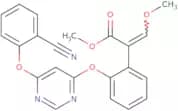
CAS:(Z)-Azoxystrobin is a strobilurin fungicide, which is a synthetic derivative of naturally occurring antifungal compounds produced by fungi such as *Strobilurus tenacellus*. Its mode of action involves the inhibition of mitochondrial respiration in target fungi, specifically by binding to the Qo site of the cytochrome bc1 complex. This disrupts electron transport in the mitochondria, leading to the cessation of ATP production and subsequent cell death.
Fórmula:C22H17N3O5Pureza:Min. 95%Peso molecular:403.4 g/mol7-Ethyl-10-(4-amino-1-piperidino)carbonyloxycamptothecin-d3
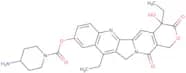
CAS:7-Ethyl-10-(4-amino-1-piperidino)carbonyloxycamptothecin-d3 is a synthetic chemical compound, which is a deuterated derivative of irinotecan. Deuteration involves the substitution of deuterium for hydrogen atoms, which is often utilized to enhance the metabolic stability and pharmacokinetic properties of compounds in research applications. The compound is derived from camptothecin, a natural alkaloid sourced from the Chinese tree Camptotheca acuminata.Fórmula:C28H30N4O6Pureza:Min. 95%Peso molecular:521.6 g/molPazufloxacin
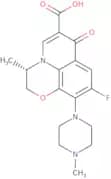
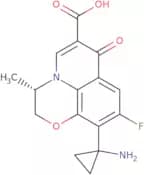
CAS:Pazufloxacin is an antibacterial agent, which is a synthetic derivative originating from the fluoroquinolone class of compounds. This source categorizes it alongside a group of broad-spectrum antibiotics known for their efficacy against a wide variety of bacterial pathogens. The mode of action of pazufloxacin involves the inhibition of bacterial DNA gyrase and topoisomerase IV. These are essential enzymes for bacterial DNA replication, transcription, repair, and recombination processes. By inhibiting these enzymes, pazufloxacin disrupts the bacterial DNA processes, ultimately leading to cell death.
Fórmula:C16H15FN2O4Pureza:Min. 95%Peso molecular:318.3 g/molNifedipine
CAS:Nifedipine is a pharmaceutical compound belonging to the class of dihydropyridine calcium channel blockers, which is synthetically derived. Its mode of action involves the inhibition of calcium ions entering vascular smooth muscle and cardiac muscle cells, leading to vasodilation. By blocking these channels, it reduces peripheral vascular resistance, thereby decreasing blood pressure and easing cardiac workload.
Fórmula:C17H18N2O6Pureza:Min. 98 Area-%Peso molecular:346.33 g/molNicotinamide
CAS:Nicotinamide is an amide form of vitamin B3, which is a water-soluble vitamin derived from dietary sources such as meat, fish, and yeast. In cellular biology, it functions as a precursor to nicotinamide adenine dinucleotide (NAD+), a critical coenzyme in redox reactions and energy production within the cells. Nicotinamide facilitates the transfer of electrons in metabolic processes, contributing to ATP production and cellular respiration. Moreover, it plays a pivotal role in DNA repair and cellular signaling through the regulation of sirtuins and poly(ADP-ribose) polymerases (PARPs).Fórmula:C6H6N2OPureza:Min. 97.0 Area-%Peso molecular:122.12 g/molMGB-BP-3
CAS:MGB-BP-3 is a synthetic antimicrobial agent, which is derived from natural DNA-binding minor groove binder (MGB) compounds. Its structure is based on distamycin, known for targeting the minor groove of DNA. MGB-BP-3 operates by binding to specific sequences within the DNA minor groove, thereby interfering with the replication and transcription processes of bacterial cells. This binding disrupts the DNA function and inhibits the growth and proliferation of bacterial pathogens.
Fórmula:C36H37N7O4Pureza:Min. 95%Peso molecular:631.7 g/molAntimicrobial compound 1
CAS:Antimicrobial Compound 1 is a broad-spectrum antimicrobial agent, which is derived from natural sources, specifically from marine bacteria with known potent antimicrobial properties. This compound acts by targeting and disrupting the synthesis of bacterial cell walls, specifically inhibiting peptidoglycan cross-linking, which ultimately leads to cell lysis and death due to osmotic instability. Such a mechanism offers a robust approach to tackling Gram-positive and Gram-negative bacteria.
Fórmula:C18H30BrNO2Pureza:Min. 95%Peso molecular:372.3 g/molPC 190723
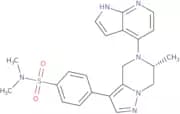
CAS:PC 190723 is a synthetic chemical compound, which is derived through targeted chemical synthesis processes involving precise organic reactions. Its mode of action involves disrupting cellular division by inhibiting specific protein functions essential for the mitotic process. This molecular interaction results in potent effects on cell division, making it a valuable tool for studying cellular mechanics and developing therapeutic strategies.
Fórmula:C14H8ClF2N3O2SPureza:Min. 95%Peso molecular:355.75 g/mol6-Chloro didesacetyl famciclovir
CAS:6-Chloro didesacetyl famciclovir is a synthetic antiviral compound, which is derived from famciclovir, with specific modifications to enhance its biochemical properties. It is a chlorinated analog resulting from structural alterations to famciclovir, a prodrug of the antiviral agent penciclovir.
Fórmula:C10H14ClN5O2Pureza:Min. 95%Peso molecular:271.7 g/molShowdomycin
CAS:Showdomycin is an antibiotic, which is derived from the bacterium *Streptomyces showdoensis*. The mode of action of Showdomycin involves its role as a nucleoside analog that disrupts nucleic acid synthesis by incorporating itself into the nucleic acid chains during replication and transcription, thereby impairing cellular functions.Fórmula:C9H11NO6Pureza:Min. 95%Peso molecular:229.19 g/molClindamycin 2-palmitate sulfoxide
CAS:Clindamycin 2-palmitate sulfoxide is a semisynthetic antibiotic, which is a derivative of clindamycin. It originates from lincomycin, a natural antibiotic produced by the bacterium *Streptomyces lincolnensis*. This compound functions as a prodrug, which is converted into its active form in the body. Its mode of action involves inhibiting bacterial protein synthesis by binding to the 50S subunit of the ribosome, thereby preventing the growth and replication of susceptible bacteria.
Fórmula:C34H64Cl2N2O7SPureza:Min. 95%Peso molecular:715.9 g/mol