Antimicrobianos
Subcategorias de "Antimicrobianos"
- Antibióticos(4.504 produtos)
- Antifúngicos(939 produtos)
- Antiparasitários(808 produtos)
- Antivíricos(1.058 produtos)
Foram encontrados 2643 produtos de "Antimicrobianos"
6-Chloro didesacetyl famciclovir
CAS:6-Chloro didesacetyl famciclovir is a synthetic antiviral compound, which is derived from famciclovir, with specific modifications to enhance its biochemical properties. It is a chlorinated analog resulting from structural alterations to famciclovir, a prodrug of the antiviral agent penciclovir.
Fórmula:C10H14ClN5O2Pureza:Min. 95%Peso molecular:271.7 g/molImipenem Monohydrate, Antibiotic for Culture Media Use Only
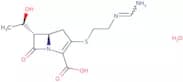
CAS:Imipenem acts as an antimicrobial through inhibiting cell wall synthesis of various gram-positive and gram-negative bacteria. It remains very stable in the presence of beta-lactamase (both penicillinase andcephalosporinase) produced by some bacteria, and is a strong inhibitor of beta-lactamases from some gram-negative bacteria that are resistant to most beta-lactam antibiotics.Fórmula:C12H19N3O5SPureza:Min. 98.0 Area-%Peso molecular:317.36 g/molBCX 4430 hydrochloride
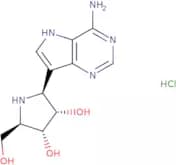
CAS:RNA polymerase (RdRp) inhibitor
Fórmula:C11H15N5O3Pureza:Min. 95%Peso molecular:265.27 g/molCarumonam disodium
CAS:Carumonam disodium is a monobactam antibiotic, which is derived from microbial fermentation processes. Its mode of action involves binding to penicillin-binding proteins (PBPs) of susceptible Gram-negative bacteria. This binding inhibits the final transpeptidation step of peptidoglycan synthesis in the bacterial cell wall, leading to cell lysis and death.Fórmula:C12H14N6Na2O10S2Pureza:Min. 95%Peso molecular:512.39 g/molCycloheximide, Antibiotic for Culture Media Use Only
CAS:Cycloheximide, Antibiotic for Culture Media Use Only, is an antifungal agent derived from the Streptomyces griseus bacterium. Its primary mode of action involves the inhibition of eukaryotic protein synthesis by interfering with the translocation step on the 80S ribosome. This leads to rapid arrest of protein assembly, effectively limiting fungal and certain yeast growth in culture.Fórmula:C15H23NO4Peso molecular:281.35 g/molImazamox-o-desmethyl
CAS:Imazamox-o-desmethyl is a herbicide metabolite, which is derived from the biotransformation of the imazamox compound, typically occurring during degradation processes. Its mode of action involves targeting the acetohydroxyacid synthase (AHAS) enzyme—a critical component in the biosynthesis of branched-chain amino acids in plants. This inhibition disrupts plant growth, leading to effective weed control.
Fórmula:C14H17N3O4Pureza:Min. 95%Peso molecular:291.3 g/molZiresovir
CAS:Respiratory syncytial virus (RSV) fusion (F) protein inhibitorFórmula:C22H25N5O3SPureza:Min. 95%Cor e Forma:PowderPeso molecular:439.53 g/molHexazinone metabolite C
CAS:Hexazinone Metabolite C is a chemical compound that serves as a marker for the metabolic degradation of hexazinone, a systemic herbicide. This metabolite is derived from the biological and chemical transformation processes that hexazinone undergoes when applied to plants and soil environments.Fórmula:C11H18N4O3Pureza:Min. 95%Peso molecular:254.29 g/molN-(4-(tert-Butyl)phenyl)-N-(2-(cyclohexylamino)-2-oxo-1-(pyridin-3-yl)ethyl)-1H-imidazole-4-carboxamide
CAS:N-(4-(tert-Butyl)phenyl)-N-(2-(cyclohexylamino)-2-oxo-1-(pyridin-3-yl)ethyl)-1H-imidazole-4-carboxamide is a synthetic small molecule, which is a product of advanced organic synthesis. This compound is a derivative of imidazole carboxamides, primarily sourced through intricate organic reactions involving selective functionalization and cyclization processes to achieve its precise molecular architecture.Fórmula:C27H33N5O2Pureza:Min. 95%Peso molecular:459.6 g/molAcetyllovastatin
CAS:Acetyllovastatin is a semi-synthetic derivative of lovastatin, which is a member of the statin class of pharmaceuticals. It is derived from the natural product lovastatin, originally isolated from the mold Aspergillus terreus, through acetylation to enhance its pharmacological properties. The mode of action of acetyllovastatin involves the inhibition of HMG-CoA reductase, a key enzyme in the mevalonate pathway responsible for cholesterol biosynthesis. By competitively inhibiting this enzyme, acetyllovastatin effectively reduces intracellular cholesterol levels, leading to upregulation of LDL receptors and increased clearance of low-density lipoprotein (LDL) from the bloodstream.Fórmula:C26H38O6Pureza:Min. 95%Peso molecular:446.6 g/molMesosulfuron
CAS:Mesosulfuron is a selective herbicide, which is a synthetic chemical compound with a specific mode of action designed to inhibit acetolactate synthase (ALS). This enzyme inhibition disrupts the biosynthesis of essential amino acids such as valine, leucine, and isoleucine, leading to the cessation of cell division and consequent plant growth arrest. The herbicide is primarily utilized in agricultural settings, particularly for post-emergence control of various grass weeds within cereal crops, including wheat and barley. Its application is crucial for managing weed competition that can significantly impact crop yield and quality. Mesosulfuron is absorbed through the foliage and roots of targeted species, providing systemic action that ensures effective control. Its usage is governed by stringent regulations to minimize environmental impact and to manage herbicide resistance through integrated weed management strategies.
Fórmula:C16H19N5O9S2Pureza:Min. 95%Peso molecular:489.5 g/molTazobactam diphenylmethyl ester
CAS:Tazobactam diphenylmethyl ester is a chemical compound that serves as a precursor or intermediate in the synthesis of beta-lactamase inhibitors. This product originates from synthetic organic chemistry and plays a crucial role in antibiotic research and development. Its mode of action involves modifying or blocking the active site of beta-lactamase enzymes, which are responsible for granting bacteria resistance to beta-lactam antibiotics.
Fórmula:C23H22N4O5SPureza:Min. 95%Peso molecular:466.5 g/molCefoselis hydrochloride
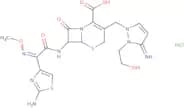
CAS:Cefoselis hydrochloride is a broad-spectrum antibiotic, which is a synthetic cephalosporin derived from a semi-synthetic process involving modifications of naturally occurring cephalosporin C. Its mode of action involves inhibiting bacterial cell wall synthesis by binding to specific penicillin-binding proteins, leading to cell lysis and death.Fórmula:C19H23ClN8O6S2Pureza:Min. 95%Peso molecular:559 g/mol4-(4,5-Dihydroxy-3-methoxy-6-methyloxan-2-yl)oxy-2,5,7-trihydroxy-3-methoxy-2-methyl-3,4-dihydrotetracene-1,6,11-trione
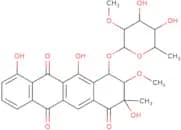
CAS:4-(4,5-Dihydroxy-3-methoxy-6-methyloxan-2-yl)oxy-2,5,7-trihydroxy-3-methoxy-2-methyl-3,4-dihydrotetracene-1,6,11-trione is an anthraquinone derivative, which is a specialized organic compound. This compound is typically derived from complex synthetic processes involving multi-step organic reactions starting from anthraquinone precursors. Its mode of action primarily involves the disruption of microbial cell walls and the inhibition of essential enzymatic pathways that are critical for microbial replication and survival.
Fórmula:C27H28O12Pureza:Min. 95%Peso molecular:544.5 g/molMepanipyrim-2-hydroxypropyl
CAS:Mepanipyrim-2-hydroxypropyl is a fungicide, which is synthesized from chemical sources, specifically targeting pathogens by inhibiting their metabolic processes. Its mode of action involves the disruption of enzymatic activities crucial for fungal cell survival, leading to halted growth and eventual death of the fungus.Fórmula:C14H17N3OPureza:Min. 95%Peso molecular:243.3 g/molCeftobiprole medocaril
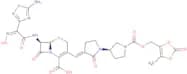
CAS:Ceftobiprole medocaril is a prodrug of the cephalosporin class, which is a beta-lactam antibiotic. It is synthetically derived, designed to combat Gram-positive and Gram-negative bacteria. The mode of action involves binding to penicillin-binding proteins (PBPs), crucial for bacterial cell wall synthesis, ultimately leading to bacterial cell lysis and death.Fórmula:C26H26N8O11S2Pureza:Min. 95%Peso molecular:690.66 g/molPyrametostrobin
CAS:Pyrametostrobin is a fungicide, which is derived from strobilurin compounds. These compounds are originally sourced from natural antifungal substances produced by certain fungi, specifically the wood-decay fungus Strobilurus tenacellus. Pyrametostrobin functions by inhibiting mitochondrial respiration in fungal cells, specifically targeting the cytochrome bc1 complex within the electron transport chain. This action disrupts the energy production of the fungal cells, ultimately leading to their death.
Fórmula:C21H23N3O4Pureza:Min. 95%Peso molecular:381.4 g/molPicloxydine digluconate
CAS:Picloxydine digluconate is an antiseptic agent, which is derived from synthetic chemical processes designed to produce highly effective antimicrobial compounds. It operates through the disruption of microbial cell membranes, leading to the leakage of cell contents and subsequent cell death. This mode of action is particularly efficient against a wide spectrum of bacteria, including both Gram-positive and Gram-negative strains, as well as fungi and some viruses.Fórmula:C26H36Cl2N10O7Pureza:Min. 95%Peso molecular:671.5 g/molMoxifloxacin
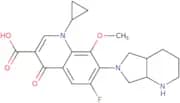
CAS:Moxifloxacin is a synthetic broad-spectrum antibiotic, which is derived from the fluoroquinolones class. It functions by inhibiting bacterial topoisomerase II (DNA gyrase) and topoisomerase IV, enzymes critical for DNA replication, transcription, repair, and recombination. The inhibition of these enzymes results in DNA breakage, thereby leading to bacterial cell death.Fórmula:C21H24FN3O4Pureza:Min. 95%Peso molecular:401.4 g/molBalapiravir hydrochloride
CAS:Balapiravir hydrochloride is an antiviral agent, which is synthesized through chemical processes. It operates as a prodrug, meaning it is metabolized in the body to produce the active compound that inhibits viral replication. The mode of action of Balapiravir involves targeting the viral RNA polymerase, an essential enzyme for the replication of viral genomes. By inhibiting this enzyme, the drug effectively reduces viral load within the host, impairing the spread and establishment of the virus.
Fórmula:C21H31ClN6O8Pureza:Min. 95%Peso molecular:531 g/mol