Terpenóides
Subcategorias de "Terpenóides"
- Diterpenos (C₂₀)(671 produtos)
- Hemiterpenos (C₅)(21 produtos)
- Monoterpenos (C₁₀)(709 produtos)
- Sesquiterpenos (C₂₅)(452 produtos)
- Tetraterpenos (C₄₀)(63 produtos)
- Triterpenos (C₃₀)(1.130 produtos)
Foram encontrados 1423 produtos de "Terpenóides"
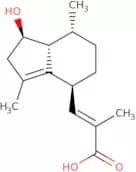
Hydroxyvalerenic acid
CAS:Hydroxyvalerenic acid is a bioactive compound, which is primarily found in the roots of the Valeriana officinalis plant. This source is widely recognized in traditional medicine for its calming properties. The compound acts on the central nervous system, potentially modulating GABAergic activity, which may contribute to its sedative and anxiolytic effects.Fórmula:C15H22O3Pureza:Min. 95 Area-%Peso molecular:250.33 g/molTripdiolide
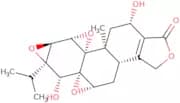
CAS:Tripdiolide is a bioactive diterpenoid, which is derived from the Chinese medicinal plant Tripterygium wilfordii, commonly known as Thunder God Vine. This compound exerts its effects through a complex mode of action, primarily involving the inhibition of nuclear factor kappa B (NF-kB) signaling pathways and the induction of apoptosis. Recent studies have also suggested its role in modulating the immune response by targeting specific cytokines and signaling pathways.
Pureza:Min. 95%Cor e Forma:PowderQS 21
CAS:QS-21 is a saponin-based adjuvant, which is a compound used to enhance the body's immune response to an antigen. This product is derived from the bark of the Quillaja saponaria tree, commonly known as the soapbark tree, native to Chile. The mode of action of QS-21 involves stimulating the immune system by activating antigen-presenting cells, such as dendritic cells and macrophages, which in turn enhance both humoral and cellular immune responses.
Fórmula:C92H148O46Peso molecular:1,990.14 g/molGinkgolic acid (C15:1)
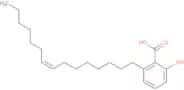
CAS:Ginkgolic acid (C15:1) is a bioactive compound, which is derived from the seeds and leaves of the Ginkgo biloba tree. It is known for its cytotoxic and antimicrobial properties, primarily acting as an inhibitor of various enzymatic activities. This compound functions by interfering with enzyme processes, disrupting cellular functions in target organisms. Ginkgolic acid is utilized in research focused on understanding and potentially manipulating these biological pathways. Its applications extend to studies examining its effects on cancer cell lines, where it has demonstrated the ability to induce apoptosis and inhibit cellular proliferation. Additionally, its antimicrobial characteristics are explored for developing novel pharmaceutical agents. While primarily of interest in the context of biochemical research, Ginkgolic acid also serves as a model compound for studying the ecological roles of natural plant toxins.Fórmula:C22H34O3Pureza:Min. 95%Cor e Forma:White PowderPeso molecular:346.5 g/molMadecassic acid
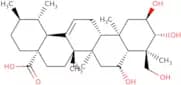
CAS:Produto ControladoMadecassic acid is a triterpenoid compound, which is a natural chemical constituent of Centella asiatica, commonly known as Gotu Kola. This source is a perennial herbaceous plant belonging to the Apiaceae family, widely distributed in tropical and subtropical countries. Madecassic acid acts primarily through its anti-inflammatory and antioxidant mechanisms. It modulates inflammatory responses by inhibiting the activation of NF-κB signaling pathways and reducing the production of pro-inflammatory cytokines. Additionally, it contributes to cellular protection by scavenging reactive oxygen species.
Fórmula:C30H48O6Pureza:Min. 95%Peso molecular:504.7 g/molMomilactone B
CAS:Please enquire for more information about Momilactone B including the price, delivery time and more detailed product information at the technical inquiry form on this pageFórmula:C20H26O4Pureza:Min. 95%Cor e Forma:PowderPeso molecular:330.42 g/molMuzigadial
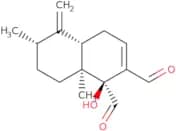
CAS:Muzigadial is a sesquiterpene dialdehyde, which is a type of natural product isolated from the plant Myristica ceylanica. This compound is characterized by its biogenically derived structural complexity that confers an array of bioactive properties. It operates primarily through its interaction with biological membranes and proteins, leading to disruptions in cellular processes and inhibition of microbial growth.
Fórmula:C15H20O3Pureza:Min. 95%Peso molecular:248.32 g/molOrobanchyl acetate
CAS:Orobanchyl acetate is a natural compound, a sesquiterpenoid ester, which is isolated from plants of the Orobanche species. These plants, often referred to as broomrapes, are parasitic and obtain nutrients from host plants, making them a unique source of bioactive compounds. The mode of action of orobanchyl acetate is primarily allelopathic, where it influences the growth and development of neighboring plants. It achieves this by interacting with specific biochemical pathways, potentially inhibiting the growth of competing plant species.Fórmula:C21H24O7Pureza:Min. 95%Cor e Forma:PowderPeso molecular:388.41 g/mol(-)-Secologanin
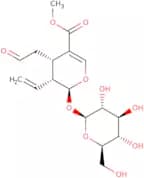
CAS:(-)-Secologanin is a monoterpenoid glycoside, which is a key intermediate in the biosynthesis of indole alkaloids, found primarily in plants such as those in the Apocynaceae and Rubiaceae families. It plays a crucial role in the natural production of complex alkaloids, forming the backbone for numerous pharmacologically active compounds, including quinine, camptothecin, and ajmalicine.
Fórmula:C17H24O10Pureza:Min. 88 Area-%Cor e Forma:PowderPeso molecular:388.37 g/molDigitoxigenin
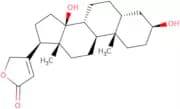
CAS:Digitoxigenin is an aglycone, which is a type of steroid structure, derived from the hydrolysis of cardiac glycosides found in plants of the Digitalis species, such as foxglove. This compound is obtained through enzymatic or chemical cleavage of glycosidic bonds present in its parent molecules, digitoxin and others, which are naturally occurring compounds in these plants.Fórmula:C23H34O4Cor e Forma:White PowderPeso molecular:374.51 g/molDehydrokahweol
CAS:Dehydrokahweol is a diterpene molecule, which is a natural compound found in coffee beans. Identified as one of the diterpenes present in coffee, dehydrokahweol is derived from plant sources, specifically Coffea arabica and Coffea canephora. The mode of action of dehydrokahweol involves various biochemical pathways, including modulation of oxidative stress and potential anti-inflammatory activities. This compound is under investigation for its ability to influence cellular signaling pathways that may impact metabolic and immunological responses.Fórmula:C20H24O2Pureza:Min. 95%Cor e Forma:PowderPeso molecular:296.4 g/molThujone (α- and β- mixture)
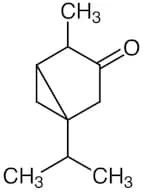
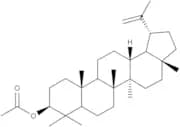
CAS:Fórmula:C10H16OPureza:>70.0%(GC)Cor e Forma:Colorless to Light orange to Yellow clear liquidPeso molecular:152.24Lupeol acetate
CAS:Lupeol acetate analytical standard provided with chromatographic purity, to be used as reference material for qualitative determination.
Fórmula:C32H52O2Pureza:(HPLC) ≥95%Cor e Forma:PowderPeso molecular:468.77Ref: IN-DA003AAQ
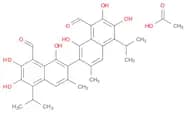
Produto descontinuadoGossypol Acetic Acid
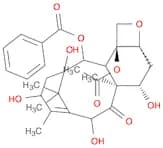
CAS:Fórmula:C32H34O10Pureza:95%Cor e Forma:SolidPeso molecular:578.6063599999999b-D-Glucopyranoside,(1aR,2S,3aR,5R,5aR,5bS)-5b-[(benzoyloxy)methyl]tetrahydro-5-hydroxy-2-methyl-2,5-methano-1H-3,4-dioxacyclobuta[cd]pentalen-1a(2H)-yl
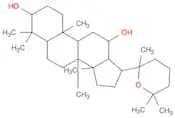
CAS:Fórmula:C23H28O11Pureza:95%Cor e Forma:SolidPeso molecular:480.4618Dammarane-3,12-diol, 20,25-epoxy-, (3b,12b,20R)-
CAS:Fórmula:C30H52O3Cor e Forma:SolidPeso molecular:460.73211H-4,6:16,19-Dietheno-21,25-metheno-12H-[1,3]dioxolo[4,5-g]pyrido[2',3':17,18][1,10]dioxacycloeicosino[2,3,4-ij]isoquinoline,2,3,13,14,14a,15,26,26a-octahydro-22,30-dimethoxy-1,14-dimethyl-,(14aS,26aR)-
CAS:Fórmula:C37H38N2O6Pureza:97%Cor e Forma:SolidPeso molecular:606.7074Ref: IN-DA00I8RC
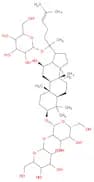
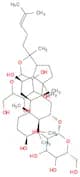
Produto descontinuadob-D-Glucopyranoside,(3b,12b)-20-(b-D-glucopyranosyloxy)-12-hydroxydammar-24-en-3-yl2-O-b-D-glucopyranosyl-
CAS:Fórmula:C48H82O18Pureza:98%Cor e Forma:SolidPeso molecular:947.1539





![b-D-Glucopyranoside,(1aR,2S,3aR,5R,5aR,5bS)-5b-[(benzoyloxy)methyl]tetrahydro-5-hydroxy-2-methyl-2…](/_next/image/?url=https%3A%2Fstatic.cymitquimica.com%2Fproducts%2FIN%2Fthumb-webp%2FDA00I4J3.webp&w=3840&q=75)
![1H-4,6:16,19-Dietheno-21,25-metheno-12H-[1,3]dioxolo[4,5-g]pyrido[2',3':17,18][1,10]dioxacycloeico…](/_next/image/?url=https%3A%2Fstatic.cymitquimica.com%2Fproducts%2FIN%2Fthumb-webp%2FDA00I8RC.webp&w=3840&q=75)