Terpenóides
Os terpenoides, também conhecidos como isoprenoides, são a maior classe de compostos orgânicos naturais, derivados de unidades de isopreno de cinco carbonos. Eles são encontrados em diversas plantas e são conhecidos por suas propriedades aromáticas, bem como por seu papel na defesa e sinalização das plantas. Os terpenoides têm sido amplamente estudados por seus efeitos terapêuticos, incluindo propriedades anti-inflamatórias, antimicrobianas e anticancerígenas. Eles são usados nas indústrias farmacêutica, cosmética e alimentícia devido aos seus benefícios para a saúde e qualidades aromáticas. Na CymitQuimica, você encontrará uma ampla seleção de terpenoides, essenciais para a pesquisa em biologia vegetal, farmacologia e síntese de produtos naturais.
Subcategorias de "Terpenóides"
- Diterpenos (C₂₀)(671 produtos)
- Hemiterpenos (C₅)(21 produtos)
- Monoterpenos (C₁₀)(709 produtos)
- Sesquiterpenos (C₂₅)(452 produtos)
- Tetraterpenos (C₄₀)(63 produtos)
- Triterpenos (C₃₀)(1.130 produtos)
Foram encontrados 1423 produtos de "Terpenóides"
Ordenar por
Pureza (%)
0
100
|
0
|
50
|
90
|
95
|
100
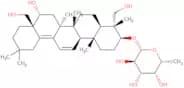
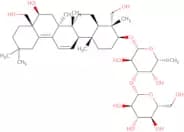
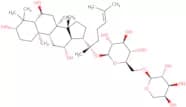
Prosaikogenin D
CAS:<p>Prosaikogenin D is a type of saponin, which is a secondary metabolite derived primarily from the plant species within the Araliaceae family, notably ginseng and related plants. This compound is a result of bioconversion processes involving ginsenosides, which are the primary active components found in ginseng. The mode of action of Prosaikogenin D involves its interaction with various cellular pathways, leading to modulation of immune responses, anti-inflammatory effects, and potential anticancer activity.</p>Fórmula:C36H58O8Pureza:Min. 95%Peso molecular:618.84 g/mol(-)-trans-Myrtanol
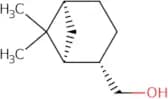
CAS:<p>(-)-trans-Myrtanol is a type of monoterpenoid, classified as a terpene alcohol. It is primarily derived from essential oils found in various plants, including those in the coniferous and Lauraceae families. Myrtanol is a chiral compound, and its stereochemistry is vital for its biological activities.</p>Fórmula:C10H18OPureza:Min. 95%Cor e Forma:Colorless Clear LiquidPeso molecular:154.25 g/molDehydroandrographolide succinate
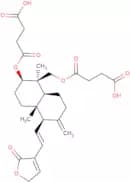
CAS:<p>Dehydroandrographolide succinate is a pharmacological agent derived from the diterpenoid lactone, andrographolide, which is found in the plant *Andrographis paniculata*. This compound exhibits its mode of action primarily by modulating inflammatory pathways, including inhibition of nuclear factor kappa-light-chain-enhancer of activated B cells (NF-κB) and the reduction of pro-inflammatory cytokines. These actions contribute to its anti-inflammatory and immunomodulatory properties.</p>Fórmula:C28H36O10Pureza:Min. 95%Peso molecular:532.58 g/molPseudolaric Acid C
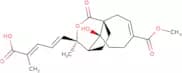
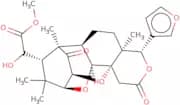
CAS:Pseudolaric Acid C is a naturally occurring diterpenoid, which is extracted from the plant Pseudolarix amabilis, commonly known as the golden larch. It is characterized by its unique structural properties, contributing to its biological activity. The primary mode of action of Pseudolaric Acid C involves disrupting the integrity of fungal cell membranes, thereby inhibiting fungal growth and viability. This compound has been shown to have significant antifungal properties, making it a subject of interest in the development of antifungal agents.Pureza:Min. 95%Fraxinellone
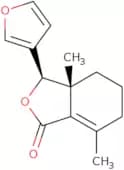
CAS:Fraxinellone is a naturally occurring sesquiterpenoid lactone, which is derived from the plant species Dictamnus dasycarpus, commonly known as the burning bush. It exhibits its mode of action through the disruption of calcium ion channels, leading to neurotoxic effects in target organisms. This interaction with calcium channel pathways is crucial for its bioactivity, influencing both insecticidal and potential therapeutic effects.Pureza:Min. 95%20(R)Ginsenoside Rh1
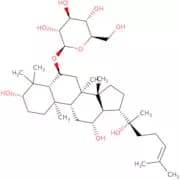
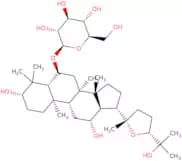
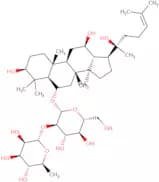
CAS:<p>20(R)-Ginsenoside Rh1 is a bioactive compound, which is a secondary metabolite extracted from Panax ginseng, a medicinal plant widely utilized in traditional medicine. This ginsenoside functions by modulating various cellular pathways, interacting with nuclear receptors and signal transduction molecules, thus influencing immune responses, anti-inflammatory activities, and neuroprotective mechanisms.</p>Pureza:Min. 95%Pyrocurzerenone
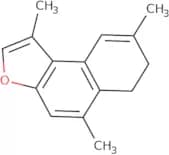
CAS:Please enquire for more information about Pyrocurzerenone including the price, delivery time and more detailed product information at the technical inquiry form on this pageFórmula:C15H16OPureza:Min. 95%Peso molecular:212.29 g/molDarutoside
CAS:Darutoside is a bioactive compound, which is a sesquiterpene lactone glycoside sourced primarily from the Siegesbeckia orientalis plant. It functions through a mechanism that enhances extracellular matrix components, particularly promoting the synthesis of collagen and elastin fibers. This action helps in reinforcing the skin's structural integrity and improving its reparative processes.Fórmula:C26H44O8Pureza:Min. 95%Peso molecular:484.62 g/molNeosartoricin
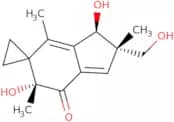
CAS:Please enquire for more information about Neosartoricin including the price, delivery time and more detailed product information at the technical inquiry form on this pageFórmula:C26H28O9Pureza:Min. 95%Peso molecular:484.5 g/molNotoginsenoside Fa
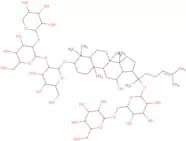
CAS:<p>Notoginsenoside Fa is a bioactive compound, specifically a type of saponin. It is derived from the roots of Panax notoginseng, a plant renowned in traditional Chinese medicine. The mode of action of Notoginsenoside Fa involves modulation of signaling pathways, including antioxidant, anti-inflammatory, and anti-apoptotic activities, as well as influencing cellular pathways related to energy metabolism and cell proliferation.</p>Pureza:Min. 95%Illudin M
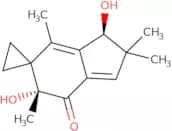
CAS:<p>Illudin M is a natural compound, categorized as a sesquiterpene. It is derived from certain species of mushrooms, notably those in the Omphalotus genus, such as the jack-o'-lantern mushroom (Omphalotus illudens). The mode of action of Illudin M involves targeting and damaging DNA within cells. Due to its cytotoxic nature, it interferes with DNA synthesis, leading to cell death, particularly in rapidly dividing cells.</p>Fórmula:C15H20O3Pureza:Min. 95%Peso molecular:248.14124Incensole acetate
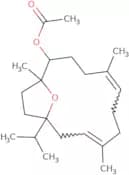
CAS:<p>Incensole acetate is a bioactive diterpene compound, which is a significant constituent of the Boswellia genus, commonly known as frankincense. This compound is primarily derived from the resin of Boswellia species, notably Boswellia sacra. Incensole acetate functions as a psychoactive agent, exhibiting its effects primarily through interactions with ion channels and receptors in the brain, modulating neuroinflammation and possibly influencing synaptic transmission.</p>Fórmula:C22H36O3Pureza:Min. 95%Peso molecular:348.52 g/molLanatoside A
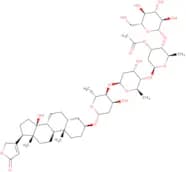
CAS:<p>Lanatoside A is a cardiac glycoside found in the plant "Lantana camara" and other plants of the family Verbenaceae. Lanatoside A is structurally characterized by an oxygenated hydroxyl group at C-3, which is present in the natural compound secoisolariciresinol. It has been shown to have inhibitory effects on enzymes involved in congestive heart failure such as myosin light chain kinase and serine/threonine protein kinase. Lanatoside A also has been shown to have immunomodulatory properties and may be beneficial for autoimmune diseases such as rheumatoid arthritis. The enzyme activities are inhibited by lanatosides at low pH values (pH 5-6) but not at high pH values (pH 7-8).</p>Pureza:Min. 95%Prosaikogenin H
CAS:Prosaikogenin H is a naturally occurring compound, classified as a saponin, which is derived from specific plant sources, particularly within the family Araliaceae. It is obtained through extraction and purification processes from plants known for their bioactive compounds. The mode of action of prosaikogenin H involves interacting with cellular pathways to modulate biological responses, including anti-inflammatory and antioxidant effects. These interactions are facilitated by its structural properties that enable it to engage with cell membranes and influence signaling cascades.Fórmula:C36H58O8Pureza:Min. 95%Peso molecular:618.84 g/molPseudolaric acid B-O-beta-D-glucopyranoside
CAS:Pseudolaric acid B-O-beta-D-glucopyranoside is a secondary metabolite, which is a bioactive compound sourced from the bark of the Pseudolarix amabilis, a coniferous tree native to China. It exhibits its mode of action primarily through the disruption of fungal cell integrity and inhibition of fungal growth by interfering with the synthesis of key structural components in the cell wall. This action makes it a potent antifungal agent with secondary antibacterial properties.Pureza:Min. 95%Pseudoginsenoside RT5
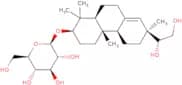
CAS:Pseudoginsenoside RT5 is a saponin, which is a type of glycoside found in certain plants, particularly in the Panax ginseng species. It is extracted from the root of this traditional medicinal plant, which is well-known for its therapeutic properties. The mode of action of Pseudoginsenoside RT5 involves modulating various cellular pathways, including the inhibition of certain enzymes and receptors involved in disease processes such as inflammation and cell proliferation. This compound is also implicated in antioxidant activities, which further contribute to its potential therapeutic effects.Pureza:Min. 95%Jasminoside N
CAS:Jasminoside N is a natural compound, specifically a glycoside, which is derived from certain plant species, particularly in the genus *Jasminum*. As a natural metabolite found in these species, it exhibits an interesting profile in pharmacological research. The mode of action of Jasminoside N primarily involves its interaction with specific cellular pathways, often influencing anti-inflammatory and antioxidant responses. Its ability to modulate these pathways makes it a subject of interest in the study of plant-based therapeutic agents.Fórmula:C22H38O11Pureza:Min. 95%Peso molecular:478.53 g/molSaikosaponin B1
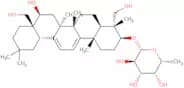
CAS:<p>Saikosaponin B1 is a triterpenoid saponin, which is primarily derived from the roots of Bupleurum species, particularly Bupleurum falcatum. This bioactive compound exhibits a plethora of pharmacological activities through various modes of action, including modulation of immune responses and inhibition of inflammatory pathways. It interacts with cellular components to influence signal transduction mechanisms that are crucial in the pathophysiology of various diseases.</p>Pureza:Min. 95%Gypenoside Li
CAS:<p>Gypenoside Li is a phytochemical compound, which is derived from the plant Gynostemma pentaphyllum, commonly known as Jiaogulan. It functions primarily through modulating various biological pathways, including anti-inflammatory and antioxidant mechanisms, making it of significant interest for therapeutic research.</p>Fórmula:C42H72O14Pureza:Min. 95%Peso molecular:801.01 g/molSabinene hydrate
CAS:Sabinene hydrate is a bicyclic monoterpene alcohol, which is a naturally occurring compound found in essential oils of various plants, especially in species such as Juniperus and Myristica. This compound is derived from the oxidation of sabinene, a terpene prevalent in numerous aromatic plants.Fórmula:C10H18OPureza:Min. 95%Peso molecular:154.25 g/molLucidenic acid P
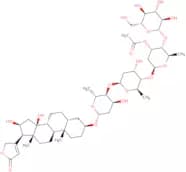
CAS:<p>Lucidenic acid P is a triterpenoid compound, which is a bioactive metabolite isolated from Ganoderma lucidum, a medicinal mushroom known for its diverse pharmacological properties. It is primarily sourced from the fruiting bodies of this fungus, where it is present as part of a complex mixture of triterpenoids.</p>Fórmula:C29H42O8Pureza:Min. 95%Peso molecular:518.64 g/molLanatoside B
CAS:<p>Lanatoside B is a cardiac glycoside, which is a type of compound obtained from the leaves of the Digitalis lanata plant, commonly known as woolly foxglove. This compound belongs to a class of organic substances known for their potent effects on the heart's contractile capability. The primary mode of action of Lanatoside B involves inhibiting the sodium-potassium ATPase enzyme in cardiac tissues. This inhibition leads to an increase in intracellular sodium concentration, which subsequently boosts calcium ions available for myocardial contraction via the sodium-calcium exchange mechanism.</p>Fórmula:C49H76O20Pureza:Min. 95%Peso molecular:985.12 g/molValerenic acid - Valeriana officinalis (common valerian)
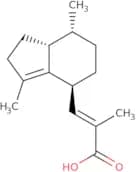
CAS:Valerenic acid is a bioactive compound, which is a sesquiterpenoid product of Valeriana officinalis, commonly known as valerian. This perennial flowering plant is native to Europe and parts of Asia and has been employed in traditional medicine for centuries. Valerenic acid is primarily extracted from the root, which is known for its distinctive aroma and therapeutic properties.Fórmula:C15H22O2Pureza:Min. 98 Area-%Cor e Forma:PowderPeso molecular:234.33 g/molCycloartanol
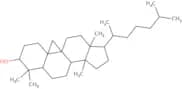
CAS:Cycloartanol is a triterpenoid alcohol, which is primarily derived from plant sources, particularly from the cell membranes of various plant species. As a phytosterol, it plays a critical role in the stabilization of cell membranes and serves as a precursor in the biosynthesis of more complex steroidal compounds. The mode of action of cycloartanol involves its integration into lipid bilayers, contributing to membrane fluidity and integrity, and potentially interacting with various biochemical pathways within the plant systems.Fórmula:C30H52OPureza:Min. 95%Cor e Forma:PowderPeso molecular:428.7 g/molMethyl lucidenate D2
CAS:Methyl lucidenate D2 is a triterpenoid compound, which is a derivative isolated from the fruiting bodies of Ganoderma lucidum, a widely studied medicinal mushroom. This compound exhibits activity primarily through its ability to modulate various signaling pathways implicated in cancer cell proliferation and survival. Specifically, it has been observed to interfere with tumor growth by inducing apoptosis and cell cycle arrest in several cancer cell lines.Pureza:Min. 95%trans-Hydroxydavanone - Artemisia sp.
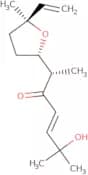
CAS:<p>trans-Hydroxydavanone is a naturally occurring compound, which is a sesquiterpenoid ketone derived from the Artemisia species. It is characterized by its unique molecular structure that includes a hydroxyl group, contributing to its distinctive biochemical properties. The source of trans-Hydroxydavanone lies primarily in various species of the Artemisia plant, which are known for their diverse range of secondary metabolites.</p>Fórmula:C15H24O3Pureza:Min. 95%Peso molecular:252.35 g/molSapindoside A
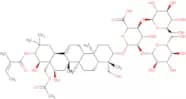
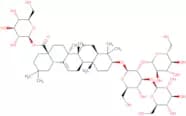
CAS:<p>Sapindoside A is a bioactive saponin, which is a glycoside compound. It is derived from the fruit pericarp of Sapindus species, commonly known as soapberries or soapnuts. These are traditionally utilized for their natural surfactant properties due to the presence of saponins, which form stable foams when agitated in water.</p>Fórmula:C41H66O12Pureza:Min. 98.0 Area-%Peso molecular:750.96 g/molRef: 3D-Q-100340
1gA consultar5gA consultar250mgA consultar500mgA consultar2500mgA consultar-Unit-ggA consultarIsoescin IB
CAS:Isoescin IB is a saponin compound derived from the seeds of Aesculus hippocastanum, commonly known as horse chestnut. It belongs to a class of natural products known for their potential therapeutic properties. The source of Isoescin IB, the horse chestnut tree, is widely studied for its bioactive compounds that have been used in traditional medicine.Pureza:Min. 95%Verbenone
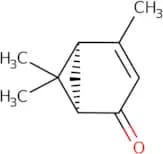
CAS:<p>Verbenone is a semiochemical product, which is a terpene compound sourced from the fragrant essential oils of certain plants, such as members of the Verbena genus. It acts as an anti-aggregation pheromone that disrupts the behavior of specific insect species. By mimicking natural signals in the environment, Verbenone inhibits the congregation and settling of pests like bark beetles.</p>Fórmula:C10H14OPureza:Min. 95%Peso molecular:150.22 g/molIsolimonene
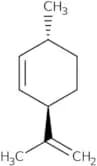
CAS:<p>Isolimonene is a monoterpene, which is a naturally occurring hydrocarbon found primarily in citrus oils extracted from the rinds of fruits such as lemons, oranges, and grapefruits. As a compound derived from the secondary metabolites of plants, it is intricately involved in the plant's defense mechanisms.</p>Fórmula:C10H16Pureza:Min. 95%Cor e Forma:Clear LiquidPeso molecular:136.23 g/molBetulonicacid
CAS:Betulonic acid is a naturally occurring triterpenoid compound, which is sourced from the bark of certain species of birch trees, mainly Betula species. It exhibits anti-inflammatory and anti-cancer properties, primarily through the modulation of various signaling pathways involved in inflammation and apoptosis. Betulonic acid acts by inhibiting key enzymes and transcription factors, such as cyclooxygenase and NF-κB, thereby reducing the production of pro-inflammatory mediators and promoting cell death in cancerous cells.Fórmula:C30H46O3Pureza:Min. 95%Peso molecular:454.68 g/mol(-)-trans-Pinocarveol
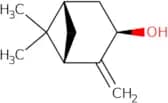
CAS:<p>(-)-trans-Pinocarveol is a bicyclic monoterpene alcohol, which occurs naturally in a variety of essential oils, typically extracted from coniferous trees and some aromatic plants. As a chiral compound, it features a unique molecular configuration, often isolated from the Pinaceae family or synthesized via dihydroxylation of pinene derivatives.</p>Fórmula:C10H16OPureza:Min. 95%Peso molecular:152.23 g/molDemethoxydeacetoxypseudolaric acid B
CAS:Demethoxydeacetoxypseudolaric acid B is a potent bioactive compound, which is a natural diterpenoid isolated from the plant Pseudolarix amabilis, also known as the golden larch. This compound is part of a class of structurally intricate molecules characterized by their tricyclic diterpenoid structures, specific to this botanical source. The mode of action of demethoxydeacetoxypseudolaric acid B primarily involves the disruption of microtubule assembly, a mechanism critical for its antifungal activity. By interfering with the polymerization of tubulin proteins, it effectively hinders cellular functions dependent on the microtubule network, leading to cell cycle arrest and apoptosis in susceptible fungal cells.Pureza:Min. 95%Cinnamodial
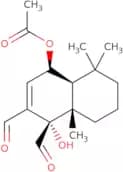
CAS:<p>Cinnamodial is a naturally occurring compound classified as a sesquiterpene dialdehyde, which is isolated from cinnamon oil, derived primarily from the bark of the Cinnamomum tree. Its primary mode of action involves disrupting cellular integrity through binding with fungal cell membranes, leading to increased permeability and ultimately cell death. This mechanism highlights its potential as an effective antifungal agent.</p>Fórmula:C17H24O5Pureza:Min. 95%Cor e Forma:White PowderPeso molecular:308.37 g/molCedrodorin - Cedrela tonduzii
CAS:Cedrodorin is a natural insecticidal compound extracted from the wood of Cedrela tonduzii, a species native to Central America. This compound functions by disrupting the feeding behavior of herbivorous insects, effectively reducing their ability to cause damage to plants. Cedrodorin’s mode of action involves interference with the neural pathways that regulate feeding, leading to reduced ingestion and eventual starvation of the pests.Fórmula:C27H34O9Pureza:Min. 95%Peso molecular:502.55 g/molPseudolaric acid A beta-D-glucoside
CAS:<p>Pseudolaric acid A beta-D-glucoside is a bioactive compound, which is a natural product derived from Pseudolarix amabilis, a species of tree native to certain regions of China. It belongs to the diterpenoid family, known for their diverse structural features and significant biological activities. This compound exhibits its mode of action primarily through interactions with cellular pathways, modulating specific enzymatic activities and receptor responses, which can lead to varying effects at the cellular and molecular levels.</p>Pureza:Min. 95%Gibberellic Acid Acetoxymethyl Ester
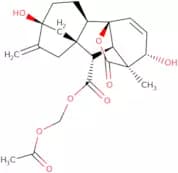
CAS:<p>Gibberellic Acid Acetoxymethyl Ester is a plant growth regulator, derived from the gibberellin family of diterpenoid acids, which is synthesized through microbiological processes involving certain fungal species like *Gibberella fujikuroi*. It acts by mimicking endogenous gibberellins, which are natural plant hormones that regulate various developmental processes. Upon application, it binds to specific receptors in plant cells, triggering a cascade of gene expressions that promote cell elongation, division, and differentiation.</p>Fórmula:C22H26O8Pureza:Min. 95%Peso molecular:418.44 g/molDesmethylfrutescin - Argyranthemum frutescens (Marguerite)
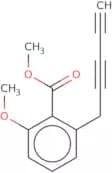
CAS:<p>Desmethylfrutescin is a bioactive compound, which is a secondary metabolite isolated from the plant Argyranthemum frutescens, commonly known as Marguerite. This compound is derived from the chemical constituents of the plant, which has long been studied for its various biological activities.</p>Fórmula:C14H12O3Pureza:Min. 95%Peso molecular:228.24 g/mol20(R)Ginsenoside Rg2
CAS:<p>20(R)Ginsenoside Rg2 is a bioactive compound, specifically a saponin, derived from Panax ginseng, a perennial plant in the Araliaceae family. This compound is one of the ginsenosides, which are the primary active constituents responsible for ginseng's pharmacological properties. Its mode of action involves modulation of cellular signaling pathways and neurotransmitter regulation, which contributes to its neuroprotective and cognitive enhancing effects.</p>Pureza:Min. 95%Ginsenoside F3
CAS:<p>Ginsenoside F3 is a bioactive compound, specifically a saponin, which is extracted from the roots of Panax ginseng, a perennial plant widely studied for its medicinal properties. This compound is of significant interest in the field of pharmacology due to its multifaceted mode of action at the cellular level. Ginsenoside F3 is known to modulate various signaling pathways, including those involved in immune response, apoptosis, and anti-inflammatory processes. Its ability to interact with cellular receptors and enzymes makes it a potent candidate for therapeutic applications.</p>Fórmula:C41H70O13Pureza:Min. 95%Peso molecular:770.99 g/molProsaikogenin G
CAS:<p>Prosaikogenin G is a saponin derivative, which is a bioactive compound commonly found in medicinal plants, traditionally used in Eastern medicine. Saponins are naturally occurring glycosides, and they have a wide range of biological activities due to their amphiphilic nature. Prosaikogenin G is specifically sourced from Bupleurum species, a well-known genus in herbal medicine. These compounds have been extensively studied for their anti-inflammatory and immunomodulatory effects.</p>Fórmula:C36H58O8Pureza:Min. 95%Peso molecular:618.84 g/molCongmunosideV
CAS:<p>Congmunoside V is a triterpenoid saponin, which is a bioactive compound isolated from the plant Gynostemma pentaphyllum, also known as Jiaogulan. This plant is traditionally recognized in herbal medicine and is a member of the Cucurbitaceae family, primarily found in East Asia. Triterpenoid saponins are a class of chemical compounds composed of a sapogenin (triterpene) attached to sugar moieties, which confer a variety of biological activities.</p>Pureza:Min. 95%llludin S
CAS:<p>Illudin S is a sesquiterpene toxin, which is a naturally occurring compound isolated from several species of fungi belonging to the genus Omphalotus, such as Omphalotus olearius, commonly known as the Jack-o'-lantern mushroom. Its mode of action involves alkylating DNA, which leads to DNA cross-linking and subsequent inhibition of DNA synthesis. This mechanism renders it highly cytotoxic, as it can induce cell death by disrupting normal cellular replication processes.</p>Fórmula:C15H20O4Pureza:Min. 95%Peso molecular:264.13616Juvenile hormone I
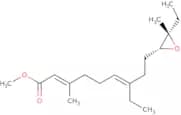
CAS:<p>Juvenile hormone I is a sesquiterpenoid hormone, which is an endogenous regulatory compound found in insects. Its source is primarily the corpora allata, a pair of endocrine glands associated with the insect brain. Juvenile hormone I functions by modulating the expression of specific genes involved in development, metamorphosis, and reproduction, acting through a receptor-mediated mechanism that influences the transcriptional activity of target genes.</p>Fórmula:C18H30O3Pureza:Min. 95%Cor e Forma:Clear LiquidPeso molecular:294.43 g/molα-Selinine
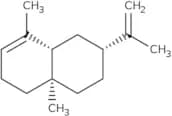
CAS:alpha-Selinine is a sesquiterpene compound, which is a naturally occurring organic molecule. It is extracted primarily from the essential oils of certain plant species, such as those within the Apiaceae family, including celery and parsley. The compound’s mode of action involves interactions at the molecular level with cellular targets, which can influence a range of biological pathways. Studies suggest that alpha-Selinine may exhibit various bioactivities, including antimicrobial, anti-inflammatory, and antioxidant effects, by modulating enzyme activity and cell signaling pathways.Fórmula:C15H24Pureza:85%MinPeso molecular:204.35 g/mol(+)-Nootkatone
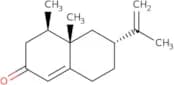
CAS:<p>Flavour and scent of grapefruit</p>Fórmula:C15H22OPureza:Min. 95%Peso molecular:218.33 g/molTagitinin A
CAS:<p>Tagitinin A is a naturally occurring sesquiterpene lactone, which is derived from the plant *Tithonia diversifolia*. This compound is known for its potential therapeutic properties, particularly in the field of oncology. As a sesquiterpene lactone, Tagitinin A is part of a larger class of secondary metabolites found in various plant species, which often exhibit diverse biological activities.</p>Pureza:Min. 95%Prosaikogenin F
CAS:<p>Prosaikogenin F is a saponin derivative, which is a bioactive compound typically derived from ginseng or related plants within the Araliaceae family. These sources are renowned for their complex saponins, known as ginsenosides, which play significant roles in traditional medicine and modern pharmacology.</p>Fórmula:C36H58O8Pureza:Min. 95%Peso molecular:618.84 g/molEscin Ib
CAS:<p>Escin Ib is a natural saponin glycoside, which is derived from the seeds of Aesculus hippocastanum, commonly known as horse chestnut. Its mode of action involves inhibiting the enzyme hyaluronidase, thereby reducing capillary permeability and effectively controlling edema and inflammation. Additionally, it acts by stabilizing lysosomal membranes, further contributing to its anti-inflammatory effects.</p>Pureza:Min. 95%8(17)13-Labdadiene-15,18-diol - Xcupressocyparis leylandii (cypress)
CAS:8(17)13-Labdadiene-15,18-diol is a diterpenoid compound, which is derived from the hybrid plant Xcupressocyparis leylandii, commonly known as Leyland cypress. This compound belongs to the labdane-type diterpenes, which are known for their diverse biological activities. The source, Xcupressocyparis leylandii, is a fast-growing evergreen tree often used in horticulture.Fórmula:C20H34O2Pureza:Min. 95%Peso molecular:306.48 g/mol