Terpenóides
Os terpenoides, também conhecidos como isoprenoides, são a maior classe de compostos orgânicos naturais, derivados de unidades de isopreno de cinco carbonos. Eles são encontrados em diversas plantas e são conhecidos por suas propriedades aromáticas, bem como por seu papel na defesa e sinalização das plantas. Os terpenoides têm sido amplamente estudados por seus efeitos terapêuticos, incluindo propriedades anti-inflamatórias, antimicrobianas e anticancerígenas. Eles são usados nas indústrias farmacêutica, cosmética e alimentícia devido aos seus benefícios para a saúde e qualidades aromáticas. Na CymitQuimica, você encontrará uma ampla seleção de terpenoides, essenciais para a pesquisa em biologia vegetal, farmacologia e síntese de produtos naturais.
Subcategorias de "Terpenóides"
- Diterpenos (C₂₀)(671 produtos)
- Hemiterpenos (C₅)(21 produtos)
- Monoterpenos (C₁₀)(709 produtos)
- Sesquiterpenos (C₂₅)(452 produtos)
- Tetraterpenos (C₄₀)(63 produtos)
- Triterpenos (C₃₀)(1.130 produtos)
Foram encontrados 1423 produtos de "Terpenóides"
Ordenar por
Pureza (%)
0
100
|
0
|
50
|
90
|
95
|
100
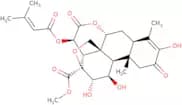
Brusatol
CAS:Inhibitor of protein synthesis and Nrf2-mediated chemoresistanceFórmula:C26H32O11Pureza:Min. 97 Area-%Cor e Forma:White PowderPeso molecular:520.53 g/molTotarol - 98%
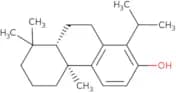
CAS:<p>Natural diterpene; anti-microbial</p>Fórmula:C20H30OPureza:Min. 98 Area-%Cor e Forma:PowderPeso molecular:286.45 g/molIsosteviol
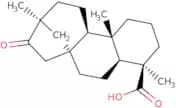
CAS:<p>Isosteviol is a diterpenoid compound, which is a metabolite derived from the enzymatic hydrolysis of stevioside, a glycoside found in the leaves of the Stevia rebaudiana plant. Its mode of action involves modulation of various biological pathways, including anti-inflammatory and antihyperglycemic effects. These actions are attributed to its ability to interact with specific cellular targets, inhibiting pro-inflammatory cytokines and improving insulin sensitivity.</p>Fórmula:C20H30O3Pureza:Min. 95%Peso molecular:318.45 g/molNigranoic acid
CAS:Nigranoic acid is a triterpenoid compound, which is derived from the seeds of Schisandra species, a type of plant known for its medicinal properties. It is particularly abundant in Schisandra chinensis, commonly used in traditional medicine systems. The mode of action of nigranoic acid involves modulation of inflammatory pathways and oxidative stress. It has shown the ability to inhibit the production of pro-inflammatory cytokines and reactive oxygen species, mediating its potential therapeutic effects.Fórmula:C30H46O4Pureza:Min. 95%Cor e Forma:PowderPeso molecular:470.68 g/molα-Amyrin
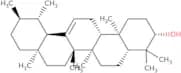
CAS:Produto Controlado<p>α-Amyrin is a pentacyclic triterpene, which is commonly found in the resins and latex of various plant species. It is primarily sourced from the lipophilic extracts of angiosperms, where it is often present in both the free form and as esters. Its mode of action involves modulation of key signaling pathways involved in inflammation and cellular oxidative stress, particularly through the inhibition of pro-inflammatory enzymes such as cyclooxygenase. α-Amyrin also induces apoptosis via mitochondrial pathways in certain cell types, adding to its therapeutic potential.</p>Fórmula:C30H50OPureza:Min. 95%Cor e Forma:PowderPeso molecular:426.72 g/molDiosbulbin B
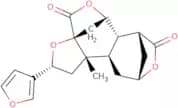
CAS:Diosbulbin B is a naturally occurring sesquiterpene lactone, which is derived primarily from the plant Dioscorea bulbifera, commonly known as "air potato" or "bitter yam." As a bioactive compound, Diosbulbin B demonstrates a mode of action that involves the induction of cytotoxicity in malignant cells, primarily through the disruption of microtubule dynamics, leading to cell cycle arrest and apoptosis.Fórmula:C19H20O6Pureza:Min. 98 Area-%Cor e Forma:PowderPeso molecular:344.36 g/molAjugarin II
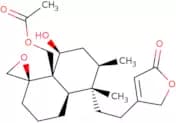
CAS:<p>Ajugarin II is a naturally occurring iridoid glycoside found in plants belonging to the genus Ajuga, which is a member of the Lamiaceae family. These plants have been traditionally used in herbal medicine and are known for their various pharmacological properties. The source of Ajugarin II is primarily the leaf and stem tissues, where it is biosynthesized as part of the plant's secondary metabolites.</p>Fórmula:C22H32O6Pureza:Min. 95%Peso molecular:392.49 g/molAndrographolide
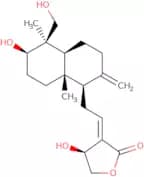
CAS:<p>Andrographolide is a labdane diterpenoid, which is the primary active constituent extracted from the plant *Andrographis paniculata*. This compound exhibits a broad spectrum of pharmacological activities, primarily attributed to its ability to modulate various biological pathways. The mode of action of andrographolide includes the inhibition of pro-inflammatory cytokines and enzymes, as well as the activation of pathways that enhance antioxidant activities within cells.</p>Fórmula:C20H30O5Pureza:Min. 97.5 Area-%Cor e Forma:White PowderPeso molecular:350.45 g/molCynaropicrin - Cynara cardunculus (artichoke)
CAS:Cynaropicrin is a sesquiterpene lactone, which is a bioactive compound derived from Cynara cardunculus, commonly known as the artichoke. The source of this compound is primarily the leaves and flowering parts of the plant, which have been traditionally used in herbal medicine. Cynaropicrin exhibits its biological activity through the inhibition of various inflammatory pathways, particularly by modulating the NF-κB signaling pathway, which is crucial in the regulation of immune response and inflammation.Fórmula:C19H22O6Pureza:Min. 95%Cor e Forma:PowderPeso molecular:346.37 g/molLevopimaric acid
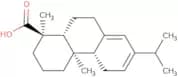
CAS:Produto Controlado<p>Levopimaric acid is a type of resin acid, which is a naturally occurring compound primarily derived from the resin of pine trees. It is classified as a diterpenoid, a group of chemical compounds known for their complex structure and diverse functionalities. The mode of action of levopimaric acid involves its role as a key intermediate in the biosynthesis of other resin acids, affecting the properties of the resin through its chemical stability and reactivity.</p>Fórmula:C20H30O2Pureza:(%) Min. 85%Cor e Forma:PowderPeso molecular:302.45 g/molSteviolbioside
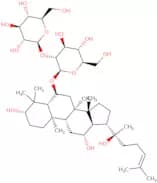
CAS:<p>Steviolbioside is a high-intensity sweetening compound, classified as a steviol glycoside. It is derived from the plant Stevia rebaudiana, a member of the Asteraceae family, which is native to South America. The mode of action of Steviolbioside involves interacting with sweet taste receptors on the human tongue, specifically the TAS1R2 and TAS1R3 receptor heterodimer, mimicking the sweetness perceived from traditional sugars but without eliciting a caloric response.</p>Fórmula:C32H50O13Pureza:Min. 95%Cor e Forma:PowderPeso molecular:642.73 g/molGinsenoside Rf
CAS:<p>Ginsenoside Rf is a steroidal saponin, which is a bioactive compound found primarily in the roots of Panax ginseng, a plant widely used in traditional medicine. As a part of the ginsenoside family, this compound exerts its effects through modulation of several cellular pathways, including anti-inflammatory and antioxidant mechanisms. It is known to interact with glucocorticoid receptors and influence calcium ion channels, contributing to its potential neuroprotective and immunomodulatory effects.</p>Fórmula:C42H72O14Pureza:Min. 95%Cor e Forma:White PowderPeso molecular:801.03 g/molIridogermanal
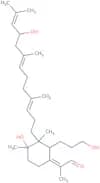
CAS:Please enquire for more information about Iridogermanal including the price, delivery time and more detailed product information at the technical inquiry form on this pageFórmula:C30H50O4Pureza:Min. 95%Peso molecular:474.72 g/molDeltoidin
CAS:<p>Deltoidin is a cutting-edge biochemical compound, which is developed through intricate synthetic processes involving organic precursors. It functions by interacting at the molecular level with specific biochemical pathways, thereby modulating cellular responses precisely and effectively. This mode of action makes it highly valuable for targeted research applications where specific cellular mechanisms need to be studied or manipulated.</p>Fórmula:C20H22O9Pureza:Min. 95%Peso molecular:406.38 g/molDigitoxose
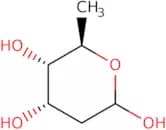
CAS:<p>Digitoxose is a deoxy sugar, which is an integral component of certain cardiac glycosides. These glycosides, such as digitoxin, are predominantly sourced from the leaves of the digitalis species, particularly Digitalis purpurea or Digitalis lanata. The sugar moiety, digitoxose, is critical for the glycoside's ability to exert its pharmacological effects through interactions with cellular components.</p>Fórmula:C6H12O4Pureza:Min. 95%Cor e Forma:Off-White Yellow PowderPeso molecular:148.16 g/mol(+)-Aromadendrene
CAS:<p>(+)-Aromadendrene is a sesquiterpene, which is a type of hydrocarbon compound found in the essential oils of various plants, particularly those within the Myrtaceae family. This compound is primarily sourced from the leaves and branches of Eucalyptus species, where it contributes to the plant’s aromatic profile.</p>Fórmula:C15H24Pureza:Min. 80 Area-%Cor e Forma:Yellow Clear LiquidPeso molecular:204.35 g/mol(-)-Vinigrol
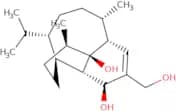
CAS:<p>(-)-Vinigrol is a naturally occurring diterpenoid, which is originally isolated from the fungal species Virgaria nigra, known for its complex stereochemistry and unique structure. It functions as a bioactive compound with multiple mechanisms of action, including modulation of signal transduction pathways and inhibition of specific enzymes, contributing to its broad spectrum of biological activities.</p>Pureza:Min. 95%Aescin
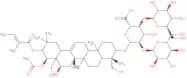
CAS:<p>Beta-Aescin (also known as beta-escin) is a mixture of saponins produced by the horse chestnut tree, Aesculus hippocastanum, with most published reports relating to the pharmacological properties that it shows. It is reported that beta-aescin is a safe and very tolerable drug in the treatment of post thrombotic syndrome and chronic venous insufficiency. Aescin shows promise in the treatment of arthritis and appears to have potential as an anti-cancer drug. In fact, beta-aescin is active on glioblastoma-initiating cells (GIC), which have the ability to initiate glioblastoma growth. Glioblastoma multiform is the most abundant primary tumor of the human nervous system. Beta-aescin was more efficient in diminishing GIC growth compared to present clinically used drugs.</p>Fórmula:C55H85O24Cor e Forma:PowderPeso molecular:1,131.26 g/molCantharidin
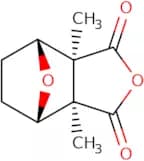
CAS:<p>Natural toxin; protein phosphatase inhibitor</p>Fórmula:C10H12O4Pureza:Min. 98 Area-%Cor e Forma:White/Off-White SolidPeso molecular:196.2 g/molLoganic acid
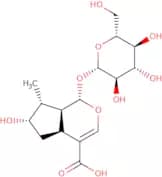
CAS:<p>Loganic acid is a natural iridoid glycoside, which is primarily derived from plants belonging to the Loganiaceae family, such as the genus Strychnos. As a bioactive compound, it plays a significant role in plant defense mechanisms and possesses potential therapeutic properties that are of great interest to the scientific community.</p>Fórmula:C16H24O10Pureza:Min. 95%Cor e Forma:PowderPeso molecular:376.36 g/mol