Flavonóides
Os flavonoides são um grupo de metabólitos vegetais com propriedades antioxidantes que contribuem para a cor de frutas e flores. Eles desempenham um papel importante na proteção das plantas contra radiação UV e patógenos. Os flavonoides são estudados por seus potenciais benefícios à saúde, incluindo propriedades anti-inflamatórias, antivirais e anticancerígenas. Eles são amplamente pesquisados nos campos da farmacologia, nutrição e biologia molecular.
Subcategorias de "Flavonóides"
- Antocianidinas(46 produtos)
- Antocianinas(46 produtos)
- Catequinas(88 produtos)
- Chalconas(237 produtos)
- Pterocarpanos(28 produtos)
Foram encontrados 2408 produtos de "Flavonóides"
Ordenar por
Pureza (%)
0
100
|
0
|
50
|
90
|
95
|
100
3-Hydroxy-7,8-dimethoxyflavone
CAS:<p>3-Hydroxy-7,8-dimethoxyflavone is a synthetic flavonoid derivative, which is structurally sourced from the broader class of naturally occurring flavonoids found in various plants. It functions primarily as a potent and selective ligand for the TrkB receptor, a receptor for brain-derived neurotrophic factor (BDNF). This interaction mimics the effects of BDNF, promoting neuronal survival, synaptic plasticity, and neurogenesis, thereby facilitating neuroprotective and neurorestorative processes.</p>Fórmula:C17H14O5Pureza:Min. 95%Peso molecular:298.29 g/molFicifolinol
CAS:<p>Ficifolinol is a bioactive compound, which is a naturally occurring phenolic compound derived from the plant genus *Eucalyptus*, particularly from the species known for their rich bioactive profiles. Ficifolinol acts primarily through its antioxidant mechanisms, scavenging free radicals and inhibiting oxidative stress, thereby contributing to cellular protection and stability.</p>Fórmula:C25H28O4Pureza:Min. 95%Peso molecular:392.49 g/molApigenin-7-glucoside
CAS:Apigenin-7-glucoside is a naturally occurring flavonoid glycoside, which is derived primarily from various plant sources, including parsley, celery, chamomile, and some fruits. This compound is formed when apigenin, a flavonoid, is conjugated with a glucose molecule. The interaction with glucose enhances its solubility and bioavailability in biological systems.Fórmula:C21H20O10Pureza:Min. 95%Cor e Forma:Yellow PowderPeso molecular:432.39 g/molAgathisflavone-7,7”-dimethyl ether
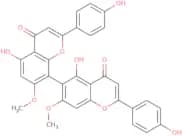
CAS:<p>Agathisflavone-7,7”-dimethyl ether is a methylated flavonoid, a type of natural compound belonging to the biflavonoid family. This compound is primarily derived from plant sources, particularly from the leaves and seeds of certain leguminous plants. It presents unique biochemical properties due to the dimethyl ether groups attached to its flavonoid structure.</p>Fórmula:C32H22O10Pureza:Min. 95%Cor e Forma:solid.Peso molecular:566.51 g/mol3-Hydroxy-7,2',4'-trimethoxyflavone
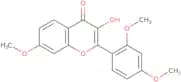
CAS:<p>3-Hydroxy-7,2',4'-trimethoxyflavone is a specialized flavone compound, which is a type of polyphenolic molecule commonly found in a variety of plants. This product is naturally derived, often isolated from diverse botanical sources like various species of herbs and flowering plants known for their medicinal properties. The compound exhibits various biological activities through its interactions with cellular pathways, predominantly by modulating enzymatic functions and signaling pathways that influence oxidative stress and inflammation.</p>Fórmula:C18H16O6Pureza:Min. 95%Peso molecular:328.32 g/mol3-Hydroxy-7,2',3'-trimethoxyflavone
CAS:3-Hydroxy-7,2',3'-trimethoxyflavone is a naturally occurring flavonoid, which is a type of polyphenolic compound commonly found in plants. These compounds are typically sourced from various plant species where they are known to contribute to pigmentation and offer protective functions.Fórmula:C18H16O6Pureza:Min. 95%Peso molecular:328.32 g/molAlnusin
CAS:<p>Alnusin is a phytochemical compound, which is a naturally occurring flavonoid sourced from the bark and leaves of the alder tree (genus Alnus). This compound is structurally categorized as an O-methylated flavonoid, specifically demonstrating unique biological activities.</p>Fórmula:C16H12O6Pureza:90%Cor e Forma:PowderPeso molecular:300.26 g/mol3-Hydroxy-7,2',4',5'-tetramethoxyflavone
CAS:<p>3-Hydroxy-7,2',4',5'-tetramethoxyflavone is a naturally occurring flavonoid, which is derived from plant sources, particularly within the family of citrus fruits. Its chemical structure consists of a hydroxyl group and multiple methoxy groups, contributing to its biological activity. As a flavonoid, it is primarily involved in mediating anti-inflammatory, antioxidant, and potential anticancer effects by modulating various cellular pathways.</p>Fórmula:C19H18O7Pureza:Min. 95%Peso molecular:358.34 g/mol5-Hydroxy-4'-methoxyflavone
CAS:5-Hydroxy-4'-methoxyflavone is a naturally occurring flavone, which is a type of polyphenolic compound found in various plants. It is derived from natural sources such as fruits, vegetables, and certain herbs. This compound is part of the larger class of flavonoids, which are known for their various biological activities and potential health benefits.Fórmula:C16H12O4Pureza:Min. 95%Peso molecular:268.26 g/molEriodictyol-7-neohesperidoside
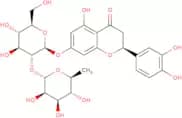
CAS:<p>Eriodictyol-7-neohesperidoside is a flavonoid glycoside, a type of compound that naturally occurs in certain plant species, notably within the genus Eriodictyon. This compound is a derivative of eriodictyol, which is found widely in citrus fruits. Its mode of action is primarily linked to its ability to interact with taste receptors, making it notable for its potential to modulate taste perceptions, specifically in the context of bitterness. This makes it of significant interest in the field of food science and technology.</p>Fórmula:C27H32O15Pureza:Min. 95%Cor e Forma:PowderPeso molecular:596.53 g/molCupressuflavone-7,7”-dimethyl ether
CAS:<p>Biflavonyl pigment; anti-inflammatory; analgesic</p>Fórmula:C32H22O10Pureza:Min. 95%Cor e Forma:solid.Peso molecular:566.51 g/molTricetin
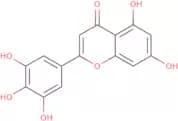
CAS:<p>Tricetin is a naturally occurring flavonoid compound, which is primarily sourced from various plant species. Its molecular structure comprises multiple hydroxyl groups, contributing to its biological activity. Tricetin functions by modulating several biochemical pathways; it exhibits antioxidant properties through scavenging of reactive oxygen species and chelation of metal ions. Additionally, Tricetin possesses anti-inflammatory effects, as it can inhibit the synthesis of pro-inflammatory cytokines and downregulate the expression of enzymes involved in inflammation, such as cyclooxygenase and lipoxygenase.</p>Fórmula:C15H10O7Pureza:Min. 95%Cor e Forma:Yellow PowderPeso molecular:302.24 g/mol3-(3,4-Dimethoxyphenyl)-1H-benzo[f]chromen-1-one
CAS:3',4'-Dimethoxy-beta-naphthoflavone is a synthetic chemical compound, which is a selective aryl hydrocarbon receptor (AhR) agonist, derived from flavonoid structures. With its capacity to modulate xenobiotic metabolism, this compound acts as an inducer of cytochrome P450 enzymes, specifically CYP1A1 and CYP1A2, through the activation of the AhR pathway. Upon binding to AhR, 3',4'-Dimethoxy-beta-naphthoflavone translocates to the nucleus, where it influences gene expression involved in xenobiotic metabolism.Fórmula:C21H16O4Pureza:Min. 95%Peso molecular:332.35 g/mol4'-Methoxyflavanone
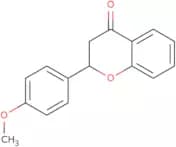
CAS:4'-Methoxyflavanone is a methoxy-substituted flavanone, which is a specialized class of flavonoids. These compounds are primarily derived from plant sources and are known for their diverse biological activities. The modification of the flavanone structure with a methoxy group can significantly influence its biochemical interactions and properties.Fórmula:C16H14O3Pureza:Min. 95%Cor e Forma:PowderPeso molecular:254.28 g/mol3-Hydroxy-6,3',4',5'-tetramethoxyflavone
CAS:<p>3-Hydroxy-6,3',4',5'-tetramethoxyflavone is a naturally occurring flavonoid, which is derived from various plant sources, including certain species of the genus Chromolaena. It belongs to a class of polyphenolic compounds known for their potential biological activities. This flavonoid acts primarily through antioxidant mechanisms, where it scavenges free radicals and inhibits oxidative stress pathways. Additionally, it can modulate various signaling pathways, implicating roles in anti-inflammatory processes and cellular protection.</p>Fórmula:C19H18O7Pureza:Min. 95%Peso molecular:358.34 g/mol6,4'-Dimethoxyflavone
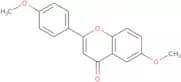
CAS:<p>6,4'-Dimethoxyflavone is a naturally occurring flavone, which is a type of polyphenolic compound typically found in various plants. It is derived from natural sources such as certain species of citrus fruits and other flavonoid-rich plants. The compound is characterized by the presence of two methoxy groups attached to its flavone backbone.</p>Fórmula:C17H14O4Pureza:Min. 95%Peso molecular:282.29 g/molScutellarein-6,4'-dimethyl ether
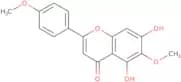
CAS:<p>Scutellarein-6,4'-dimethyl ether is a flavonoid derivative, which is a type of polyphenolic compound widely found in the plant kingdom. It is primarily sourced from various species within the genus Scutellaria, known for their rich flavonoid content. Scutellarein-6,4'-dimethyl ether demonstrates an affinity for interacting with key biological pathways, including exerting possible antioxidant activities by scavenging free radicals and modulating redox states, as well as potential anti-inflammatory effects through the regulation of inflammatory mediators.</p>Fórmula:C17H14O6Pureza:Min. 95%Cor e Forma:PowderPeso molecular:314.29 g/molKaempferol-3-O-rhamnoside
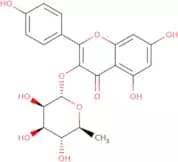
CAS:Kaempferol-3-O-rhamnoside is a naturally occurring flavonoid glycoside, which is derived from various plants, particularly those in the families Rosaceae and Brassicaceae. This compound is a significant bioactive component found in herbs, fruits, and vegetables. Its mode of action primarily involves the scavenging of free radicals, inhibition of oxidative stress, and modulation of various signaling pathways related to inflammation and apoptosis.Fórmula:C21H20O10Pureza:Min. 95 Area-%Cor e Forma:Yellow PowderPeso molecular:432.38 g/molMucronulatol
CAS:<p>Mucronulatol is a naturally occurring compound, which is derived from certain plant species known for their rich array of bioactive compounds. As a product of natural origin, mucronulatol is classified as a polyphenolic compound. Its biosynthesis in plants is a part of the complex secondary metabolism, playing roles in defense mechanisms against environmental stressors and pathogens. The mode of action of mucronulatol involves modulation of various biochemical pathways, which may include antioxidant activity, enzyme inhibition, or signaling pathway regulation. This capacity makes mucronulatol a subject of interest in pharmacological and therapeutic research.</p>Fórmula:C17H18O5Pureza:Min. 95%Peso molecular:302.32 g/molApigenin-7-O-glucronide
CAS:Apigenin-7-O-glucronide is a flavonoid derivative, which is a bioactive compound found naturally in various plants, particularly in those used medicinally or as nutritional supplements. Its source includes a variety of plant species, where it exists as part of the plant's secondary metabolites, often contributing to the plant's defense mechanisms.Fórmula:C21H18O11Pureza:Min. 98 Area-%Cor e Forma:PowderPeso molecular:446.36 g/mol





![3-(3,4-Dimethoxyphenyl)-1H-benzo[f]chromen-1-one](/_next/image/?url=https%3A%2Fstatic.cymitquimica.com%2Fproducts%2F3D%2Fthumb-webp%2FFD65660.webp&w=3840&q=75)