Flavonóides
Os flavonoides são um grupo de metabólitos vegetais com propriedades antioxidantes que contribuem para a cor de frutas e flores. Eles desempenham um papel importante na proteção das plantas contra radiação UV e patógenos. Os flavonoides são estudados por seus potenciais benefícios à saúde, incluindo propriedades anti-inflamatórias, antivirais e anticancerígenas. Eles são amplamente pesquisados nos campos da farmacologia, nutrição e biologia molecular.
Subcategorias de "Flavonóides"
- Antocianidinas(46 produtos)
- Antocianinas(46 produtos)
- Catequinas(88 produtos)
- Chalconas(237 produtos)
- Pterocarpanos(28 produtos)
Foram encontrados 2408 produtos de "Flavonóides"
Ordenar por
Pureza (%)
0
100
|
0
|
50
|
90
|
95
|
100
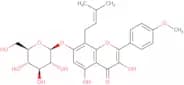
Icarisid I
CAS:<p>Icarisid I is a sophisticated protease inhibitor, which is derived from a natural source. This compound exhibits a high affinity for specific proteases, making it an invaluable tool in research and biotechnological applications. The compound's mode of action involves the selective and competitive inhibition of protease enzymes, effectively blocking their activity within biological systems. This can be particularly useful in studies aiming to elucidate the role of proteases in various biochemical pathways and disease processes.</p>Pureza:Min. 95%Sideritoflavone
CAS:<p>Sideritoflavone is a flavonoid compound, which is a type of secondary metabolite derived from the *Sideritis* plant species. These plants, commonly found in the Mediterranean region, are traditionally used in herbal remedies. The compound is known for its potential biological and pharmacological activities, which stem from its interaction with various biochemical pathways.</p>Fórmula:C18H16O8Pureza:Min. 95%Peso molecular:360.31 g/mol6,7,2',3',4'-Pentamethoxyisoflavone
CAS:<p>6,7,2',3',4'-Pentamethoxyisoflavone is a naturally occurring flavonoid compound, which is derived from certain plant sources known for their rich polyphenolic content. As part of the isoflavone family, this compound is structurally similar to estrogen, allowing it to potentially interact with estrogen receptors in the body. Its mode of action includes modulating various biochemical pathways, including antioxidant and anti-inflammatory pathways, due to its ability to influence enzyme activities and cell signaling processes.</p>Fórmula:C20H20O7Pureza:Min. 95%Cor e Forma:PowderPeso molecular:372.37 g/mol5-Hydroxy-7,8,2'-trimethoxyflavone
CAS:<p>5-Hydroxy-7,8,2'-trimethoxyflavone is a flavonoid compound, which is a type of polyphenolic molecule. Flavonoids are primarily derived from plants, where they function in various biological roles, including pigmentation, UV filtration, and symbiotic nitrogen fixation. The source of 5-Hydroxy-7,8,2'-trimethoxyflavone is often plants, particularly those known for their medicinal properties.</p>Fórmula:C18H16O6Pureza:Min. 95%Cor e Forma:PowderPeso molecular:328.32 g/mol5,7-Dihydroxy-3',4',5'-trimethoxyflavanone
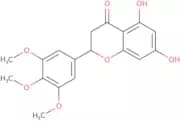
CAS:<p>5,7-Dihydroxy-3',4',5'-trimethoxyflavanone is a flavanone compound, which is a type of polyphenolic compound found predominantly in the plant kingdom. This compound can be sourced from various plants, where it often occurs as part of the natural defense mechanisms to protect the organism from environmental stressors.</p>Fórmula:C18H18O7Pureza:Min. 95%Peso molecular:346.33 g/molVincetoxicoside B
CAS:<p>Vincetoxicoside B is a natural compound, specifically a glycoside, which is derived from plant sources, notably within the genus Vincetoxicum. This compound, isolated from certain medicinal plants, represents a significant interest in phytochemistry due to its complex molecular structure and potential biological activities.</p>Pureza:Min. 95%2',5,7-Trihydroxy-8-methoxyflavanone
CAS:<p>2',5,7-Trihydroxy-8-methoxyflavanone is a polyphenolic flavanone compound, which is a type of flavonoid. It is sourced primarily from plant materials, particularly those rich in flavonoid content, such as specific fruits, vegetables, and herbs. This compound exerts its effects primarily through its antioxidant properties, where it functions by scavenging free radicals and inhibiting oxidative stress within biological systems.</p>Fórmula:C16H14O6Pureza:Min. 95%Peso molecular:302.28 g/molWarangalone
CAS:<p>Warangalone is a type of flavonoid compound, which is derived from the roots of the medicinal plant Abrus precatorius. This compound is characterized by its polyphenolic structure, making it an excellent candidate for various biochemical interactions. Warangalone exhibits its mode of action primarily through the disruption of microbial cell walls, leading to effective antimicrobial activity. Its interactions with microbial membranes result in altered permeability, ultimately inhibiting the growth and replication of various bacterial and fungal species.</p>Fórmula:C25H24O5Pureza:Min. 95%Peso molecular:404.46 g/molPodocarpus flavanone
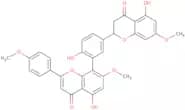
CAS:Podocarpus flavanone is a naturally occurring flavonoid derivative, which is sourced from the Podocarpus genus, a group of coniferous trees native to the Southern Hemisphere. The compound is characterized by its polyphenolic structure, contributing to its ability to engage in a range of biochemical interactions. Its mode of action primarily involves the inhibition of microbial growth through disruption of microbial cell membranes and interference with key enzymatic pathways necessary for cell survival.Fórmula:C33H26O10Pureza:Min. 95%Peso molecular:582.6 g/mol2'-Methoxybiochanin A
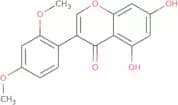
CAS:<p>2'-Methoxybiochanin A is a naturally occurring isoflavone, which is predominantly derived from the plant Trifolium pratense, commonly known as red clover. This compound is characterized by its unique chemical structure that includes a methoxy group, which differentiates it from other isoflavones. The mode of action of 2'-Methoxybiochanin A involves its interaction with estrogen receptors, as well as its ability to modulate various biological pathways linked to inflammation and oxidative stress.</p>Fórmula:C17H14O6Pureza:Min. 95%Cor e Forma:PowderPeso molecular:314.29 g/mol7-Benzyloxy-3',4'-dimethoxyisoflavone
CAS:<p>7-Benzyloxy-3',4'-dimethoxyisoflavone is a synthetic isoflavone derivative, which is a specialized compound designed for research and potential pharmacological applications. Isoflavones are naturally occurring compounds found predominantly in plants like soybeans and are studied for their biological activities. This particular compound is synthetically modified with methoxy groups, enhancing its stability and bioavailability.</p>Fórmula:C24H20O5Pureza:Min. 95%Peso molecular:388.41 g/mol6,4'-Dihydroxy-7-methoxyflavanone
CAS:<p>6,4'-Dihydroxy-7-methoxyflavanone is a naturally occurring flavanone compound, which is typically derived from various plant sources known for their rich polyphenolic content. This compound is characterized by its unique chemical structure, including hydroxyl and methoxy functional groups, contributing to its bioactivity.</p>Fórmula:C16H14O5Pureza:Min. 95%Peso molecular:286.28 g/molBiochanin A-7-O-glucoside
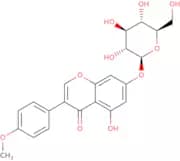
CAS:<p>Biochanin A-7-O-glucoside is a naturally occurring isoflavone glucoside, which is derived from various plants, particularly red clover and soy. It is a secondary metabolite, commonly found in legumes and other related species. The mode of action of Biochanin A-7-O-glucoside involves its structural ability to act as an antioxidant, scavenging free radicals and mitigating oxidative stress. This biochemical property allows it to influence various molecular pathways related to cell signaling and gene expression.</p>Fórmula:C22H22O10Pureza:Min. 95%Cor e Forma:SolidPeso molecular:446.4 g/mol6-Chloroflavone
CAS:<p>6-Chloroflavone is a synthetic flavonoid derivative, which is a modified chemical compound originating from naturally occurring flavonoids found in various plants. Structurally, it is characterized by the substitution of a chlorine atom at the 6th position on the flavone backbone. This chemical modification is designed to alter its physicochemical properties and enhance its biological activity.</p>Fórmula:C15H9ClO2Pureza:Min. 95%Peso molecular:256.68 g/mol5-Hydroxy-7,8-dimethoxy (2R)-flavanone-5-o-beta-D-glucopyranoside
CAS:<p>5-Hydroxy-7,8-dimethoxy (2R)-flavanone-5-o-beta-D-glucopyranoside is a flavanone glycoside, which is a type of naturally occurring polyphenolic compound. This compound is typically derived from various plant sources, particularly those used in traditional medicine.</p>Fórmula:C23H26O10Pureza:Min. 95%Peso molecular:462.40 g/mol(E)-Deschlorophenyl fluoxastrobin
CAS:<p>(E)-Deschlorophenyl fluoxastrobin is a synthetic fungicide, which is derived from the strobilurin class of compounds, originally sourced from natural fungal metabolites. It functions by inhibiting mitochondrial respiration in fungal cells through disruption of the cytochrome bc1 complex, specifically at the Qo site. This mode of action effectively curtails the energy supply of the pathogen, leading to its death, and is integral in managing resistance issues known to occur with other fungicide groups.</p>Fórmula:C15H13FN4O5Pureza:Min. 95%Peso molecular:348.29 g/mol5,7,2',4'-Tetrahydroxy-8,3'-di(gamma,gamma-dimethylallyl)-isoflavanone
CAS:<p>5,7,2',4'-Tetrahydroxy-8,3'-di(gamma,gamma-dimethylallyl)-isoflavanone is a prenylated isoflavanone, which is a type of flavonoid compound extensively studied in natural product chemistry. It is primarily sourced from specific plant species known for their rich secondary metabolite profiles, often within the Fabaceae family. The mode of action of this compound involves its interaction at the molecular level with various biological targets, potentially leading to antioxidant, anti-inflammatory, or antimicrobial effects. These actions are mediated through the compound’s ability to modulate enzyme activities, interact with cellular membranes, and influence signaling pathways.</p>Fórmula:C25H28O6Pureza:Min. 95%Peso molecular:424.50 g/molIso-Osajin
CAS:<p>Iso-Osajin is a naturally occurring compound that falls under the category of prenylated flavonoids. It is isolated from the seeds of Psoralea corylifolia, a plant traditionally used in various medicinal systems. The compound exhibits its mode of action primarily through antimicrobial activities, potentially disrupting microbial cell membranes or inhibiting essential enzymes. Iso-Osajin has been of considerable interest due to its promising pharmacological effects, including antibacterial, antifungal, and possibly antiviral properties.</p>Fórmula:C25H24O5Pureza:Min. 95%Cor e Forma:PowderPeso molecular:404.46 g/molKumatakenin
CAS:Kumatakenin is a naturally occurring flavonoid compound, which is derived from various plant sources, particularly in the Meliaceae family. It functions as an antioxidant by scavenging free radicals and reducing oxidative stress at the molecular level. The compound interacts with reactive oxygen species (ROS) using its phenolic hydroxyl groups, effectively neutralizing them and preventing cellular damage.Fórmula:C17H14O6Pureza:(%) Min. 95%Cor e Forma:PowderPeso molecular:314.29 g/mol5,3'-Dihydroxyflavone
CAS:<p>5,3'-Dihydroxyflavone is a flavonoid compound, which is a class of polyphenolic molecules. It is derived from various plants, where it occurs naturally as part of the complex biochemical repertoire involved in defense mechanisms and signaling processes. This compound acts as an antioxidant, neutralizing free radicals and reducing oxidative stress. It also exhibits potential neuroprotective effects by modulating specific signaling pathways and interacting with enzymes linked to inflammation and cellular health.</p>Fórmula:C15H10O4Pureza:Min. 95%Peso molecular:254.24 g/mol