Canabinóides
Os canabinoides são uma classe de compostos químicos diversos derivados de ácidos graxos ou poliquetídeos que atuam sobre os receptores canabinoides nas células, alterando a liberação de neurotransmissores no cérebro. Encontrados principalmente em plantas de cannabis, canabinoides como THC e CBD são amplamente estudados por seus efeitos terapêuticos, incluindo alívio da dor, propriedades anti-inflamatórias e uso potencial em doenças neurodegenerativas. Na CymitQuimica, você encontrará uma ampla variedade de canabinoides para pesquisa em farmacologia, neurobiologia e química medicinal.
Foram encontrados 318 produtos de "Canabinóides"
Ordenar por
Pureza (%)
0
100
|
0
|
50
|
90
|
95
|
100
GW 833972A
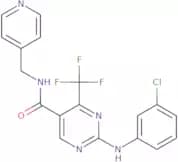
CAS:<p>A cannabinoid receptor agonist, which binds more selectively to CB2 than CB1 receptors (1000-fold). GW833972A inhibits vagus nerve depolarization induced by tussive agents, such as hypertonic saline (EC50 = 6.5 μM), capsaicin (EC50 = 33.9 μM) or PGE2 (EC50 = 15.9 μM).</p>Fórmula:C18H13ClF3N5OPureza:Min. 95%Cor e Forma:White To Off-White SolidPeso molecular:407.78 g/molGW 833972A hydrochloride
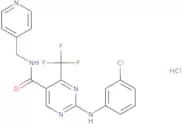
CAS:<p>A cannabinoid receptor agonist, which binds more selectively to CB2 than CB1 receptors (1000-fold). GW833972A inhibits vagus nerve depolarization induced by tussive agents, such as hypertonic saline (EC50 = 6.5 μM), capsaicin (EC50 = 33.9 μM) or PGE2 (EC50 = 15.9 μM).</p>Fórmula:C18H13ClF3N5O·HClPureza:Min. 95%Cor e Forma:White/Off-White SolidPeso molecular:444.24 g/molACEA, 5mg/ml solution in ethanol
CAS:<p>Cannabinoid type 1 (CB1) receptor agonist. Anti-depressant activity demonstrated in vivo alone, as well as enhancing the effect of fluoxetine. In the brain, ACEA activates CB1 receptors expressed in the mitochondria of neuronal cells to elicit neuroprotective effects. This is mediated by inducing glycogen synthase kinase-3β (GSK-3β) phosphorylation and inhibiting the opening of mitochondrial permeability transition pore (MPTP).<br>Sold by weight of solid</p>Fórmula:C22H36ClNOPureza:Min. 95%Cor e Forma:Clear LiquidPeso molecular:365.98 g/mol1,2,3,9-Tetrahydro-4H-carbazol-4-one
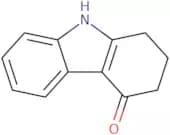
CAS:<p>1,2,3,9-Tetrahydro-4H-carbazol-4-one is a cyclic ketone compound, which can be synthesized through various organic reactions involving appropriate precursors. It is often derived from indole-based substrates through catalytic hydrogenation, allowing the formation of its stable tetrahydro structure with a retained core carbazole skeleton.</p>Fórmula:C12H11NOPureza:Min. 95%Cor e Forma:PowderPeso molecular:185.23 g/molC2
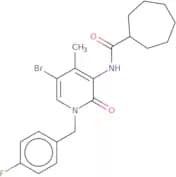
CAS:Positive allosteric modulator (PAM) of cannabinoid receptors CB2. The C2 modulator is the first synthetic PAM of CB2 receptors with antinociceptive properties, which were observed in a mouse model of neuropathic pain.Fórmula:C21H24BrFN2O2Pureza:Min. 95%Cor e Forma:White PowderPeso molecular:435.33 g/molAnandamide
CAS:<p>Anandamide is an endogenous cannabinoid, which is a bioactive lipid mediator primarily found in the brain and peripheral organs. It is synthesized from membrane phospholipid precursors through enzymatic pathways, primarily involving the enzyme N-acyl phosphatidylethanolamine phospholipase D (NAPE-PLD). Anandamide acts as a ligand for cannabinoid receptors, mainly the CB1 receptor located in the central nervous system, and the CB2 receptor found in peripheral tissues.</p>Fórmula:C22H37NO2Pureza:Min. 95%Cor e Forma:Clear LiquidPeso molecular:347.53 g/molCannabichromenic Acid
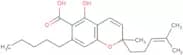
CAS:<p>Cannabichromenic acid is a non-psychoactive phytocannabinoid and a precursor of cannabichromene1 which toxicological and pharmacological properties are unknown. Due to its structural similarity to cannabichromene, it is thought to reportedly exert anti-analgesic and anti-inflammatory activity.</p>Fórmula:C22H30O4Pureza:Min. 95%Peso molecular:358.47 g/molAbnormal 1''-Hydroxycannabidiol
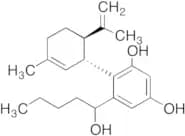
Produto ControladoFórmula:C21H30O3Cor e Forma:NeatPeso molecular:330.4615-(4-Hydroxypentyl)-1,3-benzenediol
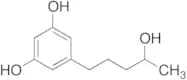
CAS:Produto Controlado<p>Applications 5-(4-Hydroxypentyl)-1,3-benzenediol is an intermediate used in the synthesis of 4''-Hydroxycannabidiol (H824830), which is a metabolite of Canabidiol (C175300), a major constituents in marijuana. 4''-Hydroxycannabidiol be used to investigate canabidiol metabolism and human liver microsomes that metabolize Canabidiol into 6α-Hydroxycannabidiol.<br>References Jiang, R., et al.: Life Sci. 89, 165 (2011); Lander, N., et al.: Science 169, 611 (1970)<br></p>Fórmula:C11H16O3Cor e Forma:NeatPeso molecular:196.24Cannabigerovarinic acid
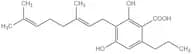
CAS:Carboxylic acid with phenol functionFórmula:C20H28O4Pureza:≥ 90.0 % (HPLC)Cor e Forma:PowderPeso molecular:332.43Dehydroabiethylamine
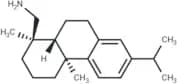
CAS:Dehydroabiethylamine (NSC-2955) boosts liver CYP2B, blocks PDKs & cholesterol transport, and has anti-tumor effects.Fórmula:C20H31NPureza:98.79%Cor e Forma:Pale Yellow Viscous Liquid /Technical Grade/ Viscous Colorless To Amber LiquidPeso molecular:285.472-[(9Z)-9-Octadecenyloxy]-1,3-propanediol
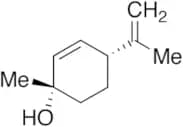
CAS:Produto Controlado<p>Applications 2-[(9Z)-9-Octadecenyloxy]-1,3-propanediol, which is an endogenous cannabinoid receptor ligand.<br>References Suhara, Y. et al.: Chem. Pharm. Bull., 48, 903 (2000);<br></p>Fórmula:C21H42O3Cor e Forma:NeatPeso molecular:342.56(1S,4R)-1-Methyl-4-(1-methylethenyl)-2-cyclohexen-1-ol
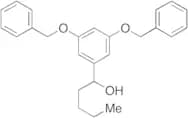
CAS:Produto Controlado<p>Applications 1-Methyl-4-(1-methylethenyl)-2-cyclohexen-1-ol is an acetal reagent used in the synthesis of desoxy cannabidiols and THC (T293202) related psychoactive compounds. It is formed from (+)-Limonene using a photosynthesized O2 transfer.<br>References Wilkinson, S. et al.: Tetrahedron Lett., 54, 52 (2013);<br></p>Fórmula:C10H16OCor e Forma:NeatPeso molecular:152.231-(3,5-Bis(benzyloxy)phenyl)pentan-1-ol
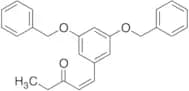
CAS:Produto ControladoFórmula:C25H28O3Cor e Forma:NeatPeso molecular:376.491-(3,5-Bis(benzyloxy)phenyl)pent-1-en-3-one
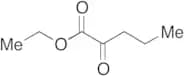
CAS:Produto Controlado<p>Stability Light Sensitive<br>Applications (Z)-1-(3,5-Bis(benzyloxy)phenyl)pent-1-en-3-one is a reagent in the synthesis of 3''-Hydroxycannabidiol (H824825) which is a major constituents in marijuana. 3''-Hydroxycannabidiol be used to investigate canabidiol metabolism and human liver microsomes that metabolize Canabidiol into 6α-Hydroxycannabidiol.<br>References Jiang, R., et al.: Life Sci. 89, 165 (2011); Lander, N., et al.: Science 169, 611 (1970)<br></p>Fórmula:C25H24O3Cor e Forma:NeatPeso molecular:372.46Ethyl 2-Oxopentanoate
CAS:Produto Controlado<p>Applications Ethyl 2-oxopentanoate is used as a reagent to synthesize selective CB1 cannabinoid receptor antagonists. Ethyl 2-oxopentanoate is also used to synthesize derivatives of iminodiacid, an inhibitor of angiotensin converting enzyme.<br>References Lange, J., et al.: J. Med. Chem., 48, 1823 (2005); Vincent, M., et al.: Tetrahedron Lett., 23, 1677 (2982)<br></p>Fórmula:C7H12O3Cor e Forma:NeatPeso molecular:144.17Cannabigerorcinic Acid
CAS:Produto Controlado<p>Stability Light Sensitive<br>Applications Cannabigerorcinic Acid is a compound that takes part in the biosynthesis of daurichromenic acid synthase which is active in anti-HIV biosynthesis.<br>References Iijima, M. et al.: Plant Phys., 174, 2213 (2017);<br></p>Fórmula:C18H24O4Cor e Forma:NeatPeso molecular:304.38






![2-[(9Z)-9-Octadecenyloxy]-1,3-propanediol](/_next/image/?url=https%3A%2Fstatic.cymitquimica.com%2Fproducts%2FTR%2Fthumb-webp%2FO235930.webp&w=3840&q=75)