Nucleotídeos
Os nucleotídeos são compostos orgânicos que servem como building blocks dos ácidos nucleicos, essenciais para a formação de DNA e RNA. Cada nucleotídeo é composto por uma base nitrogenada, uma molécula de açúcar e um ou mais grupos fosfato. Esses nucleotídeos se unem para formar longas cadeias, criando o material genético que carrega e transmite informações genéticas em todos os organismos vivos. Nesta seção, você encontrará uma ampla variedade de nucleotídeos cruciais para pesquisas em genética, biologia molecular e bioquímica. Eles são fundamentais para estudar processos genéticos, sintetizar ácidos nucleicos e desenvolver ferramentas diagnósticas e terapêuticas. Na CymitQuimica, oferecemos nucleotídeos de alta qualidade para apoiar suas pesquisas científicas e aplicações, garantindo precisão e confiabilidade em seus experimentos.
Subcategorias de "Nucleotídeos"
Foram encontrados 2634 produtos de "Nucleotídeos"
Ordenar por
Pureza (%)
0
100
|
0
|
50
|
90
|
95
|
100
Guanosine 3',5'-bisdiphosphate lithium salt - 100mM aqueous solution
CAS:<p>Regulates gene transcription; inhibits the synthesis of tRNA and rRNA</p>Fórmula:C10H17N5O17P4·xLiPureza:Min. 85 Area-%Cor e Forma:Colorless PowderPeso molecular:602.16 g/mol2'-Deoxy-4-thiouridine
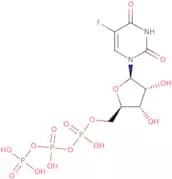
CAS:<p>2'-Deoxy-4-thiouridine is a pyrimidine nucleoside for a range of applications</p>Fórmula:C9H12N2O4SPureza:Min. 98 Area-%Cor e Forma:PowderPeso molecular:244.27 g/mol5-Fluorouridine-5'-triphosphate sodium salt
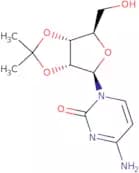
CAS:<p>5-Fluorouridine-5'-triphosphate sodium salt is an analog of uridine that has been used in the treatment of metastatic colorectal cancer. It is a prodrug that is metabolized to 5-fluorouracil, its active form. 5-Fluorouridine-5'-triphosphate sodium salt inhibits the synthesis of thymidylate, one of the precursors to DNA, and blocks the production of nucleotides. This results in cell lysis and death by apoptosis. The drug also inhibits epidermal growth factor receptor (EGFR), which may contribute to its antitumor effects.</p>Fórmula:C9H14N2O15P3FPureza:Min. 95%Peso molecular:502.13 g/mol2',3'-O-Isopropylidenecytidine
CAS:<p>2',3'-O-Isopropylidenecytidine is a nucleoside for use in research applications</p>Fórmula:C12H17N3O5Pureza:Min. 95%Cor e Forma:PowderPeso molecular:283.28 g/mol5-Aza-7-deazaguanosine
CAS:<p>5-Aza-7-deazaguanosine is a nucleoside analogue that has antiviral activity against herpes simplex virus, influenza, and other DNA viruses. 5-Aza-7-deazaguanosine is an analog of guanosine with the addition of a 7-deaza group on the nitrogen atom. This drug inhibits viral replication by inhibiting the polymerase function of the viral NS5B protein, which is essential for DNA synthesis. The structure activity relationship studies have shown that this compound has anti-hepatitis B virus activity, but not against hepatitis C virus. 5-Aza-7-deazaguanosine has been shown to be effective in animal models as well as in humans without any significant toxicity issues.</p>Fórmula:C10H13N5O5Pureza:Min. 95%Cor e Forma:PowderPeso molecular:283.24 g/moldNTP pre-mixes, 10 mM aqueous solution
CAS:<p>dATP, dTTP, dCTP and dGTP pre-mixed in a single vial</p>Fórmula:C10H16N5O12P3Pureza:Min. 95%Cor e Forma:Clear LiquidPeso molecular:491.18 g/molQueuosine
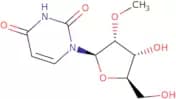
CAS:<p>Queuosine is a modified nucleoside found in the tRNA of both eukaryotic and prokaryotic organisms. It is primarily sourced from the gut microbiota and obtained through dietary intake, as humans lack the biosynthetic machinery to produce it endogenously. Queuosine plays a crucial role in cellular processes by contributing to the accuracy of protein synthesis, impacting cellular growth and maintenance. Its importance extends to understanding the molecular mechanisms underpinning various physiological processes and the potential for dysregulation in diseases. Ongoing research is exploring queuosine's implications in cellular metabolism, including its role in cancer biology and neurobiology. Understanding the pathways and effects of queuosine incorporation into tRNA may provide insights into novel therapeutic avenues for targeting metabolic disorders and diseases associated with translational fidelity.</p>Fórmula:C17H23N5O7Pureza:Min. 95 Area-%Cor e Forma:PowderPeso molecular:409.39 g/mol2'-O-Methyluridine
CAS:<p>2'-O-Methyluridine is a chemical compound that is used in the synthesis of RNA. It is an analog of uridine and has been shown to have antiviral and anticancer properties. 2'-O-Methyluridine inhibits protein synthesis by competing with uridine for the active site of the enzyme ribonucleotide reductase, which converts ribonucleotides to dNMPs. This compound also inhibits RNA synthesis by disrupting the pairing of adenine and cytosine residues in RNA strands. 2'-O-Methyluridine has been shown to inhibit growth in some types of cancer cells, including colorectal adenocarcinoma cells. It may also be useful as a chemotherapeutic agent against HIV, as it inhibits virus replication by inhibiting reverse transcription and DNA synthesis.</p>Fórmula:C10H14N2O6Pureza:Min. 98 Area-%Cor e Forma:White Off-White PowderPeso molecular:258.23 g/mol8-Amino[1''-(N''-dansyl)-4''-aminobutyl]-5'-(1-aziridinyl)-5'-deoxy adenosine
CAS:<p>8-Amino-[1''-(N''-dansyl)-4''-aminobutyl]-5'-(1-aziridinyl)-5'-deoxyadenosine is a novel nucleoside phosphoramidite that has antiviral and anticancer activity. It is currently under development as a potential treatment for Hepatitis C, HIV and cancer. 8-Amino-[1''-(N''-dansyl)-4''-aminobutyl]-5'-(1-aziridinyl)-5'-deoxyadenosine is an activator of the enzyme ribonucleotide reductase, which converts ribonucleotides to deoxyribonucleotides. It also inhibits the synthesis of DNA and RNA by inhibiting the enzyme DNA gyrase and topoisomerase IV. 8-Amino-[1''-(N''-dansyl)-4''-aminobutyl</p>Fórmula:C28H37N9O5SPureza:Min. 95%Cor e Forma:PowderPeso molecular:611.72 g/mol2'-O-Methylinosine
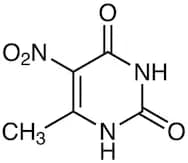
CAS:<p>2'-O-Methylinosine is a nucleoside that is structurally related to inosine. It has been shown to induce apoptotic cell death in HIV-infected cells by inhibiting the synthesis of rRNA and by inhibiting the activity of the transcriptase enzyme. 2'-O-Methylinosine has also been shown to inhibit the replication of RNA viruses, such as herpes simplex virus and cytomegalovirus, and it can be used as an experimental model for studying apoptosis. 2'-O-Methylinosine can be synthesized from inosine using a chromatographic method that utilizes hydroxylamine. The chemical structure of this nucleoside is amphipathic, which allows it to bind both DNA and RNA strands.</p>Fórmula:C11H14N4O5Pureza:Min. 99 Area-%Cor e Forma:White PowderPeso molecular:282.25 g/mol6-Methyl-5-nitrouracil
CAS:Fórmula:C5H5N3O4Pureza:>95.0%(T)(HPLC)Cor e Forma:Light orange to Yellow to Green powder to crystalPeso molecular:171.11Cytidine 5'-triphosphate disodium dihydrate
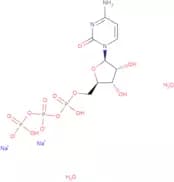
CAS:<p>Cytidine 5'-triphosphate (CTP) disodium dihydrate prevents the action of aspartate carbamoyltransferase, an enzyme involved in pyrimidine biosynthesis. CTP serves as a molecule of high energy and acts as a coenzyme in glycerophospholipid biosynthesis and protein glycosylation.</p>Fórmula:C9H16N3O14P3•(H2O)2•Na2Pureza:Min. 95%Cor e Forma:PowderPeso molecular:565.17 g/molN3-Methylthymidine
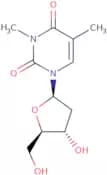
CAS:<p>N3-Methylthymidine is a metalloprotease inhibitor that has been shown to inhibit the activity of epidermal growth factor (EGF). N3-Methylthymidine is also an effective inhibitor of HIV infection. The inhibitory effect on HIV infection is due to the competitive inhibition of viral protease and subsequent degradation of viral proteins. N3-Methylthymidine inhibits the synthesis and release of infectious herpes simplex virus particles. This drug also inhibits the growth of human tumor cells in culture by inhibiting cell proliferation, most likely due to its ability to inhibit EGF. An analytical method for determining the concentration of this drug in plasma using chemical ligation has been developed.</p>Fórmula:C11H16N2O5Pureza:Min. 95%Cor e Forma:White PowderPeso molecular:256.26 g/moldNTP bundle, 4 x 100mM aqueous solution
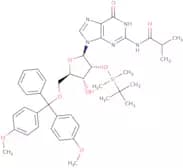
CAS:Each dNTP supplied in a separate vialPureza:Min. 99 Area-%Cor e Forma:Clear Liquid5'-O-DMT-N2-isobutyrylguanosine
CAS:<p>5'-O-DMT-N2-isobutyrylguanosine is a novel phosphoramidite monophosphate, which has been modified with an isobutyryl group. This compound was synthesized in order to be used as a nucleoside analogue and antimetabolite for the treatment of cancer. It also has antiviral properties and inhibits the replication of DNA by inhibiting transcription. 5'-O-DMT-N2-isobutyrylguanosine is an anticancer agent that can be used to treat tumors that are resistant to other chemotherapy drugs. It also inhibits the growth of cells by preventing the synthesis of proteins needed for cell division.</p>Fórmula:C35H37N5O8Pureza:Min. 95%Cor e Forma:White PowderPeso molecular:655.7 g/mol2'-Deoxyinosine-5'-monophosphate disodium salt
CAS:<p>2'-Deoxyinosine-5'-monophosphate disodium salt is a synthetic nucleoside, phosphoramidite, and diphosphate that is used in the synthesis of DNA. It has been shown to have antiviral effects against HIV and herpes simplex virus type 2 (HSV-2). This drug also has anticancer activity and is an activator of novel nucleosides.</p>Fórmula:C10H11N4Na2O7PPureza:Min. 98 Area-%Cor e Forma:White PowderPeso molecular:376.17 g/mol2'-Deoxycytidine-5'-diphosphate trisodium salt hydrate
CAS:2'-Deoxycytidine-5'-diphosphate trisodium salt hydrate is a nucleoside that is used as an antiviral agent in the treatment of herpes zoster and varicella zoster. This drug also has anticancer properties, which may be due to its ability to inhibit DNA synthesis. 2'-Deoxycytidine-5'-diphosphate trisodium salt hydrate is a novel nucleotide analogue that has been modified to improve its stability, solubility and bioavailability. It can be used as a starting material for the synthesis of phosphoramidites by reacting with phosphorous pentoxide at elevated temperatures and pH. CAS No. 151151-32-5Fórmula:C9H12N3O10P2·Na3Pureza:Min. 95%Cor e Forma:White Off-White PowderPeso molecular:453.12 g/molGuanosine 5'-monophosphate disodium salt
CAS:Guanosine 5'-monophosphate disodium salt (GMPDS) is an antiviral agent that inhibits the synthesis of viral nucleic acids by competitive inhibition of the enzyme ribonucleotide reductase. GMPDS has been shown to inhibit the replication of a number of RNA viruses, including influenza A and B, herpes simplex virus type 1, and human immunodeficiency virus type 1. This drug also has been shown to decrease cyclic adenosine monophosphate (cAMP) levels in cells by inhibiting phosphodiesterase activity. GMPDS is used for treatment of infectious diseases such as influenza A, herpes, and HIV-1.Fórmula:C10H12N5Na2O8PPureza:Min. 98 Area-%Cor e Forma:White Off-White PowderPeso molecular:407.18 g/mol2'-O-(tert-Butyldimethylsilyl)-5'-O-DMT-N2-isobutyryl-guanosine
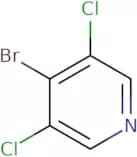
CAS:2'-O-(tert-Butyldimethylsilyl)-5'-O-DMT-N2-isobutyryl-guanosine is a synthetic nucleoside that has been modified with a tert-butyldimethylsilyl group. This modification is used to improve the efficiency of coupling reactions between nucleosides and phosphoramidites in oligonucleotide synthesis. The 2'-O-(tert-Butyldimethylsilyl)-5'-O-DMT-N2-isobutyryl guanosine is also used as a chromophore in spectroscopy experiments and as a ligand in metal coordination chemistry.Fórmula:C41H51N5O8SiPureza:Min. 98 Area-%Cor e Forma:Off-White PowderPeso molecular:769.96 g/mol4-Bromo-3,5-dichloropyridine
CAS:<p>4-Bromo-3,5-dichloropyridine is a reactive intermediate that is used as a reagent in organic synthesis. It has low basicity and reacts with lithium to form the lithium salt. The salt can be deprotonated to form the bromide anion, which is more reactive than the chloride anion. 4-Bromo-3,5-dichloropyridine can also be used for the selective isomerization of ketones and related compounds. Bromine is added to prevent side reactions with oxygen. The intermediates are generated at the site of reaction by using an excess of diisopropylamide over bromination agent.</p>Fórmula:C5H2BrCl2NPureza:Min. 95%Peso molecular:226.89 g/mol




![8-Amino[1''-(N''-dansyl)-4''-aminobutyl]-5'-(1-aziridinyl)-5'-deoxy adenosine](/_next/image/?url=https%3A%2Fstatic.cymitquimica.com%2Fproducts%2F3D%2Fthumb-webp%2FNA16503.webp&w=3840&q=75)