Nucleotídeos
Subcategorias de "Nucleotídeos"
Foram encontrados 2635 produtos de "Nucleotídeos"
N6-Benzyladenosine 5'-diphosphate sodium salt - 10 mM aqueous solution
CAS:N6-Benzyladenosine 5'-diphosphate sodium salt is a modified nucleoside that has a high purity, which is suitable for synthesis of DNA or RNA. It can be used in the modification of deoxyribonucleosides, ribonucleosides, and phosphoramidites. N6-Benzyladenosine 5'-diphosphate sodium salt has been shown to have anticancer effects and antiviral effects. This drug also has novel properties such as an ability to inhibit the proliferation of cancer cells.Fórmula:C17H21N5O10P2Pureza:Min. 95%Cor e Forma:Colorless PowderPeso molecular:517.32 g/molAdenosine 3'-monophosphate sodium
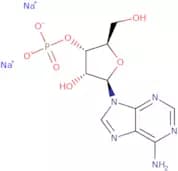
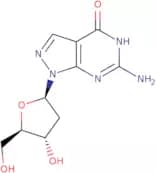
CAS:Adenosine 3'-monophosphate sodium is a nucleotide that is used as a substrate for enzymes. It has been shown to increase the enzymatic activity of papaverine, litoralis, subtilis, and histidine phosphatase. Adenosine 3'-monophosphate sodium also has protease activity, which can be activated by adding an enzyme preparation containing subtilisin and trypsin. This compound also has a pH optimum of 8.0-9.5 and is active at an alkaline pH of 9.5-10.5. The specific strain of bacteria will determine the optimal pH range for activity, with enterobacter bacterial strains having a maximum range of 6-7 and brevibacterium bacteria strains having a range of 4-6.Fórmula:C10H12N5O7PNa2Pureza:Min. 95%Cor e Forma:White To Off-White SolidPeso molecular:391.19 g/mol8-Aza-7-deaza-2'-deoxyguanosine
CAS:8-Aza-7-deaza-2'-deoxyguanosine is an alkynylated, cross-linked, single stranded nucleic acid. It has been shown to be effective at cross-linking and cross-linking nucleic acids. 8-Aza-7-deaza-2'-deoxyguanosine binds to the 7 deazapurine residues in DNA, forming a covalent bond between the two strands of the helix. This binding prevents the strand from unwinding and prevents the replication of DNA. The thermodynamic data for this compound shows that it is stable in both hot and cold water, which makes it a good candidate for use in research as well as in clinical settings.Fórmula:C10H13N5O4Pureza:Min. 95%Cor e Forma:PowderPeso molecular:267.24 g/mol6-Methyluridine
CAS:Methyluridine is a derivative of uridine that is used in the synthesis of pyrimidine nucleotides. This drug is also an inhibitor of orotidine 5′-monophosphate decarboxylase, which converts orotic acid to uracil. The conformational properties of methyluridine have been studied and found to be similar to those of other purine derivatives, such as adenine and guanine. In addition, methyluridine has been shown to inhibit the growth of typhimurium and increase the production of uracil in human lymphocytes. Methyluridine is metabolized by hydroxylation in liver microsomes, yielding 6-carboxylic acid.Fórmula:C10H14N2O6Pureza:Min. 95%Cor e Forma:PowderPeso molecular:258.23 g/mol5-Methoxyuridine-5'-triphosphate sodium, 100mM aqueous solution
CAS:5-Methoxyuridine-5'-triphosphate is a monophosphate nucleoside that serves as a precursor for the synthesis of 5-methoxyuridine (5MU) and other nucleosides. It has antiviral effects, and is used in the treatment of herpes zoster infection. 5-Methoxyuridine-5'-triphosphate is an analog of uridine and deoxyribonucleosides with antiviral activity, which can be used to treat herpes zoster infection. This drug also has anticancer properties, which may be due to its ability to inhibit DNA synthesis by inhibiting ribonucleotide reductase and DNA polymerase, leading to cell death.Fórmula:C10H17N2O16P3•NaxPureza:Min. 95%Cor e Forma:Clear LiquidPeso molecular:514.17 g/mol2'-Deoxy-a-adenosine
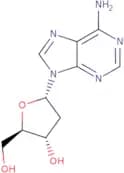
CAS:2'-Deoxy-a-adenosine is a nucleoside that contains an adenine base. It has been studied for its biological properties, including its reaction with solution and its use as an antimicrobial agent. 2'-Deoxy-a-adenosine has been shown to inhibit the growth of bowel disease in mice by binding to the adenosine A3 receptor on the surface of cells. This nucleoside also binds to nuclear DNA and may be used as a pharmacological agent, but more research is needed to determine whether it would be effective against cancer cells. 2'-Deoxy-a-adenosine may also be useful as a potential drug target for the treatment of cancer due to its ability to bind with dna duplexes, which are found in all cancer cells.
Fórmula:C10H13N5O3Pureza:Min. 95%Cor e Forma:White PowderPeso molecular:251.25 g/mol2-O-Ethylthymidine
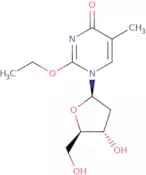
CAS:2-O-Ethylthymidine is a nucleoside that is used to study the structure and dynamics of DNA. It can be synthesized by reacting 1-β-D-arabinofuranosylbenzene with ethylmercury acetate. 2-O-Ethylthymidine can be used in kinetic studies as it is specific for dna. It has been shown to have a conformational change, which is stabilized by the presence of an aromatic ring such as phenanthrene. This compound was also found to inhibit neuroblastoma cell growth in vitro.
Fórmula:C12H18N2O5Pureza:Min. 95%Cor e Forma:PowderPeso molecular:270.28 g/mol4-Chloro-5-iodo-pyrrolo[2,3-d]pyriMidine-7-carboxylic acid tert-butyl ester
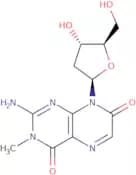
CAS:Focuses is a chemical compound that does not have any known commercial or industrial uses.Pureza:Min. 95%3-Methyl-8-(2-deoxy-b-D-ribofuranosyl)isoxanthopterin
CAS:3-Methyl-8-(2-deoxy-b-D-ribofuranosyl)isoxanthopterin is a nucleoside analog that is used as an activator of phosphoramidite. It can be used as a building block in the synthesis of modified phosphoramidites and it has antiviral, anticancer, and antiinflammatory properties. 3-Methyl-8-(2-deoxy-b-D-ribofuranosyl)isoxanthopterin is a novel nucleoside analog that can be used to synthesize DNA or RNA. It is also an inhibitor of deoxyribonucleoside kinase, preventing the conversion of deoxyribonucleosides into diphosphate monophosphates.
Fórmula:C12H15N5O5Pureza:Min. 95%Cor e Forma:PowderPeso molecular:309.28 g/mol2-Fluoroadenosine
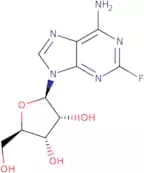
CAS:2-Fluoroadenosine is a nucleoside that has shown high resistance to the enzyme cyclase. This property may be due to its structural and conformational properties, which are different from those of adenosine. 2-Fluoroadenosine has been shown to inhibit the synthesis of ATP in ventricular myocardium and fat cells, as well as increase levels of adenylate kinase in blood. It has also been shown to have potential as a drug target for autoimmune diseases, such as multiple sclerosis. 2-Fluoroadenosine can be used for biochemical and pharmacokinetic studies because it is rapidly metabolized by the liver and excreted in urine.
2-Fluoroadenosine can also be used to measure changes in the ratio of adenylate kinase:adenylate kinase reductase (AKAR) in blood plasma.Fórmula:C10H12FN5O4Pureza:Min. 95%Cor e Forma:White Slightly Yellow PowderPeso molecular:285.23 g/mol5′-O-DMT-LNA N-Bz 5-Me cytidine
CAS:5′-O-DMT-LNA N-Bz 5-Me cytidine is a protected LNA cytidine nucleoside.Fórmula:C39H37N3O8Pureza:Min. 95%Peso molecular:675.73 g/molAdenosine 5'-monophosphate sodium
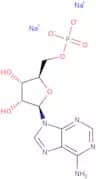
CAS:Adenosine 5'-monophosphate sodium is a nucleotide that is involved in the energy metabolism of cells. It has been shown to inhibit oxidative injury and to activate signal pathways in response to external stimuli, such as glucose deprivation. Adenosine 5'-monophosphate sodium can be synthesized from ATP by the enzyme adenosine kinase.
Fórmula:C10H13N5O7P·NaPureza:Min. 98 Area-%Cor e Forma:White PowderPeso molecular:369.2 g/molThymidine-5'-triphosphate sodium salt - 100mM aqueous solution
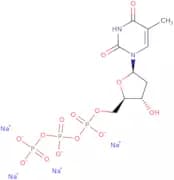
CAS:Thymidine-5'-triphosphate sodium salt is a modified nucleoside with anticancer properties. It is a high-quality, high-purity ribonucleoside that can be used as an activator for the synthesis of deoxyribonucleosides and phosphoramidites. Thymidine-5'-triphosphate sodium salt has antiviral activity, which is due to its ability to inhibit viral DNA replication and transcription. This compound also has the potential to be used in the treatment of cancer cells by inhibiting DNA synthesis and cell division.Fórmula:C10H17N2O14P3·xNaPureza:Min. 95%Cor e Forma:PowderPeso molecular:482.17 g/molKinetin riboside-5'-monophosphate sodium salt
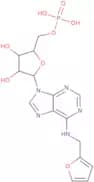
CAS:Kinetin riboside-5'-monophosphate sodium salt is a synthetic nucleotide that has been modified to include a phosphate group at the 5' position. Kinetin riboside-5'-monophosphate sodium salt is an activator of DNA synthesis and can be used for the treatment of viral infections. It also shows anticancer activity and is effective against cancer cells that are resistant to other cancer drugs.Fórmula:C15H16N5Na2O8P·H2OPureza:Min. 95%Cor e Forma:PowderPeso molecular:489.29 g/molThymidine-3',5'-diphosphate disodium salt
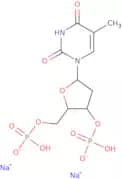
CAS:Thymidine-3',5'-diphosphate disodium salt is an antiviral and anticancer drug. It is a modified nucleoside which is synthesized from thymidine-3',5'-diphosphate and sodium bicarbonate (NaHCO3). This drug inhibits the synthesis of DNA and RNA, thereby inhibiting viral replication. Thymidine-3',5'-diphosphate disodium salt also has an antitumor effect by preventing the production of DNA in tumor cells.Fórmula:C10H14N2Na2O11P2Pureza:Min. 95%Cor e Forma:PowderPeso molecular:446.15 g/molCiticoline sodium
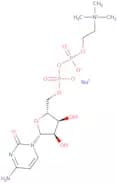
CAS:Citicoline is a complex organic molecule, a form of B-vitamin choline that acts as an intermediate in many biosynthetic pathways, for example, in the biosynthesis of cell membrane phospholipids. As a dietary supplement, citicoline is a source of choline and cytidine, two components that are quickly absorbed in the intestine and across the blood-brain barrier. The neuroprotective properties of citicoline improves mental performance increasing the levels of other brain-related chemicals like dopamine and norepinephrine, helping with recovery in stroke patients, reducing memory loss due to aging and improving vision in patients with glaucoma.Fórmula:C14H26N4O11P2•NaPureza:Min. 98.0 Area-%Cor e Forma:White To Off-White SolidPeso molecular:511.31 g/mol2'-Deoxyadenosine
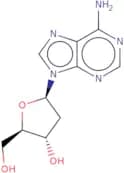
CAS:2'-Deoxyadenosine is a nucleoside that is found in DNA. It has been shown to have potent anticancer activity against carcinoma cell lines and to bind to the adenosine receptor A3. 2'-Deoxyadenosine has also been shown to inhibit the production of inflammatory cytokines, such as tumor necrosis factor-α and interleukin-6, from nuclear extracts of mouse tumor cells. This nucleoside may be a potential drug target for the treatment of cancer and inflammation.Fórmula:C10H13N5O3Pureza:Min. 98 Area-%Cor e Forma:PowderPeso molecular:251.24 g/mol3'-Deoxy-5-methyluridine
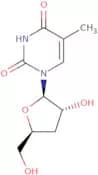
CAS:3'-Deoxy-5-methyluridine (3'-DMAU) is a synthetic nucleoside that is used in the treatment of viral infections. 3'-DMAU has antiviral and anticancer activity, and it has been used to synthesize DNA for genetic engineering. It has shown promising results in the treatment of HIV as well as in the prevention of cancer metastasis. 3'-DMAU inhibits DNA synthesis by binding to the enzyme RNA polymerase, which blocks its interaction with ribonucleosides, thus inhibiting RNA synthesis. In addition, 3'-DMAU causes cell death by inhibiting protein synthesis. The drug is activated by phosphorylation to form 5'-triphosphate and 5'-diphosphate derivatives, which inhibit DNA and RNA synthesis at multiple sites within the cell.Fórmula:C10H14N2O5Pureza:Min. 95%Cor e Forma:PowderPeso molecular:242.23 g/mol2',3'-Dideoxy-2',3'-didehydro-2'-fluorocytidine
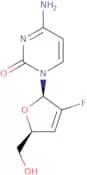
CAS:2',3'-Dideoxy-2',3'-didehydro-2'-fluorocytidine (ddC) is a nucleoside with antiviral activity. The mechanism of action is not well understood, but ddC has been shown to inhibit the proliferation of human immunodeficiency virus (HIV). It is also active against isolates of herpes simplex virus and vesicular stomatitis virus. The elimination half-life of ddC in humans is about 8 hours. In humans, this drug is eliminated by methylation and glucuronidation reactions. The pharmacokinetics of ddC have been studied in animals, including rats and rabbits, with preliminary indications that the elimination half-life may be longer than in humans.Fórmula:C9H10FN3O3Pureza:Min. 95%Peso molecular:227.19 g/mol3-Acetylpyridine adenine dinucleotide disodium, reduced form
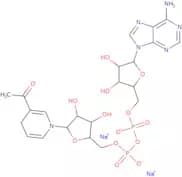
CAS:Reduced synthetic analog of NADH with an acetylpyridine modification. It is used as a reducing substrate to study the mechanisms of NAD(P)+-dependent reductases and to probe the active sites and catalytic processes of these important enzymes through its altered spectroscopic and binding properties. The disodium salt ensures good solubility for biochemical applications.Fórmula:C22H30N6O14P2•Na2Pureza:Min. 95%Cor e Forma:Slightly Yellow PowderPeso molecular:710.43 g/mol




![4-Chloro-5-iodo-pyrrolo[2,3-d]pyriMidine-7-carboxylic acid tert-butyl ester](/_next/image/?url=https%3A%2Fstatic.cymitquimica.com%2Fproducts%2F3D%2Fthumb-webp%2FNC44293.webp&w=3840&q=75)