Vitaminas
As vitaminas são compostos orgânicos necessários em pequenas quantidades para funções fisiológicas essenciais e para a saúde geral. Desempenham papéis cruciais no metabolismo, na função imunológica e na manutenção celular. Nesta categoria, encontrará uma ampla gama de vitaminas, incluindo tipos solúveis em água e em gordura, necessários para a pesquisa em nutrição, bioquímica e ciências da saúde. Na CymitQuimica, oferecemos vitaminas de alta qualidade para apoiar seus esforços de pesquisa e desenvolvimento, garantindo a precisão e eficácia de seus estudos sobre as funções e deficiências das vitaminas.
Foram encontrados 1123 produtos de "Vitaminas"
Ordenar por
Pureza (%)
0
100
|
0
|
50
|
90
|
95
|
100
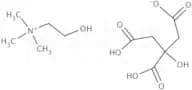
Choline dihydrogen citrate
CAS:Fórmula:C11H21NO8Cor e Forma:White to almost white powder or crystalsPeso molecular:295.29Calcitroic Acid
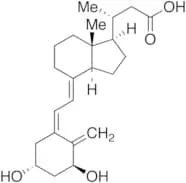
CAS:Produto Controlado<p>Stability Light Sensitive<br>Applications Calcitroic Acid is a major metabolite of Calcitriol (C144500).<br> Not a dangerous good if item is equal to or less than 1g/ml and there is less than 100g/ml in the package<br>References Esvelt, R.P. et al.: Arch. Biochem. Biophys., 206, 403 (1981); Onisko, B.L. et al.: Biochemistry, 19, 4124 (1980); Reddy, G.S. et al.: Biochemistry, 28, 1763 (1989);<br></p>Fórmula:C23H34O4Pureza:>85%Cor e Forma:NeatPeso molecular:374.51Icariin
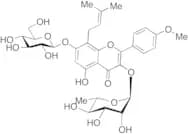
CAS:Produto Controlado<p>Stability Light Sensitive<br>Applications Icariin inhibits the ROS-dependent JNK and p38 pathways.<br>References Zhou, H., et al.: Exp. Ther. Med., 7, 1116 (2014)<br></p>Fórmula:C33H40O15Cor e Forma:NeatPeso molecular:676.66Perhydrofarnesyl Acetone
CAS:Produto Controlado<p>Applications Perhydrofarnesyl Acetone is used as a flavor and fragrance agent, it is often used in jasmine compositions.<br>References Toda, H. et al.: Dev. Food Sci., 17, 181 (1988); Maggi, F. et al.: Food Chem., 113, 216 (2009); Maggi, F. et al.: Chem. Biodiv., 8, 2057 (2011);<br></p>Fórmula:C18H36OCor e Forma:ColourlessPeso molecular:268.4813-cis-Vitamin A Palmitate
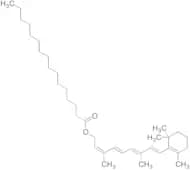
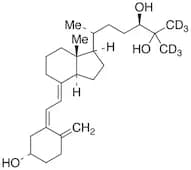
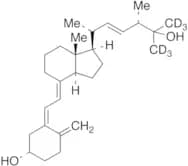
CAS:Fórmula:C36H60O2Cor e Forma:Colourless To YellowPeso molecular:524.8604Secalciferol-d6
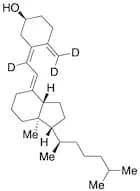
CAS:Produto Controlado<p>Stability Light Sensitive, Temperature Sensitive<br>Applications A labelled metabolite of Vitamin D, a possible anti-inflammatory steroid.<br> Not a dangerous good if item is equal to or less than 1g/ml and there is less than 100g/ml in the package<br>References Boyan, B., et al.: Steroids, 66, 363 (2001), Holick, M., et al.: J. Cell Biochem., 88, 296 (2003), Vogeser, M., et al.: Clin. Chem., 50, 1415 (2004), Singh, R., et al.: J. Clin. Endocrinol. Metab., 91, 3055 (2006),<br></p>Fórmula:C272H6H38O3Cor e Forma:NeatPeso molecular:422.67Tachysterol (>90%)
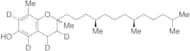
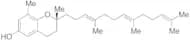
CAS:<p>Stability Light Sensitive, Temperature Sensitive<br>Applications Bioactive, synthetic vitamin D3 analog; exhibits antiproliferative effect on keratinocytes. Antipsoriatic.<br> Not a dangerous good if item is equal to or less than 1g/ml and there is less than 100g/ml in the package<br>References Matsunaga, T., et al.: J. Dermatol., 17, 135 (1990), Gerritsen, M.J.P., et al.: Br. J. Dermatol., 131, 57 (1994),<br></p>Fórmula:C28H44OPureza:>90%Cor e Forma:NeatPeso molecular:396.65(2RS,4R,8R)-δ-Tocopherol-d4 (Mixture of Diastereomers)
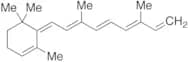
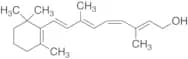
CAS:Produto Controlado<p>Applications Labelled δ-Tocopherol. One of the naturally occurring forms of Vitamin E. Isolated from soybean oil.<br>References Emerson, et al.: Science, 83, 421 (1936), Bieri, J.G., et al.: J. Nutr., 104, 850 (1974), Jiang, Q., et al.: Am. J. Clin. Nutr., 74, 714 (2001),<br></p>Fórmula:C27H42D4O2Cor e Forma:NeatPeso molecular:406.68all-trans-Anhydro Retinol (90%)
CAS:<p>Stability Light Sensitive, Temperature Sensitive<br>Applications A metabolite of vitamin A (Retinol) (R252000).<br>References Allo, S., et al.: J. Biol. Chem., 266, 22003 (1991), Brancolini, C., et al.: J. Cell Biol., 139, 759 (1997), Bubb, M., et al.: J. Biol .Chem., 269, 14869 (1994),<br></p>Fórmula:C20H28Pureza:90%Cor e Forma:Yellow-OrangePeso molecular:268.44α-Tocopherol Acetate
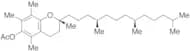
CAS:<p>Applications α-Tocopherol acetate is the most bioactive of the naturally occurring forms of Vitamin E. Richest sources are green vegetables, grains, and oils, particularly palm, safflower and sunflower oils.<br>References Bianchi, G., et al.: Eur. J. Lipid Sci. Technology, 105, 229 (2003), Sakouhi, F., et al.: Food Chem., 108, 833 (2008),<br></p>Fórmula:C31H52O3Cor e Forma:Off-WhitePeso molecular:472.74all-trans-Retinal
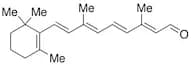
CAS:Produto Controlado<p>Stability Hygroscopic<br>Applications Corotenoid component of the visual pigments. All-trans retinal is converted to retinoic acid in vivo by the action of retinal dehydrogenase.<br>References Ball, et al.: Biochem. J., 42, 516 (1948), O’Brien, D.F., et al.: Science, 218, 961 (1982),<br></p>Fórmula:C20H28OCor e Forma:Yellow To Dark OrangePeso molecular:284.44β-Tocopherol (Racemic Mixture)
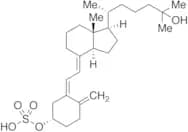
CAS:Produto Controlado<p>Stability Hygroscopic<br>Applications β-Tocopherol (Racemic Mixture) is one of the naturally occurring forms of Vitamin E. Is biologically less active than α-Tocopherol. This is the racemic mixture of all stereoisomers.<br> Not a dangerous good if item is equal to or less than 1g/ml and there is less than 100g/ml in the package<br>References Bianchi, G., et al.: Eur. J. Lipid Sci. Technology, 105, 229 (2003), Sakouhi, F., et al.: Food Chem., 108, 833 (2008),<br></p>Fórmula:C28H48O2Cor e Forma:Colourless To BeigePeso molecular:416.6825-Hydroxy Vitamin D3 3-Sulfate Sodium Salt (90%)
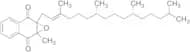
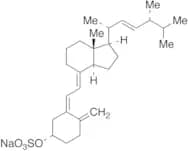
CAS:Produto Controlado<p>Stability Light Sensitive, Temperature Sensitive<br>Applications 25-Hydroxyvitamin D3 3-Sulfate is a metabolite of 24,25-Dihydroxyvitamin D3 and 25-Hydroxyvitamin D3 (C125700).<br>References Higashi, T. et al.: Steroids, 65, 281 (2000); Higashi, T. et al.: Ann. Clin. Biochem., 36, 43 (1999);<br></p>Fórmula:C27H43NaO5SPureza:90%Cor e Forma:NeatPeso molecular:502.68Vitamin K1 2,3-Epoxide
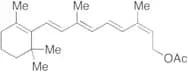
CAS:Produto Controlado<p>Applications Vitamin K1 2,3-Epoxide is a metabolite of Vitamin K1 (V676080), which is occurs widely in green plants, algae, and photosynthetic bacteria.<br>References Smee, D.F., et al.: Antimicrob. Agents Chemother., 23, 676 (1983), Miyamoto, T., et al.: Biochem. Pharmacol., 35, 839 (1986); Hassan, M.M.A., et al.: Anal. Profiles Drug Subs., 17, 449 (1988), Breton, J., et al.: Biochemistry, 33, 12405 (1994), Dowd, P., et al.: Science, 269, 1684 (1995);<br></p>Fórmula:C31H46O3Cor e Forma:Light YellowPeso molecular:466.7013-cis-Retinyl Acetate (85%)
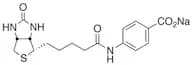
CAS:Produto Controlado<p>Applications 13-cis-Retinyl Acetate is a derivative of 13-Cis-Retinol (R252110), an active metabolite of vitamin A.<br>References Shantz, E., et al.: J. Biol. Chem., 183, A61 (1950), Barua, A., et al.: Biochem. J., 164, 133 (1977), Brouwer, I., et al.: Nutr. Res. Rev., 14, 267 (2001), Grillenberger, M., et al.: Br. J. Nutr., 95, 379 (2006),<br></p>Fórmula:C22H32O2Pureza:85%Cor e Forma:NeatPeso molecular:328.49(+)-Biotin 4-Amidobenzoic Acid, Sodium Salt
CAS:<p>Applications (+)-Biotin 4-Amidobenzoic Acid, Sodium Salt is a fluorigenic substrate for the determination of Biotinidase activity.<br></p>Fórmula:C17H20N3O4S·NaCor e Forma:White To Light YellowPeso molecular:385.41α-Tocopherol
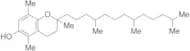
CAS:<p>Stability Light Sensitive<br>Applications α-Tocopherol is the most bioactive of the naturally occurring forms of Vitamin E. Richest sources are green vegetables, grains, and oils, particularly palm, safflower and sunflower oils.<br>References Bianchi, G., et al.: Eur. J. Lipid Sci. Technology, 105, 229 (2003), Sakouhi, F., et al.: Food Chem., 108, 833 (2008),<br></p>Fórmula:C29H50O2Cor e Forma:NeatPeso molecular:430.71Isovitamin D3 (90%)
CAS:Produto Controlado<p>Stability Light Sensitive<br>Applications Isovitamin D3 is a metabolite of Vitamin D. Studies show that Isovitamin D3 is biologically active in normal rats but inactive in anephric rats.<br>References Holick, M.F. et al.: Science, 180, 964 (1973); Wilczek, H. et al.: Prak. Lek., 59, 794 (1979);<br></p>Fórmula:C27H44OPureza:90%Cor e Forma:NeatPeso molecular:384.64Lumiflavin
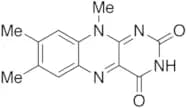
CAS:Produto Controlado<p>Applications Lumiflavin is a toxic photolysis product of vitamin B2 (R415000).<br>References Zhao, X. et al.: Chemosphere, 63, 1116 (2006); Litke, S.V. et al.: Khim. Fiz., 10, 48 (1991); Ye, W. et al.: Guang. Yaox. Xueb., 12, 175 (1996);<br></p>Fórmula:C13H12N4O2Cor e Forma:Dark YellowPeso molecular:256.26Saikosaponin A
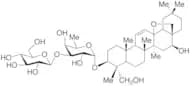
CAS:Produto Controlado<p>Stability Hygroscopic<br>Applications Saikosaponin A was shown to exhibit anti-inflammatory activities by suppressing activation of NF-kB signaling pathway.<br>References Wu, S.J., et al.: Am. J. Chin. Med., 38, 99 (2010); Wu. S.J., et al.: J. Med. Food., 11, 224 (2008); Yoon, S.S., et al.: Neurosci. Lett., 529, 97 (2012); Lu, C.N., et al.: Int. Immunopharmacol., 14, 121 (2012);<br></p>Fórmula:C42H68O13Cor e Forma:NeatPeso molecular:780.984-Deoxy Pyridoxine Hydrochloride
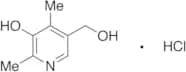
CAS:Produto Controlado<p>Stability Hygroscopic<br>Applications 4-Deoxypyridoxine is the deoxy analogue of Pyridoxine (P991735). 4-Deoxypyridoxine is a vitamin B6 antimetabolite; 4-Deoxypyridoxine can induce a deficient status that alters the function and ultrastructure of EC similar to vascular disease.<br>References La Pesa, M. et al.: Pathologia, 62, 907 (1970); Chang, S..: J. Nutrit. Sci. Vitaminol., 46, 149 (2000); Yamashita, J.: J. Nutrit. Sci. Vitaminol., 22, 1 (1976);<br></p>Fórmula:C8H12ClNO2Cor e Forma:Off-WhitePeso molecular:189.64Pyridoxine-d3 hydrochloride
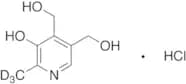
CAS:Produto Controlado<p>Applications Labelled Pyridoxine. One of the vitamins of the B6 complex; present in many foodstuffs (yeast, liver and cereals). Pyridoxine has a role in transporting protein Bsu1, Pyridoxine contributes to thiamine uptake; characterization of thiamine (vitamin B1) transporter Thi9 from Schizosaccharomyces pombe.<br>References Williams, R., et al.: J. Biol. Chem., 87, 581 (1930), Rodionov, D., et al.: J. Biol. Chem., 277, 48949 (2002),Nosaka, K., et al.: Mol. Microbiol., 58, 467 (2005),<br></p>Fórmula:C82H3H8NO3·ClHCor e Forma:White To Off-WhitePeso molecular:208.66all-trans-Retinol
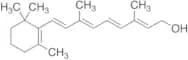
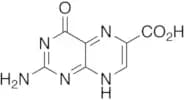
CAS:Produto Controlado<p>Stability Liight Sensitive, Temperature Sensitive<br>Applications Occurs preformed only in animals; metabolized from carotenoids, such β-carotene, in the intestinal mucosa. Dietary sources include liver, milk, butter, cheese, eggs and fish liver oils or as carotenois from fruits and vegetables. Stored primarily in the liver in esterified form; transported in the blood by retinol binding protein (RBP). Nutritional factor.<br>References Davis, M., et al.: J. Biol. Chem., 15, 167 (1913), Crouch, R.K., et al.: Photochem. Photobiol., 64, 613 (1996),<br></p>Fórmula:C20H30OCor e Forma:Off-White To Dark YellowPeso molecular:286.45Pterine-6-carboxylic Acid
CAS:Produto Controlado<p>Applications Pterine-6-carboxylic Acid is a degradation product of Folic acid (F680300).<br>References Akhtar, M., et al.: J. Pharm. Biomed. Anal., 19, 269 (1999), Andrisano, V., et al.: J. Pharm. Biomed. Anal., 32, 983 (2003), Patro, B., et al.: Bioorg. Med. Chem. Lett., 15, 67 (2005),<br></p>Fórmula:C7H5N5O3Cor e Forma:NeatPeso molecular:207.1511-cis-Retinol, >85%
CAS:<p>Stability Light Sensitive, Temperature Sensitive<br>Applications A metabolite of Vitamin A (R252000(M)).<br>References Touma, S., et al.: Biochem. Pharmacol., 78, 1127 (2009), Muniz, A., et al.: Biochem., 48, 6854 (2009), Guignard, T., et al.: J. Biol. Chem., 285, 18759 (2010),<br></p>Fórmula:C20H30OPureza:>85%Cor e Forma:NeatPeso molecular:286.4525-Hydroxy Vitamin D2-d6
CAS:Produto Controlado<p>Stability Light Sensitive, Temperature Sensitive, Toxic<br>Applications A labelled metabolite of Vitamin D2 (V676040).<br> Not a dangerous good if item is equal to or less than 1g/ml and there is less than 100g/ml in the package<br>References Barnes, P., et al.: J. Clin. Invest., 83, 1527 (1989), Holick, M., et al.: J. Cell Biochem., 88(2), 296 (2003), Maunsell, Z., et al.: Clin. Chem., 51, 1683 (2005),<br></p>Fórmula:C282H6H38O2Cor e Forma:White To Off-WhitePeso molecular:418.68δ-Tocotrienol
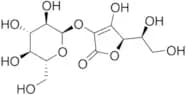
CAS:<p>Stability Light Sensitive<br>Applications δ-Tocotrienol is a natural substance with vitamin E activity. It can work as an antioxidant. It inhibits the growth of human breast cancer cells.<br>References Sen, C., et al.: Life Sci., 78, 2088 (2006); Yoshida, Y., et al.: Chem. Phys. Lipids, 123, 63 (2005)<br></p>Fórmula:C27H40O2Cor e Forma:Light Yellow To Dark OrangePeso molecular:396.612-O-a-D-Glucopyranosyl-L-ascorbic Acid
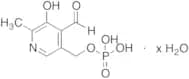
CAS:Produto Controlado<p>Applications 2-O-a-D-Glucopyranosyl-L-ascorbic Acid is a useful cosmetic gel and skin cleanser.<br>References Aizawa, K., et al.: PCT Int. Appl. (2020), WO 2020226147 A1<br></p>Fórmula:C12H18O11Cor e Forma:White To Off-WhitePeso molecular:338.26Pyridoxal 5-Phosphate Hydrate
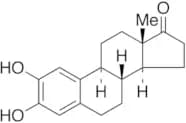
CAS:Produto Controlado<p>Applications Pyridoxal 5-phosphate Hydrate (cas# 853645-22-4) is a useful research chemical.<br></p>Fórmula:C8H10NO6P·xH2OCor e Forma:NeatPeso molecular:247.14 + x(18.02)2-Hydroxy Estrone
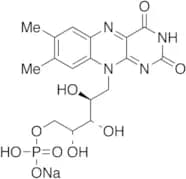
CAS:Produto ControladoFórmula:C18H22O3Cor e Forma:Off-White To Light BrownPeso molecular:286.37Riboflavin Phosphate Sodium Salt (~70%)
CAS:<p>Stability Hygroscopic<br>Applications One of the bioactive forms of Riboflavin. Nutritional factor found in milk, eggs, malted barley, liver, kidney, heart, leafy vegetables. Richest natural source is yeast. Minute amounts present in all plant and animal cells. Vitamin (enzyme cofactor).<br>References Unna, K., et al.: J. Pharmacol. Exp. Ther., 76, 75 (1942), Rivlin, et al.: N. Engl. J. Med., 283, 463 (1970), Al-Shammary, F.J., et al.: Anal. Profiles Drug Subs., 19, 429 (1990),<br></p>Fórmula:C17H20N4O9P·NaPureza:~70%Cor e Forma:Yellow-OrangePeso molecular:478.33Zymostenol
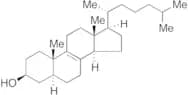
CAS:Produto Controlado<p>Applications Zymostenol, is the derivative of Zymosterol (Z701520), which is an sterol intermediate in the biosynthesis of cholesterol (C432501).<br>References Roland, E.D., et al.: J. Am. Chem. Soc., 111, 278 (1989); Echevarria, F., et al.: J. Biol. Chem., 265, 8484 (1990); Baranovskii, A.V., et al.: Russian. J. Bioorg. Chem., 28, 250 (2002); Schoenheimer, et al.: J. Biol. Chem., 105, 355 (1934);<br></p>Fórmula:C27H46OCor e Forma:NeatPeso molecular:386.65Parathyroid Hormone Fragment (1-34)
CAS:Produto Controlado<p>Applications A fragment of human parathyroid hormone (hPTH) peptide sequence containing the 34 N-terminal residues of hPTH. This fragment was also found to be an agonist at PTH1 and PTH2 receptors.<br>References Niall, et al.: Proc. Natl. Acad. Sci., 71, 384 (1974); Dobnig,T., et al.: Endocrinol., 138, 4607 (1997); Manabe. et al.: Bone., 40, 1475 (2007);<br></p>Fórmula:C181H291N55O51S2Cor e Forma:NeatPeso molecular:4117.725,6-trans-Vitamin D3
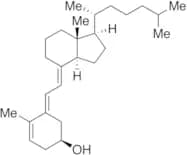
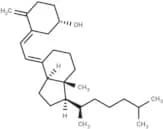
CAS:5,6-trans-Vitamin D3(5,6-trans-Cholecalciferol) is an isoform of Vitamin D3, which is converted from Vitamin D3 on the skin surface after light exposure.Fórmula:C27H44OPureza:98.23%Cor e Forma:SolidPeso molecular:384.64Hydrocortisone 17-Valerate
CAS:Produto Controlado<p>Applications Hydrocortisone 17-Valerate is a derivative of Hydrocortisone (H714615) which is a glucocorticoid that is produced by the zona fasciculata of the adrenal gland.<br>References Ponec, M. et. al.: J. Pharm. Sci., 75, 973 (1986); Vigore, L., et al.: Cancer Ther., 6, 699 (2008)<br></p>Fórmula:C26H38O6Cor e Forma:NeatPeso molecular:446.58Coenzyme Q2
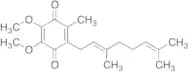
CAS:Produto Controlado<p>Applications Coenzyme Q2 is a redox carrier in the mitochondrial respiratory chain in eukaryotic cells. It has been used to investigate interaction of coenzyme Q with phosphatidylethanolamine membranes.<br>References Do, T., et al.: J. Biol Chem. 276, 18161 (2001); Gomez-Fernandez, J. C., et al.: Eur. J. Biochem. 259, 739 (1999);<br></p>Fórmula:C19H26O4Cor e Forma:NeatPeso molecular:318.407Tocofersolan
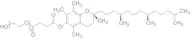
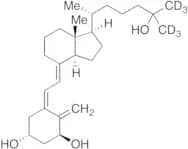
CAS:<p>Applications Tocofersolan is a polyethylene glycol derivative of α-Tocopherol (T526125). Tocofersolan is a synthetic water-soluble vitamin E unlike its natural counterpart which are fat soluble. Tocofersolan is used in pediatrics in the treatment vitamin E-deficient cholestatic children. Tocofersolan has potential application as a absorption enhancer in drug delivery systems. Typical batch, n = 21<br>References Socha, P. et al.: J. Pediatric Gastroenterol. Nutr., 24, 189 (1997); Chang, T. et al.: Clin. Pharmacol. Therap., 59, 297 (1996); Wu, S.H.W. et al.: Pharmac. Technol., 23, 52 (1999);<br></p>Fórmula:C33H54O5(C2H4O)nCor e Forma:NeatPeso molecular:530.78 + (44.05)nCalcitriol-d6
CAS:Produto Controlado<p>Stability Light Sensitive, Temperature Sensitive<br>Applications The biologically active form of vitamin D3. Calcium regulator; vitamin (antirachitic); antihyperparathyroid; antineoplastic; antipsoriatic.<br> Not a dangerous good if item is equal to or less than 1g/ml and there is less than 100g/ml in the package<br>References Myrtle, J.F., et al.: J. Biol. Chem., 245, 1190 (1970), Lawson, D.E.M., et al.: Nature, 230, 228 (1971), Norman, A.W., et al.: Science, 173, 51 (1971), Suda, T., et al.: Vitamins, 45, 175 (1972), Muindi, J.R., et al.: Clin. Pharmacol. Ther., 72, 648 (2002),<br></p>Fórmula:C272H6H38O3Cor e Forma:BeigePeso molecular:422.679-cis-Retinol Acetate
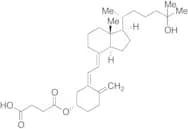
CAS:Produto ControladoFórmula:C22H32O2Pureza:>85%Cor e Forma:NeatPeso molecular:328.4925-Hydroxyvitamin D3 3-Hemisuccinate
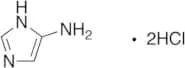
CAS:Produto Controlado<p>Stability Light Sensitive, Temperature Sensitive<br>Applications 25-Hydroxyvitamin D3 3-Hemisuccinate is a conjugate of 5-Hydroxyvitamin D3 (C125700), the principal circulating form of vitamin D3, formed in the liver by hydroxylation at C-25. Calcium regulator. Also used in the preparation and synthesis of antisera to be used in the immunoassay of 25-Hydroxyvitamin D3.<br>References Morii, et al.: Arch. Biochem. Biophys., 120, 513 (1967), Blunt, et al.: Biochemistry, 7, 3317 (1968), Liu, et al.: Science, 311, 1770 (2006),<br></p>Fórmula:C31H48O5Cor e Forma:NeatPeso molecular:500.714-Aminoimidazole Dihydrochloride
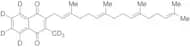
CAS:Produto Controlado<p>Applications 4-Aminoimidazole is used as a building block for the synthesis vitamin B12-analogs via Eubacterium limosu.<br>References Endres, B. et al.: Biol. Chem. Hop.-Sey., 376, 595 (1995);<br></p>Fórmula:C3H7Cl2N3Cor e Forma:NeatPeso molecular:156.01Menaquinone 4-D7 (Mixture of cis-trans isomers)
CAS:Produto ControladoFórmula:C31H33D7O2Cor e Forma:Colourless To Dark YellowPeso molecular:451.69Dihydro Folic Acid
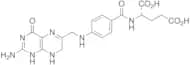
CAS:<p>Stability Hygroscoipic, Light and Air Sensitive<br>Applications Dihydrofolic Acid is an intermediate in mammalian conversion of dietary folic acid to tetrahydrofolate by dihydrofolate reductase (DHFR). Folic acid (FA) and Dihydrofolic acid (FAH2) are substrates of dihydrofolate reductase(s) which reduce them to tetrahydrofolate (THF).<br>References Andres, J., et al.: Bioorg. Chem., 24, 10 (1996), Benkovic, S., et al.: Science, 301, 1196 (2003), ,,,,Williams, D; J Mol Biol 2003, 329, 389,,,Krahn, J., et al.: Biochemistry, 46, 14878 (2007),<br></p>Fórmula:C19H21N7O6Cor e Forma:Light Beige To GreyPeso molecular:443.41Secalciferol
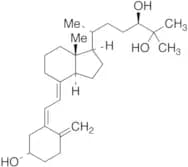
CAS:Produto Controlado<p>Stability Light Sensitive, Temperature Sensitive<br>Applications A metabolite of Vitamin D, a possibly anti-inflammatory steroid.<br> Not a dangerous good if item is equal to or less than 1g/ml and there is less than 100g/ml in the package<br>References Boyan, B., et al.: Steroids, 66, 363 (2001), Holick, M., et al.: J. Cell Biochem., 88, 296 (2003), Vogeser, M., et al.: Clin. Chem., 50, 1415 (2004), Singh, R., et al.: J. Clin. Endocrinol. Metab., 91, 3055 (2006),<br></p>Fórmula:C27H44O3Cor e Forma:NeatPeso molecular:416.64