Vitaminas
As vitaminas são compostos orgânicos necessários em pequenas quantidades para funções fisiológicas essenciais e para a saúde geral. Desempenham papéis cruciais no metabolismo, na função imunológica e na manutenção celular. Nesta categoria, encontrará uma ampla gama de vitaminas, incluindo tipos solúveis em água e em gordura, necessários para a pesquisa em nutrição, bioquímica e ciências da saúde. Na CymitQuimica, oferecemos vitaminas de alta qualidade para apoiar seus esforços de pesquisa e desenvolvimento, garantindo a precisão e eficácia de seus estudos sobre as funções e deficiências das vitaminas.
Foram encontrados 1124 produtos de "Vitaminas"
Ordenar por
Pureza (%)
0
100
|
0
|
50
|
90
|
95
|
100
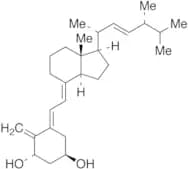
trans-Doxercalciferol
CAS:Produto Controlado<p>Applications A Vitamin D derivative.<br> Not a dangerous good if item is equal to or less than 1g/ml and there is less than 100g/ml in the package<br>References Koeffler, M.R., et al.: Blood, 74, 82 (1989),<br></p>Fórmula:C28H44O2Cor e Forma:NeatPeso molecular:412.65Succinimidyl-6-(biotinamido) Hexanoate
CAS:Produto Controlado<p>Stability Moisture Sensitive<br>Applications Succinimidyl-6-(biotinamido) Hexanoate is a biotinylation reagent incorporating an aminocaproyl “spacer”. This can reduce the steric hindrance in binding avidin to some biotinylated compounds when used to biotinylate both the antibody and the carrier in the Protein Avidin-Biotin Capture System. This system avoids the direct interaction of a captured antibody with solid surfaces, such as plastics, which may reduce antigenicity. It has also been used to enhance the detection of DNA on nitrocellulose. Has also been used as a cell surface labelling reagent<br>References Hofmann, K., et al.: Biochemistry, 21, 978 (1982); Leary, J.J., et al.: P. Natl. Acad. Sci. USA, 80, 4045, (1983); Suter, M., et al.: Immunology Letters, 13, 313 (1986); Gretch, D.R., et al.: Anal. Biochem., 163, 270 (1987), Burgess, T.L., et al.: J. Biol. Chem., 269 (32), 19188 (1995), Schumacher, T.N.M., et al.: Science, 271, 1854 (1996)<br></p>Fórmula:C20H30N4O6SCor e Forma:Off White Crystalline PowderPeso molecular:454.54Calcitroic Acid
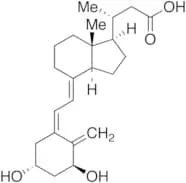
CAS:Produto Controlado<p>Stability Light Sensitive<br>Applications Calcitroic Acid is a major metabolite of Calcitriol (C144500).<br> Not a dangerous good if item is equal to or less than 1g/ml and there is less than 100g/ml in the package<br>References Esvelt, R.P. et al.: Arch. Biochem. Biophys., 206, 403 (1981); Onisko, B.L. et al.: Biochemistry, 19, 4124 (1980); Reddy, G.S. et al.: Biochemistry, 28, 1763 (1989);<br></p>Fórmula:C23H34O4Pureza:>85%Cor e Forma:NeatPeso molecular:374.5110-Formyl-5,6,7,8-tetrahydro Folic Acid Disodium (Technical Grade)
CAS:Produto Controlado<p>Stability Hygroscopic, Light Sensitive, Temperature Sensitive<br>Applications 10-Formyl-5,6,7,8-tetrahydro Folic Acid Disodium Salt is the disodium salt of F701085, which is a Folic Acid (F680300) derivative. Folic Acid is a vitamin needed to synthesize DNA, conduct DNA repair and methylate DNA, it also acts as a cofactor in biological reactions involving folate.10-Formyl-5,6,7,8-tetrahydro Folic Acid Disodium Salt is also used in the diagnosis and prevention and therapy of cerebral folate dificiency in relation to formation of folate receptor autoantibodies and treatment with reduced folate and antioxidants.<br>References Slieker, L.J., et al.: Mol. Pharmacol., 25, 294-302 (1984); Xu, L., et al.: Mol. Pharm., 7, 1311 (2010); Everette, J., et al.: J. Agric. Food Chem., 58, 8139 (2010); Alshatwi, A., et al.: Food, Chem., Toxicol., 48, 1881 (2010); McKay, D., et al.: Nut. J., 9 (2010)Ramaekers, WO 2006119589, (2006)<br></p>Fórmula:C20H21N7Na2O7Cor e Forma:NeatPeso molecular:517.4(S)-Naringenin
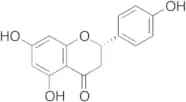
CAS:<p>Applications (S)-Naringenin, an active flavanone, maintains antioxidative, anti-inflammatory and antitumorigenic activities. Used in the treatment of praquat (PQ)-induced oxidative stress.<br>References Podder, B. et al.: J. Microbiol. Biotech., 24, 605 (2014); Abd El Azim, M. et al.: Org. Chem. An Ind. J., 10,410 (2014);<br></p>Fórmula:C15H12O5Cor e Forma:Light BrownPeso molecular:272.25Eupatilin
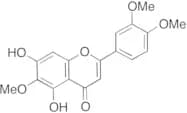
CAS:Produto Controlado<p>Stability Hygroscopic<br>Applications Eupatilin maintains anticoagulant and antiplatelet activity isolated from the Artemisia princeps Pampanini flower.<br>References Ryu, R. et al.: Prev. Nutr. Food Sci., 18, 181 (2013);<br></p>Fórmula:C18H16O7Cor e Forma:Light Yellow To BeigePeso molecular:344.32Dexamethasone Phosphate
CAS:<p>Applications A pro-drug of Dexamethasone (D298800), an anti-inflammatory glucocorticoid. It was found that liposomal DXM-P inhibited both chronic inflammation and joint destruction, whereas free DXM-P failed to prevent joint destruction.<br>References Kodelja, V., et al.: J. Immunol., 160, 1411 (1998), Metselaar, J., et al.: Arthritis Rheum., 48, 2059 (2003), Buttgereit, F., et al.: Arthritis Rheum., 50, 3408 (2004), Martinez, F., et al.: Front Biosci., 13, 453 (2008),<br></p>Fórmula:C22H30FO8PCor e Forma:White To Light BrownPeso molecular:472.44Thyroxine-13C6
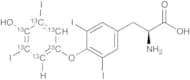
CAS:<p>Applications One of the thyroid hormones involved in the maintenance of metabolic homeostasis. Synthesized and stored as amino acid residues of thyroglobulin, the major protein component of the thyroid follicular colloid. Synthesis and secretion are regulated by the pituitary hormone (TSH). Deiodinated in peripheral tissues to the active metabolite, liothyronine. The D-form has very little activity as a thyroid hormone, but has been used to treat hyperlipidemia.<br>References Post, A., et al.: Anal. Profiles Drug Subs., 5, 225 (1976), Nelson, J.C., et al.: Clin. Chem., 34, 1737 (1988), Fischer, D.A., et al.: Clin. Chem., 42, 135 (1996), Cavalieri, R.R., et al.: Thyroid, 7, 177 (1997),<br></p>Fórmula:C913C6H11I4NO4Cor e Forma:White To Light BrownPeso molecular:782.83Folic Acid-d4
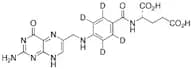
CAS:Produto Controlado<p>Applications A vitamin needed to synthesize DNA, conduct DNA repair and methylate DNA, it also acts as a cofactor in biological reactions involving folate.<br>References Xu, L., et al.: Mol. Pharm., 7, 1311 (2010), Everette, J., et al.: J. Agric. Food Chem., 58, 8139 (2010), Alshatwi, A., et al.: Food, Chem., Toxicol., 48, 1881 (2010), McKay, D., et al.: Nut. J., 9 (2010),<br></p>Fórmula:C192H4H15N7O6Cor e Forma:NeatPeso molecular:445.42(2RS,4R,8R)-δ-Tocopherol-d4 (Mixture of Diastereomers)
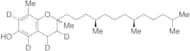
CAS:Produto Controlado<p>Applications Labelled δ-Tocopherol. One of the naturally occurring forms of Vitamin E. Isolated from soybean oil.<br>References Emerson, et al.: Science, 83, 421 (1936), Bieri, J.G., et al.: J. Nutr., 104, 850 (1974), Jiang, Q., et al.: Am. J. Clin. Nutr., 74, 714 (2001),<br></p>Fórmula:C27H42D4O2Cor e Forma:NeatPeso molecular:406.68all-trans-Anhydro Retinol (90%)
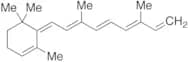
CAS:<p>Stability Light Sensitive, Temperature Sensitive<br>Applications A metabolite of vitamin A (Retinol) (R252000).<br>References Allo, S., et al.: J. Biol. Chem., 266, 22003 (1991), Brancolini, C., et al.: J. Cell Biol., 139, 759 (1997), Bubb, M., et al.: J. Biol .Chem., 269, 14869 (1994),<br></p>Fórmula:C20H28Pureza:90%Cor e Forma:Yellow-OrangePeso molecular:268.44all-trans-Retinal
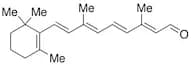
CAS:Produto Controlado<p>Stability Hygroscopic<br>Applications Corotenoid component of the visual pigments. All-trans retinal is converted to retinoic acid in vivo by the action of retinal dehydrogenase.<br>References Ball, et al.: Biochem. J., 42, 516 (1948), O’Brien, D.F., et al.: Science, 218, 961 (1982),<br></p>Fórmula:C20H28OCor e Forma:Yellow To Dark OrangePeso molecular:284.44L-Ascorbic Acid 2-Phosphate Sesquimagnesium Salt Hydrate (~15% Inorganics)
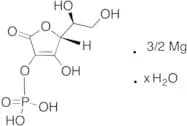
CAS:Produto ControladoFórmula:C6H9O9P•xHO·5MgCor e Forma:White To Off-WhitePeso molecular:256.10 + x(18.02) + 1.5(24.30)β-Tocopherol (Racemic Mixture)
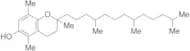
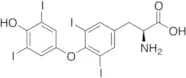
CAS:Produto Controlado<p>Stability Hygroscopic<br>Applications β-Tocopherol (Racemic Mixture) is one of the naturally occurring forms of Vitamin E. Is biologically less active than α-Tocopherol. This is the racemic mixture of all stereoisomers.<br> Not a dangerous good if item is equal to or less than 1g/ml and there is less than 100g/ml in the package<br>References Bianchi, G., et al.: Eur. J. Lipid Sci. Technology, 105, 229 (2003), Sakouhi, F., et al.: Food Chem., 108, 833 (2008),<br></p>Fórmula:C28H48O2Cor e Forma:Colourless To BeigePeso molecular:416.68Thyroxine (100% pure T4 reference standard (free of T3))
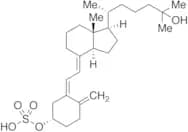
CAS:<p>Applications Thyroxine is one of the thyroid hormones involved in the maintenance of metabolic homeostasis. Synthesized and stored as amino acid residues of thyroglobulin, the major protein component of the thyroid follicular colloid. Synthesis and secretion are regulated by the pituitary hormone (TSH). Deiodinated in peripheral tissues to the active metabolite, liothyronine. The D-form has very little activity as a thyroid hormone, but has been used to treat hyperlipidemia.<br>References Post, A., et al.: Anal. Profiles Drug Subs., 5, 225 (1976); Nelson, J.C., et al.: Clin. Chem., 34, 1737 (1988); Fischer, D.A., et al.: Clin. Chem., 42, 135 (1996); Cavalieri, R.R., et al.: Thyroid, 7, 177 (1997);<br></p>Fórmula:C15H11I4NO4Cor e Forma:Off-WhitePeso molecular:776.8725-Hydroxy Vitamin D3 3-Sulfate Sodium Salt (90%)
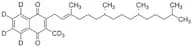
CAS:Produto Controlado<p>Stability Light Sensitive, Temperature Sensitive<br>Applications 25-Hydroxyvitamin D3 3-Sulfate is a metabolite of 24,25-Dihydroxyvitamin D3 and 25-Hydroxyvitamin D3 (C125700).<br>References Higashi, T. et al.: Steroids, 65, 281 (2000); Higashi, T. et al.: Ann. Clin. Biochem., 36, 43 (1999);<br></p>Fórmula:C27H43NaO5SPureza:90%Cor e Forma:NeatPeso molecular:502.68Vitamin K1-d7
CAS:Produto Controlado<p>Stability Light Sensitive, Temperature Sensitive<br>Applications Labelled Vitamin K1 (V676080). Occurs widely in green plants, algae, photosynthetic bacteria.<br>References Hassan, M.M.A., et al.: Anal. Profiles Drug Subs., 17, 449 (1988), Breton, J., et al.: Biochemistry, 33, 12405 (1994), Dowd, P., et al.: Science, 269, 1684 (1995),<br></p>Fórmula:C31H39D7O2Cor e Forma:Yellow BrownPeso molecular:457.74(3R,S)-Oxidosqualene (>90%)
CAS:Produto ControladoFórmula:C30H50OPureza:>90%Cor e Forma:NeatPeso molecular:426.72