Nucleosídeos
Foram encontrados 3569 produtos de "Nucleosídeos"
3’,5’-Di-O-Benzoyl-2'-deoxy-2',2'-difluoro-5-methyluridine
CAS:A gemcitabine analogue
Fórmula:C24H20F2N2O7Pureza:Min. 95%Cor e Forma:PowderPeso molecular:486.42 g/molRef: 3D-ND01187
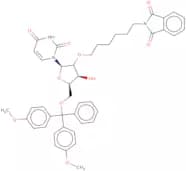
Produto descontinuado5'-O-DMT-2'-O-hexylphthalimidouridine
5'-O-DMT-2'-O-hexylphthalimidouridine is a novel nucleoside analog with anticancer activity. It is a modified nucleoside that has been synthesized and purified in high purity. 5'-O-DMT-2'-O-hexylphthalimidouridine is an activator of DNA and RNA synthesis and has antiviral properties. It also inhibits the production of tumor necrosis factor alpha (TNFα) by human synovial cells. This compound binds to the RNA polymerase II enzyme, which prevents transcription of genetic material from DNA templates into messenger RNA. This leads to inhibition of protein synthesis and cell death by apoptosis.
Fórmula:C44H45N3O10Pureza:Min. 95%Peso molecular:775.86 g/molRef: 3D-ND08415
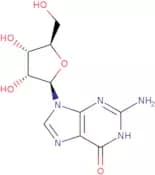
Produto descontinuadoGuanosine hydrate
CAS:Blocks glutamatergic activity; neuroprotective
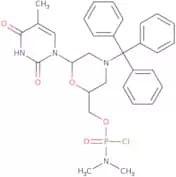
Fórmula:C10H13N5O5·xH2OPureza:Min. 98 Area-%Cor e Forma:PowderPeso molecular:283.24 g/molMorpholino T monomer
CAS:Morpholino T is a modified nucleoside amidite used to prepare morpholino oligomers
Fórmula:C31H34ClN4O5PPureza:Min. 98 Area-%Cor e Forma:White PowderPeso molecular:609.05 g/molRef: 3D-PM137474
Produto descontinuadoN6-Benzoyl-8-hydroxy-2'-O-methyladenosine
N6-Benzoyl-8-hydroxy-2'-O-methyladenosine is a nucleoside analogue that inhibits the replication of RNA and DNA. It is a monophosphate, which can be converted to a diphosphate through phosphorylation. N6-Benzoyl-8-hydroxy-2'-O-methyladenosine has been shown to inhibit cancer cells and may have potential for use in antiviral therapy. This compound was synthesized from 2,4,5,6 tetrahydrobenzyl alcohol and 2'-deoxyadenosine. The CAS number for this compound is 79430-89-1.
Pureza:Min. 95%N3-Methyl-5-methyluridine
CAS:N3-Methyl-5-methyluridine is a monophosphate of deoxyribonucleosides, which is a novel and modified nucleotide. It can be used as an antiviral agent and as a reagent in DNA synthesis. N3-Methyl-5-methyluridine is also an activator of ribonucleic acid (RNA) synthesis and has anticancer activity. It can be used for the production of phosphoramidites and DNA synthesis, as well as for the treatment of cancer.
Pureza:Min. 95%L-Guanosine
CAS:L-Guanosine is an enantiomer of adenosine. It has been shown to be effective in the treatment of autoimmune diseases and viruses, such as HIV. L-Guanosine is activated by phosphorylation, which leads to its binding with DNA and inhibition of viral replication. L-Guanosine is also a potent inhibitor of mammalian cell proliferation. It binds to the enzyme adenosyltransferase, thereby inhibiting the production of nucleotides, which are necessary for DNA synthesis. This inhibition causes cell death due to lack of DNA synthesis and protein production.
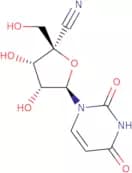
Fórmula:C10H13N5O5Pureza:Min. 95%Cor e Forma:White PowderPeso molecular:283.24 g/mol4’-Cyanouridine
CAS:4’-Cyanouridine is a nucleoside that is used in the synthesis of DNA and RNA. It is often used as a precursor in the production of phosphoramidites and nucleosides, which are important for DNA synthesis. 4’-Cyanouridine can be used to inhibit viral replication by blocking the activity of reverse transcriptase, an enzyme required for the synthesis of viral DNA. 4’-Cyanouridine can also be used to treat cancer cells by preventing the growth of cells. This compound has been shown to activate RNA polymerase II, which is required for protein synthesis and cell division. The high purity and novel nature of this product make it ideal for use in research laboratories or other specialized settings where high quality products are required.
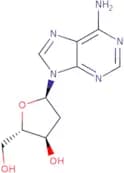
Pureza:Min. 95%2'-Deoxy-L-adenosine
CAS:2'-Deoxy-L-adenosine is an adenosine analogue that has been shown to inhibit the growth of tumor cells in mice. The mechanism of this inhibition is not well understood, but it is thought that 2'-deoxy-L-adenosine inhibits the adenosine A3 receptor and blocks the activation of toll-like receptors. This drug also has been shown to have anti-inflammatory properties, which may be due to its ability to inhibit prostaglandin synthesis. It has been used as a model system for studying cellular responses to DNA damage caused by ultraviolet radiation. 2'-Deoxy-L-adenosine also has been shown to have a cytotoxic effect on human HL60 cells, which is mediated by nuclear DNA fragmentation.
Fórmula:C10H13N5O3Pureza:Min. 98 Area-%Cor e Forma:Off-White PowderPeso molecular:251.25 g/molRef: 3D-ND04246
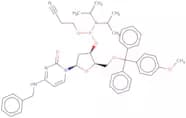
Produto descontinuadoN4-Benzyl-2'-deoxy-5'-O-MMT-cytidine 3'-CE phosphoramidite
N4-Benzyl-2'-deoxy-5'-O-MMT-cytidine 3'-CE phosphoramidite is a monophosphate nucleoside that is used as an activator of anticancer agents, such as cytosine arabinoside. It has been modified to include an N4-benzyl group and a 2'-deoxy-5'-O-methyl moiety at the 5' position. The novel modifications have been shown to improve the efficacy of anticancer drugs against leukemia cells. In addition, it has been shown that this compound is more potent than other phosphoramidites in inhibiting the synthesis of viral RNA and DNA.
Fórmula:C45H52N5O6PPureza:Min. 95%Peso molecular:789.92 g/molN4-Ethenocytidine
CAS:N4-Ethenocytidine is a nucleoside analogue that has been synthesized and shown to be an effective inhibitor of the hepatitis C virus. N4-Ethenocytidine prevents the synthesis of viral RNA by attacking the 3'-hydroxyl group of uridine, which is involved in the formation of ribonucleotides. This compound can also inhibit rat liver microsomes through a hydrated attack on carbonyl groups. The reaction products are trifluoroacetic acid and chloride ions. N4-Ethenocytidine's fluorescence properties have been used to identify its reaction intermediates, which include uridylic acid and 4-etheno-N6-isopentenyladenosine.
Fórmula:C11H13N3O5Pureza:Min. 95%Cor e Forma:White Off-White PowderPeso molecular:267.24 g/molRef: 3D-NE06244
Produto descontinuado2’-Deoxy-2’-fluoro-N3-(2S)-[2-(tert-butoxycarbonyl)-amino-3-carbonyl]propyluridine
2’-Deoxy-2’-fluoro-N3-(2S)-[2-(tert-butoxycarbonyl)-amino-3-carbonyl]propyluridine is a nucleoside, modified with fluorine at the 2’ position. It is an activator of phosphoramidites in the synthesis of DNA and RNA. This product has shown anticancer activity in vitro. 2'DFNAPU has also been shown to inhibit the replication of HIV virus and herpes simplex virus type 1 in cell culture, which may be due to its ability to inhibit viral DNA polymerase.
Pureza:Min. 95%2'-Deoxy-5-methylcytidine
CAS:2'-Deoxy-5-methylcytidine is a nucleoside analogue that inhibits the synthesis of DNA. It prevents methylation of guanine, which disrupts the binding of guanine nucleotide-binding proteins to the dna template and prevents polymerase chain reactions. 2'-Deoxy-5-methylcytidine has been shown to inhibit colon cancer cells in vitro, and may be a potential biomarker for bowel disease. This drug is also a methyltransferase inhibitor, which means it blocks the enzyme responsible for adding methyl groups to cytosine molecules.
Fórmula:C10H15N3O4Pureza:Min. 98 Area-%Cor e Forma:White PowderPeso molecular:241.25 g/molRef: 3D-ND06242
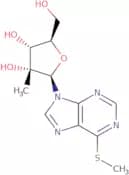
Produto descontinuado2'-C-Methyl-6-S-methyl-6-thioinosine
CAS:2'-C-Methyl-6-S-methyl-6-thioinosine is a modified nucleoside that can be used as an antiviral and anticancer agent. It has been shown to activate the immune system by inducing cytokine production, which leads to increased cytotoxicity against tumor cells. 2'-C-Methyl-6-S-methyl-6-thioinosine has also been shown to inhibit DNA synthesis and induce apoptosis in cancer cells. This product is of high purity and quality, with a CAS number of 172722-76-8.
Pureza:Min. 95%6-O-Methyl-5’(R)-C-methylinosine
6-O-Methyl-5’(R)-C-methylinosine is a modified nucleoside that is an antiviral agent. It inhibits the synthesis of viral DNA and RNA by inhibiting the activity of ribonucleotide reductase. 6-O-Methyl-5’(R)-C-methylinosine has been shown to inhibit the growth of certain cancer cells and may be useful in treating prostate cancer. This drug has been synthesized from deoxyribonucleosides and diphosphate, which are phosphoramidites that were used as starting materials. 6-O-Methyl-5’(R)-C-methylinosine was first described in a patent in 1979, with CAS number 827076.
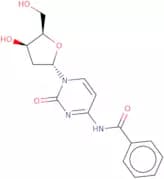
Pureza:Min. 95%N4-Benzoyl-2'-deoxy-a-cytidine
CAS:N4-Benzoyl-2'-deoxy-a-cytidine is a novel, modified nucleoside that has shown anticancer and antiviral activity. It is synthesized by the enzymatic oxidation of 2'-deoxyadenosine with benzoyl chloride and sodium bicarbonate. N4-Benzoyl-2'-deoxy-a-cytidine has been shown to activate transcription, increase DNA synthesis, and inhibit virus replication. It also inhibits bacterial growth, but does not appear to have any effect on mammalian cells.Fórmula:C16H17N3O5Pureza:Min. 95%Cor e Forma:PowderPeso molecular:331.32 g/molRef: 3D-NB08374
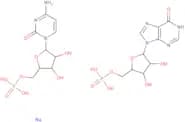
Produto descontinuadoPolyinosinic-polycytidylic acid sodium salt
CAS:Polyinosinic acid-polycytidylic acid (Poly I:C), an agonist of TLR3 toll-like receptors, is a synthetic double-stranded RNA analog, consisting of polyinosinic acid (poly I) paired with polycytidylic acid (poly C), forming a stable duplex structure. PolyI:C stimulates the secretion of pro-inflammatory cytokines and type I interferon through its interaction with endosomal Toll-like receptor 3 (TLR-3) and the cytoplasmic receptors melanoma differentiation-associated gene 5 (MDA-5) and retinoic acid-inducible gene I (RIG-I). This immunostimulant activity makes Poly I:C a useful vaccine adjuvant and is used in vaccine formulations. Poly I:C and its stabilized analogs (e.g., poly-ICLC) are also being actively researched for their dual role in oncology: directly targeting tumors and acting as immune potentiators. For example Poly I:C can induce apoptosis in tumor cells and stimulate immunogenic cell death and is therefore being explored alongside chemotherapy, radiotherapy, and checkpoint inhibitors, helping to overcome resistance mechanisms and strengthen treatment outcomes. We can supply PolyI:C to all stages of your project - from R&D and preclinical phases right up to GMP commercial manufacture. Contact our team for custom Poly I:C products.
For more on poly I:C read out blog 'Poly I:C: A Vaccine Adjuvant With Oncological Potential.'Fórmula:(C10H13N4O8P)x•(C9H14N3O8P)x•NaxCor e Forma:White PowderRef: 3D-TP36521
Produto descontinuadoN′-[9-(2-Deoxy-2-fluoro-β-D-arabinofuranosyl)-6,9-dihydro-6-oxo-1H-purin-2-yl]-N,N-dimethylmethanimidamide
CAS:Please enquire for more information about N′-[9-(2-Deoxy-2-fluoro-β-D-arabinofuranosyl)-6,9-dihydro-6-oxo-1H-purin-2-yl]-N,N-dimethylmethanimidamide including the price, delivery time and more detailed product information at the technical inquiry form on this page
Fórmula:C13H17FN6O4Pureza:Min. 95%Peso molecular:340.31 g/mol3,N6-Dimethyl-2-deoxyadenosine
3,N6-Dimethyl-2-deoxyadenosine is a synthetic nucleoside that is an activator of DNA polymerase. It has been shown to inhibit the growth of cancer cells and has antiviral properties.
Pureza:Min. 95%







![2’-Deoxy-2’-fluoro-N3-(2S)-[2-(tert-butoxycarbonyl)-amino-3-carbonyl]propyluridine](/_next/image/?url=https%3A%2Fstatic.cymitquimica.com%2Fproducts%2F3D%2Fthumb-webp%2FND162843.webp&w=3840&q=75)


![N′-[9-(2-Deoxy-2-fluoro-β-D-arabinofuranosyl)-6,9-dihydro-6-oxo-1H-purin-2-yl]-N,N-dimethylmethani…](/_next/image/?url=https%3A%2Fstatic.cymitquimica.com%2Fproducts%2F3D%2Fthumb-webp%2FNF183584.webp&w=3840&q=75)