Nucleosídeos
Os nucleosídeos são building blocks fundamentais dos ácidos nucleicos, compostos por uma base nitrogenada ligada a uma molécula de açúcar. Nesta seção, você encontrará uma ampla variedade de nucleosídeos essenciais para pesquisas em biologia molecular, bioquímica e farmacologia. Esses compostos desempenham papéis cruciais na síntese de DNA e RNA, e também são vitais em vários processos metabólicos. Os nucleosídeos são usados para estudar material genético, desenvolver terapias antivirais e anticancerígenas, e entender os mecanismos celulares. Na CymitQuimica, fornecemos nucleosídeos de alta qualidade para apoiar suas necessidades de pesquisa e desenvolvimento, garantindo pureza e confiabilidade para suas aplicações experimentais.
Foram encontrados 3569 produtos de "Nucleosídeos"
Ordenar por
Pureza (%)
0
100
|
0
|
50
|
90
|
95
|
100
Thymidine-5'-diphosphate-4-keto-6-deoxy-D-glucose disodium salt
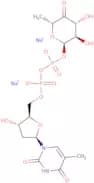
CAS:Thymidine-5'-diphosphate-4-keto-6-deoxy-D-glucose disodium salt is a precursor in the synthesis of nucleoside sugars in pathways such as rhamnose biosynthesis.Fórmula:C16H22N2O15P2Na2Pureza:Min. 85 Area-%Cor e Forma:White PowderPeso molecular:590.28 g/molXanthosine 5'-triphosphate disodium salt
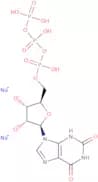
CAS:<p>Xanthosine 5'-triphosphate disodium salt is a nucleotide that is an intermediate in the synthesis of DNA and RNA. It has a hydroxyl group at the 5' carbon atom and two carboxylic acid groups on the 3' carbon atom. Xanthosine 5'-triphosphate disodium salt can be found in many compounds, such as d-glucose, which contains six hydroxyl groups. <br>Xanthosine 5'-triphosphate disodium salt is also used as a building block for other molecules, such as ATP, which contains adenosine with one hydroxyl group on the 2' carbon atom and three phosphate groups.</p>Fórmula:C10H13N4O15P3·2NaPureza:Min. 95%Cor e Forma:PowderPeso molecular:568.13 g/mol3'-Amino-2',3'-dideoxy-5-methylcytidine
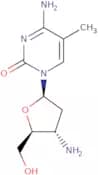
CAS:3'-Amino-2',3'-dideoxy-5-methylcytidine is an antiviral agent that has been shown to inhibit the replication of viruses in cell culture. It also inhibits the synthesis of DNA, RNA, and proteins. This drug has been used in vivo studies on animals and humans. 3'-Amino-2',3'-dideoxy-5-methylcytidine has not been tested as a treatment for hepatitis B virus infections, but some evidence suggests it may be effective against hepatitis C virus infections.Fórmula:C10H16N4O3Pureza:Min. 95%Peso molecular:240.26 g/molCytidine
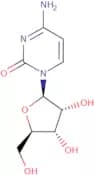
CAS:<p>Cytidine is a nucleoside that belongs to the group of pyrimidine nucleosides. It can be absorbed from the intestine and hydrolyzed to uridine by intestinal enzymes. Cytidine has been shown to inhibit angiogenesis in animal model systems and transfection experiments, as well as being genotoxic in vitro. Cytidine has also been shown to inhibit polymerase chain reactions (PCR) and enzyme activities, such as cytidine deaminase, which converts cytidine into uracil.</p>Fórmula:C9H13N3O5Pureza:Min. 99 Area-%Cor e Forma:White Off-White PowderPeso molecular:243.22 g/mol5-Hydroxyuridine
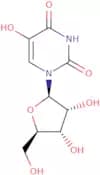
CAS:5-Hydroxyduridine is a nucleoside that is naturally found in the human body. It can be synthesized from uridine by oxidation of the 5-hydroxyl group to the corresponding aldehyde. It has been shown to have genotoxic effects in vitro and in prostate cancer cells. 5-Hydroxyduridine has also been shown to inhibit sugar transport, which may be due to its ability to form hydrogen bonds with glycosidic bonds. It has been reported that 5-hydroxyduridine causes acid formation and hydroxylation of cardiac lipids.Fórmula:C9H12N2O7Pureza:Min. 96 Area-%Cor e Forma:White Off-White PowderPeso molecular:260.2 g/molN4-Acetyl-2'-deoxy-5'-O-DMT-cytidine 3'-CE phosphoramidite
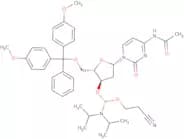
CAS:N4-Acetyl-2'-deoxy-5'-O-DMT-cytidine 3'-CE phosphoramidite is a novel nucleoside that belongs to the group of deoxyribonucleosides. It is a modified nucleotide with a phosphate at the 5' position and an acetyl group in place of the hydroxyl group at the 2' position. N4-Acetyl-2'-deoxy-5'-O-DMT-cytidine 3'-CE phosphoramidite has antiviral, anticancer, and activator properties. This compound is also known as 5′N4 acetyldeoxythymidine 3′Ce, or 5′N4 acetyldeoxythymidine 3′Ce phosphoramidite.Fórmula:C41H50N5O8PPureza:Min. 97 Area-%Cor e Forma:PowderPeso molecular:771.86 g/mol2'-O-Methylcytidine-5'-monophosphate triethylammonium salt
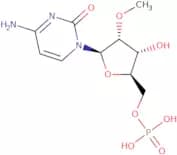
CAS:2'-O-Methylcytidine-5'-monophosphate triethylammonium salt is a synthetic nucleoside that has been shown to be a substrate for DNA polymerase and an inhibitor of RNA synthesis. It has been used in the laboratory as a primer and as a biochemical tool to study viruses. 2'-O-Methylcytidine-5'-monophosphate triethylammonium salt is active against murine leukemia virus, but not against ciliated protozoan parasites such as Tetrahymena pyriformis. This compound has also been shown to inhibit the enzyme form of HIV reverse transcriptase and to be cytotoxic at high concentrations.Fórmula:C10H16N3O8P•C6H15NPureza:Min. 95%Cor e Forma:PowderPeso molecular:438.41 g/molNADPH 4Na - min 95%
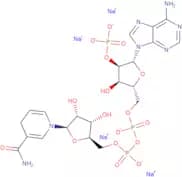
CAS:Beta-nicotinamide adenine dinucleotide phosphate sodium salt (NADPH) is a coenzyme that mediates various biological processes. It’s a regenerating electron donor in cellular antioxidation systems and a regulator of energy metabolism and mitochondrial functions. It mediates calcium homeostasis via the generation of cyclic ADP-ribose and modulates several key factors in cell death such as mitochondrial permeability transition and poly(ADP-ribose) polymerase-1 (PARP1).Fórmula:C21H26N7O17P3·4NaPureza:Min. 95 Area-%Cor e Forma:White PowderPeso molecular:833.35 g/mol2,2’-Anhydro-5-methyluridine-3’-CE phosphoramidite
<p>2,2’-Anhydro-5-methyluridine-3’-CE phosphoramidite is a monophosphate nucleotide that is used as a building block for DNA synthesis. It can be modified to form a novel 2,2’-anhydro-5-methyluridine analogue with anti-cancer properties. This product also has antiviral and activator activities.</p>Pureza:Min. 95%S4-(2-Cyanoethyl)-4-thiothymidine
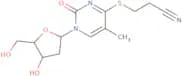
CAS:S4-2-Cyanoethyl-4-thiothymidine is a novel nucleoside with high quality and high purity. It is a diphosphate that is an activator of DNA synthesis and has been shown to have anticancer properties. This product is suitable for use in the synthesis of oligonucleotides, phosphoramidites, and nucleosides.Fórmula:C13H17N3O4SPureza:Min. 95%Peso molecular:311.36 g/molAdenosine - Endotoxin level below 100 EU/g
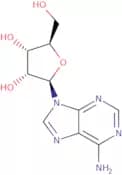
CAS:Adenosine is a nucleoside that interacts with adenosine receptors in the central nervous system. It is found in most body tissues and fluids, including blood, cerebrospinal fluid, and synovial fluid. Adenosine has been shown to inhibit uptake of glucose and other substances in the brain. The uptake of adenosine by neurons is inhibited by solute transport inhibitors such as nevirapine, which prevents the accumulation of toxic levels of adenosine during excitotoxic injury. Adenosine also has thermodynamic properties that promote its removal from solution by binding to water molecules and forming crystals or precipitates. This property may be useful in the treatment of cerebral edema following traumatic brain injury.Fórmula:C10H13N5O4Pureza:Min. 99.0 Area-%Cor e Forma:White PowderPeso molecular:267.24 g/mol2'-Deoxy-5-hydroxycytidine
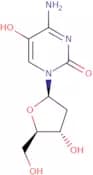
CAS:<p>2'-Deoxy-5-hydroxycytidine is a nucleoside analog that is used to treat human immunodeficiency virus (HIV). It inhibits the synthesis of HIV by inhibiting the enzyme reverse transcriptase. This drug binds to DNA duplexes, and has been shown to be reactive with damaged DNA. The compound has been shown to inhibit viral replication in a model system, and also inhibits the polymerase chain reaction. 2'-Deoxy-5-hydroxycytidine may also have thermodynamic properties that are related to its potential for reactivity with oxidative DNA.<br>2'-Deoxy-5-hydroxycytidine is an analog of cytidine. It can be synthesized using solid phase synthesis on a resin support.</p>Fórmula:C9H13N3O5Pureza:Min. 95%Cor e Forma:White PowderPeso molecular:243.22 g/mol3'-Phosphoadenosine 5'-phosphosulfate triethylammnonium
CAS:Universal sulfonate donor for in vivo sulfonation by sulfotransferasesFórmula:C10H15N5O13P2S•4C6H15NPureza:Min. 90 Area-%Cor e Forma:PowderPeso molecular:912.03 g/molN6-Benzoyladenosine
CAS:N6-Benzoyladenosine is a purine nucleoside that is synthesized from uridine and has a high resistance to phosphorylation. It is found in the mitochondrial matrix of rat hepatocytes and can be used as a specific agent for the treatment of symptoms related to Parkinson's disease. N6-Benzoyladenosine inhibits protein synthesis by inhibiting the catalytic subunit of guanine nucleotide-binding proteins, which are involved in cellular energy production. It also inhibits camp levels and camp concentrations in mitochondria, which may be due to its effects on the trimethylbenzodiazepine receptor.Fórmula:C17H17N5O5Pureza:Min. 98 Area-%Cor e Forma:White PowderPeso molecular:371.35 g/mol2-Chloroinosine
CAS:2-Chloroinosine is a synthetic nucleoside analog derived from inosine, in which a chlorine atom is substituted at the 2-position of the purine base (hypoxanthine). This modifcation causes altered reactivity and can be used in research applicationsFórmula:C10H11ClN4O5Pureza:Min. 95%Cor e Forma:PowderPeso molecular:302.67 g/mol5'-O-DMT-2'-O-(2-methoxyethyl)-5-methylcytidine
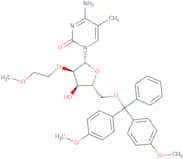
CAS:5'-O-DMT-2'-O-(2-methoxyethyl)-5-methylcytidine is a phosphoramidite that is used in the synthesis of DNA and RNA. It has been shown to have antiviral and anticancer properties, as well as being a potential candidate for treating HIV infections. 5'-O-DMT-2'-O-(2-methoxyethyl)-5-methylcytidine has high quality and purity and is not hazardous to the environment.Fórmula:C34H39N3O8Pureza:Min. 95%Cor e Forma:PowderPeso molecular:617.69 g/mol5-Methoxymethyl-2'-deoxyuridine
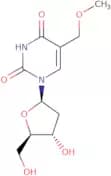
CAS:<p>5-Methoxymethyl-2'-deoxyuridine is an antiviral agent that inhibits viral replication by reacting with the glycosidic bond in the viral enzyme, which prevents the enzyme from functioning and so prevents virus replication. 5-Methoxymethyl-2'-deoxyuridine has been shown to be active against herpes simplex virus, although it is not active against wild-type viruses. This drug has toxic effects on animals, which may be due to its ability to inhibit amino transferase activity, which leads to systemic diseases. It has also been shown that 5-Methoxymethyl-2'-deoxyuridine can be used as a marker for autoimmune diseases.</p>Fórmula:C11H16N2O6Pureza:Min. 95%Cor e Forma:PowderPeso molecular:272.25 g/molThymidine-5'-monophosphate disodium salt
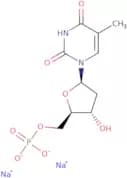
CAS:Thymidine-5'-monophosphate disodium salt is a nucleoside that is synthesized by reductive phosphorylation of thymidine. It is a substrate for nucleotide synthesis and can be used as a reagent in the synthesis of oligonucleotides. Thymidine-5'-monophosphate disodium salt can be reduced to form thymidine, which can then be converted to 5-thio-2'-deoxyuridylate or 5-thio-2'-deoxycytidylate. This conversion takes place through the cleavage reaction of the thymidine residue from the disodium salt.Fórmula:C10H13N2Na2O8PPureza:Min. 98 Area-%Cor e Forma:White PowderPeso molecular:366.17 g/mol2-Thiothymidine
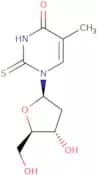
CAS:<p>2-Thiothymidine is a hydrogen bond donor and acceptor that can be used as a substitute for thymine in the synthesis of DNA. 2-Thiothymidine has been shown to have successful in vivo treatment against bladder cancer and skin cells, as well as photochemical properties. It has been shown to inhibit the growth of prostate cancer cells by inhibiting DNA synthesis. 2-Thiothymidine binds to dna duplexes and polymerase chain reactions, which are important for replication of DNA. This drug also inhibits replication by preventing intramolecular hydrogen bonds from forming.<br>2-Thiothymidine is a nucleoside analog that is substituted for thymine during DNA synthesis. It inhibits the growth of prostate cancer cells by inhibiting DNA synthesis. It binds to dna duplexes and polymerase chain reactions, which are important for replication of DNA. This drug also inhibits replication by preventing intramolecular hydrogen bonds from forming.</p>Fórmula:C10H14N2O4SPureza:Min. 95%Cor e Forma:White PowderPeso molecular:258.3 g/mol7-Deaza-2’-C-methylinosine
<p>7-Deaza-2’-C-methylinosine is an antiviral agent that inhibits the replication of DNA or RNA. It is a nucleoside analog that can be phosphorylated to form a diphosphate or monophosphate. 7-Deaza-2’-C-methylinosine has been shown to have anticancer effects in vitro and in vivo, as well as inhibit the proliferation of cancer cells. This agent also has novel properties due to the presence of the methyl group at position 2’ on the deoxyribose ring.</p>Fórmula:C11H11N3O6Pureza:Min. 95%Cor e Forma:PowderPeso molecular:281.22 g/mol