Nucleosídeos
Os nucleosídeos são building blocks fundamentais dos ácidos nucleicos, compostos por uma base nitrogenada ligada a uma molécula de açúcar. Nesta seção, você encontrará uma ampla variedade de nucleosídeos essenciais para pesquisas em biologia molecular, bioquímica e farmacologia. Esses compostos desempenham papéis cruciais na síntese de DNA e RNA, e também são vitais em vários processos metabólicos. Os nucleosídeos são usados para estudar material genético, desenvolver terapias antivirais e anticancerígenas, e entender os mecanismos celulares. Na CymitQuimica, fornecemos nucleosídeos de alta qualidade para apoiar suas necessidades de pesquisa e desenvolvimento, garantindo pureza e confiabilidade para suas aplicações experimentais.
Foram encontrados 3569 produtos de "Nucleosídeos"
Ordenar por
Pureza (%)
0
100
|
0
|
50
|
90
|
95
|
100
3'-O-Aminoacetoxythymidine 5'-O-triphosphate triethylammonium salt
<p>Please enquire for more information about 3'-O-Aminoacetoxythymidine 5'-O-triphosphate triethylammonium salt including the price, delivery time and more detailed product information at the technical inquiry form on this page</p>Fórmula:C13H22N3O14P3•(C6H15N)xPureza:Min. 99 Area-%Cor e Forma:PowderPeso molecular:537.25 g/molLDA
CAS:<p>LDA is a technique for extracting spectral features from a set of spectra. It uses the probabilistic model of discriminant analysis to discriminate between groups of spectra. LDA has been shown to outperform other techniques, such as PCA and MDA, in analyzing datasets with a small number of variables. The algorithm is incrementally updated with new data points and parameters, which makes it an attractive choice for real-time applications.</p>Pureza:Min. 95%5-Chloro-2',3'-O-isopropylidenecytidine
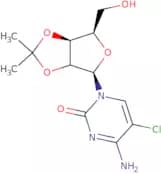
<p>5-Chloro-2',3'-O-isopropylidenecytidine is a synthetic nucleoside that is activated by phosphorylation to form the corresponding nucleotide. It has antiviral and anticancer properties, and can be used as a building block for synthesis of other nucleosides. 5-Chloro-2',3'-O-isopropylidenecytidine is synthesized from 2,4-dichlorophenoxyacetic acid (DCA) and 2,5-dichloroaniline in the presence of sodium cyanide. The compound was first synthesized in 1972 and its chemical structure was determined in 1974. 5-Chloro-2',3'-O-isopropylidenecytidine has been shown to inhibit DNA synthesis by binding to viral diphosphate and deoxyribonucleosides. This compound also inhibits the activity of bacterial DNA gyrase and DNA top</p>Fórmula:C12H16ClN3O5Pureza:Min. 95%Peso molecular:317.73 g/molN2-Isobutyryl-2'-(2-methoxyethyl)guanosine
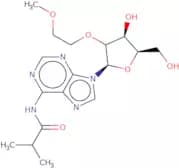
CAS:<p>N2-Isobutyryl-2'-(2-methoxyethyl)guanosine is a nucleoside that is structurally related to guanosine. It is used as an activator for RNA synthesis and as a novel antiviral agent. This compound has been shown to have high purity, high quality, and excellent solubility. N2-Isobutyryl-2'-(2-methoxyethyl)guanosine has also been found to be active against HIV in vitro by inhibiting reverse transcriptase activity.</p>Pureza:Min. 95%2-Aminopyrimidine-5-boronic acid
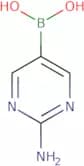
CAS:<p>2-Aminopyrimidine-5-boronic acid is a synthetic compound that has been shown to inhibit the activity of cellulase enzymes in vitro. It also has neuroprotective effects and potent inhibition against cancer cells. 2-Aminopyrimidine-5-boronic acid's mechanism of action is reversible covalent, meaning that it reacts with DNA by forming an N2-(2'-aminopyrimidine) adduct with guanine at position 6 in the purine ring. This reaction inhibits DNA synthesis, leading to cell death. 2-Aminopyrimidine-5-boronic acid is not currently being used as a cancer therapy, but it is being researched for its potential use in cancer treatments.</p>Fórmula:C4H6BN3O2Pureza:Min. 95%Peso molecular:138.92 g/molRef: 3D-NA57424
Produto descontinuado2-Amino-6-chloro-9-(2'-deoxy-b-D-ribofuranosyl)purine-5'-triphosphate
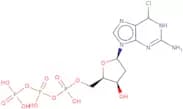
<p>2-Amino-6-chloro-9-(2'-deoxy-b-D-ribofuranosyl)purine-5'-triphosphate is a novel synthetic nucleoside analog with antiviral and anticancer properties. It is an activator of ribonucleotide reductase, which converts ribonucleotides to deoxyribonucleotides. 2-Amino-6-chloro-9-(2'-deoxy-b-D-ribofuranosyl)purine has been shown to be effective against human leukemia cells in vitro and in vivo.</p>Fórmula:C10H17ClN5O12P3Pureza:Min. 95%Peso molecular:527.64 g/mol5'-O-DMT-2'-ethylfluoro-5-methyluridine 3'-CE phophoramidite
<p>5'-O-DMT-2'-ethylfluoro-5-methyluridine 3'-CE phophoramidite is an antiviral agent that has been shown to inhibit the replication of HIV in cell culture and to prevent the synthesis of the virus. 5'-O-DMT-2'-ethylfluoro-5-methyluridine 3'-CE phophoramidite inhibits viral replication by acting as a competitive inhibitor of HIV reverse transcriptase and blocking viral DNA synthesis from viral RNA. It has also been shown to have anticancer properties, which may be due to its ability to suppress tumor growth through inhibition of protein synthesis.</p>Pureza:Min. 95%Guanosine hydrate
CAS:<p>Please enquire for more information about Guanosine hydrate including the price, delivery time and more detailed product information at the technical inquiry form on this page</p>Fórmula:C10H13N5O5·xH2OPureza:Min. 98 Area-%Peso molecular:283.24 g/molRef: 3D-W-108553
Produto descontinuadoBiotin-18-cytidine-5'-triphosphate triethylammonium salt - 5mM aqeous solution
<p>Biotin-18-cytidine-5'-triphosphate triethylammonium salt - 5mM aqeous solution is an activator of DNA synthesis. It is a cytidine nucleoside with a biotin label at the 5' position that is used as a substrate in DNA synthesis reactions. Biotin-18-cytidine-5'-triphosphate triethylammonium salt - 5mM aqeous solution is also used to make phosphoramidites, which are building blocks for oligonucleotide synthesis. This product can be used in anticancer and antiviral research.</p>Fórmula:C34H55N8O18P3SPureza:Min. 95%Peso molecular:988.83 g/mol2-(Butylthio)pyrimidine-5-carbaldehyde
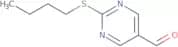
CAS:<p>2-(Butylthio)pyrimidine-5-carbaldehyde (BTPCA) is a neutralizing agent that inhibits the proliferation of cancer cells by binding to their cell membranes. It binds to the membrane and blocks the cyclic AMP receptor, thereby inhibiting the growth of cells. BTPCA has been shown to be effective in killing CD4+ T cells and may have therapeutic potential for autoimmune diseases. BTPCA also has diagnostic potential, as it can be used to detect epidermal growth factor receptors on cell membranes.</p>Fórmula:C9H12N2OSPureza:Min. 95%Peso molecular:196.27 g/molRef: 3D-NB57433
Produto descontinuado3'-Azido-3'-deoxythymidine 5'-triphosphate triethylammonium salt
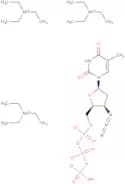
CAS:<p>3'-Azido-3'-deoxythymidine 5'-triphosphate triethylammonium salt is a nucleoside analogue of 3'-azido-3'-deoxythymidine. It is an antiviral agent that inhibits the synthesis of viral DNA and RNA by inhibiting the activity of DNA polymerase, which has been shown to be effective against HIV and herpes simplex virus type 1. The phosphoramidites are synthesized from the corresponding phosphonate, 3'-azido-3'-deoxythymidine 5'-triphosphate, by treatment with a base (e.g., sodium methoxide). This novel nucleoside analogue has been shown to have anticancer properties in animal models.</p>Fórmula:C10H16N5O13P3·3C6H15NPureza:Min. 95%Peso molecular:810.75 g/molRef: 3D-NA15338
Produto descontinuado1-(2'-Deoxy-3',5'-di-O-toluoyl-D-ribofuranosyl)-4-amino-1,3-dihydro-2-oxo-1,3,5-triazine
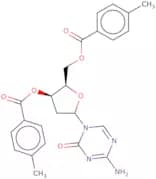
<p>1-(2'-Deoxy-3',5'-di-O-toluoyl-D-ribofuranosyl)-4-amino-1,3-dihydro-2-oxo-1,3,5-triazine is a nucleoside that is used as an anticancer drug. It is a modified nucleotide with a 2'-deoxyribofuranosyl group attached to the 3' carbon of the sugar moiety. It has been shown to be active against viruses and cancer cells. 1-(2'-Deoxy-3',5'-di-O-toluoyl-D-ribofuranosyl)-4-amino -1,3 -dihydro -2 -oxo -1,3,5 -triazine inhibits the replication of DNA by inhibiting DNA polymerase. This in turn prevents RNA synthesis and protein synthesis.</p>Fórmula:C24H24N4O6Pureza:Min. 95%Peso molecular:464.48 g/mol3'-Azido-2',3'-dideoxyuridine
CAS:<p>3'-Azido-2',3'-dideoxyuridine is an analog of the nucleoside dideoxyuridine that inhibits HIV replication. It has a high inhibitory dose and low toxicity. 3'-Azido-2',3'-dideoxyuridine is converted to its active form, 3'-azido-2',3'-dideoxythymidine (AZT), by dephosphorylation in human serum. AZT inhibits HIV replication by competing with the natural substrate for viral DNA polymerase, thereby inhibiting synthesis of viral DNA. 3'-Azido-2',3'-dideoxyuridine has been shown to be effective against hepatitis B virus and hepatitis C virus in cell cultures.</p>Fórmula:C9H11N5O4Pureza:Min. 95%Cor e Forma:Off-White PowderPeso molecular:253.21 g/molRef: 3D-NA05737
Produto descontinuado3'-Deoxy-N6-lauroyladenosine
CAS:<p>3'-Deoxy-N6-lauroyladenosine is a nucleoside analog that is used to treat cancer. It is a phosphoramidite compound and it has been shown to be highly active against cancer cells. 3'-Deoxy-N6-lauroyladenosine is an antiviral agent that inhibits viral DNA synthesis by competing with the natural substrate, deoxyribonucleosides, for incorporation into the growing DNA chain. It also prevents the replication of RNA viruses by inhibiting their transcription and translation processes. 3'-Deoxy-N6-lauroyladenosine also inhibits inflammation in the body and may act as a chemotherapeutic agent in other diseases such as diabetes, Alzheimer's disease, and Parkinson's disease.</p>Fórmula:C22H35N5O4Pureza:Min. 95%Peso molecular:433.54 g/molRef: 3D-ND10014
Produto descontinuado3'-Deoxy-3'-C-methylcytidine
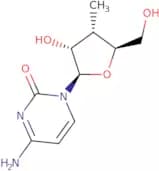
CAS:<p>3'-Deoxy-3'-C-methylcytidine is a monophosphate nucleotide that is used as an activator for DNA synthesis. It is a novel, synthetic nucleoside with high purity and high quality. 3'-Deoxy-3'-C-methylcytidine has been shown to inhibit viral replication, including human immunodeficiency virus type 1 (HIV-1), herpes simplex virus type 1 (HSV-1) and Epstein Barr virus (EBV) in cell culture. It also inhibits the growth of cancer cells in vitro by inhibiting the synthesis of DNA, RNA, and protein.</p>Fórmula:C10H15N3O4Pureza:Min. 95%Peso molecular:241.24 g/molRef: 3D-ND15622
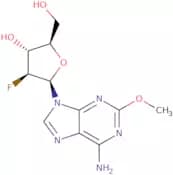
Produto descontinuado2'-Deoxy-2'-fluoro-2-methoxy-b-D-arabinoadenosine
CAS:<p>2'-Deoxy-2'-fluoro-2-methoxy-b-D-arabinoadenosine (FMA) is an antiviral nucleoside that has been shown to inhibit the growth of human T lymphocytes, human hepatoma cells and mouse lymphoma L5178Y cells. It also inhibits the replication of HIV in vitro and has been shown to be effective against other viruses such as herpes simplex virus type 1 and 2, cytomegalovirus, Epstein Barr virus, varicella zoster virus and vaccinia. FMA is a phosphoramidite compound that can be used in DNA synthesis. It is also a monophosphate analog of arabinoadenosine that can be used as an activator of deoxyribonucleosides. This novel compound can be modified to synthesize diphosphates or phosphoramidites.</p>Fórmula:C11H14FN5O4Pureza:Min. 95%Peso molecular:299.26 g/molUridine-3',5'-cyclic monophosphate sodium salt
CAS:<p>Uridine-3',5'-cyclic monophosphate sodium salt is a phosphotriester that is an intermediate in the biosynthesis of nucleosides. It is also a phosphodiesterase inhibitor, which means it inhibits the breakdown of cyclic nucleotides and allows them to accumulate. This drug has been shown to increase platelet production and has anti-inflammatory effects. Uridine-3',5'-cyclic monophosphate sodium salt is a human metabolite that can be synthesized from uridine, which is present in DNA, RNA, and food sources such as meat, eggs, and milk. The synthesis of uridine-3',5'-cyclic monophosphate sodium salt requires phosphoramidite as a precursor.</p>Fórmula:C9H10N2O8P·NaPureza:Min. 98 Area-%Cor e Forma:White PowderPeso molecular:328.2 g/molPolyadenylic acid potassium
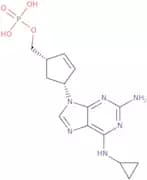
CAS:<p>Please enquire for more information about Polyadenylic acid potassium including the price, delivery time and more detailed product information at the technical inquiry form on this page</p>Fórmula:(C10H14N5O7P)x•KxPureza:85% MinAbacavir 5'-phosphate
CAS:<p>Abacavir 5'-phosphate is a nucleoside analog that inhibits the replication of the herpes virus by covalently binding to the viral DNA polymerase and blocking its ability to polymerize dNTPs. Abacavir 5'-phosphate's anti-viral potency has been shown in vivo using a model with herpes simplex virus, and it has been shown to inhibit viral replication in cell culture. The drug also reacts with cellular components such as proteins, lipids, and nucleic acids, which may lead to drug reactions. Abacavir 5'-phosphate is chemically stable, so it can be subjected to analytical methods without degradation. It is an analog of zidovudine (AZT).</p>Fórmula:C14H19N6O4PPureza:Min. 95%Peso molecular:366.31 g/molRef: 3D-NA16495
Produto descontinuado