


Nucleosídeos
Os nucleosídeos são building blocks fundamentais dos ácidos nucleicos, compostos por uma base nitrogenada ligada a uma molécula de açúcar. Nesta seção, você encontrará uma ampla variedade de nucleosídeos essenciais para pesquisas em biologia molecular, bioquímica e farmacologia. Esses compostos desempenham papéis cruciais na síntese de DNA e RNA, e também são vitais em vários processos metabólicos. Os nucleosídeos são usados para estudar material genético, desenvolver terapias antivirais e anticancerígenas, e entender os mecanismos celulares. Na CymitQuimica, fornecemos nucleosídeos de alta qualidade para apoiar suas necessidades de pesquisa e desenvolvimento, garantindo pureza e confiabilidade para suas aplicações experimentais.
Foram encontrados 3570 produtos de "Nucleosídeos"
Ordenar por
Pureza (%)
0
100
|
0
|
50
|
90
|
95
|
100
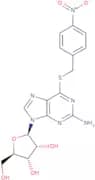
S-(4-Nitrobenzyl)-6-thioguanosine
CAS:S-(4-Nitrobenzyl)-6-thioguanosine is a transport inhibitor that has been shown to be active against leukemia. This drug inhibits the uptake of leukocytes into the bone marrow, which prevents their proliferation and development. S-(4-Nitrobenzyl)-6-thioguanosine also inhibits the synthesis of adenosine in erythrocytes, which leads to the accumulation of uridine and then to an increase in the levels of ATP. This drug can be used to treat chronic lymphocytic leukemia.Fórmula:C17H18N6O6SPureza:Min. 95%Peso molecular:434.43 g/molN6-Benzoyl-2'-deoxy-3'-O-levulinoyladenosine
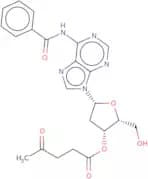
N6-Benzoyl-2'-deoxy-3'-O-levulinoyladenosine is an antiviral monophosphate nucleoside that has been shown to have significant activity against HIV and herpes simplex virus. It is also an anticancer drug and a novel synthetic nucleoside. N6-Benzoyl-2'-deoxy-3'-O-levulinoyladenosine has been shown to inhibit the growth of cancer cells in culture, as well as in animal models. It also inhibits the production of DNA and RNA, which may be due to its ability to act as a competitive inhibitor of DNA polymerase or RNA polymerase.
Fórmula:C22H23N5O6Pureza:Min. 95%Peso molecular:453.46 g/molBenzyl-N, N-diisopropylchlorophosphoramidite
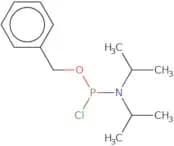
CAS:Benzyl-N, N-diisopropylchlorophosphoramidite is a novel nucleoside phosphoramidite with anticancer activity. It is synthesized from benzyl alcohol and diisopropylamine by reaction with phosphorus oxychloride in the presence of a base. This compound can be used to activate DNA for subsequent coupling reactions or for modification of DNA. Benzyl-N, N-diisopropylchlorophosphoramidite has been shown to have antiviral and antitumour activities in vitro and in vivo.Fórmula:C13H21NOPClPureza:Min. 95%Peso molecular:273.74 g/mol5-[N-(2-Aminoethyl)-3-E-acrylamido]-2'-deoxy-5'-O-DMT-uridine
CAS:5-[N-(2-Aminoethyl)-3-E-acrylamido]-2'-deoxy-5'-O-DMT-uridine is a novel, activator ribonucleoside phosphoramidite. It is used in the synthesis of oligodeoxynucleotides and has antiviral, anticancer, and antimalarial activities. 5-[N-(2-Aminoethyl)-3-E-acrylamido]-2'-deoxy-5'-O-DMT-uridine is synthesized from 2'-deoxyadenosine monophosphate (dAMP) and N-(2 aminopropyl)-3-(E acryloyl) aminopropylphosphoramidite (APEAP). This nucleoside can be used as a building block for DNA synthesis or for other purposes such as the treatment of cancer and HIV.Fórmula:C35H38N4O8Pureza:Min. 95%Peso molecular:642.72 g/mol2'-Deoxyuridine-5'-diphosphate sodium
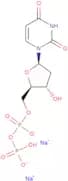
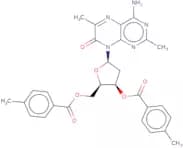
CAS:2'-Deoxyuridine-5'-diphosphate sodium salt is a novel antiviral agent that inhibits viral replication by inhibiting the activity of viral DNA polymerase. It is a synthetic nucleoside that is not found in nature, but is an analog of deoxyuridine monophosphate. This compound has been shown to be effective against tumor cells and has high purity with a CAS number 102814-06-2. 2'-Deoxyuridine-5'-diphosphate sodium salt is also used as an activator for phosphoramidites and modified nucleosides.Fórmula:C9H14N2O11P2•Na2Pureza:Min. 95%Cor e Forma:PowderPeso molecular:434.14 g/mol4-Amino-2,6-dimethyl-8-(2'-deoxy-3',5'-di-O-toluoyl-b-D-ribofuranosyl)-7-pteridone
4-Amino-2,6-dimethyl-8-(2'-deoxy-3',5'-di-O-toluoyl-b-D-ribofuranosyl)-7-pteridone is a high purity, modified nucleoside that is synthesized from 2,4,6,8 tetramethylpyridine and 2'-deoxyribofuranosyl bromide. 4ADTP is an antiviral and anticancer agent that inhibits the viral DNA polymerase in the herpes family of viruses and the DNA polymerase in cancer cells. This drug has been shown to be active against HIV type 1 (HIV1) and HIV type 2 (HIV2).Fórmula:C29H29H5O6Pureza:Min. 95%Peso molecular:543.57 g/mol2'-Amino-2'-deoxyuridine-5'-triphosphate
CAS:2'-Amino-2'-deoxyuridine-5'-triphosphate (2dUDP) is a nucleotide that has been shown to be a potent inhibitor of cytosolic Ca2+ release. 2dUDP binds to the Ryanodine receptor (RYR) and inhibits the release of Ca2+ from the sarcoplasmic reticulum. It is also fluorescent, and can be used to detect Ca2+ in cells. This nucleotide has been shown to inhibit populations of heterologous and homologous RYR receptors.Fórmula:C9H16N3O14P3Pureza:Min. 95%Peso molecular:483.16 g/mol2'-Deoxynebularine
CAS:2'-Deoxynebularine is a nucleoside analog that has been shown to inhibit the replication of human immunodeficiency virus type 1 (HIV-1) in vitro. 2'-Deoxynebularine binds to the viral DNA and inhibits its synthesis by hydrogen bonding with the sugar-phosphate backbone. This inhibition prevents the production of new viral DNA and stops viral replication. The drug also inhibits cellular proliferation, which may be due to its ability to inhibit oxidative DNA damage in animal cells. This drug has been shown to inhibit enzyme activities in both human skin cells and leukemia cells, which may be due to its ability to act as a substrate for various enzymes. It is also an effective inhibitor of cellular protein synthesis.Fórmula:C10H12N4O3Pureza:Min. 95%Peso molecular:236.23 g/mol8-Azidocyclic adenosine diphosphate ribose
CAS:8-Azidocyclic adenosine diphosphate ribose (8AADPR) is a molecule that is synthesized from ATP and ribose. It has been shown to inhibit the endoplasmic reticulum Ca2+-ATPase, which transports calcium ions out of the cell, leading to increased concentrations of calcium ions in the cytosol. 8AADPR also inhibits mitochondrial ATPase, which leads to an accumulation of ADP-ribose within mitochondria. This accumulation leads to the inhibition of protein synthesis within mitochondria and an activation of ryanodine receptors. There are no known adverse effects associated with 8AADPR at this time, but it should be used with caution due to its potential effects on cardiac function.Fórmula:C15H20N8O13P2Pureza:Min. 95%Peso molecular:582.31 g/mol4-Phenylpyrimidine-2-thiol
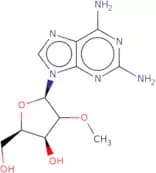
CAS:4-Phenylpyrimidine-2-thiol is a chemical compound that belongs to the group of elemental compounds. It has a density of 1.5 g/mL, a melting point of > 200 °C, and a boiling point of > 300 °C. 4-Phenylpyrimidine-2-thiol has been shown to exist as chains with assembled chains in the crystalline state. The crystals are composed of two molecules stacked on top of each other in an antiparallel orientation. The crystal structure was solved through x-ray crystallography and single-crystal x-ray diffraction. 4-Phenylpyrimidine-2-thiol is dimeric in solution and polymerizes in the solid state to form polymers with chains consisting of four phenylpyrimidine units. This compound has an elemental analysis consisting mainly of carbon and hydrogen, with small amounts of sulfur and nitrogen present.Fórmula:C10H8N2SPureza:Min. 95%Peso molecular:188.25 g/mol2,6-Diamino-9-(2'-O-methyl-b-D-ribofuranosyl)purine
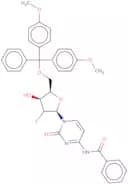
CAS:2,6-Diamino-9-(2'-O-methyl-b-D-ribofuranosyl)purine is a synthetic nucleoside that is used as an antiviral and antitumor agent. It is a modified nucleoside with a purine base. It has been shown to be effective against certain cancer cells in vitro and in vivo. This drug also has antiviral properties, which may be due to its ability to inhibit DNA synthesis through the inhibition of viral RNA replication. 2,6-Diamino-9-(2'-O-methyl-b-D-ribofuranosyl)purine is resistant to phosphorylation by kinase enzymes and it can be used as a precursor for the preparation of other nucleosides.Fórmula:C11H16N6O4Pureza:Min. 95%Cor e Forma:White to off-white solid.Peso molecular:296.29 g/molN4-Benzoyl-1-(2'-deoxy-5'-O-DMT-2'-fluoro-b-D-arabinofuranosyl)cytosine
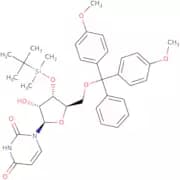
N4-Benzoyl-1-(2'-deoxy-5'-O-DMT-2'-fluoro-b-D-arabinofuranosyl)cytosine is an antiviral compound that inhibits the synthesis of viral RNA. This nucleoside analog is a monophosphate and diphosphate inhibitor of ribonucleotide reductase, which is required for DNA and RNA synthesis. N4-Benzoylcytosine has also been shown to be cytotoxic against tumor cells in vitro and in vivo, making it a potential anticancer drug. It was synthesized as part of a novel series of compounds that have been shown to inhibit the growth of bacterial cultures, including Mycobacterium tuberculosis.Fórmula:C37H34FN3O7Pureza:Min. 95%Peso molecular:651.7 g/mol3'-O-tert-Butyldimethylsilyl-5'-O-DMT-uridine
CAS:3'-O-tert-Butyldimethylsilyl-5'-O-DMT-uridine is a nucleoside that is modified with a tert-butyldimethylsilyl group at the 3' position. It is used as an activator for synthesizing oligonucleotides, ribonucleosides, and phosphoramidites. 3'-O-tert-Butyldimethylsilyl-5'-O-DMT-uridine has antiviral and anticancer properties. This product can be used in research applications such as the synthesis of novel DNA and RNA molecules, as well as for diagnostic purposes such as detecting viral infections.Fórmula:C36H44N2O8SiPureza:Min. 95%Peso molecular:660.83 g/molN6-Benzoyl-5'-chloro-5'-deoxy-2',3'-O-isopropylideneadenosine
N6-Benzoyl-5'-chloro-5'-deoxy-2',3'-O-isopropylideneadenosine is a novel nucleoside that has the potential to be a therapeutic agent for cancer and antiviral therapy. It is an analog of adenosine that inhibits viral replication by inhibiting the viral enzyme RNA-dependent DNA polymerase. N6-Benzoyl-5'-chloro-5'-deoxy-2',3'-O-isopropylideneadenosine also inhibits tumor growth by inducing apoptosis. The compound has been shown to inhibit human leukemia cells in vitro, as well as mouse leukemia cells in vivo. This novel nucleoside is synthesized through a two step process starting with 5'-chloroadenosine and converting it to 5'-chloroinosidine with potassium cyanide, followed by deoxygenation at the 6 position with benzoyl chloride and sodium hydroxide.Pureza:Min. 95%2',3'-Di-O-acetyl-5'-deoxy-5-fluoro-N4-(isopentyloxycarbonyl)cytidine
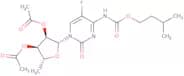
CAS:2',3'-Di-O-acetyl-5'-deoxy-5-fluoro-N4-(isopentyloxycarbonyl)cytidine is an antiviral nucleoside. It is a novel nucleotide analog that inhibits human immunodeficiency virus (HIV). The cytidine monophosphate moiety of 2',3'-Di-O-acetyl-5'-deoxy-5-fluoro-N4-(isopentyloxycarbonyl)cytidine has been modified with the substitution of the acetyl group at the 2' position with a deoxyribose group, and the 5' fluoro group with a 5'-deoxyfluro group. This modification prevents phosphodiesterases from hydrolyzing it to its monophosphate form, which leads to higher antiviral activity. 2',3'-Di-O-acetyl-5'-deoxy-5-fluoro -Fórmula:C19H26FN3O8Pureza:Min. 95%Peso molecular:443.42 g/mol5-Amino-1-(2',3',5'-tri-O-acetyl-b-D-ribofuranosyl)-imidazole-4-carbonitrile
CAS:5-Amino-1-(2',3',5'-tri-O-acetyl-b-D-ribofuranosyl)-imidazole-4-carbonitrile is a novel nucleoside analogue that inhibits the viral enzyme ribonucleotide reductase. It has antiviral activity against the herpes viruses, cytomegalovirus, and Epstein Barr virus. 5AADC has also been shown to inhibit DNA synthesis in tumor cells. This compound is currently undergoing clinical trials as an anticancer agent.Fórmula:C15H18N4O7Pureza:Min. 95%Peso molecular:366.33 g/mol5-Fluoro-1-(2'-deoxy-2'-fluoro-3',5'-di-O-benzoyl-b-L-arabinofuranosyl)-uracil
CAS:5-Fluoro-1-(2'-deoxy-2'-fluoro-3',5'-di-O-benzoyl-b-L-arabinofuranosyl)-uracil (5FUA) is a monophosphate nucleoside that inhibits viral replication. It is phosphorylated by the viral enzyme 3' to 5' exonuclease and then acts as a competitive inhibitor of the natural substrate, diphosphate, at the active site of DNA polymerase. The result is inhibition of viral DNA synthesis and replication. 5FUA has been shown to be active against a variety of viruses including herpes simplex virus types 1 and 2, varicella zoster virus, influenza A virus, and human immunodeficiency virus type 1. This drug has also been shown to inhibit cancer cell proliferation in vitro.Pureza:Min. 95%5'-O-DMT-thymidine 3'-Q Linker CPG 1000 Å
5'-O-DMT-thymidine 3'-Q Linker CPG 1000 Å is an Activator that is a monophosphate and synthesized through the modification of nucleosides. It has novel anticancer properties and is a high quality, high purity, and modified nucleotide. The 5'-O-DMT-thymidine 3'-Q Linker CPG 1000 Å has been shown to have antiviral activity against herpes simplex virus type 1 (HSV-1) in human cells. It also has anticancer effects on human leukemia cells by inhibiting the growth of cancer cells.Pureza:Min. 95%5’-O-DMT cET-N4-benzoylcytidine 3’-OCE amdite
CAS:The LNA locks the ribose ring in a fixed configurationFórmula:C49H56N5O9PPeso molecular:889.97 g/mol[U-13C10, U-15N2]-Labelled thymidine
Thymidine is a nucleoside that is a component of DNA and RNA. It is also the precursor for thymine, the DNA base in which the thymine ring is derived from. Thymidine has been shown to be an activator of DNA synthesis, as well as being anticancer and antiviral.Pureza:Min. 95%

![5-[N-(2-Aminoethyl)-3-E-acrylamido]-2'-deoxy-5'-O-DMT-uridine](/_next/image/?url=https%3A%2Fstatic.cymitquimica.com%2Fproducts%2F3D%2Fthumb-webp%2FNA08231.webp&w=3840&q=75)






![[U-13C10, U-15N2]-Labelled thymidine](/_next/image/?url=https%3A%2Fstatic.cymitquimica.com%2Fproducts%2F3D%2Fthumb-webp%2FNL32196.webp&w=3840&q=75)