Nucleosídeos
Foram encontrados 3570 produtos de "Nucleosídeos"
6,6'-Azopurine
CAS:6,6'-Azopurine is a hydrophobic organic compound that is used as an operational oxidant in the conversion of alcohols to aldehydes. It reacts with hydroxyl groups on the surface of the catalyst and undergoes nucleophilic attack to form a pyridinium salt. The reaction rate increases with increasing pH and temperature. 6,6'-Azopurine is also an immobilized oxidant that can be used for the oxidation of alcohols or hydrocarbons. Immobilization can be achieved by covalent coupling or adsorption on silica gel or alumina. 6,6'-Azopurine has been shown to have high activity against chlorides and is used for the oxidation of chlorides to produce chloride radicals.Fórmula:C10H6N10Pureza:Min. 95%Peso molecular:266.22 g/mol2',3'-Dideoxyxanthosine
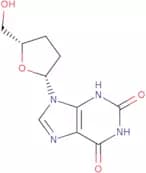
CAS:Produto Controlado2',3'-Dideoxyxanthosine is a purine nucleoside analog that inhibits the production of human immunodeficiency virus (HIV). It has potent activity against HIV and is more potent than other drugs in its class. This drug also inhibits the growth of cells by preventing the synthesis of DNA, RNA, and proteins. 2',3'-Dideoxyxanthosine has shown to be an effective treatment for HIV infection.Fórmula:C10H12N4O4Pureza:Min. 95%Peso molecular:252.23 g/molAdenosine 5'-monophosphate [U-13C10,U-15N5]
CAS:Adenosine 5'-monophosphate (AMP) is a nucleoside that is used in the synthesis of DNA, RNA and other nucleic acids. AMP is also an antiviral and anticancer agent that can be used to activate other drugs. AMP is synthesized from adenosine triphosphate (ATP) by removing one phosphate group, resulting in the formation of adenosine diphosphate (ADP). ADP can then be converted to AMP by adding a phosphate group back on. This synthetic process can be modified to produce novel derivatives of AMP with enhanced properties.Fórmula:C10H14N5O7PPureza:Min. 95%Peso molecular:362.11 g/mol2'-O-tert-Butyldimethylsilyl-3'-deoxy-5-methyluridine
CAS:2'-O-tert-Butyldimethylsilyl-3'-deoxy-5-methyluridine (2'-O-TBDMS-5'-dMU) is a synthetic nucleoside that is an antiviral agent. It has been shown to be an activator of DNA polymerase, which may be due to its ability to bind to the enzyme's catalytic site and inhibit the enzyme's activity. 2'-O-TBDMS-5'-dMU also has high purity and can be used in the synthesis of modified nucleosides, phosphoramidites, diphosphates, and ribonucleosides. 2'-O-TBDMS-5'-dMU is a white powder with a melting point of about 221°C. It is soluble in water and alcohols and insoluble in acetone or ether.Fórmula:C16H28N2O5SiPureza:Min. 95%Peso molecular:356.49 g/mol2'-C-Methylinosine
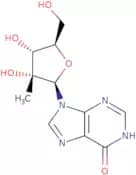
CAS:2'-C-Methylinosine is an analog of 2'-deoxyinosine that is used as a prodrug for the treatment of hepatitis B virus infection. It has been shown to inhibit RNA synthesis in cell cultures by competitively inhibiting the activity of rna-dependent RNA polymerase. This inhibition leads to the accumulation of unprocessed, inactive ribonucleotides, which are eventually degraded by cellular enzymes. 2'-C-Methylinosine is an analog of 2'-deoxyinosine that has been modified at the C2 position with methyl groups (hence its name). The modification increases the stability and solubility of this molecule. Clinical trials have shown that 2'-C-Methylinosine can be used to treat hepatitis B virus infection when combined with other drugs such as lamivudine or entecavir.
Fórmula:C11H14N4O5Pureza:Min. 95%Peso molecular:282.25 g/molAdenosine 3',5'-cyclic monophosphothioate Rp-isomer sodium salt
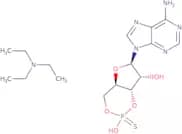
CAS:Adenosine 3',5'-cyclic monophosphothioate Rp-isomer sodium salt is a neurotrophic factor that has been shown to have neuroprotective properties in different animal models of Parkinson's disease. It has been shown to promote the synthesis of dopamine, glutamate, and other neurotransmitters in dopaminergic neurons. Adenosine 3',5'-cyclic monophosphothioate Rp-isomer sodium salt also promotes protein production by stimulating the synthesis of intracellular proteins such as cytosolic Ca2+ and IGF-I. This drug may be effective in pharmacological treatment for Parkinson's disease. Adenosine 3',5'-cyclic monophosphothioate Rp-isomer sodium salt is a potent inhibitor of phosphodiesterase type 4 (PDE4) with a Ki value of 0.07 μM. This inhibition leads to the accumulation of cAMP, which activates protein kinase A (PKAFórmula:C10H11N5O5PS·NaPureza:Min. 95%Peso molecular:367.25 g/mol5-Bromo-deoxyuridine CPG
5-Bromo-deoxyuridine CPG is a novel nucleoside. The chemical name of this compound is 5-bromo-2'-deoxyuridine (CAS No. 2305-39-4). 5-Bromo-deoxyuridine CPG has been synthesized from diphosphate and phosphoramidite. It is used to produce the monophosphate form, which acts as an antiviral and anticancer agent.Pureza:Min. 95%4-Chloro-5-fluoropyrimidine
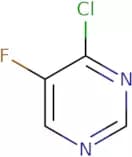
CAS:4-Chloro-5-fluoropyrimidine is a fluoropyrimidine that is used in the synthesis of pharmaceuticals, such as 4-amino-2-chloro-5-fluoropyrimidine. This compound is synthesized by chlorinating 4-chloro-5-fluoropyrimidine with chlorine gas. The resulting product is hydrolyzed to yield 4-amino-2,4,5,6 tetrafluoro pyrimidines. 4CFP can also be obtained by hydrogenolysis of toluene with chlorine gas and sodium hydroxide or hydrolyzing an ammonium salt with hydrochloric acid.
Fórmula:C4H2ClFN2Pureza:Min. 95%Peso molecular:132.52 g/mol2'-Deoxyadenosine-5'-[(a,b)-methyleno]triphosphate sodium salt - 10 mM aqueous solution
CAS:2'-Deoxyadenosine-5'-[(a,b)-methyleno]triphosphate sodium salt - 10 mM aqueous solution is a molecule that binds to the epidermal growth factor receptor (EGFR). It is a nucleotide that is used in pharmaceutical preparations to treat certain types of cancer. This drug can be used in tissue culture to increase follicular growth and pge2 levels. 2'-Deoxyadenosine-5'-[(a,b)-methyleno]triphosphate sodium salt - 10 mM aqueous solution has been shown to inhibit the proliferation of monoclonal antibody-producing cells by inhibiting DNA synthesis through the inhibition of RNA polymerase II and polymerase chain reaction.Fórmula:C11H18N5O11P3·xNaPureza:Min. 95%Cor e Forma:PowderPeso molecular:489.21 g/mol6-(2-Deoxy-5-O-DMT-b-D-ribofuranosyl)-3,4-dihydro-8H-pyrimido-[4,5-c][1,2]oxazin-7-one
CAS:6-(2-Deoxy-5-O-DMT-b-D-ribofuranosyl)-3,4-dihydro-8H-pyrimido-[4,5-c][1,2]oxazin-7-one is a synthetic diphosphate that is active as an activator of phosphoramidites. It has shown anticancer activity in vitro and in vivo. This compound has been shown to inhibit the DNA synthesis of tumor cells and to be effective against viruses such as herpes simplex virus type 1 and 2 (HSV1 and HSV2). 6-(2-Deoxy-5-O-DMT b -D ribofuranosyl)-3,4 -dihydro 8H pyrimido [4,5 c ][1,2]oxazin 7 one also inhibits the replication of RNA viruses such as influenza A virus (IAV), human immunodeficiency virusFórmula:C32H35N3O7Pureza:Min. 95%Peso molecular:573.64 g/mol6-Chloro-7-deaza-9-(a-D-ribofuranosyl)purine
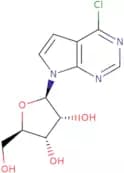
CAS:6-Chloro-7-deaza-9-(a-D-ribofuranosyl)purine is an anticancer drug that belongs to the class of nucleosides. It inhibits DNA and RNA synthesis by blocking the incorporation of nucleotides into DNA or RNA. This drug may also inhibit viral replication by blocking viral polymerase activity. 6-Chloro-7-deaza-9-(a-D-ribofuranosyl)purine has been shown to be a potent activator of phosphoramidites, which are used in chemical synthesis. This novel compound is synthesized using modified diphosphate chemistry and purified to high purity.Fórmula:C11H12ClN3O4Pureza:Min. 95%Peso molecular:285.68 g/mol5-Aminoallyl-2'-deoxycytidine
5-Aminoallyl-2'-deoxycytidine is an activator that has been shown to be a novel anticancer drug. It is an analogue of cytidine and is synthesized by the phosphoramidite method. 5-Aminoallyl-2'-deoxycytidine inhibits viral replication in human cells, but also has antiviral activity against HIV and influenza A virus. The compound has been shown to be active against small cell lung cancer in animal models.Pureza:Min. 95%2’-O-(2-Methoxy-2-oxoethyl)adenosine
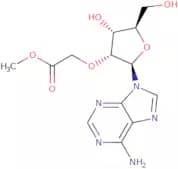
CAS:2’-O-(2-Methoxy-2-oxoethyl)adenosine is a novel antiviral and anticancer agent. It is an antiviral due to its ability to inhibit viral DNA synthesis and replication by competitively inhibiting the incorporation of deoxyribonucleoside triphosphate precursors into viral DNA. 2’-O-(2-Methoxy-2-oxoethyl)adenosine has been shown to be active against human cancer cells in vitro and in vivo, as well as other cell lines. This compound is a phosphoramidite that can be used for the synthesis of modified oligonucleotides, including ribonucleosides and deoxyribonucleosides. 2’-O-(2-Methoxy-2-oxoethyl)adenosine has also been shown to be an activator of RNA polymerase II transcriptional activity.Pureza:Min. 95%2,4,5,6-Tetraaminopyrimidine 2HCl
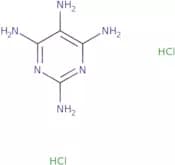
CAS:2,4,5,6-Tetraaminopyrimidine 2HCl is a chemical compound that belongs to the group of pyrimidines. It is a colorless solid with a melting point of 178.2°C and a boiling point of 339.8°C. This compound can be obtained by reacting 2,4,5-trichloropyrimidine with potassium cyanide in acetic acid solution or by heating 2,4-diaminopyrimidine with ammonium chloride and sodium nitrate in water. In the liquid chromatography process this compound is used as an analytical reagent for determining the purity and identity of organic compounds by measuring their retention time on the column.Pureza:Min. 95%2'/3'-(N-Methylanthraniloyl)-adenosine-5'-triphosphate triethylammonium salt
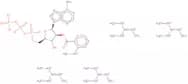
CAS:2'/3'-(N-Methylanthraniloyl)-adenosine-5'-triphosphate triethylammonium salt is a phosphoramidite, deoxyribonucleoside that is active as an antiviral. It inhibits the production of viral DNA and RNA by binding to the polymerase enzyme that copies the viral genome. This drug has been shown to be effective in vitro and in vivo against a wide range of viruses, including HIV, herpes simplex virus type 1 and 2, cytomegalovirus, varicella zoster virus, influenza A virus, and poliovirus. It also has anticancer activity by inhibiting cell proliferation.Fórmula:C18H23N6O14P3Pureza:Min. 95%Peso molecular:640.33 g/molThymidylyl-(3′→5′)-thymidine ammonium salt
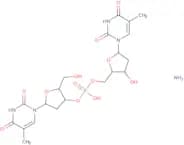
CAS:Thymidylyl-(3′→5′)-thymidine is a modified nucleoside that has antiviral activity. It is synthesized from thymidine, which is the deoxyribonucleotide of thymine and uracil, by phosphorylation with ATP. Thymidylyl-(3′→5′)-thymidine has been shown to be an activator of DNA polymerase in vitro and inhibits replication of human immunodeficiency virus (HIV) in cell cultures. This compound has been studied as a potential treatment for AIDS.Fórmula:C20H30N5O12PPureza:Min. 95%Peso molecular:563.5 g/molN4-Benzoyl-3'-O-tert-butyldimethylsilyl-2'-deoxycytidine
N4-Benzoyl-3'-O-tert-butyldimethylsilyl-2'-deoxycytidine is a monophosphate nucleoside analogue. It has antiviral and anticancer properties, as well as the ability to activate DNA synthesis. This product is synthesized from 2'-deoxycytidine and 4-benzoyl chloride in the presence of tert-butyldimethylsilyl chloride. It is available for sale as a white powder with a purity of 99%.Fórmula:C22H31N3O5SiPureza:Min. 95%Cor e Forma:PowderPeso molecular:445.58 g/molN-Succinyl-5-aminoimidazole-4-carboxamide ribose 5'-phosphate dibarium salt
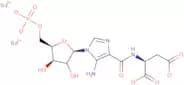
CAS:N-Succinyl-5-aminoimidazole-4-carboxamide ribose 5'-phosphate dibarium salt is a novel, modified, and synthetic nucleotide that belongs to the group of ribonucleosides. It is an activator of DNA and has antiviral properties. This compound was developed for use in high quality pharmaceuticals for the treatment of cancer and as an antiviral drug. The synthesis of this compound is based on the incorporation of phosphoramidites in place of deoxyribonucleosides. This process yields high purity compounds that are used in various research applications.Fórmula:C13H15Ba2N4O12PPureza:Min. 95%Peso molecular:724.91 g/molN6-Benzoyl-5'-O-DMT-adenosine 3'-CE phosphoramidite
N6-Benzoyl-5'-O-DMT-adenosine 3'-CE phosphoramidite is a novel nucleoside that has been modified to protect the 2' hydroxyl group from attack by nucleases. This modification makes N6-Benzoyl-5'-O-DMT-adenosine 3'-CE phosphoramidite resistant to degradation and allows for its use in a variety of applications, such as anticancer, antiviral, and DNA sequencing.Pureza:Min. 95%5'-O-Acetyl-2',3'-dideoxyinosine
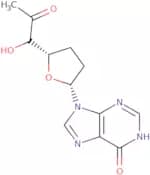
CAS:5'-O-Acetyl-2',3'-dideoxyinosine is a nucleoside analogue that inhibits viral replication. It is a potent activator of the immune system and has been shown to be effective against cancer cells. 5'-O-Acetyl-2',3'-dideoxyinosine was originally synthesized as an antiviral agent, but it was found to be ineffective in this function. The drug binds to the ribonucleotide reductase enzyme, which converts ribonucleotides into deoxyribonucleotides and is essential for the production of DNA. The drug blocks the conversion of ribonucleotides into deoxyribonucleotides, preventing DNA synthesis and replication. This drug has also been shown to have anticancer activity by inhibiting DNA synthesis and cell division.Fórmula:C12H14N4O4Pureza:Min. 95%Peso molecular:278.26 g/mol


![Adenosine 5'-monophosphate [U-13C10,U-15N5]](/_next/image/?url=https%3A%2Fstatic.cymitquimica.com%2Fproducts%2F3D%2Fthumb-webp%2FNA31536.webp&w=3840&q=75)


![2'-Deoxyadenosine-5'-[(a,b)-methyleno]triphosphate sodium salt - 10 mM aqueous solution](/_next/image/?url=https%3A%2Fstatic.cymitquimica.com%2Fproducts%2F3D%2Fthumb-webp%2FND46688.webp&w=3840&q=75)
![6-(2-Deoxy-5-O-DMT-b-D-ribofuranosyl)-3,4-dihydro-8H-pyrimido-[4,5-c][1,2]oxazin-7-one](/_next/image/?url=https%3A%2Fstatic.cymitquimica.com%2Fproducts%2F3D%2Fthumb-webp%2FND145589.webp&w=3840&q=75)