Nucleosídeos
Os nucleosídeos são building blocks fundamentais dos ácidos nucleicos, compostos por uma base nitrogenada ligada a uma molécula de açúcar. Nesta seção, você encontrará uma ampla variedade de nucleosídeos essenciais para pesquisas em biologia molecular, bioquímica e farmacologia. Esses compostos desempenham papéis cruciais na síntese de DNA e RNA, e também são vitais em vários processos metabólicos. Os nucleosídeos são usados para estudar material genético, desenvolver terapias antivirais e anticancerígenas, e entender os mecanismos celulares. Na CymitQuimica, fornecemos nucleosídeos de alta qualidade para apoiar suas necessidades de pesquisa e desenvolvimento, garantindo pureza e confiabilidade para suas aplicações experimentais.
Foram encontrados 3569 produtos de "Nucleosídeos"
Ordenar por
Pureza (%)
0
100
|
0
|
50
|
90
|
95
|
100
2'-O-tert-Butyldimethylsilyl-N2-DMF-5'-O-DMT-guanosine 3'-CE phosphoramidite
2'-O-tert-Butyldimethylsilyl-N2-DMF-5'-O-DMT-guanosine 3'-CE phosphoramidite is a nucleoside monophosphate with CAS No. 58822-52-3. It is an activator that has anticancer and antiviral properties. This product is modified, novel and high purity and quality. 2'-O-tert-Butyldimethylsilyl-N2-DMF-5'-O-DMT-guanosine 3'-CE phosphoramidite can be used in the synthesis of oligonucleotides for use as probes or drugs in the treatment of cancer, HIV, hepatitis B and influenza A.Fórmula:C49H67N8O8PSiPureza:Min. 95%Peso molecular:955.19 g/mol3'-Deoxy-L-thymidine
CAS:<p>3'-Deoxy-L-thymidine is a nucleoside analog that inhibits HIV replication by interfering with the synthesis of viral DNA. The drug binds to the enzyme thymidine phosphorylase, which converts thymidine into deoxyuridine monophosphate, and prevents conversion of deoxyuridine to deoxythymidine monophosphate. This leads to inhibition of both DNA synthesis and the production of RNA. 3'-Deoxy-L-thymidine has dose-limiting toxicity at high doses and is not active against other viruses such as herpes simplex virus or cytomegalovirus. It is metabolized in the liver by enzymes such as 5-fluorocytosine, which converts it into its active form, 5-fluorouracil.</p>Fórmula:C10H14N2O4Pureza:Min. 95%Peso molecular:226.23 g/molDisodium adenosine 5'-phosphate hydrate
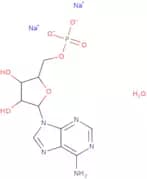
CAS:Disodium adenosine 5'-phosphate hydrate is a novel, modified nucleotide analogue that is used in antiviral therapy. It has been shown to be an effective inhibitor of herpes simplex virus type 1 (HSV-1), herpes simplex virus type 2 (HSV-2), and cytomegalovirus. Disodium adenosine 5'-phosphate hydrate also inhibits DNA polymerase and RNA polymerase, thereby preventing replication of the virus genome. Disodium adenosine 5'-phosphate hydrate has been shown to be active against cancer cells in vitro and in vivo, as well as being useful in the treatment of cancer.Fórmula:C10H14N5Na2O8PPureza:Min. 95%Peso molecular:409.2 g/mol2-Chloro-4-hydroxy-5-fluoropyrimidine
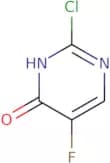
CAS:2-Chloro-4-hydroxy-5-fluoropyrimidine is a nucleoside with antiviral and anticancer activity. It has shown to be an effective agent against HIV, herpes virus and human papilloma virus. 2-Chloro-4-hydroxy-5-fluoropyrimidine inhibits the synthesis of DNA by inhibiting the enzyme DNA polymerase, which catalyzes the formation of diphosphate from monophosphate. In addition, it inhibits protein synthesis by inhibiting ribonucleotide reductase, which catalyzes the conversion of ribonucleotides to deoxyribonucleotides.Fórmula:C4H2ClFN2OPureza:Min. 95%Peso molecular:148.52 g/molN2-Isobutyryl-7’-tert-butyldimethylsilyl-N-trityl-morpholino guanosine
N2-Isobutyryl-7’-tert-butyldimethylsilyl-N-trityl-morpholino guanosine is a modified nucleoside that can be used in the synthesis of DNA, RNA, and other nucleic acids. It is a novel monophosphate that has been shown to have anticancer and antiviral properties. N2-Isobutyryl-7’-tert-butyldimethylsilyl-N-trityl-morpholino guanosine is synthesized by reacting 2,4,6 trichlorobenzoyl chloride with morpholine and silylation. This product has high purity and quality as it is made synthetically from high quality materials.Pureza:Min. 95%(-)-Adenosine 3'-monophosphate hydrate
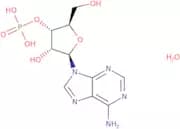
CAS:<p>Adenosine 3'-monophosphate hydrate is a nucleoside that is an important intermediate in the biosynthesis of DNA and RNA. It is a phosphodiesterase inhibitor, which prevents the breakdown of adenosine 3'-monophosphate (cAMP). This compound also has a role in various other metabolic pathways, such as the synthesis of purines. Adenosine 3'-monophosphate hydrate is used for preparing adenosylcobalamin and for studies on phosphodiesterases. The nature of this compound is determined by its chemical structure, including functional groups and sequences. Its modification includes the addition of phosphate groups to its ribose sugar moiety. Adenosine 3'-monophosphate hydrate has a molecular weight of 372.4 g/mol and optimum pH of 7-8.<br>The hybridization behavior and ph optimum are characteristic properties of this compound.</p>Fórmula:C10H16N5O8PPureza:Min. 95%Peso molecular:365.24 g/mol3,5-Di-o-(p-toluoyl)-5-(2-hydroxyethyl)-2-deoxyuridine
CAS:<p>3,5-Di-o-(p-toluoyl)-5-(2-hydroxyethyl)-2-deoxyuridine is a nucleoside analogue that has antiviral and anticancer activities. It is synthesized by the condensation of orotic acid with 2'-deoxyuridine in the presence of N,N'-dicyclohexylcarbodiimide (DCC). 3,5-Di-o-(p-toluoyl)-5-(2-hydroxyethyl)-2-deoxyuridine is an activator of ribonucleotide reductase, which is an enzyme involved in DNA synthesis and repair. 3,5-Di-o-(p-toluoyl)-5-(2-hydroxyethyl)-2-deoxyuridine is also capable of inhibiting DNA polymerases and RNA polymerases. This drug can be used for treatment against cancer and antiviral infections.</p>Fórmula:C27H28N2O8Pureza:Min. 95%Peso molecular:508.50 g/mol4'-C-Azido-2'-deoxy-2'-fluoro-b-D-arabinouridine
CAS:<p>4'-C-Azido-2'-deoxy-2'-fluoro-b-D-arabinouridine is a novel nucleoside analog that can be activated to the monophosphate form for incorporation into DNA. It has antiviral and anticancer properties. 4'-C-Azido-2'-deoxy-2'-fluoro-b-D-arabinouridine has been shown to inhibit the proliferation of cultured tumor cells, suggesting a potential use in cancer chemotherapy.</p>Fórmula:C9H10FN5O5Pureza:Min. 95%Peso molecular:287.2 g/mol2'-O-Acetyl-5'-O-benzoyl-3'-deoxy-5-methyluridine
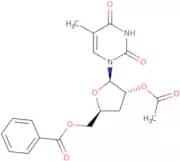
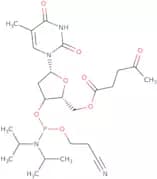
CAS:2'-O-Acetyl-5'-O-benzoyl-3'-deoxy-5-methyluridine (ABT-888) is a nucleoside analog that inhibits DNA synthesis and RNA transcription. It has been shown to induce apoptosis in human cancer cells, including leukemia, lymphoma and breast cancer cells. ABT-888 also has antiviral activity against herpes simplex virus type 1 and 2, vaccinia virus, and vesicular stomatitis virus.Fórmula:C19H20N2O7Pureza:Min. 95%Peso molecular:388.37 g/mol5'-O-Levulinoylthymidine 3'-CE phosphoramidite
CAS:<p>5'-O-Levulinoylthymidine 3'-CE phosphoramidite is a novel, high quality diphosphate nucleoside. It is modified with levulinic acid and has antiviral and anticancer properties. 5'-O-Levulinoylthymidine 3'-CE phosphoramidite is synthesized from 5'-O-levulinoylthymidine monophosphate, which is synthesized from thymidine and levulinic acid. The synthesis of 5'-O-levulinoylthymidine 3'-CE phosphoramidite starts with the reaction of 1 equivalent of thymidine with 1 equivalent of levulinic acid in aqueous solution at pH 7 to 8 at 100°C for 2 hours, followed by purification by HPLC.</p>Fórmula:C24H37N4O8PPureza:Min. 95%Peso molecular:540.55 g/molLNA-guanosine 3'-CE phosphoramidite
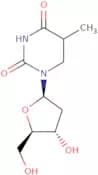
CAS:<p>LNA-guanosine 3'-CE phosphoramidite is a novel, high purity, activated nucleoside. It is an anti-cancer and antiviral agent that is synthetically modified to include a phosphate group at the 3' position of the sugar moiety. This modification prevents viral inhibition by inhibiting viral DNA synthesis. LNA-guanosine 3'-CE phosphoramidite is also used as an anticancer agent due to its ability to inhibit ribonucleotide reductase and diphosphate reductase, which are enzymes required for DNA synthesis.</p>Pureza:Min. 95%5,6-Dihydrothymidine
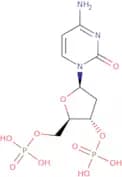
CAS:<p>5,6-Dihydrothymidine is a hydroxylated thymidine analogue. It binds to the leukocyte antigen, which is found on many different types of cells. 5,6-Dihydrothymidine inhibits the replication of herpes simplex virus and can be used for diagnostic purposes. 5,6-Dihydrothymidine has been shown to have conformational properties that are similar to those of thymine, which allows it to bind to the template strand in DNA. This binding prevents the synthesis of messenger RNA from DNA. 5,6-Dihydrothymidine is also able to inhibit cell growth in culture and can be used as a cell culture medium supplement.</p>Fórmula:C10H16N2O5Pureza:Min. 95%Cor e Forma:PowderPeso molecular:244.24 g/mol2-Deoxycytidine 3',5'-diphosphate
CAS:<p>2-Deoxycytidine 3',5'-diphosphate is an additive that is used in the production of DNA. It is a single-stranded nucleotide with a guanine base. 2-Deoxycytidine 3',5'-diphosphate has been shown to inhibit bacterial growth by reacting with hydrogen peroxide, which is produced during the process of oxidative phosphorylation. This reaction leads to the formation of reactive oxygen species, which damage DNA and cause cell death. The compound also binds to metal ions and prevents them from interacting with cellular components. 2-Deoxycytidine 3',5'-diphosphate can be used as a chromatographic agent for separating DNA fragments according to their size.</p>Fórmula:C9H15N3O10P2Pureza:Min. 95%Peso molecular:387.18 g/mol3-(2'-Deoxy-β-D-2-ribofuranosyl)pyrido[2,3-d]pyrimidine-2,7(8H)-dione
CAS:3-(2'-Deoxy-β-D-2-ribofuranosyl)pyrido[2,3-d]pyrimidine-2,7(8H)-dione is a synthetic nucleoside analogue that has been modified by the replacement of the 2' oxygen atom. The phosphoramidite is used to produce 3-(2'-Deoxy-β-D-2-ribofuranosyl)pyrido[2,3-d]pyrimidine-2,7(8H)-dione in high purity and high quality. This product can be used as an antiviral agent and as an anticancer agent. It has also been shown to inhibit DNA synthesis and RNA synthesis.Fórmula:C12H13N3O5Pureza:Min. 95%Peso molecular:279.25 g/molN4-Benzoyl-1-(a-D-mannopyranosyl)cytosine
N4-Benzoyl-1-(a-D-mannopyranosyl)cytosine is a modified deoxyribonucleoside that has antiviral and anticancer activities. It is a phosphoramidite, which can be converted to nucleosides using standard methods. N4-Benzoyl-1-(a-D-mannopyranosyl)cytosine is also an activator of the DNA polymerase enzyme and a high quality, novel anti-cancer drug.Fórmula:C17H19N3O7Pureza:Min. 95%Cor e Forma:White to off-white powder.Peso molecular:377.35 g/mol6-[(4-Nitrobenzyl)thio]-9-(b-D-ribofuranosyl)purine-5'-monophosphate disodium salt
CAS:6-[(4-Nitrobenzyl)thio]purine-5'-monophosphate disodium salt is a modified nucleoside that has anticancer activity. It is phosphorylated to the corresponding nucleotide in vivo and inhibits the growth of cancer cells. 6-[(4-Nitrobenzyl)thio]purine-5'-monophosphate disodium salt has a novel structure and can be used as an activator for ribonucleotides or deoxyribonucleotides. It is also used as a component in DNA synthesis, which may be due to its ability to inhibit viral RNA replication. This drug can be synthesized through chemical reactions that involve diphosphate, nucleosides, and phosphoramidites. 6-[(4-Nitrobenzyl)thio]purine-5'-monophosphate disodium salt is not currently available on the market; however, it canFórmula:C17H16N5Na2O9PSPureza:Min. 95%Cor e Forma:White to off-white solid.Peso molecular:543.36 g/mol(+)-Emtricitabine
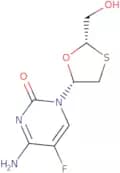
CAS:Emtricitabine is a synthetic nucleoside analog of cytidine. It is used in the treatment of HIV infection and hepatitis B virus infection. Emtricitabine binds to human DNA polymerase, preventing the incorporation of viral DNA into the host cell's genome. This prevents the virus from multiplying and reproducing, thereby inhibiting the spread of HIV in humans. The drug has been shown to inhibit replication at all stages of HIV-1, including reverse transcription and integration into host cell DNA. Emtricitabine also inhibits replication of other viruses such as herpes simplex virus type 1 (HSV-1) and hepatitis C virus (HCV). Emtricitabine is a prodrug that must be activated by phosphorylation before it can be incorporated into DNA. This activation requires tenofovir alafenamide hemifumarate as an activator, which is an experimental drug with improved bioavailability, reduced renal clearance, andFórmula:C8H10FN3O3SPureza:Min. 95%Peso molecular:247.25 g/molFluorescein-dt cep
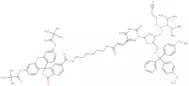
CAS:Fluorescein-dt cep is a monophosphate nucleoside analog that is modified with an activated ester group. It is used as a prodrug for the treatment of influenza in humans. Fluorescein-dt cep has antiviral activity, which may be due to its ability to inhibit viral RNA synthesis. This agent also has anticancer activity and has been shown to kill leukemia cells by interfering with DNA synthesis. The chemical name for fluorescein-dt cep is 1-(2,6-dichloro-4-(5,7-dimethoxy-4-methylpyridiniumyl)phenyl)cytosine monophosphate. Fluorescein-dt cep is also known by the following synonyms: 1-(2,6-Dichloro-4-(5,7-dimethoxyquinoliniumyl)phenyl)-1H-[1,3]dioxFórmula:C79H89N6O17PPureza:Min. 95%Peso molecular:1,425.6 g/molcis-Zeatin-o-glucoside riboside
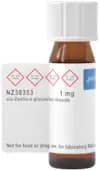
CAS:<p>Cis-Zeatin-o-glucoside riboside is a plant metabolite that belongs to the class of phenylpropanoids. It is the product of the conversion of zeatin by a polyphenol oxidase. Cis-Zeatin-o-glucoside riboside has been found in plants, such as Eucomis and Alnifolia, at levels ranging from 0.2 to 1%. This metabolite is also present in animal tissues, such as rat brain and bovine mammary gland. The metabolic pathway for cis-Zeatin-o-glucoside riboside has been elucidated through tissue culture experiments with Eucomis and 24-epibrassinolide. The biosynthesis of this metabolite involves a two step process: first, an oxidative cleavage of zeatin to indole-3-acetyl l -aspartic acid and then conversion to</p>Fórmula:C21H31N5O10Pureza:Min. 95%Peso molecular:513.5 g/molO6-Chlorophenyl-I ce-phosphoramidite
CAS:<p>Please enquire for more information about O6-Chlorophenyl-I ce-phosphoramidite including the price, delivery time and more detailed product information at the technical inquiry form on this page</p>Fórmula:C52H64ClN6O8PSiPureza:Min. 95%Peso molecular:995.6 g/mol





![3-(2'-Deoxy-β-D-2-ribofuranosyl)pyrido[2,3-d]pyrimidine-2,7(8H)-dione](/_next/image/?url=https%3A%2Fstatic.cymitquimica.com%2Fproducts%2F3D%2Fthumb-webp%2FZDA51798.webp&w=3840&q=75)

![6-[(4-Nitrobenzyl)thio]-9-(b-D-ribofuranosyl)purine-5'-monophosphate disodium salt](/_next/image/?url=https%3A%2Fstatic.cymitquimica.com%2Fproducts%2F3D%2Fthumb-webp%2FNN07313.webp&w=3840&q=75)