Nucleosídeos
Os nucleosídeos são building blocks fundamentais dos ácidos nucleicos, compostos por uma base nitrogenada ligada a uma molécula de açúcar. Nesta seção, você encontrará uma ampla variedade de nucleosídeos essenciais para pesquisas em biologia molecular, bioquímica e farmacologia. Esses compostos desempenham papéis cruciais na síntese de DNA e RNA, e também são vitais em vários processos metabólicos. Os nucleosídeos são usados para estudar material genético, desenvolver terapias antivirais e anticancerígenas, e entender os mecanismos celulares. Na CymitQuimica, fornecemos nucleosídeos de alta qualidade para apoiar suas necessidades de pesquisa e desenvolvimento, garantindo pureza e confiabilidade para suas aplicações experimentais.
Foram encontrados 3569 produtos de "Nucleosídeos"
Ordenar por
Pureza (%)
0
100
|
0
|
50
|
90
|
95
|
100
8-Chloroadenosine 3',5'-cyclic monophosphate
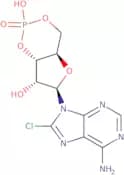
CAS:8-Chloroadenosine 3',5'-cyclic monophosphate (8-CAM) is a potent inducer of the mitochondrial membrane potential. It has been shown to have cytotoxic effects on human myeloma cell line, HL-60 cells, and fetal bovine serum. 8-CAM has shown anticancer properties in solid tumours in mice. It was also found to be toxic to human carcinoma cell lines and synergistic with other pharmacological agents, such as doxorubicin. 8-CAM has been shown to have immunosuppressive effects in animal models and may be a potential therapeutic agent for autoimmune diseases.Fórmula:C10H11ClN5O6PPureza:Min. 95%Cor e Forma:White PowderPeso molecular:363.65 g/mol3'-Azido-N4-benzoyl-2',3'-dideoxy5'-O-DMT-cytidine
<p>3'-Azido-N4-benzoyl-2',3'-dideoxy5'-O-DMT-cytidine is a novel nucleoside analog that has antiviral activity against herpes simplex virus type 1. It is a modified nucleoside phosphoramidite with an azido group at the 3' position and a benzoyl group at the 2' position of cytidine. This product can be used for the synthesis of oligonucleotides with high purity and high quality. This product has CAS number 271462-87-6.</p>Pureza:Min. 95%N1-(4-(t-Butyl)benzoyl)-D-(+)biotin 2-nitrophenyl ester
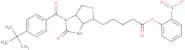
CAS:<p>N1-(4-(t-Butyl)benzoyl)-D-(+)biotin 2-nitrophenyl ester is a novel nucleoside analogue and phosphoramidite. It has been modified to have an acyclic carbon chain with a 4-hydroxybenzoyl group at the C2 position. This compound is an activator of DNA synthesis, and it can be used for the synthesis of deoxyribonucleosides. The purity of this compound is 99%. The CAS number for this compound is 869354-61-0.</p>Fórmula:C27H31N3O6SPureza:Min. 95%Peso molecular:525.6 g/mol5'-O-DMT-N2-DMF-guanosine-3'-succinyl CPG 1000 Å
<p>5'-O-DMT-N2-DMF-guanosine-3'-succinyl CPG 1000 Å is a nucleoside, modified with succinyldiimidazopropylcarbodiimide. It is an activator of phosphoramidites and is used in the synthesis of DNA and RNA. 5'-O-DMT-N2-DMF-guanosine-3'-succinyl CPG 1000 Å has shown anticancer and antiviral properties in vitro.</p>Pureza:Min. 95%2-(Propylthio)pyrimidine-5-carbaldehyde
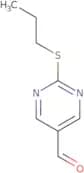
CAS:<p>2-(Propylthio)pyrimidine-5-carbaldehyde (2-PSPCA) is a novel, modified ribonucleoside that has been shown to activate the DNA polymerase. 2-PSPCA has been used in the synthesis of deoxyribonucleosides and phosphoramidites for use in the research and development of antiviral agents and anticancer drugs. 2-PSPCA is a monophosphate with an IC50 of 0.6 mM against human leukemia cells.</p>Fórmula:C8H10N2OSPureza:Min. 95%Peso molecular:182.24 g/molN6-Cyclopentyladenosine-5'-O-monophosphate
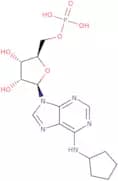
CAS:<p>N6-Cyclopentyladenosine-5'-O-monophosphate is a nucleoside that is a substrate for RNA polymerase and is involved in the regulation of transcription. It also has been shown to be localized in the nucleus, cytoplasm, and cell membrane. N6-Cyclopentyladenosine-5'-O-monophosphate is used in diagnosis as an immunochemical reagent for the detection of matrix metalloproteinases (MMPs) and it can be used to measure MMP-9 activity. The monoclonal antibody (mAb) against this nucleoside can be used to detect N6-Cyclopentyladenosine-5'-O-monophosphate in biological samples such as human serum or cell culture.</p>Fórmula:C15H22N5O7PPureza:Min. 95%Peso molecular:415.34 g/mol6-Chloro-9-(2-deoxy-b-L-erythro-pentofuranosyl)-9H-purin-2-amine
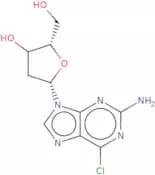
CAS:<p>6-Chloro-9-(2-deoxy-b-L-erythro-pentofuranosyl)-9H-purin-2-amine is a novel antiviral and anticancer agent. It is an analog of adenosine that inhibits viral replication by inhibiting DNA synthesis. 6CePP2A is an activator of nucleoside deoxyribonucleotidyltransferase, which converts dATP to dTTP.</p>Fórmula:C10H12ClN5O3Pureza:Min. 95%Peso molecular:285.69 g/molN4-Benzoyl-2'-deoxy-5'-O-DMT-2'-trifluoroacetamidocytidine
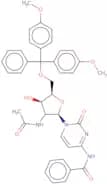
N4-Benzoyl-2'-deoxy-5'-O-DMT-2'-trifluoroacetamidocytidine is a novel nucleoside analog that is activated by ribonucleotide reductase. This compound inhibits the synthesis of DNA and RNA in cells, which leads to the inhibition of cellular proliferation. N4-Benzoyl-2'-deoxy-5'-O-DMT-2'-trifluoroacetamidocytidine has been shown to be effective against cancer cells, as well as antiviral and antiretroviral activity. It is also active against drug resistant strains of HIV.Fórmula:C39H35F3N4O8Pureza:Min. 95%Peso molecular:744.71 g/mol2-(sec-Butylthio)pyrimidine-5-carbaldehyde
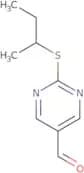
CAS:<p>2-(sec-Butylthio)pyrimidine-5-carbaldehyde is a molecule that inhibits cell growth and angiogenesis. It was found to inhibit the phosphorylation of specific proteins, leading to the inhibition of cell growth and angiogenesis. This compound has been shown to be effective against prostate cancer cells in vitro and in vivo, as well as in a mouse model for breast cancer. In this model, the drug inhibited tumor growth without any apparent toxicity to normal tissues. 2-(sec-Butylthio)pyrimidine-5-carbaldehyde has been tested as a potential antiangiogenic agent in mice, with results showing no adverse effects on animals.</p>Fórmula:C9H12N2OSPureza:Min. 95%Peso molecular:196.27 g/molAdenosine 5'-monophosphate [U-13C10,U-15N5]
CAS:Adenosine 5'-monophosphate (AMP) is a nucleoside that is used in the synthesis of DNA, RNA and other nucleic acids. AMP is also an antiviral and anticancer agent that can be used to activate other drugs. AMP is synthesized from adenosine triphosphate (ATP) by removing one phosphate group, resulting in the formation of adenosine diphosphate (ADP). ADP can then be converted to AMP by adding a phosphate group back on. This synthetic process can be modified to produce novel derivatives of AMP with enhanced properties.Fórmula:C10H14N5O7PPureza:Min. 95%Peso molecular:362.11 g/molN4-Acetyl-2'-deoxy-2'-fluoro-2'C-methylcytidine
N4-Acetyl-2'-deoxy-2'-fluoro-2'C-methylcytidine is a novel nucleoside analogue that is currently being studied as an anti-cancer agent. It inhibits the growth of cancer cells by inhibiting the synthesis of DNA, RNA and proteins in these cells. N4-Acetyl-2'-deoxy-2'-fluoro-2'C-methylcytidine has been shown to be active against Hepatitis C virus and HIV, but not against influenza virus. This drug also has antiviral activity and can be used for the treatment of herpes simplex viruses type 1 and 2.Pureza:Min. 95%4',5'-Didehydro-2',5'-dideoxy-2'-fluorouridine
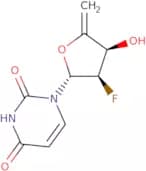
CAS:4',5'-Didehydro-2',5'-dideoxy-2'-fluorouridine is a monophosphate of the nucleoside 5FU. It is an antiviral and anticancer agent that inhibits viral DNA synthesis by competitively inhibiting the activity of thymidylate synthase, which converts dUMP to dTMP. 4',5'-Didehydro-2',5'-dideoxy-2'-fluorouridine also induces apoptosis in neoplastic cells. This compound has high purity and quality, and can be used as a phosphoramidite for the synthesis of modified oligonucleotides.Fórmula:C10H10FNO4Pureza:Min. 95%Peso molecular:227.19 g/molN4-Ethyl-2'-deoxycytidine
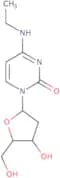
CAS:<p>N4-Ethyl-2'-deoxycytidine is a novel nucleoside analog that inhibits the activity of DNA polymerase. It is used as an anticancer, antiviral and antiretroviral agent. N4-Ethyl-2'-deoxycytidine has been shown to be active against herpes simplex virus type 1 (HSV-1), HSV-2, cytomegalovirus (CMV), human immunodeficiency virus type 1 (HIV-1) and HIV-2 in vitro. This drug also has antiangiogenic properties due to its ability to inhibit the synthesis of vascular endothelial growth factor A. N4-Ethyl-2'-deoxycytidine is a modified nucleoside that can be phosphorylated by cellular enzymes, which activates it by converting it into a monophosphate or diphosphate form. This drug inhibits the production of RNA from DNA and also prevents protein</p>Fórmula:C11H17N3O4Pureza:Min. 95%Peso molecular:255.27 g/molBiotinyl coenzyme A
<p>Biotinyl coenzyme A is a novel, synthetic nucleotide that has activity against cancer cells. It is an analogue of biotin-diphosphate with a ribonucleoside moiety attached to the diphosphate. Biotinyl coenzyme A is phosphoramidite monophosphate, which can be synthesized by modifying the 5'-terminus of the anticancer drug gemcitabine.</p>Fórmula:C43H82N13O19P3S2Pureza:Min. 95%Peso molecular:1,242.24 g/molN6-Monobutyryl-2'-deoxyadenosine 3',5'-cyclic monophosphate sodium salt
CAS:<p>N6-Monobutyryl-2'-deoxyadenosine 3',5'-cyclic monophosphate sodium salt is a novel antiviral and anticancer agent that is a synthetic nucleoside analogue. It has been shown to be effective at inhibiting the growth of human cancer cells in vitro and in vivo. N6-Monobutyryl-2'-deoxyadenosine 3',5'-cyclic monophosphate sodium salt binds to viral RNA, resulting in inhibition of protein synthesis and cell death.</p>Fórmula:C14H18N5O6P·NaPureza:Min. 95%Peso molecular:406.29 g/mol2',3'-O-Isopropylidene-6-thioinosine
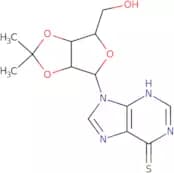
CAS:<p>2',3'-O-Isopropylidene-6-thioinosine is a fluorinated analogue of 6-thioguanine, which is an important precursor in the synthesis of nucleotides. The compound contains a fluorine atom at the 2' position and a sulfur atom at the 3' position of the ribose ring. It is soluble in organic solvents and can be used as a tracer for biochemical studies. The thermal stability of 2',3'-O-Isopropylidene-6-thioinosine has been demonstrated by molecular modelling and thermally induced filtration experiments. Molecular modeling has also shown that 2',3'-O-Isopropylidene-6-thioinosine binds to the active site of uridine phosphorylase, which is involved in pyrimidine salvage pathways in cells.<br>2',3'-O-Isopropylidene-6-thioinos</p>Fórmula:C13H16N4O4SPureza:Min. 95%Peso molecular:324.36 g/mol2-(Methylthio)-4-(P-Tolylamino)Pyrimidine-5-Carboxylic Acid
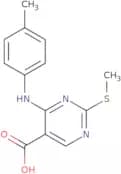
CAS:<p>2-(Methylthio)-4-(P-tolylamino)pyrimidine-5-carboxylic acid is an anticancer drug that is a novel, modified nucleoside. It has been shown to be active as a monophosphate and diphosphate in vitro. 2-(Methylthio)-4-(P-tolylamino)pyrimidine-5-carboxylic acid has also been shown to have antiviral activity against HIV and herpes simplex virus type 1 (HSV1).</p>Fórmula:C13H13N3O2SPureza:Min. 95%Peso molecular:275.33 g/mol2'-Deoxy-5'-DMT-5-[3-(trifluoroacetylamino)-1-propynyl]-uridine 3'-CE phosphoramidite
CAS:<p>2'-Deoxy-5'-DMT-5-[3-(trifluoroacetylamino)-1-propynyl]-uridine 3'-CE phosphoramidite is a novel modified nucleoside that is synthesized by the reaction of 2'-deoxy-5'-DMT-5-[3-(trifluoroacetylamino)-1-propynyl] uridine with bis(2,4,6-trimethylbenzoyl)phosphine and then with tetrazole. This product inhibits the synthesis of viral RNA and DNA and has been shown to be effective against cancer cells in vitro.</p>Fórmula:C44H49F3N5O9PPureza:Min. 95%Peso molecular:879.86 g/mol8-Bromoguanosine-5'-triphosphate sodium salt - 10 mM aqueous solution
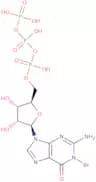
CAS:<p>8-Bromoguanosine-5'-triphosphate sodium salt is a nucleotide analog that inhibits the enzyme ribonucleotide reductase. This drug inhibits bacterial growth by interfering with protein synthesis and cell division. It binds to the purine riboswitch, which is an allosteric regulatory binding site on the ribosome, inactivating it. 8-Bromoguanosine-5'-triphosphate sodium salt also binds to the active site of bacterial RNA polymerase and inhibits DNA synthesis. The activity of this drug has been shown using a bacteriophage system in which the enzyme protein synthesis was inhibited by 8-bromoguanosine-5'-triphosphate sodium salt.</p>Fórmula:C10H15N5O14P3Br·xNaPureza:Min. 95%Peso molecular:602.08 g/mol2,6-Dichloro-9-(3',5'-di-O-benzoyl-2'-deoxy-2'-fluoro-a-D-arabinofuranosyl)purine
<p>2,6-Dichloro-9-(3',5'-di-O-benzoyl-2'-deoxy-2'-fluoro-a-D-arabinofuranosyl)purine is a nucleoside that is used in the synthesis of antiviral drugs. It is a modified monophosphate with a 3',5'-di-O-benzoyl group and 2'-deoxyribose. This substance can be prepared from the corresponding 2,6-dichloropurine by reaction with chloroacetaldehyde diethyl acetal. 2,6 Dichloro 9-(3',5'-di-O-benzoyl) purine has been shown to have anticancer activity against various human cancer cell lines in vitro and in vivo.</p>Pureza:Min. 95%



![Adenosine 5'-monophosphate [U-13C10,U-15N5]](/_next/image/?url=https%3A%2Fstatic.cymitquimica.com%2Fproducts%2F3D%2Fthumb-webp%2FNA31536.webp&w=3840&q=75)



![2'-Deoxy-5'-DMT-5-[3-(trifluoroacetylamino)-1-propynyl]-uridine 3'-CE phosphoramidite](/_next/image/?url=https%3A%2Fstatic.cymitquimica.com%2Fproducts%2F3D%2Fthumb-webp%2FPD138044.webp&w=3840&q=75)