Nucleosídeos
Os nucleosídeos são building blocks fundamentais dos ácidos nucleicos, compostos por uma base nitrogenada ligada a uma molécula de açúcar. Nesta seção, você encontrará uma ampla variedade de nucleosídeos essenciais para pesquisas em biologia molecular, bioquímica e farmacologia. Esses compostos desempenham papéis cruciais na síntese de DNA e RNA, e também são vitais em vários processos metabólicos. Os nucleosídeos são usados para estudar material genético, desenvolver terapias antivirais e anticancerígenas, e entender os mecanismos celulares. Na CymitQuimica, fornecemos nucleosídeos de alta qualidade para apoiar suas necessidades de pesquisa e desenvolvimento, garantindo pureza e confiabilidade para suas aplicações experimentais.
Foram encontrados 3569 produtos de "Nucleosídeos"
Ordenar por
Pureza (%)
0
100
|
0
|
50
|
90
|
95
|
100
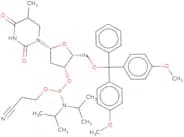
5,6-Dihydro-5'-O-DMT-thymidine 3'-CE phosphoramidite
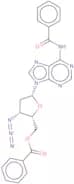
This is a synthetic DNA analogue that is used in the synthesis of oligonucleotides. It is a phosphoramidite in which the 5,6-dihydro-5'-O-DMT group has been modified to allow for incorporation into DNA and RNA. This compound has antiviral and anticancer activities.Fórmula:C40H51N4O8PPureza:Min. 95%Peso molecular:746.83 g/mol3'-Azido-N6-benzoyl-5'-O-benzoyl-2',3'-dideoxyadenosine
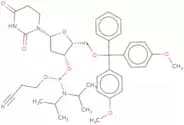
<p>3'-Azido-N6-benzoyl-5'-O-benzoyl-2',3'-dideoxyadenosine is a novel nucleoside analogue with high purity and quality. It is a DNA activator that has been shown to be active against both RNA and DNA viruses. 3'-Azido-N6-benzoyl-5'-O-benzoyl-2',3'-dideoxyadenosine phosphorylates to the corresponding monophosphate, which inhibits viral DNA synthesis by competitive inhibition of diphosphate formation. This compound has also been shown to be an effective inhibitor of HIV replication in vitro.</p>Fórmula:C24H20N8O4Pureza:Min. 95%Peso molecular:484.47 g/mol5,6-Dihydro-2'-deoxy-5'-O-DMT-uridine 3'-CE phosphoramidite
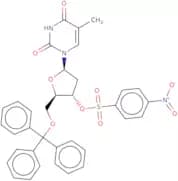
<p>5,6-Dihydro-2'-deoxy-5'-O-DMT-uridine 3'-CE phosphoramidite is a modified nucleoside that is used as an activator in DNA synthesis. It has been shown to have anticancer properties by inhibiting the growth of cancer cells. 5,6-Dihydro-2'-deoxy-5'-O-DMT-uridine 3'-CE phosphoramidite is synthesized from the monophosphate form and can be used for the synthesis of both DNA and RNA.</p>Fórmula:C39H49N4O8PPureza:Min. 95%Peso molecular:732.82 g/mol1-(3'-O-Nosyl-5'-O-trityl-2'-deoxy-b-D-lyxofuranosyl)thymine
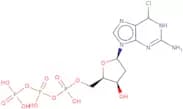
CAS:<p>Ribonucleosides are nucleosides that contain ribose as their pentose sugar. Ribonuclesides are synthetic, modified ribonucleosides that have been modified to include a 2'-deoxy-b-D-lyxofuranosyl group at the 3' position. Ribonuclesides activate antiviral activity by inhibiting viral DNA synthesis and protein synthesis. They also inhibit cancer cell proliferation by inhibiting DNA synthesis and RNA synthesis.</p>Fórmula:C35H31N3O9SPureza:Min. 95%Peso molecular:669.7 g/mol2-Amino-6-chloro-9-(2'-deoxy-b-D-ribofuranosyl)purine-5'-triphosphate
<p>2-Amino-6-chloro-9-(2'-deoxy-b-D-ribofuranosyl)purine-5'-triphosphate is a novel synthetic nucleoside analog with antiviral and anticancer properties. It is an activator of ribonucleotide reductase, which converts ribonucleotides to deoxyribonucleotides. 2-Amino-6-chloro-9-(2'-deoxy-b-D-ribofuranosyl)purine has been shown to be effective against human leukemia cells in vitro and in vivo.</p>Fórmula:C10H17ClN5O12P3Pureza:Min. 95%Peso molecular:527.64 g/molN4-Acetyl-2'-deoxy-2'-fluoro-5'-O-DMT-cytidine 3'-O-succinate
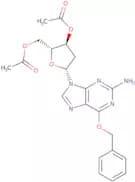
<p>N4-Acetyl-2'-deoxy-2'-fluoro-5'-O-DMT-cytidine 3'-O-succinate is a synthetic nucleoside that has antiviral activity. It is a modification of the natural nucleoside cytidine, where the 4th position of the ribose ring is substituted with an acetyl group and the 2' position of the sugar moiety is substituted with a 2' deoxyribofuranosyl group. N4-Acetyl-2'-deoxy-2'-fluoro-5'-O-DMT-cytidine 3'-O-succinate inhibits viral replication by inhibiting viral RNA synthesis. Its antiviral properties may be due to its ability to inhibit DNA polymerase and reverse transcriptase, which are enzymes that synthesize DNA from RNA.</p>Pureza:Min. 95%3',5'-Di-O-acetyl O6-benzyl-2'-deoxyguanosine
CAS:<p>3',5'-Di-O-acetyl O6-benzyl-2'-deoxyguanosine is a novel antiviral agent that is synthesized as a deoxyribonucleoside monophosphate. It inhibits viral DNA polymerase and RNA synthesis by competitively inhibiting the incorporation of diphosphates into viral DNA. It has been shown to be active against herpes simplex virus type 1 and 2, vaccinia virus, influenza A virus, and Sindbis virus. 3',5'-Di-O-acetyl O6-benzyl-2'-deoxyguanosine has also been shown to have anticancer properties in vitro and in vivo.</p>Fórmula:C21H23N5O6Pureza:Min. 95%Peso molecular:441.44 g/molBiotin-5-uridine-5'-triphosphate, lithium salt - 1 mM aqueous solution
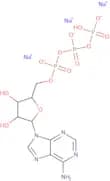
<p>Biotin-5-uridine-5'-triphosphate, lithium salt - 1 mM aqueous solution is a monoclonal antibody. It is used in the diagnosis of lung cancer. The antibody binds to markers present on the tumor cells and can be detected by immunohistochemistry (IHC) or immunofluorescence (IF). The antibody may also be used to identify submucosal tumors that are not palpable.</p>Fórmula:C22H34N5O17P3S·xLiPureza:Min. 95%Peso molecular:765.52 g/molAdenosine 5'-triphosphate trisodium salt
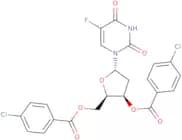
CAS:<p>ATP is an important molecule in the body that is involved in a number of cellular processes, including energy production and transmission. It has been shown to be tumorigenic and is found at high levels in plasma membranes and muscle cells. ATP binds to the adenylate cyclase enzyme in the cell membrane and stimulates its activity, which increases intracellular levels of cyclic AMP (cAMP). Cyclic AMP activates protein kinase A, which phosphorylates proteins, leading to a cascade of reactions that result in cellular changes. ATP also has pharmacological effects on the plasma membrane by increasing its permeability to certain ions such as potassium ions. This leads to an increase in the rate of depolarization of the cell membrane, which causes an influx of calcium ions into the cell.</p>Fórmula:C10H15N5O13P3Na3Pureza:Min. 95%Peso molecular:575.14 g/mol3',5'-Di-O-p-chlorobenzoyl-2'-deoxy a-5-fluorouridine
CAS:<p>3',5'-Di-O-p-chlorobenzoyl-2'-deoxy a-5-fluorouridine is a nucleoside that is used in the antiviral drug Aciclovir. It is an analog of 2'-deoxyadenosine and inhibits viral DNA synthesis by acting as a chain terminator. 3',5'-Di-O-p-chlorobenzoyl-2'-deoxy a-5-fluorouridine has shown some anticancer activity against human tumor cells in culture, but its mechanism of action is not well understood.</p>Fórmula:C23H17Cl2FN2O7Pureza:Min. 95%Peso molecular:523.29 g/molN6-Benzyladenosine 5'-triphosphate triethylammonium salt
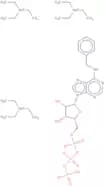
CAS:<p>N6-Benzyladenosine 5'-triphosphate triethylammonium salt is a hydrogen bond donor that is not naturally occurring. It has been shown to be a potent and selective analog of ATP with high specificity for cGMP-dependent protein kinase. This drug has been used to study the function of serotonin receptors, tyrosine kinases, and epidermal growth factor receptors. N6-Benzyladenosine 5'-triphosphate triethylammonium salt has also been shown to increase the sensitivity of cells to epidermal growth factor and to inhibit the reuptake of serotonin.END></p>Fórmula:C19H26N5O11P3·C18H48N3Pureza:Min. 95%Peso molecular:899.95 g/mol3'-Azido-3'-deoxythymidine-5'-triphosphate lithium salt - 100mM aqueous solution
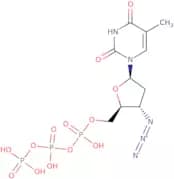
CAS:<p>3'-Azido-3'-deoxythymidine-5'-triphosphate lithium salt - 100mM aqueous solution is an inhibitor of the enzyme kinase. The active form of 3'-Azido-3'-deoxythymidine-5'-triphosphate lithium salt - 100mM aqueous solution inhibits human immunodeficiency virus (HIV) reverse transcriptase, preventing the synthesis of viral DNA. 3'-Azido-3'-deoxythymidine-5'-triphosphate lithium salt - 100mM aqueous solution has been shown to inhibit cancer cell growth in culture and to inhibit cancer cell proliferation in mice. This compound is also active against cancer cells that are resistant to other anti-cancer drugs. 3'-Azido-3'-deoxythymidine-5'-triphosphate lithium salt - 100mM aqueous solution is phosphorylated by cellular kinases, which may be</p>Fórmula:C10H16N5O13P3·xLiPureza:Min. 95%Cor e Forma:Colorless Clear LiquidPeso molecular:507.18 g/mol3'-O-Acetyl-5'-O-tert-butyldiphenylsilyl-2'-deoxy-2'-fluorothymidine
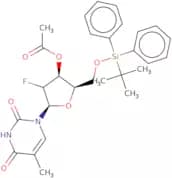
<p>3'-O-Acetyl-5'-O-tert-butyldiphenylsilyl-2'-deoxy-2'-fluorothymidine is an antiviral agent that inhibits the production of virus particles by inhibiting DNA and RNA synthesis. It is a modified nucleoside analog that has been shown to inhibit the proliferation of tumor cells in vitro and in vivo. This drug has also been shown to be effective against leukemia and lymphoma cells, as well as other types of cancer cells. 3'-O-Acetyl-5'-O-tert-butyldiphenylsilyl-2'-deoxy-2'-fluorothymidine is used for the treatment of AIDS, hepatitis B, hepatitis C, herpes zoster (shingles), and other diseases caused by viruses. It can be administered orally or intravenously.</p>Fórmula:C28H33FN2O6SiPureza:Min. 95%Peso molecular:540.66 g/mol2-Methylthioadenosine-5'-triphosphate
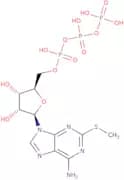
CAS:2-Methylthioadenosine-5'-triphosphate (2MeSATP) is a nucleotide analogue that inhibits the synthesis of ATP by binding to the adenylate cyclase enzyme. 2MeSATP has been shown to be a potent inhibitor of neuronal death and is used as a tool in cellular research. 2MeSATP binds to guanine nucleotide-binding protein (G protein), which inhibits its activity and prevents the activation of other downstream enzymes, such as phospholipase C, which are necessary for neurotransmitter release. 2MeSATP also has an inhibitory effect on several other enzymes, including phosphodiesterases and cyclases, in cellular models and whole cells.Fórmula:C11H18N5O13P3SPureza:Min. 95%Peso molecular:553.27 g/molBiotin-5-deoxyuridine-5'-triphosphate, lithium salt - 1 mM aqueous solution
<p>Biotin-5-deoxyuridine-5'-triphosphate, lithium salt is a novel phosphoramidite. It has been shown to be an anticancer agent and antiviral agent. Biotin-5-deoxyuridine-5'-triphosphate, lithium salt inhibits the growth of cancer cells by binding to the ribonucleotide reductase enzyme, thereby preventing synthesis of DNA and RNA.</p>Fórmula:C22H34N5O16P3S·xLiPureza:Min. 95%Peso molecular:749.52 g/mol5'-O-tert-Butyldimethylsilyl-7-deaza-2'-deoxy-7-iodoadenosine
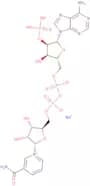
<p>5'-O-tert-Butyldimethylsilyl-7-deaza-2'-deoxy-7-iodoadenosine is an antiviral drug that has been shown to inhibit the synthesis of viral RNA by inhibiting the activity of DNA polymerase. It is a novel antiviral drug with high purity and can be used for cancer treatment as well. 5'-O-tert-Butyldimethylsilyl-7-deaza-2'-deoxy-7-iodoadenosine also has a novel mechanism of action, which is different from other antiviral drugs such as ribonucleosides or deoxyribonucleosides. This compound is used in the synthesis of phosphoramidites for oligonucleotide synthesis.</p>Fórmula:C17H27IN4O3SiPureza:Min. 95%Peso molecular:490.41 g/mola-Nicotinamide adenine dinucleotide phosphate
CAS:<p>a-Nicotinamide adenine dinucleotide phosphate (NADP) is a modified form of the natural coenzyme nicotinamide adenine dinucleotide (NAD) and is an important component in cellular metabolism. NADP is also an anticancer agent that inhibits the synthesis of DNA, RNA, and protein. It is used for the treatment of viral infections such as cytomegalovirus (CMV), herpes simplex virus (HSV), varicella zoster virus (VZV), and Epstein-Barr virus (EBV). NADP is also a novel antiviral agent that has been shown to inhibit the enzyme diphosphate kinase, which prevents the production of ATP. This inhibition leads to cell death by disrupting normal energy production. NADP has been shown to be effective against CMV isolates resistant to ganciclovir or foscarnet due to its ability to inhibit DNA synthesis.</p>Fórmula:C21H28N7O17P3Pureza:Min. 95%Peso molecular:743.41 g/mol2',3'-Dideoxyinosine-5'-triphosphate triethylammonium salt
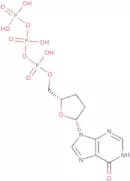
CAS:<p>2',3'-Dideoxyinosine-5'-triphosphate triethylammonium salt (ddI-TP) is a nucleoside analog that inhibits HIV replication by competing with natural nucleosides for binding to HIV reverse transcriptase. ddI-TP acts as an inhibitor of human mitochondrial DNA polymerase γ, and blocks the synthesis of fatty acids in mouse cells. It is also able to inhibit signal pathways involving protein kinases and phosphatases. ddI-TP has been shown to be effective against hiv infection in mice. This drug can be used in the treatment of hiv infection, as well as in the prevention of its transmission from mother to child during pregnancy and breastfeeding.</p>Fórmula:C10H15N4O12P3Pureza:Min. 95%Peso molecular:476.17 g/mol8-Bromo-5'-o-(dimethyoxytrityl)-N2-(dimethyl-aminomethylidene)-2'-deoxyguanosine
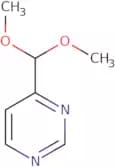
CAS:8-Bromo-5'-O-(dimethyoxytrityl)-N2-(dimethyl-aminomethylidene)-2'-deoxyguanosine (8-Bromo-5'-O-(DMT)-dG) is a novel nucleoside that is synthesized by reacting 8-bromo-5'-O-(dimethyoxytrityl)-2'-deoxyguanosine with dimethylaminomethylidene. It has antiviral, anticancer, and ribonucleoside activities. 8-Bromo-5'-O-(DMT)-dG is used as a building block for the synthesis of oligonucleotides, phosphoramidites, and other modified nucleosides. 8-Bromo-5'-O-(DMT)-dG is currently being developed as an anticancer drug.Fórmula:C34H35BrN6O6Pureza:Min. 95%Peso molecular:703.6 g/mol4-(Dimethoxymethyl)pyrimidine
CAS:<p>4-(Dimethoxymethyl)pyrimidine is a nitrogen heterocycle that is prepared by the reaction of formamide and nitrate. This compound has been shown to inhibit the replication of viruses such as HIV, herpes simplex virus type 2 (HSV-2), or vesicular stomatitis virus (VSV). 4-(Dimethoxymethyl)pyrimidine also binds to uracil in RNA, inhibiting RNA synthesis and leading to cell death. This compound can also be used as a precursor for the preparation of 2-aminopyrimidine, which is used in the synthesis of other compounds. 4-(Dimethoxymethyl)pyrimidine is used in organic synthesis for the preparation of benzene derivatives, such as nitrobenzene. This compound can also be synthesized by reacting formamide with toluene in an ultrasonic bath.</p>Fórmula:C7H10N2O2Pureza:Min. 95%Peso molecular:154.17 g/mol