Nucleosídeos
Os nucleosídeos são building blocks fundamentais dos ácidos nucleicos, compostos por uma base nitrogenada ligada a uma molécula de açúcar. Nesta seção, você encontrará uma ampla variedade de nucleosídeos essenciais para pesquisas em biologia molecular, bioquímica e farmacologia. Esses compostos desempenham papéis cruciais na síntese de DNA e RNA, e também são vitais em vários processos metabólicos. Os nucleosídeos são usados para estudar material genético, desenvolver terapias antivirais e anticancerígenas, e entender os mecanismos celulares. Na CymitQuimica, fornecemos nucleosídeos de alta qualidade para apoiar suas necessidades de pesquisa e desenvolvimento, garantindo pureza e confiabilidade para suas aplicações experimentais.
Foram encontrados 3569 produtos de "Nucleosídeos"
Ordenar por
Pureza (%)
0
100
|
0
|
50
|
90
|
95
|
100
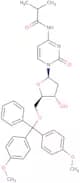
2'-Deoxy-5'-O-DMT-N4-isobutyrylcytidine
CAS:<p>2'-Deoxy-5'-O-DMT-N4-isobutyrylcytidine is a monophosphate nucleoside analog that has antiviral activity against the Herpes virus. It is a cytosine analog that is incorporated into DNA and inhibits viral replication. 2'-Deoxy-5'-O-DMT-N4-isobutyrylcytidine has also been shown to have anticancer properties and high purity. This compound is synthesized by the reaction of 2'-deoxycytidine and 4-(2,2,2,-trimethylpropionyl)-1,3-butanediol with O-(7-azabenzotriazol-1-yl) N,N,N',N' tetramethyluronium hexafluorophosphate (HATU) in anhydrous pyridine. The CAS number for this compound is 10089862.</p>Fórmula:C34H37N3O7Pureza:Min. 95%Peso molecular:599.69 g/molXTT, sodium salt
CAS:<p>XTT is a tetrazolium compound that can be used to measure the activity of enzymes. It has been shown to inhibit the growth of tumor cells in vitro and in vivo. XTT can also be used as an antibacterial agent against C. glabrata and as an anthelmintic drug against tapeworms. This compound is not active against other bacteria, such as E. coli or S. aureus, because they are resistant to oxidative injury and have high levels of ABCG2 (ATP-binding cassette G2), which prevents intracellular accumulation of XTT.</p>Fórmula:C22H16N7NaO13S2Peso molecular:673.53 g/molRef: 3D-X-5000
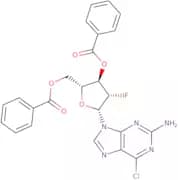
1gA consultar100mgA consultar250mgA consultar500mgA consultar2500mgA consultar-Unit-ggA consultar2-Amino-6-chloro-9-(2-deoxy-3,5-di-O-benzoyl-2-fluoro-b-D-arabinofuranosyl)purine
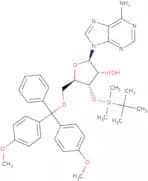
CAS:<p>2-Amino-6-chloro-9-(2-deoxy-3,5-di-O-benzoyl-2-fluoro-b-D-arabinofuranosyl)purine is a novel modified nucleoside with antiviral activity. It has been shown to inhibit the replication of the influenza A virus in cell culture and animal models. 2′Amino-6′chloro 9-(2′deoxy 3′,5′di O′benzoyl 2′fluoro b D arabinofuranosyl)purine is an analog of adenosine that has shown anticancer activity in vitro and in vivo. It inhibits DNA synthesis by inhibiting deoxyribonucleotide synthesis and ribonucleotide synthesis. This drug also inhibits cell proliferation and induces apoptosis.</p>Fórmula:C24H19ClFN5O5Pureza:Min. 95%Peso molecular:511.89 g/mol3'-O-tert-Butyldimethylsilyl-5'-O-DMT-adenosine
CAS:<p>3'-O-tert-Butyldimethylsilyl-5'-O-DMT-adenosine is a nucleoside that is used in the synthesis of oligonucleotides. It is a modified nucleoside that can be used as an antiviral or anticancer agent. It has been shown to have high purity and quality. The synthesis of this compound involves the use of a novel activator, which is also available for purchase from this website. This nucleoside has been modified with tert-butyldimethylsilyl groups at the 3' and 5' positions of the ribose moiety, which prevents the hydrolysis of the phosphate ester bond by alkaline phosphatase enzymes, thus allowing for sequence determination.</p>Pureza:Min. 95%N2-Isobutyryl-2'-O-(2-methylacetamido)guanosine
<p>N2-Isobutyryl-2'-O-(2-methylacetamido)guanosine is a modified nucleoside with antiviral, anticancer and antiretroviral activity. It is a novel monophosphate that has been shown to be effective against hepatitis B and HIV. N2-Isobutyryl-2'-O-(2-methylacetamido)guanosine inhibits the synthesis of viral DNA by acting as an activator of DNA polymerases.</p>Pureza:Min. 95%1,3-Dimethyl-5-[4-(4,4,5,5-tetramethyl-[1,3,2]dioxaborolan-2-yl)-benzyl]-pyrimidine-2,4,6-trione
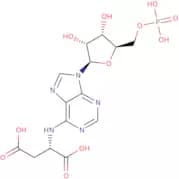
CAS:<p>1,3-Dimethyl-5-[4-(4,4,5,5-tetramethyl-[1,3,2]dioxaborolan-2-yl)-benzyl]-pyrimidine-2,4,6-trione is an organic semiconductor material. It is a dielectric with a high transition temperature and good electrical conductivity. This compound is a metal silicide with a low resistivity and high electron mobility. It can be used as an active layer in thin film transistors or as a field effect transistor channel material. 1,3-Dimethyl-5-[4-(4,4,5,5-tetramethyl-[1,3,2]dioxaborolan-2-yl)-benzyl]-pyrimidine-2,4,6-trione has been shown to have good chemical stability and thermal stability in air at temperatures up to 400°C.</p>Pureza:Min. 95%Adenylosuccinic acid
CAS:<p>Adenylosuccinic acid is an organic acid that is synthesized through the deamination of adenosine monophosphate. It is used in transfection experiments to inhibit polymerase chain reaction (PCR) and reverse transcriptase. Adenylosuccinic acid inhibits DNA synthesis by targeting enzymes such as the ribonucleotide reductase and the DNA polymerase β-subunit. Adenylosuccinic acid also inhibits protein synthesis, which may be due to its ability to inhibit energy metabolism, leading to cellular death. This drug has been shown to have a wide range of pharmacological effects, including anti-inflammatory, analgesic, and antifungal activity.</p>Fórmula:C14H18N5O11PPureza:Min. 95%Cor e Forma:PowderPeso molecular:463.29 g/mol9-(2'-Deoxy-2'-fluoro-b-D-ribofuranosyl)-2-fluoroadenine
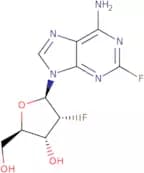
CAS:<p>9-(2'-Deoxy-2'-fluoro-b-D-ribofuranosyl)-2-fluoroadenine is a modified nucleoside that is used as an antiviral and anticancer agent. It acts as an activator for the synthesis of DNA, RNA, and protein. 9-(2'-Deoxy-2'-fluoro-b-D-ribofuranosyl)-2-fluoroadenine also inhibits the growth of cancer cells by interfering with the division process. This drug is synthesized from 9-(5'-deoxy-5'-iodo-b-D-ribofuranosyl) -2,6 difluoro adenine (diFdA). The Ribonucleosides are then prepared in a similar manner to other nucleosides by using phosphoramidites. The product is then purified using HPLC.</p>Fórmula:C10H11F2N5O3Pureza:Min. 95%Cor e Forma:White PowderPeso molecular:287.23 g/mol2'-TFA-NH-dC
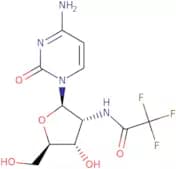
CAS:<p>2'-TFA-NH-dC is a novel nucleoside analogue that has been modified to have antiviral and anticancer properties. The chemical structure of 2'-TFA-NH-dC closely resembles dC, which is a natural DNA nucleotide, but with the addition of an extra fluorine atom at the 2' position. This modification increases the potency of 2'-TFA-NH-dC by making it more difficult for enzymes in cells to break down the drug. The compound can be used as a monophosphate or diphosphate, and is synthesized from 2'-deoxyadenosine 5'-phosphoramidite and 1,2,4-triazole in water.</p>Fórmula:C11H13F3N4O5Pureza:Min. 95%Peso molecular:338.24 g/mol2'-Deoxy-2'-fluoroadenosine-5'-triphosphate sodium salt - 100mM aqueous solution
<p>2'-Deoxy-2'-fluoroadenosine-5'-triphosphate sodium salt - 100mM aqueous solution is a high purity synthetic compound that is used as an activator for the synthesis of DNA, RNA, and phosphoramidites. The product is in the form of a white to off-white solid and has high quality with purity of >99%. 2'-Deoxy-2'-fluoroadenosine-5'-triphosphate sodium salt - 100mM aqueous solution can be used in antiviral, anticancer, and antideoxyribonucleoside therapy. It inhibits viral replication by inhibiting reverse transcriptase activity in HIV and other retroviruses. It also inhibits tumor growth by interfering with DNA synthesis.</p>Fórmula:C10H15FNO12P3·xNaPureza:Min. 95%Peso molecular:453.15 g/molo-Methoxytopolin riboside
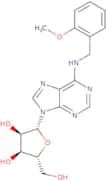
CAS:<p>o-Methoxytopolin Riboside is a novel phosphoramidite that can be used for the synthesis of ribonucleotides and deoxyribonucleosides. This product has antiviral and anticancer properties, as well as the ability to inhibit tumor growth by inducing apoptosis in cancer cells. It is synthesized from the natural compound o-methoxytyrosine by the addition of a phosphate group to the 3-position. The phosphate group is then modified to produce monophosphate or diphosphate forms. OMTPR has been shown to have anti-inflammatory properties and has been found to reduce inflammation in mice with colitis.</p>Fórmula:C18H21N5O5Pureza:Min. 95%Cor e Forma:PowderPeso molecular:387.39 g/molThymidine-5'-diphosphate-6-deoxy-D-allose
<p>Thymidine-5'-diphosphate-6-deoxy-D-allose (TDP) is a high quality monophosphorylated nucleoside that is used as an activator, anticancer, and antiviral agent. TDP has been modified to improve the efficacy and safety of cancer treatments by enhancing the cytotoxicity of chemotherapeutics. TDP also has antiviral properties and can be used in the treatment of HIV infections by inhibiting viral replication.</p>Pureza:Min. 95%Thymidylyl-(3'-5')-2'-deoxyadenosine ammonium salt
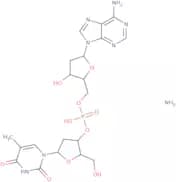
CAS:<p>Thymidylyl-(3'-5')-2'-deoxyadenosine ammonium salt is a nucleoside that is a synthetic analog of thymidine. It has antiviral activity and is used in the synthesis of DNA and RNA. This product has shown to be effective against HIV, influenza, polio, herpes, and human papillomavirus. Thymidylyl-(3'-5')-2'-deoxyadenosine ammonium salt can also be used for the synthesis of phosphoramidites for oligonucleotide synthesis.</p>Fórmula:C20H26N7O10P·NH3Pureza:Min. 95%Peso molecular:572.47 g/mol2',3'-Dideoxy-N2-isobutyrylguanosine
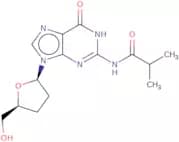
<p>2',3'-Dideoxy-N2-isobutyrylguanosine is a monophosphate that inhibits viral replication by competing with the natural substrate, diphosphate. It is synthesized in high purity and quality by our company. 2',3'-Dideoxy-N2-isobutyrylguanosine has been used as an antiviral agent to inhibit the hepatitis B virus. This product is also of interest for its potential use in cancer treatment.</p>Fórmula:C14H19N5O4Pureza:Min. 95%Peso molecular:321.34 g/mol5'-Amino-5'-deoxy-5'-N-MMT-thymidine 3'-CE phosphoramidite
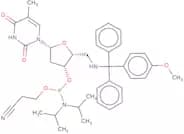
CAS:<p>5'-Amino-5'-deoxy-5'-N-MMT-thymidine 3'-CE phosphoramidite is a high purity, novel, modified, antiviral and anticancer nucleotide. It is an analog of thymidine which has the methyl group at the 5' position replaced with a 5' amino group. This modification prevents conversion of the nucleoside to thymine and therefore inhibits DNA synthesis. The phosphoramidite is used as a building block for oligonucleotides in chemical synthesis. The phosphoramidite has shown antiviral activity against HIV by preventing reverse transcription of viral RNA into DNA. It also has been tested for its anticancer effects on human cells in vitro by inhibiting DNA synthesis and inducing apoptosis in cancer cells.</p>Fórmula:C39H48N5O6PPureza:Min. 95%Peso molecular:713.8 g/mol2',3'-Dideoxy-2',3'-didehydroinosine
CAS:<p>2',3'-Dideoxy-2',3'-didehydroinosine is a synthetic pyrimidine compound that has been shown to inhibit tumor growth in animal models. It is used to prepare 2',3'-dideoxy-2',3'-didehydroinosine-5'-triphosphate, which inhibits the synthesis of DNA and RNA by binding to the enzyme ribonucleotide reductase. This inhibition leads to cell death by inducing crosslinkers and inhibiting polymerase chain reaction. 2',3'-Dideoxy-2',3'-didehydroinosine can be synthesized from hydrochloric acid and carbonyl compounds such as glyoxal, acetaldehyde, or benzaldehyde.<br>2',3'-Dideoxy-2',3'-didehydroinosine is an important part of phylogenetic tree analysis because it provides information about evolutionary relationships between bacteria.</p>Fórmula:C10H10N4O3Pureza:Min. 95 Area-%Cor e Forma:White PowderPeso molecular:234.21 g/mol3-Deazaguanosine
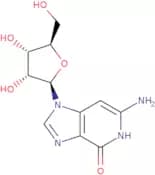
CAS:<p>3-Deazaguanosine is a nucleotide that is found in uridine, which is present in the nucleic acids of all cells. It has been shown to be cytotoxic to colorectal adenocarcinoma and carcinoma cell lines, and this cytotoxicity may be due to its ability to inhibit energy metabolism. 3-Deazaguanosine has also been shown to significantly inhibit viral replication, including HIV and herpes simplex virus type 1. It binds with high affinity to monoclonal antibodies that are specific for nucleotide levels. 3-Deazaguanosine inhibits tissue culture enzyme activity and can cause significant changes in adenine nucleotide levels in cell culture.</p>Fórmula:C11H14N4O5Pureza:Min. 95%Cor e Forma:PowderPeso molecular:282.25 g/molCyclic diguanosine monophosphate
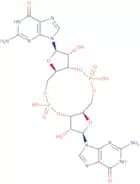
CAS:<p>Cyclic diguanosine monophosphate (c-di-GMP) is a nucleotide that is involved in bacterial cell signaling. It has been shown to be essential for the formation of bacterial biofilms and plays an important role in the development of infectious diseases. c-di-GMP is synthesized from guanosine triphosphate through a series of enzymatic reactions and then hydrolyzed by cyclic diguanosine monophosphatase, which leads to its termination as a second messenger. c-di-GMP interacts with proteins that regulate the expression of genes involved in biofilm formation, motility, and virulence. The synthesis and hydrolysis of c-di-GMP are regulated by multiple enzymes, including protein phosphatases, that control cellular physiology such as biofilm formation.</p>Fórmula:C20H24N10O14P2Pureza:Min. 95%Peso molecular:690.41 g/mol5'- O- [Bis(4- methoxyphenyl) phenylmethyl] - thymidine 3'- (hydrogen phosphonate) ,compd. with N, N- diethylethanamine (1:1)
CAS:<p>5'- O- [Bis(4- methoxyphenyl) phenylmethyl] - thymidine 3'- (hydrogen phosphonate) ,compd. with N, N- diethylethanamine (1:1) is a novel monophosphate nucleoside that has been synthesized and evaluated in vitro as an anticancer agent. It inhibits the proliferation of various human tumor cell lines, including breast cancer cells. This compound is also active against HIV-1 virus but not against other viruses tested. 5'- O- [Bis(4- methoxyphenyl) phenylmethyl] - thymidine 3'- (hydrogen phosphonate) ,compd. with N, N- diethylethanamine (1:1), like other nucleosides, can be modified to suit particular needs and then used for therapeutic purposes.</p>Fórmula:C31H33N2O9PPureza:Min. 95%Peso molecular:608.58 g/mol3'-O-tert-Butyldiphenylsilyl-2'-O-methyluridine
<p>3'-O-tert-Butyldiphenylsilyl-2'-O-methyluridine is a novel nucleoside with antiviral and anticancer properties. It has been shown to inhibit the growth of human tumor cells in culture and induce apoptosis, as well as inhibit viral replication. 3'-O-tert-Butyldiphenylsilyl-2'-O-methyluridine is an analogue of uridine, which can be used for the synthesis of DNA or RNA. The phosphate group is attached to the 3' carbon on the sugar moiety. This nucleoside has been modified from a natural ribonucleoside by substitution of a tertiary butylphenylsilyl group at the 2' position with an o-methyl group.<br>3'-O-tert-Butyldiphenylsilyl-2'-O-methyluridine is supplied as a white powder with purity greater than 99</p>Pureza:Min. 95%



![1,3-Dimethyl-5-[4-(4,4,5,5-tetramethyl-[1,3,2]dioxaborolan-2-yl)-benzyl]-pyrimidine-2,4,6-trione](/_next/image/?url=https%3A%2Fstatic.cymitquimica.com%2Fproducts%2F3D%2Fthumb-webp%2FND44283.webp&w=3840&q=75)



![5'- O- [Bis(4- methoxyphenyl) phenylmethyl] - thymidine 3'- (hydrogen phosphonate) ,compd. with N,…](/_next/image/?url=https%3A%2Fstatic.cymitquimica.com%2Fproducts%2F3D%2Fthumb-webp%2FNT158343.webp&w=3840&q=75)