Nucleosídeos
Os nucleosídeos são building blocks fundamentais dos ácidos nucleicos, compostos por uma base nitrogenada ligada a uma molécula de açúcar. Nesta seção, você encontrará uma ampla variedade de nucleosídeos essenciais para pesquisas em biologia molecular, bioquímica e farmacologia. Esses compostos desempenham papéis cruciais na síntese de DNA e RNA, e também são vitais em vários processos metabólicos. Os nucleosídeos são usados para estudar material genético, desenvolver terapias antivirais e anticancerígenas, e entender os mecanismos celulares. Na CymitQuimica, fornecemos nucleosídeos de alta qualidade para apoiar suas necessidades de pesquisa e desenvolvimento, garantindo pureza e confiabilidade para suas aplicações experimentais.
Foram encontrados 3569 produtos de "Nucleosídeos"
Ordenar por
Pureza (%)
0
100
|
0
|
50
|
90
|
95
|
100
N4-Acetyl-2'-deoxy-3'-O-DMT-cytidine 5'-CE phosphoramidite
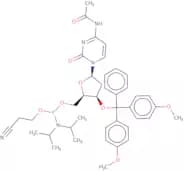
CAS:<p>N4-Acetyl-2'-deoxy-3'-O-DMT-cytidine 5'-CE phosphoramidite is a novel nucleoside. It is a monophosphate and cytidine analog that has been shown to be effective in the treatment of cancer. N4-Acetyl-2'-deoxy-3'-O-DMT-cytidine 5'-CE phosphoramidite also inhibits viral replication by preventing the synthesis of DNA and RNA. This drug can be used as an activator for synthesis of modified oligonucleotides.</p>Fórmula:C41H50N5O8PPureza:Min. 95%Peso molecular:771.84 g/mol5'- O- [Bis(4- methoxyphenyl) phenylmethyl] - thymidine 3'- (hydrogen phosphonate) ,compd. with N, N- diethylethanamine (1:1)
CAS:<p>5'- O- [Bis(4- methoxyphenyl) phenylmethyl] - thymidine 3'- (hydrogen phosphonate) ,compd. with N, N- diethylethanamine (1:1) is a novel monophosphate nucleoside that has been synthesized and evaluated in vitro as an anticancer agent. It inhibits the proliferation of various human tumor cell lines, including breast cancer cells. This compound is also active against HIV-1 virus but not against other viruses tested. 5'- O- [Bis(4- methoxyphenyl) phenylmethyl] - thymidine 3'- (hydrogen phosphonate) ,compd. with N, N- diethylethanamine (1:1), like other nucleosides, can be modified to suit particular needs and then used for therapeutic purposes.</p>Fórmula:C31H33N2O9PPureza:Min. 95%Peso molecular:608.58 g/molN6,5'-O-Dibenzoyl-2'-deoxy-adenosine
<p>N6,5'-O-Dibenzoyl-2'-deoxy-adenosine is a monophosphate nucleoside that is used in the synthesis of DNA. It is synthesized from 2'-deoxyadenosine, which is an antiviral agent against influenza virus and anticancer agent. N6,5'-O-Dibenzoyl-2'-deoxy-adenosine has been shown to be a potent activator of the polymerase chain reaction with high purity and novel properties.</p>Fórmula:C24H21N5O5Pureza:Min. 95%Peso molecular:475.45 g/molL-Ribose NAD
<p>L-Ribose NAD is a nucleoside that belongs to the group of ribonucleosides. It is a novel modified monophosphate and diphosphate nucleotide. L-Ribose NAD has antiviral, anticancer, and immunomodulatory activities. L-Ribose NAD can activate cells with DNA damage by inhibiting the synthesis of deoxyribonucleosides, which are needed for DNA repair. This product has a high purity level and high quality.</p>Pureza:Min. 95%Peso molecular:663 g/molN2-DMF-2'-O-methylguanosine
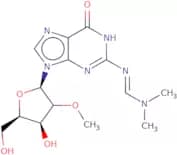
CAS:<p>N2-DMF-2'-O-methylguanosine is a nucleoside that is used as an antiviral agent and anticancer drug. It has been shown to inhibit the growth of human cancer cells in vitro and in vivo. N2-DMF-2'-O-methylguanosine has also been shown to inhibit viral replication by inhibiting DNA synthesis. This nucleoside is a novel compound that can be synthesized using phosphoramidites, which are high quality and yield high purity products.</p>Fórmula:C14H20N6O5Pureza:Min. 95%Peso molecular:352.35 g/molThymidine-5'-diphosphate-6-deoxy-D-allose
<p>Thymidine-5'-diphosphate-6-deoxy-D-allose (TDP) is a high quality monophosphorylated nucleoside that is used as an activator, anticancer, and antiviral agent. TDP has been modified to improve the efficacy and safety of cancer treatments by enhancing the cytotoxicity of chemotherapeutics. TDP also has antiviral properties and can be used in the treatment of HIV infections by inhibiting viral replication.</p>Pureza:Min. 95%5'-O-DMT-2'-O-hexylaminoadenosine
<p>5'-O-DMT-2'-O-hexylaminoadenosine is a modified nucleoside that has antiviral activity. It is the monophosphate form of 5'-O-DMT-2'-O-hexylaminoadenosine, and it is used in the synthesis of phosphoramidites for DNA and RNA. This nucleoside is also an activator for novel antiviral drugs.</p>Fórmula:C37H44N6O6Pureza:Min. 95%Peso molecular:668.8 g/mol5-[(Methylamino)methyl]uridine
CAS:<p>5-[(Methylamino)methyl]uridine is a proton-containing analog of uridine. It is an epigenetic modifier that has been shown to have conformational properties that are similar to those of uridine. 5-[(Methylamino)methyl]uridine has been shown to modify the glycosidic bond and ring structures, which are important for its function in protein synthesis. The compound can also be found as a chemical structure in the ribosomal subunit, where it is involved in protein synthesis and translation. 5-[(Methylamino)methyl]uridine has shown potential as a therapeutic agent for cancer treatment due to its ability to inhibit the expression of oncogenes in cells and induce programmed cell death (apoptosis).</p>Fórmula:C11H17N3O6Pureza:Min. 95%Peso molecular:287.27 g/mol2-Amino-4-methoxypyrimidine
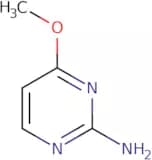
CAS:<p>2-Amino-4-methoxypyrimidine is an organic compound that can be synthesized from 2-amino-4-chloropyrimidine. It is a colorless, water soluble solid with a melting point of 166°C. The UV spectrum of 2-amino-4-methoxypyrimidine exhibits absorption maxima at 240 nm and 280 nm. When 2-amino-4-methoxypyrimidine is exposed to UV light, it emits fluorescent light at 360 nm. The IR spectrum exhibits absorption bands at 3200 cm−1, 1650 cm−1, and 1530 cm−1. Hydrogen bonding interactions occur between the methoxy group and the protonated amine group in the molecule's structure. The yield of this reaction was found to be 65% by GC analysis. This reaction occurs in two steps: first, the imino group reacts with n hexane to form an iminium ion</p>Pureza:Min. 95%2'-Deoxy-5'-O-DMT-adenosine
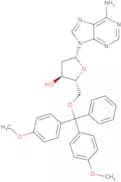
CAS:<p>2'-Deoxy-5'-O-DMT-adenosine is a nucleoside that is structurally related to adenosine. It is synthesized by the phosphoramidite approach and can be used as an activator for RNA synthesis. 2'-Deoxy-5'-O-DMT-adenosine has shown anticancer activity in vitro and in vivo, which may be due to its ability to inhibit RNA synthesis and DNA replication.</p>Fórmula:C31H31N5O5Pureza:Min. 95%Cor e Forma:PowderPeso molecular:553.61 g/mol[1',2',3',4',5'-13C5]-4-Thiothymidine
<p>[1',2',3',4',5'-13C5]-4-Thiothymidine is an antiviral, anticancer, and activator of DNA synthesis. It is a monophosphate analog of thymidine that has been modified to include a radioactive isotope. [1',2',3',4',5'-13C5]-4-Thiothymidine binds to the active site of the enzyme ribonucleotide reductase which is responsible for the production of DNA from RNA. The incorporation of this radioactively labeled analog into DNA prevents its degradation by nucleases and allows for the detection and quantification of DNA synthesis via autoradiography.</p>Pureza:Min. 95%2'-Deoxy-1,N6-dimethyladenosine
<p>2'-Deoxy-1,N6-dimethyladenosine is a nucleoside that is used for the synthesis of DNA and RNA. It has antiviral activity against HIV and herpes simplex virus type 1 (HSV-1). 2'-Deoxy-1,N6-dimethyladenosine binds to viral DNA and inhibits viral replication by preventing the viral DNA from being replicated. It also inhibits the synthesis of viral proteins. This nucleoside is synthesized in a high purity and quality, which makes it an excellent starting material for use in the synthesis of other nucleosides or phosphoramidites.</p>Pureza:Min. 95%AFB-guanine
CAS:<p>AFB-guanine is a purine nucleoside that has been found to be an intermediate in the conversion of adenosine to inosine. The toxicity of AFB-guanine was studied using the model system of rat liver microsomes and human liver. It was observed that AFB-guanine is metabolized by glycosylases, which act on purines and pyrimidines. The glycosylase activity was inhibited by dicoumarol, which results in a decrease in the amount of AFB-guanine that is converted to adenosine triphosphate (ATP). The study also showed that histological analysis revealed degenerative diseases and cancer in mice fed with AFB-guanine, suggesting that this compound may be carcinogenic.</p>Fórmula:C22H17N5O8Pureza:Min. 95%Peso molecular:479.4 g/mol5-Methylcytidine HCl
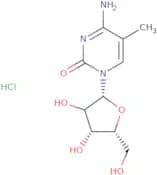
<p>5-Methylcytidine HCl is a novel antiviral and anticancer agent. It possesses two important properties: it is an activator of the enzyme ribonucleotide reductase, which regulates DNA synthesis and repair; and it inhibits the activity of DNA polymerases. It is also chemically modified to allow its use in phosphoramidite synthesis. 5-Methylcytidine HCl has been shown to cause apoptosis in cancer cells, as well as inhibit the growth of bacteria.</p>Fórmula:C10H15N3O5·HClPureza:Min. 95%Peso molecular:293.7 g/mol2-[2-(4-Fluorophenyl)ethoxy]adenosine
CAS:<p>2-[2-(4-Fluorophenyl)ethoxy]adenosine is a hydrogen-bonded, hydrated, switchable molecule. The techniques used to characterize this compound include vibrational spectroscopy and Raman spectroscopy. 2-[2-(4-Fluorophenyl)ethoxy]adenosine has been shown to have high salt and thermal stability. It has also been shown to undergo conformational changes in the presence of chemists.</p>Fórmula:C18H20FN5O5Pureza:Min. 95%Peso molecular:405.38 g/mol2,5'-Anhydro-thymidine
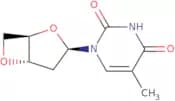
CAS:2,5'-Anhydro-thymidine is an analog of thymidine that is used in the diagnosis of women with suspected acute ischemic brain damage. It is a colony-stimulating factor that can be activated by the presence of inflammatory bowel disease or bowel disease. 2,5'-Anhydro-thymidine has been shown to cause ventricular dysfunction and to increase levels of brain natriuretic peptide in mice undergoing rotarod tests. The use of this compound has been shown to improve outcomes in animal models of acute ischemic brain damage and cancer.Fórmula:C10H12N2O4Pureza:Min. 95%Peso molecular:224.21 g/mol2-Chloropyrimidine-4-carboxamide
CAS:<p>2-Chloropyrimidine-4-carboxamide is an activator that is a novel chemical entity of deoxyribonucleosides, phosphoramidites, ribonuclesides, and antiviral nucleosides. It has been shown to have high purity and quality. 2-Chloropyrimidine-4-carboxamide has been used in the synthesis of oligodeoxynucleotides for antiviral activity.</p>Fórmula:C5H4ClN3OPureza:Min. 95%Peso molecular:157.56 g/mol2-Fluoroinosine
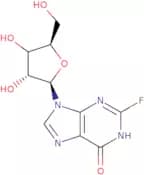
CAS:<p>2-Fluoroinosine is a chemical that inhibits protein synthesis by blocking the attachment of amino acids to their corresponding tRNA molecules. This drug is used in the treatment of cancer, as it inhibits cell growth and prevents tumor cells from dividing. 2-Fluoroinosine has been shown to be effective against human leukaemia cells, with its inhibitory properties being due to its ability to dephosphorylate the enzyme RNA polymerase II. This drug also has anti-malarial properties and can be used for the treatment of Chagas disease. 2-Fluoroinosine is synthesized from xanthosine, which is an intermediate in purine metabolism and can be obtained from naturally occurring sources or chemically through a solid phase synthesis.<br>2-Fluoroinosine is activated by UV light and can be synthesized using single stranded DNA or synthetases such as those found in calf thymus tissue. The catalytic mechanism of this drug has</p>Fórmula:C10H11FN4O5Pureza:Min. 95%Peso molecular:286.22 g/mol5'-Amino-2',5'-dideoxyuridine
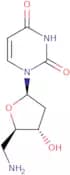
CAS:5'-Amino-2',5'-dideoxyuridine (5-ADU) is a pyrimidine nucleoside that is structurally similar to thymidylate, which it inhibits. 5-ADU is used in the treatment of viral infections and cancers, as well as in the prevention of radiation injury. It has been shown to be an effective antiviral agent against herpes virus and some DNA viruses, such as adenovirus, vaccinia virus, and poliovirus. 5-ADU also enhances the effects of azauridine and other pyrimidine nucleosides in bacterial enzymes such as E. coli. 5-ADU has not been shown to be active against uninfected cells or tissues.Fórmula:C9H13N3O4Pureza:Min. 95%Peso molecular:227.22 g/mol2-Methanesulfonyl-pyrimidine
CAS:<p>2-Methanesulfonyl-pyrimidine is a thiourea that is used as a catalyst in organic synthesis. It can be prepared by reacting phosphorus oxychloride with malonate and hydrochloric acid at temperatures of about 0°C to 150°C. The chloride anion is replaced by the sulfonyl chloride, which has high affinity for the 2-position of thiourea. This reaction leads to an intermediate that can be hydrolyzed with hydrochloric acid to produce 2-methanesulfonyl-pyrimidine. 2-Methanesulfonyl-pyrimidine is soluble in water and can be used as a catalyst in wastewater treatment processes, such as cyclic oxidation or oxychlorination reactions.</p>Pureza:Min. 95%

![5'- O- [Bis(4- methoxyphenyl) phenylmethyl] - thymidine 3'- (hydrogen phosphonate) ,compd. with N,…](/_next/image/?url=https%3A%2Fstatic.cymitquimica.com%2Fproducts%2F3D%2Fthumb-webp%2FNT158343.webp&w=3840&q=75)




![5-[(Methylamino)methyl]uridine](/_next/image/?url=https%3A%2Fstatic.cymitquimica.com%2Fproducts%2F3D%2Fthumb-webp%2FNM159410.webp&w=3840&q=75)
![[1',2',3',4',5'-13C5]-4-Thiothymidine](/_next/image/?url=https%3A%2Fstatic.cymitquimica.com%2Fproducts%2F3D%2Fthumb-webp%2FNT35287.webp&w=3840&q=75)


![2-[2-(4-Fluorophenyl)ethoxy]adenosine](/_next/image/?url=https%3A%2Fstatic.cymitquimica.com%2Fproducts%2F3D%2Fthumb-webp%2FNF16548.webp&w=3840&q=75)