Nucleosídeos
Os nucleosídeos são building blocks fundamentais dos ácidos nucleicos, compostos por uma base nitrogenada ligada a uma molécula de açúcar. Nesta seção, você encontrará uma ampla variedade de nucleosídeos essenciais para pesquisas em biologia molecular, bioquímica e farmacologia. Esses compostos desempenham papéis cruciais na síntese de DNA e RNA, e também são vitais em vários processos metabólicos. Os nucleosídeos são usados para estudar material genético, desenvolver terapias antivirais e anticancerígenas, e entender os mecanismos celulares. Na CymitQuimica, fornecemos nucleosídeos de alta qualidade para apoiar suas necessidades de pesquisa e desenvolvimento, garantindo pureza e confiabilidade para suas aplicações experimentais.
Foram encontrados 3569 produtos de "Nucleosídeos"
Ordenar por
Pureza (%)
0
100
|
0
|
50
|
90
|
95
|
100
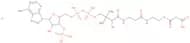
Malonyl coenzyme A lithium salt - 90%
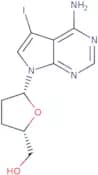
CAS:Malonyl coenzyme A lithium salt - 90% is a fatty acid that is involved in the biosynthesis of fats. It is also involved in the synthesis of prostaglandins, which are hormone-like substances that have a wide variety of effects on many different tissues. Malonyl coenzyme A lithium salt - 90% may be useful for the treatment of insulin resistance and obesity due to its ability to stimulate glucose uptake by fat cells and increase insulin sensitivity. The following product details are for a supplement:Fórmula:C24H38N7O19P3S·xLiPureza:Min. 95%Peso molecular:853.58 g/mol7-Deaza-2',3'-dideoxy-7-iodoadenosine
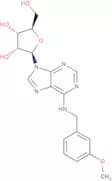
CAS:<p>7-Deaza-2',3'-dideoxy-7-iodoadenosine is a nucleoside analogue that is used as an antiviral, anticancer, and antifungal agent. It is a modified form of adenosine which inhibits viral replication by inhibiting the activity of reverse transcriptase. 7-Deaza-2',3'-dideoxy-7-iodoadenosine has also been shown to inhibit DNA synthesis in cells by blocking the incorporation of dCTP into DNA. This nucleoside analogue has shown potential for use as an activator in phosphoramidite chemistry and as a deoxyribonucleoside in oligonucleotide synthesis.</p>Fórmula:C11H13IN4O2Pureza:Min. 95%Cor e Forma:PowderPeso molecular:360.15 g/molm-Methoxytopolin riboside
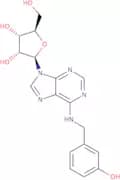
CAS:m-Methoxytopolin riboside is a nucleoside that is a phosphoramidite derivative of the natural nucleoside, topolin riboside. This compound has antiviral and anticancer activities. It inhibits viral DNA synthesis and also induces apoptosis in cancer cells. m-Methoxytopolin riboside is modified with a methoxy group at the 3' position of the sugar moiety. This modification prevents incorporation into DNA and RNA, thereby inhibiting viral replication and inducing apoptosis in cancer cells.Fórmula:C18H21N5O5Pureza:Min. 95%Cor e Forma:PowderPeso molecular:387.39 g/molGuanosine 5'-diphosphate sodium
CAS:<p>Pyruvate kinase substrate</p>Fórmula:C10H15N5O11P2•Na2Pureza:Min. 95%Cor e Forma:PowderPeso molecular:466.19 g/mol9-(β-D-Arabinofuranosyl)adenine 5'-monophosphate
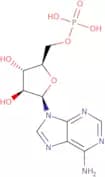
CAS:<p>9-(β-D-Arabinofuranosyl)adenine 5'-monophosphate (Ara-AMP) is a prodrug that is converted to adenine arabinoside in vivo. It is used as an antiviral agent for the prevention of hepatitis B and C. Ara-AMP inhibits viral DNA synthesis by acting as a competitive inhibitor of adenosine triphosphate, which is required for viral DNA polymerase activity. Ara-AMP also has antiviral properties against some RNA viruses, such as HIV and influenza virus. Ara-AMP can be administered orally or by injection, making it suitable for use in children who are unable to take oral medication.</p>Fórmula:C10H14N5O7PPureza:Min. 95%Cor e Forma:White PowderPeso molecular:347.22 g/molZeatin riboside
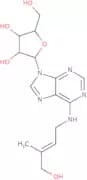
CAS:<p>Zeatin riboside is a naturally occurring compound that belongs to the group of nucleotides. It is synthesized in plants and bacteria, and has been shown to have physiological activities in both these organisms. Rootstocks are typically used as the optimum concentration for zeatin riboside. Zeatin riboside has been shown to be effective against bacterial strains that cause plant diseases, such as bacterial strain Xanthomonas campestris pv. corylina. Zeatin riboside also inhibits the growth of plant pathogens by increasing adenine nucleotide levels in root cells, which leads to an increase in photosynthetic activity and a decrease in the production of chemical pesticides. The optimum pH for zeatin riboside is 8-9.</p>Fórmula:C15H21N5O5Pureza:Min. 90%Cor e Forma:PowderPeso molecular:351.36 g/mol2'-Deoxy-N2-methylguanosine
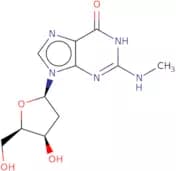
CAS:<p>2'-Deoxy-N2-methylguanosine is a nucleoside with anticancer properties. It is a phosphoramidite, which is an analog of the natural nucleotide guanosine, where the 2'-hydroxyl group has been replaced by a methylene group. This compound is used in DNA synthesis and RNA synthesis. It can be used as a monophosphate or diphosphate. It also has antiviral and anti-inflammatory activities, as well as N2-methylamino moiety that can be used for the treatment of cancer and inflammatory diseases such as arthritis.</p>Fórmula:C11H15N5O4Pureza:Min. 95%Cor e Forma:White PowderPeso molecular:281.27 g/molUridine 5'-triphosphate tris salt
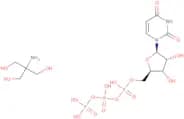
CAS:<p>Uridine 5'-triphosphate tris salt is a pyrimidine nucleotide that is used in the synthesis of RNA. It has been shown to be an effective inhibitor of hamster ovary and human ovarian cells. Uridine 5'-triphosphate tris salt is water-soluble and does not interfere with cellular assays or microfluidic devices. Uridine 5'-triphosphate tris salt has also been shown to have potential as a model system for analytical chemistry and pharmacological research.</p>Fórmula:C13H26N3O18P3Pureza:Min. 95%Cor e Forma:White PowderPeso molecular:484.14 g/mol2'-Deoxyinosine-5'-triphosphate sodium,100mM aqueous solution
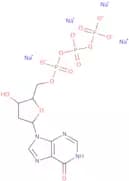
CAS:<p>2'-Deoxyinosine-5'-triphosphate sodium (2'-dITP) is a modified nucleotide that has antiviral and anticancer properties. It has been shown to be an activator for ribonucleosides, deoxyribonucleosides, and DNA. 2'-DITP has also been shown to inhibit the growth of human breast cancer cells in vitro.</p>Fórmula:C10H11N4Na4O13P3Pureza:Min. 95%Cor e Forma:Clear LiquidPeso molecular:580.09 g/molm-Topolin riboside
CAS:<p>Functionalised adenosine riboside</p>Fórmula:C17H19N5O5Pureza:Min. 95%Cor e Forma:White To Off-White SolidPeso molecular:373.36 g/mol2-Chloroadenosine
CAS:2-Chloroinosine is an adenosine receptor agonist; metabolically stable analog of adenosineFórmula:C10H12ClN5O4Pureza:Min. 95%Cor e Forma:PowderPeso molecular:301.69 g/molN6-Benzyladenosine 5'-triphosphate sodium salt - 10 mM aqueous solution
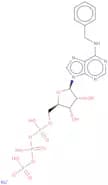
CAS:<p>N6-Benzyladenosine 5'-triphosphate sodium salt - 10 mM aqueous solution is an analog of adenosine triphosphate (ATP). It is used in the study of protein kinase C. ATP and its analogs are able to phosphorylate proteins and regulate their activity. This study has shown that N6-benzyladenosine 5'-triphosphate sodium salt - 10 mM aqueous solution is an atp analog that activates protein kinase C, leading to the phosphorylation of proteins. This analog also inhibits tyrosine kinases, which may be due to its ability to inhibit the reuptake of serotonin and other transmitters.</p>Fórmula:C17H22N5O13P3·xNaPureza:Min. 95%Cor e Forma:Colorless PowderPeso molecular:597.3 g/mol2'-Amino-2'-deoxycytidine
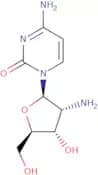
CAS:2'-Amino-2'-deoxycytidine is a modified nucleoside, based on cytidine. In this compound 2'-hydroxyl group has been replaced by an amino group, which can change hydrogen bonding patterns potentially affecting how it interacts with biomolecules.Fórmula:C9H14N4O4Pureza:Min. 95%Cor e Forma:PowderPeso molecular:242.24 g/molKinetin riboside-5'-monophosphate sodium salt
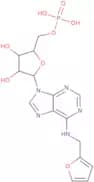
CAS:Kinetin riboside-5'-monophosphate sodium salt is a synthetic nucleotide that has been modified to include a phosphate group at the 5' position. Kinetin riboside-5'-monophosphate sodium salt is an activator of DNA synthesis and can be used for the treatment of viral infections. It also shows anticancer activity and is effective against cancer cells that are resistant to other cancer drugs.Fórmula:C15H16N5Na2O8P·H2OPureza:Min. 95%Cor e Forma:PowderPeso molecular:489.29 g/molN6-Benzoyl-L-adenosine
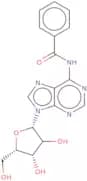
CAS:N6-Benzoyl-L-adenosine is a novel nucleoside that has been shown to have antiviral and anticancer activity. It is synthesized by the reaction of L-adenosine with benzoyl chloride in the presence of a base. The drug inhibits the growth of cancer cells by interfering with DNA synthesis. N6-Benzoyl-L-adenosine also inhibits viral replication, especially HIV, herpes simplex virus type 1, and human cytomegalovirus (HCMV). It can be used as an antiviral agent in combination with other drugs or as an anticancer agent alone. N6 Benzoyl L adenosine is a nucleoside that has been shown to have antiviral and anticancer activity. It is synthesized by the reaction of L adenosine with benzoyl chloride in the presence of a base. The drug inhibits the growth of cancer cells by interfering with DNA synthesis. N6Fórmula:C17H17N5O5Pureza:Min. 95%Cor e Forma:White to off-white solid.Peso molecular:371.35 g/mol2'-Deoxyuridine-5'-monophosphate disodium salt
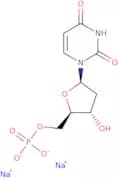
CAS:<p>2'-Deoxyuridine-5'-monophosphate disodium salt (2DUMP) is a nucleoside analog that inhibits the synthesis of DNA and RNA by inhibiting the enzyme thymidylate synthase. 2DUMP is a covalent inhibitor of thymidylate synthase, which prevents the formation of dTMP from deoxyuridine 5'-triphosphate. This compound has been shown to be effective in treating squamous cell cancer and hyperproliferative diseases such as chronic myelogenous leukemia. 2DUMP is also used as an antiviral agent against HIV, herpes simplex virus, and varicella zoster virus. It has been shown to bind to benzalkonium chloride (BAK) in biological samples such as serum or plasma.<br>2DUMP binds to BAK through a covalent linkage between the 3' hydroxyl group on BAK and the phosphate group on 2DUMP</p>Fórmula:C9H11N2O8PNa2Pureza:Min. 95%Cor e Forma:PowderPeso molecular:352.15 g/molDMTr-TNA-C(Bz)-amidite
CAS:<p>Please enquire for more information about DMTr-TNA-C(Bz)-amidite including the price, delivery time and more detailed product information at the technical inquiry form on this page</p>Fórmula:C45H50N5O8PPeso molecular:819.9 g/mol2'-Deoxy-a-adenosine
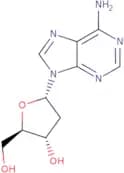
CAS:<p>2'-Deoxy-a-adenosine is a nucleoside that contains an adenine base. It has been studied for its biological properties, including its reaction with solution and its use as an antimicrobial agent. 2'-Deoxy-a-adenosine has been shown to inhibit the growth of bowel disease in mice by binding to the adenosine A3 receptor on the surface of cells. This nucleoside also binds to nuclear DNA and may be used as a pharmacological agent, but more research is needed to determine whether it would be effective against cancer cells. 2'-Deoxy-a-adenosine may also be useful as a potential drug target for the treatment of cancer due to its ability to bind with dna duplexes, which are found in all cancer cells.</p>Fórmula:C10H13N5O3Pureza:Min. 95%Cor e Forma:White PowderPeso molecular:251.25 g/mol2-Methylamino-N6-methyladenosine
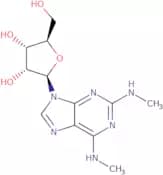
CAS:<p>2-Methylamino-N6-methyladenosine is an activator that can inhibit the replication of DNA, RNA, and protein synthesis. It is a novel monophosphate nucleoside with antiviral and anticancer properties. 2-Methylamino-N6-methyladenosine has been shown to be effective against human cytomegalovirus and murine leukemia virus (MLV) in cell culture. Furthermore, it has been shown to be active against the herpes simplex virus type 1 (HSV1) in mice after oral administration. 2-Methylamino-N6-methyladenosine is a modified deoxyribonucleoside that contains an amino group at the 2' position of the ribose sugar moiety. It also contains an alkyl group at the 6 position of adenine. This modification confers increased stability to the molecule, which prevents degradation by intracellular nucleases.</p>Pureza:Min. 95%