Nucleosídeos
Os nucleosídeos são building blocks fundamentais dos ácidos nucleicos, compostos por uma base nitrogenada ligada a uma molécula de açúcar. Nesta seção, você encontrará uma ampla variedade de nucleosídeos essenciais para pesquisas em biologia molecular, bioquímica e farmacologia. Esses compostos desempenham papéis cruciais na síntese de DNA e RNA, e também são vitais em vários processos metabólicos. Os nucleosídeos são usados para estudar material genético, desenvolver terapias antivirais e anticancerígenas, e entender os mecanismos celulares. Na CymitQuimica, fornecemos nucleosídeos de alta qualidade para apoiar suas necessidades de pesquisa e desenvolvimento, garantindo pureza e confiabilidade para suas aplicações experimentais.
Foram encontrados 3574 produtos de "Nucleosídeos"
Ordenar por
Pureza (%)
0
100
|
0
|
50
|
90
|
95
|
100
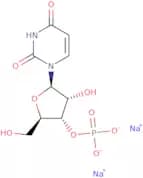
Uridine 3'-monophosphate disodium salt
CAS:Uridine 3'-monophosphate disodium salt is a nucleotide that is part of the pyrimidine family. It is synthesized from uridine and phosphoric acid in a reaction that requires hydrogen bonding and the presence of an enzyme. Uridine 3'-monophosphate disodium salt has been shown to inhibit the production of eosinophil cationic protein, which may be due to its ability to denature proteins. This drug also has an effect on the synthesis of proteins by inhibiting enzymes such as acetylcholinesterase and catalase. The synthesis of glycosidic bonds is also inhibited, which may lead to an increase in body mass index (BMI).Fórmula:C9H11N2Na2O9PPureza:Min. 95%Cor e Forma:White PowderPeso molecular:368.15 g/mol2'-Deoxycytidine-5'-diphosphate trisodium salt hydrate
CAS:2'-Deoxycytidine-5'-diphosphate trisodium salt hydrate is a nucleoside that is used as an antiviral agent in the treatment of herpes zoster and varicella zoster. This drug also has anticancer properties, which may be due to its ability to inhibit DNA synthesis. 2'-Deoxycytidine-5'-diphosphate trisodium salt hydrate is a novel nucleotide analogue that has been modified to improve its stability, solubility and bioavailability. It can be used as a starting material for the synthesis of phosphoramidites by reacting with phosphorous pentoxide at elevated temperatures and pH. CAS No. 151151-32-5Fórmula:C9H12N3O10P2·Na3Pureza:Min. 95%Cor e Forma:White Off-White PowderPeso molecular:453.12 g/mol8-Chloro-2'-deoxyadenosine
CAS:8-Chloro-2'-deoxyadenosine is a nucleoside analogue and a disinfectant that inhibits the synthesis of DNA. It has been used to control active viruses and to induce apoptotic cell death in cancer cells. 8-Chloro-2'-deoxyadenosine binds to viral RNA and DNA, preventing viral replication by inhibiting the activity of reverse transcriptase, which is an enzyme that copies the virus's genetic information from RNA into DNA. This drug has also been shown to be effective for the treatment of HIV infection. 8-Chloro-2'-deoxyadenosine disrupts DNA synthesis and cellular metabolism by blocking transcription and protein synthesis.Fórmula:C10H12ClN5O3Pureza:Min. 95%Cor e Forma:PowderPeso molecular:285.69 g/mol5’-O-DMT-LNA-thymidine 3’-O-CE amidite
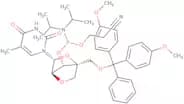
CAS:5'-O-DMT-2'-O,4'-C-methylene-5-methyluridine 3'-CE-phosphoramidite is a high purity, novel DNA monophosphate that is synthesized from 2',4'-diaminotoluene and 5'-O-dimethoxytritylthymidine. It has antiviral and anticancer properties and has shown to be an activator of RNA polymerase II in vitro. This product is used in many applications such as the synthesis of oligonucleotide probes for DNA sequencing, the synthesis of RNA for gene expression studies, and for the production of oligonucleotides for therapeutic purposes.Fórmula:C41H49N4O9PPureza:Min. 95%Peso molecular:772.82 g/molN3-Methylthymidine
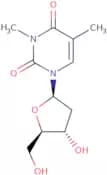
CAS:N3-Methylthymidine is a metalloprotease inhibitor that has been shown to inhibit the activity of epidermal growth factor (EGF). N3-Methylthymidine is also an effective inhibitor of HIV infection. The inhibitory effect on HIV infection is due to the competitive inhibition of viral protease and subsequent degradation of viral proteins. N3-Methylthymidine inhibits the synthesis and release of infectious herpes simplex virus particles. This drug also inhibits the growth of human tumor cells in culture by inhibiting cell proliferation, most likely due to its ability to inhibit EGF. An analytical method for determining the concentration of this drug in plasma using chemical ligation has been developed.Fórmula:C11H16N2O5Pureza:Min. 95%Cor e Forma:White PowderPeso molecular:256.26 g/mol1-(β-D-Arabinofuranosyl)thymine
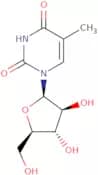
CAS:1-(β-D-Arabinofuranosyl)thymine is a nucleoside analog. It has a similar structure to thymidine. It has possible applications in research into the specificity and kinetics of thymidine kinases and has demonstrated antiviral activity against some viruses.Fórmula:C10H14N2O6Pureza:Min. 95%Cor e Forma:White PowderPeso molecular:258.23 g/mol2'-O-(2-Methoxyethyl)cytidine
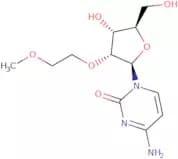
CAS:2'-O-(2-Methoxyethyl)cytidine is a nutrient that is used to maintain the dry weight of Lactobacillus acidophilus cultures. It is also used as a texturizing agent in food products. 2'-O-(2-Methoxyethyl)cytidine has been shown to increase the rate of lactose hydrolysis and reduce the viscosity of yogurt by activating L. acidophilus. 2'-O-(2-Methoxyethyl)cytidine is also used as a dietary supplement for people with intestinal disorders, such as irritable bowel syndrome. It can be found in sodium salts and n-methyl-d-glucamine.Fórmula:C12H19N3O6Pureza:Min. 95%Cor e Forma:PowderPeso molecular:301.3 g/mol2’-Deoxyisoguanosine
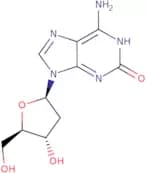
CAS:Incorporated in DNA/RNA hybrids and mismatch pairs to analyse helix stabilityFórmula:C10H13N5O4Pureza:Min. 95%Cor e Forma:PowderPeso molecular:267.24 g/molN6-Cyclopentyladenosine
CAS:N6-Cyclopentyladenosine is a nucleoside analog that binds to the kappa-opioid receptor. The physiological effects of this drug are mediated through its interaction with the kappa-opioid receptor, which is found in the central nervous system and mediates many of the effects of morphine. N6-Cyclopentyladenosine has been shown to increase blood flow and heart rate in humans. This drug also inhibits tetrazolium dye uptake by papillary muscle cells, suggesting that it may have cardiotonic effects. N6-Cyclopentyladenosine has been used as an analytical probe for adenosine, which is metabolized by cyclic AMP and cyclic GMP phosphodiesterases into adenosine 3',5'-cyclic monophosphate (cAMP).Fórmula:C15H21N5O4Pureza:Min. 95%Cor e Forma:PowderPeso molecular:335.36 g/mol4-Amino-2,6-dihydroxy-5-nitrosopyrimidine
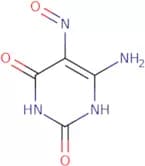
CAS:4-Amino-2,6-dihydroxy-5-nitrosopyrimidine is a molecule that has been shown to be an effective inhibitor of the enzyme tyrosinase in the oxidation of tyrosine to DOPA, which is a precursor of melanin. It is believed that vibrational and structural changes during these reactions are responsible for the inhibitory effects. 4-Amino-2,6-dihydroxy-5-nitrosopyrimidine has also been shown to have anti cancer effects on glioma cells. This molecule binds to copper ions, forming a chelate ring that can stabilize reactive intermediates and terminate free radicals. The chlorine atom on this molecule may be responsible for its cytotoxic effects by reacting with nucleophilic sites on proteins. The functional groups on this molecule react with acid catalysts, such as protonation or dehydration reactions.Fórmula:C4H4N4O3Pureza:Min. 98 Area-%Cor e Forma:PowderPeso molecular:156.1 g/molAdenosine-5’-triphosphate disodium salt trihydrate
CAS:Please enquire for more information about Adenosine-5’-triphosphate disodium salt trihydrate including the price, delivery time and more detailed product information at the technical inquiry form on this pageFórmula:C10H14N5O13P3·2Na·3H2OPeso molecular:605.19 g/mol2'-Deoxy-5'-O-DMT-uridine 3'-CE phosphoramidite
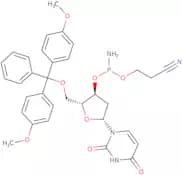
CAS:2'-Deoxy-5'-O-DMT-uridine 3'-CE phosphoramidite is an antibiotic that inhibits bacterial growth by binding to DNA, preventing transcription and replication. It has been shown to have antibacterial activity against a wide variety of bacteria, including staphylococcus, tuberculosis and vibrio cholerae. 2'-Deoxy-5'-O-DMT-uridine 3'-CE phosphoramidite is a chemotaxis regulator in the biosynthetic pathway of certain bacteria. These bacteria use this compound as a precursor for the production of other antibiotics. This antibiotic binds to the regulatory site on bacterial chemotaxis and inhibits the response to attractants such as sugars or amino acids.Fórmula:C39H47N4O8PPureza:Min. 98 Area-%Cor e Forma:White Off-White PowderPeso molecular:730.81 g/molCytidine 5'-triphosphate disodium dihydrate
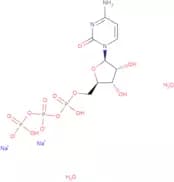
CAS:Cytidine 5'-triphosphate (CTP) disodium dihydrate prevents the action of aspartate carbamoyltransferase, an enzyme involved in pyrimidine biosynthesis. CTP serves as a molecule of high energy and acts as a coenzyme in glycerophospholipid biosynthesis and protein glycosylation.Fórmula:C9H16N3O14P3•(H2O)2•Na2Pureza:Min. 95%Cor e Forma:PowderPeso molecular:565.17 g/moldNTP pre-mixes, 10 mM aqueous solution
CAS:dATP, dTTP, dCTP and dGTP pre-mixed in a single vialFórmula:C10H16N5O12P3Pureza:Min. 95%Cor e Forma:Clear LiquidPeso molecular:491.18 g/mol2'-Deoxy-2'-fluorocytidine-5'-triphosphate tetralithium
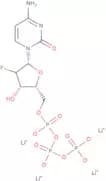
CAS:2'-Deoxy-2'-fluorocytidine-5'-triphosphate tetralithium is a modified nucleoside analog where the base is cytosine, the sugar is deoxyribose with a fluoro modification at the 2' position, and the molecule is phosphorylated at the 5' position with a triphosphate group.Fórmula:C9H11FLi4N3O13P3Pureza:Min. 95%Cor e Forma:White Off-White PowderPeso molecular:508.88 g/mol2'-Deoxy-4-thiouridine
CAS:2'-Deoxy-4-thiouridine is a pyrimidine nucleoside for a range of applications
Fórmula:C9H12N2O4SPureza:Min. 98 Area-%Cor e Forma:PowderPeso molecular:244.27 g/mol2'-Deoxyinosine-5'-monophosphate disodium salt
CAS:2'-Deoxyinosine-5'-monophosphate disodium salt is a synthetic nucleoside, phosphoramidite, and diphosphate that is used in the synthesis of DNA. It has been shown to have antiviral effects against HIV and herpes simplex virus type 2 (HSV-2). This drug also has anticancer activity and is an activator of novel nucleosides.Fórmula:C10H11N4Na2O7PPureza:Min. 98 Area-%Cor e Forma:White PowderPeso molecular:376.17 g/mol2'-Deoxyxanthosine
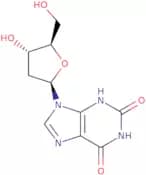
CAS:Produto Controlado2'-Deoxyxanthosine is a chemical compound with biochemical properties that can be used as a pharmaceutical drug. It is a nucleoside analogue that interferes with DNA synthesis. 2'-Deoxyxanthosine inhibits the enzyme ribonucleotide reductase, which converts ribonucleotides to deoxyribonucleotides, and prevents the formation of DNA in cells. This drug is also known to have anti-tumor effects, including angiogenesis inhibition and cytostatic activity. The reaction mechanism of 2'-deoxyxanthosine involves nitrous acid, which reacts with the 2' hydroxyl group of xanthosine to form the nitroso intermediate and then reacts with oxygen to produce nitrite and hydrogen peroxide. The final step in this process is the cleavage of xanthosine by nitrite into xanthine and oxalate. This drug has been shown to be reactive at neutral pH conditionsFórmula:C10H12N4O5Pureza:Min. 95%Cor e Forma:White Off-White PowderPeso molecular:268.23 g/molN2-Acetyl-5'-O-DMT-2'-O-methyl guanosine
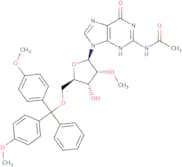
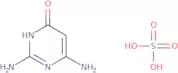
CAS:2'-O-Me protected nucleosideFórmula:C34H35N5O8Peso molecular:641.67 g/mol2,4-Diamino-6-hydroxypyridine sulphate
CAS:2,4-Diamino-6-hydroxypyridine sulphate is a nucleoside for use in research applicationsFórmula:C4H6N4O•(H2SO4)xPureza:Min. 95%Cor e Forma:PowderPeso molecular:224.2 g/mol