Nucleosídeos
Foram encontrados 3573 produtos de "Nucleosídeos"
N6-Benzoyl-9-(2'-deoxy-5'-O-DMT-2'-fluoro-b-D-arabinofuranosyl)adenine 3'-O-succinate triethylammonium salt
N6-Benzoyl-9-(2'-deoxy-5'-O-DMT-2'-fluoro-b-D-arabinofuranosyl)adenine 3'-O-succinate triethylammonium salt is a novel antiviral nucleotide. This drug has been shown to be an activator of DNA synthesis and to inhibit the growth of viruses such as influenza A, herpes simplex virus type 1, and HIV type 1. N6-Benzoyl-9-(2'-deoxy-5'-O-DMT-2'-fluoro-b-D arabinofuranosyl)adenine 3'-O succinate triethylammonium salt is synthesized by the reaction of 6-[(3,4,5,6 -tetrahydrobenzo[1,2]dioxaphosphinanyl)methyl]aminopurine (N6BA), 2',5' -dFórmula:C42H38FN5O9·C6H16NPureza:Min. 95%Peso molecular:878 g/molL-Thymidine-5'-monophosphate sodium salt
L-Thymidine-5'-monophosphate sodium salt is a synthetic nucleoside that is used as an antiviral agent. L-Thymidine-5'-monophosphate sodium salt has been shown to have high antiviral activity in vitro against human herpesvirus type 1, and in vivo against foot-and-mouth disease virus. The drug also inhibits the synthesis of DNA and RNA by inhibiting the enzyme ribonucleotide reductase. L-Thymidine-5'-monophosphate sodium salt acts as a phosphate donor for the phosphoramidite method of oligonucleotide synthesis. This novel nucleoside can be used in anticancer therapy due to its ability to inhibit DNA synthesis.Pureza:Min. 95%2'-Cytidylic acid
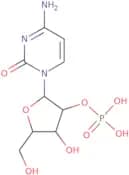
CAS:2'-Cytidylic acid is a nucleoside monophosphate that plays an important role in various biological processes. It has been used in the development of heparin and enoxaparin, which are anticoagulants used to prevent blood clots. 2'-Cytidylic acid has also been found in chitin, xyloglucan, and psyllium, where it acts as a signaling molecule involved in apoptosis and cell differentiation. This compound has been shown to modulate the activity of kinases and ion channels, including potassium channels. However, excessive intake of 2'-Cytidylic acid can cause bleeding due to its anticoagulant properties. Additionally, there is some evidence suggesting that this compound may have anti-cancer effects through its ability to inhibit cell growth and induce apoptosis. Heparin sodium containing 2'-Cytidylic acid is widely used in clinical practice for its anticoagulant properties.
Fórmula:C9H14N3O8PPureza:Min. 95%Peso molecular:323.2 g/mol2,2'-Anhydrocytidine
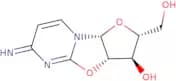
CAS:2,2'-Anhydrocytidine is a cytosine analogue that has been shown to have anticancer activity against solid tumours in mice. The mechanism of action of 2,2'-Anhydrocytidine is not fully understood, but it may be due to its ability to bind to fatty acids and tubule cells in the liver. This compound also induces the production of epidermal growth factor (EGF) and has been shown to inhibit the phase transition temperature of nuclear DNA. It can be used as a model system for hydrogen bonding interactions and chemical stability. 2,2'-Anhydrocytidine can also be used for tissue culture experiments or as a reaction solution in vivo.
Fórmula:C9H11N3O4Pureza:Min. 95%Cor e Forma:SolidPeso molecular:225.2 g/molN6-Benzoyl-3'-deoxy-5'-O-DMT-3'-fluoroadenosine
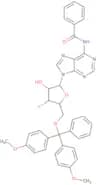
CAS:N6-Benzoyl-3'-deoxy-5'-O-DMT-3'-fluoroadenosine is an activator nucleoside that is used as a phosphoramidite in DNA synthesis. It is also used in antiviral and anticancer therapies. N6-Benzoyl-3'-deoxy-5'-O-DMT-3'-fluoroadenosine has been shown to have high purity and high quality, making it suitable for use in the pharmaceutical industry. This product is not active against bacterial or viral infections, but has proved to be effective in the treatment of leukemia, lymphoma and other cancers.Fórmula:C38H34FN5O6Pureza:Min. 95%Peso molecular:675.71 g/mol7-(Aminomethyl)-7-deazaguanosine
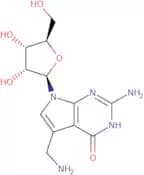
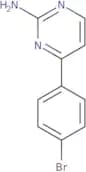
CAS:7-Aminomethyl-7-deazaguanosine is a nucleoside that is classified as a purine. It can be synthesized from 7-amino-7-deazaguanosine and sodium periodate. The chemical reactions involved in the synthesis are oxidation of the amine group on the 7-amino group to form an iminium ion and subsequent nucleophilic attack by the hydroxyl group on the N9 position of the purine ring to form an amino alcohol. This nucleoside has been shown to bind to ribosomes and inhibit protein synthesis, which suggests that it may have potential for use as an antibiotic or anticancer agent. 7-Aminomethyl-7-deazaguanosine has also been shown to cause epigenetic changes such as DNA methylation, histone modification, and alterations in chromatin structure.Fórmula:C12H17N5O5Pureza:Min. 95%Peso molecular:311.29 g/mol2-Amino-4-(4-bromophenyl)pyrimidine
CAS:2-Amino-4-(4-bromophenyl)pyrimidine is a phosphoramidite, modified nucleoside. It is an antiviral and anticancer agent that inhibits DNA synthesis. 2-Amino-4-(4-bromophenyl)pyrimidine is a novel nucleotide analog with the ability to inhibit replication of RNA and DNA in vitro. This compound has been shown to be active against herpes simplex virus type 1 (HSV1), cytomegalovirus (CMV), and HIV in cell culture. Furthermore, this phosphoramidite has been shown to have no detectable toxicity in mice at doses up to 2000 mg/kg.Fórmula:C10H8BrN3Pureza:Min. 95%Peso molecular:250.09 g/mol5'-O-DMT-2'-ethylfluoro-5-methyluridine
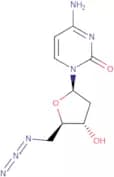
5'-O-DMT-2'-ethylfluoro-5-methyluridine is an activated nucleotide that is used as a synthetic, nonnatural substrate for DNA polymerases. It has been shown to have anticancer and antiviral activities. 5'-O-DMT-2'-ethylfluoro-5-methyluridine is highly pure and of high quality, which makes it suitable for use in research or other applications requiring a high level of purity.Pureza:Min. 95%5'-Azido-2',5'-dideoxycytidine
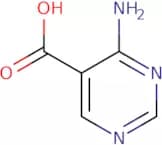
CAS:5'-Azido-2',5'-dideoxycytidine is a macrocyclic nucleoside that has been shown to be a potent inhibitor of human immunodeficiency virus type 1 (HIV-1) replication. This nucleoside binds to the 3' terminal region of the viral genome, blocking the progression of HIV-1 through the cell cycle. 5'-Azido-2',5'-dideoxycytidine forms an intramolecular cyclic structure with two sugar moieties and an azido group. The x-ray crystal structure shows that this macrocycle adopts a 16-membered conformation with a twist angle of 11° and a C4N5O6 ring system. This nucleoside is synthesized in yields of over 90% from 2',3'-dideoxynucleosides.Fórmula:C9H12N6O3Pureza:Min. 95%Cor e Forma:PowderPeso molecular:252.23 g/mol4-Aminopyrimidine-5-carboxylic acid
CAS:4-Aminopyrimidine-5-carboxylic acid is an aminopyrimidone that has been synthesized to be used as a new class of antihypertensive agents. It has dose-dependent blood pressure lowering effects, which are likely due to its ability to block angiotensin receptors. 4-Aminopyrimidine-5-carboxylic acid also has antibacterial and antifungal properties. This compound is metabolized in vivo into the pharmacologically active amine 6-aminonicotinamide and excreted in the urine. In vitro studies have shown that 4-aminopyrimidine-5 carboxylic acid inhibits the growth of bacteria by binding to DNA gyrase and topoisomerase IV enzymes required for cell division.
Fórmula:C5H5N3O2Pureza:Min. 95%Peso molecular:139.11 g/mol3’-O-(2-Methoxyethyl)guanosine
CAS:3’-O-(2-Methoxyethyl)guanosine is a nucleoside analogue of guanosine. It is a modified, deoxyribonucleoside that is synthesized from 2-methoxyethanol and 1,2-dihydroxybenzene. 3’-O-(2-Methoxyethyl)guanosine has antiviral, anticancer, and DNA synthesis inhibitory activities. This nucleoside analogue increases the intracellular concentration of guanosine by inhibiting its degradation. 3’-O-(2-Methoxyethyl)guanosine has been used as an antiviral agent in the treatment of influenza A virus infection in humans and animals.
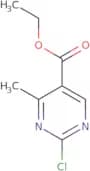
Pureza:Min. 95%Ethyl 2-chloro-4-methylpyrimidine-5-carboxylate
CAS:Ethyl 2-chloro-4-methylpyrimidine-5-carboxylate is an antiviral drug that inhibits the replication of RNA viruses. It binds to the active site of the enzyme responsible for viral RNA synthesis. Ethyl 2-chloro-4-methylpyrimidine-5-carboxylate has been shown to inhibit the growth of Mycobacterium tuberculosis in cell cultures. This drug also has cytostatic activity and can be used to treat tumors in cell culture.Fórmula:C8H9ClN2O2Pureza:Min. 95%Peso molecular:200.62 g/molSPACER-C 12 CEP
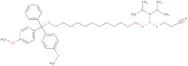
CAS:Please enquire for more information about SPACER-C 12 CEP including the price, delivery time and more detailed product information at the technical inquiry form on this pageFórmula:C42H61N2O5PPureza:Min. 95%Peso molecular:704.9 g/mol7-Deaza-2'-deoxy-5'-O-DMT-N2-isobutyrylguanosine
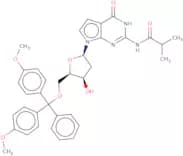
7-Deaza-2'-deoxy-5'-O-DMT-N2-isobutyrylguanosine is an activator that has been shown to stimulate the production of DNA and RNA. This compound is a novel synthetic nucleoside with high purity and quality. 7-Deaza-2'-deoxy-5'-O-DMT-N2-isobutyrylguanosine is effective against viruses and cancer cells by inhibiting viral protein synthesis and by stimulating the immune system. This drug has also been shown to be an anticancer agent, which may be due to its ability to inhibit cell division, induce apoptosis, or inhibit cellular proliferation.Fórmula:C36H38N4O7Pureza:Min. 95%Peso molecular:638.73 g/mol2',5'-Dideoxy-8,5'-cycloadenosine
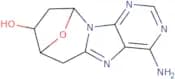
CAS:2',5'-Dideoxy-8,5'-cycloadenosine is an anticancer nucleoside. It is a modified deoxyribonucleoside that contains a 2'-deoxyribose sugar with a ribose sugar at the 5' position. This product has been shown to be active against DNA and RNA viruses in the lab. It also has antiviral properties and can inhibit the synthesis of DNA, RNA, or both. The chemical structure of this product is novel and has not been found in nature.
Fórmula:C10H11N5O2Pureza:Min. 95%Peso molecular:233.23 g/mol2'-Deoxy-5'-O-DMT-5-D-uridine 3'-CE phosphoramidite
Produto Controlado2'-deoxy-5'-O-DMT-5-D-uridine 3'-CE phosphoramidite (2'DMTU) is a synthetic nucleoside with anticancer, antiviral and antiretroviral activity. 2'DMTU is a ribonucleotide monophosphate that can be used to modify RNA in the laboratory. It is a modified nucleoside that prevents RNA polymerase from adding onto the DNA strand and has been shown to activate apoptosis in cells that are resistant to anticancer drugs.Fórmula:C39H46N4O8PDPureza:Min. 95%Peso molecular:731.81 g/mol2'-Methyl-guanosine-(iBu)-succinyl-CPG; 500 Å (RNA)
2'-Methyl-guanosine-(iBu)-succinyl-CPG is a modified nucleoside with antiviral and anticancer properties. It is synthesized by the condensation of 2'-methyl-guanosine and succinic anhydride in the presence of tetrazole. The compound is a phosphoramidite, which is used as a building block for DNA synthesis.Pureza:Min. 95%3,5-Di-o-acetyl-5-fluoro-O4-(2,4,6-trimethylphenyl)-2-deoxyuridine
CAS:3,5-Di-o-acetyl-5-fluoro-O4-(2,4,6-trimethylphenyl)-2-deoxyuridine is a novel modified monophosphate nucleoside. It is an antiviral agent and has been shown to have anticancer activity. 3,5-Di-o-acetyl-5-fluoro-O4-(2,4,6-trimethylphenyl)-2-deoxyuridine is synthesized by the reaction of 5'-triphosphates with 2'-deoxyribonucleosides in the presence of a phosphoramidite. This nucleoside has been found to be cytotoxic in vitro and in vivo against cancer cell lines and can be used as a therapeutic agent for the treatment of leukemia.Fórmula:C22H25FN2O7Pureza:Min. 95%Peso molecular:448.40 g/mol5'-Deoxy-5'-iodo-2',3'-O-isopropylidene-5-chlorouridine
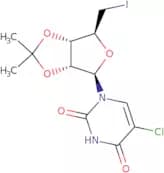
CAS:5'-Deoxy-5'-iodo-2',3'-O-isopropylidene-5-chlorouridine is a novel antiviral agent that inhibits replication of viruses. It is synthesized from 5'-deoxy-5'-iodo-2',3'-O-isopropylideneuridine, which is then phosphorylated by the addition of a phosphate group. This compound has shown to be an activator in the synthesis of ribonucleosides and deoxyribonucleosides. The high purity and high quality of this compound make it suitable for use as a starting material for the synthesis of modified nucleosides for anticancer drugs.
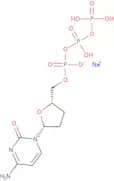
Fórmula:C12H14ClIN2O5Pureza:Min. 95%Peso molecular:428.61 g/mol2',3'-Dideoxycytidine-5'-triphosphate lithium salt - 100mM aqueous solution
CAS:2',3'-Dideoxycytidine-5'-triphosphate lithium salt is a novel nucleoside, which can be used in the synthesis of oligonucleotides and DNA. The phosphoramidite is highly reactive and stable, and has been shown to have antiviral activity against influenza A virus. This chemical has also been shown to inhibit the growth of cancer cells by inhibiting DNA synthesis.Fórmula:C9H16N3O12P3Pureza:Min. 95%Peso molecular:451.16 g/mol