Outros
Foram encontrados 6302 produtos de "Outros"
Zafirlukast p-Tolyl Isomer
CAS:Applications Zafirlukast p-Tolyl Isomer is a positional isomer and impurity of the cysteinyl leukotriene type 1 receptor antagonist, Zafirlukast (D226955).
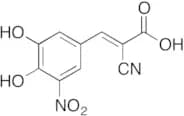
References Krishnaiah, C. et al.: Anal. Chem. Ind. J., 8, 471 (2009); Madhavi, A. et al.: Chromatographia, 70, 233 (2009); Goverdhan, G. et al.: J. Pharmac. Biomed. Anal., 49, 895 (2009);Fórmula:C31H33N3O6SCor e Forma:White To Light BeigePeso molecular:575.68cis-Entacapone-d10
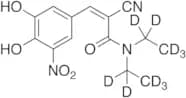
CAS:Produto ControladoApplications Labelled analogue of cis-Entacapone, the (Z)-Isomer of Entacapone (E558500) polymorphic form B. Antiparkinsonian.
References Karlsson, M., et al.: J. Pharm. Biomed. Anal., 10, 593 (1992), Nissinen, E., et al.: Arch. Pharmacol., 346, 262 (1992), Wikberg, T., et al.: Eur. J. Drug Metab. Pharmacokinet., 18, 359 (1993),Fórmula:C14H5D10N3O5Cor e Forma:NeatPeso molecular:315.35δ6-Fulvestrant
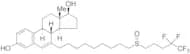
CAS:Produto ControladoImpurity Fulvestrant Impurity E;
Applications Fulvestrant (F862500) impurity E.Fórmula:C32H45F5O3SCor e Forma:NeatPeso molecular:604.75Lorazepam 2-O-β-D-Glucuronide (1 mg/ml in Methanol)
Produto ControladoFórmula:C21H18Cl2N2O8Cor e Forma:Single SolutionPeso molecular:497.281-Nitroso-3,5-dimethyladamantane
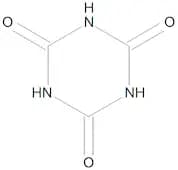
CAS:Produto ControladoFórmula:C12H19NOCor e Forma:NeatPeso molecular:193.285Cyanuric Acid (1 mg/10 mL in 84:16% ACN:H2O)
CAS:Produto ControladoFórmula:C3H3N3O3Cor e Forma:Single SolutionPeso molecular:129.07Palbociclib N-Aldehyde
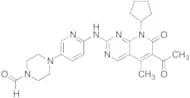
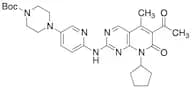
CAS:Produto ControladoApplications Palbociclib N-Aldehyde is an intermediate in synthesizing Palbociclib N-β-D-Glucuronide Sodium Salt (P139910), a derivative of Palbociclib (P139900) which is an experimental drug for the treatment of breast cancer being developed by Pfizer. It is a selective inhibitor of the cyclin-dependent kinases CDK4 and CDK6.
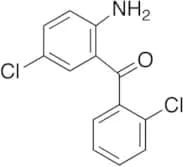
References Finn, R., et al.: Breast Cancer Res., 11, 5 (2009)Fórmula:C25H29N7O3Cor e Forma:NeatPeso molecular:475.542-Amino-2',5-dichlorobenzophenone
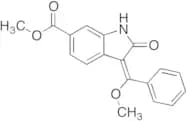
CAS:Produto ControladoFórmula:C13H9Cl2NOCor e Forma:YellowPeso molecular:266.12(E)-Methyl 3-(Methoxy(phenyl)methylene)-2-oxoindoline-6-carboxylate
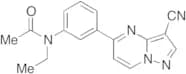
CAS:Produto ControladoFórmula:C18H15NO4Cor e Forma:Light YellowPeso molecular:309.327-(N-Ethylacetamidophenyl)-5-(N-ethylacetamidophenyl) Zaleplon
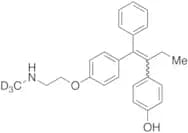
CAS:Produto ControladoFórmula:C17H15N5OCor e Forma:Off-WhitePeso molecular:305.33N-Desmethyl-4'-hydroxy Tamoxifen-d3 (E/Z Mixture)
CAS:Produto ControladoApplications A labelled metabolite of the anti-cancer drug Tamoxifen (T006000).
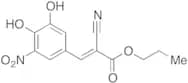
References Heiman, D., et al.: J. Med. Chem., 23, 994 (1980), Kier, L., et al.: Pharm. Res., 7, 801 (1990),Fórmula:C25H24D3NO2Cor e Forma:NeatPeso molecular:376.51n-Propyl (2E)-2-Cyano-3-(3,4-dihydroxy-5-nitrophenyl)prop-2-enoate
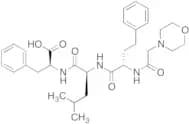
CAS:Produto ControladoFórmula:C13H12N2O6Cor e Forma:NeatPeso molecular:292.24(S)-2-((S)-4-Methyl-2-((S)-2-(2-morpholinoacetamido)-4-phenylbutanamido)pentanamido)-3-phenylpropanoic Acid
CAS:Produto ControladoApplications (S)-2-((S)-4-Methyl-2-((S)-2-(2-morpholinoacetamido)-4-phenylbutanamido)pentanamido)-3-phenylpropanoic Acid is an intermediate for Carfilzomib (C183460), which is a second-generation proteasome inhibitor that is used as a treatment in relapsed and refractory multiple myeloma.
References Fostier, K., et al.: Oncotargets. Therap., 5, 237 (2012); Geurink, P.P., et al.: J. Med. Chem., 56, 1262 (2013); McCormack, P.L., et al.: Drugs., 72, 2023 (2012);Fórmula:C31H42N4O6Cor e Forma:NeatPeso molecular:566.696-Chloro-4-(2-chlorophenyl)-2(1H)-quinazolinone
CAS:Fórmula:C14H8Cl2N2OCor e Forma:NeatPeso molecular:291.132-[4-[(2RS)-2-Hydroxy-3-[(1-methylethyl)amino]propoxy]phenyl]acetonitrile; (Atenolol Impurity H)
CAS:Produto ControladoImpurity Atenolol EP Impurity H
Applications 2-[4-[(2RS)-2-Hydroxy-3-[(1-methylethyl)amino]propoxy]phenyl]acetonitrile is an impurity of Atenolol (A790075), a cardioselective β-adrenergic blocker. Atenolol EP Impurity H
References Caplar, V., et al.: Anal. Profiles Drug Subs., 13, 1 (1984);Fórmula:C14H20N2O2Cor e Forma:NeatPeso molecular:248.32OR-486
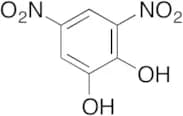
CAS:Produto ControladoApplications OR 486 is an anti-inflammatory agent used in the treatment of rheumatoid arthritis and osteoarthritis. Entacapone (E588500) impurity.
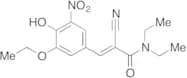
References Jenei-Lanzl, Z. et al.: Annal Rheum. Dis., 74, 444 (2015); Karlsson, M., et al.: J. Pharm. Biomed. Anal., 10, 593 (1992), Nissinen, E., et al.: Arch. Pharmacol., 346, 262 (1992), Wikberg, T., et al.: Eur. J. Drug Metab. Pharmacokinet., 18, 359 (1993),Fórmula:C6H4N2O6Cor e Forma:NeatPeso molecular:200.11(2E)-2-Cyano-3-(3-ethoxy-4-hydroxy-5-nitrophenyl)-N,N-diethyl-2-propenamide
CAS:Produto ControladoApplications (2E)-2-Cyano-3-(3-ethoxy-4-hydroxy-5-nitrophenyl)-N,N-diethyl-2-propenamide is an impurity of Entacapone (E558500), a peripherally acting inhibitor of catechol-O-methyl transferase (COMT), an enzyme involved in the metabolism of catecholamine neurotransmitters and related drugs. Antiparkinsonian.
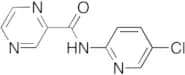
References Karlsson, M., et al.: J. Pharm. Biomed. Anal., 10, 593 (1992), Nissinen, E., et al.: Arch. Pharmacol., 346, 262 (1992), Wikberg, T., et al.: Eur. J. Drug Metab. Pharmacokinet., 18, 359 (1993),Fórmula:C16H19N3O5Cor e Forma:NeatPeso molecular:333.34N-(5-Chloro-2-pyridinyl)-2-pyrazinecarboxamide (Zopiclone Impurity)
CAS:Produto ControladoApplications N-(5-Chloro-2-pyridinyl)-2-pyrazinecarboxamide is an impurity of Zopiclone (Z700500) which is a nonbenzodiazepine hypnotic agent used in the treatment of insomnia.
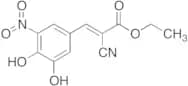
References Noble, S., et al.: Drugs, 55, 277 (1998), Musch, B., et al.: Int. J. Clin. Psychopharmacol., 5, 147 (1990),Fórmula:C10H7ClN4OCor e Forma:NeatPeso molecular:234.64Ethyl (2E)-2-Cyano-3-(3,4-dihydroxy-5-nitrophenyl)prop-2-enoate
CAS:Produto ControladoFórmula:C12H10N2O6Cor e Forma:NeatPeso molecular:278.22(5E)-Bimatoprost
CAS:Applications The trans-isomer used in the improved process for the production and purification of Bimatoprost (B386800).
Fórmula:C25H37NO4Cor e Forma:NeatPeso molecular:415.563-[[(5-Chloro-2-pyridinyl)amino]carbonyl]-2-pyrazinecarboxylic Acid
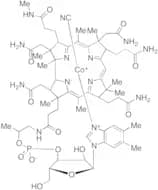
CAS:Produto ControladoFórmula:C11H7ClN4O3Cor e Forma:NeatPeso molecular:278.65Nb-Methyl Cyancobalamin
CAS:Fórmula:C64H90CoN14O14PCor e Forma:Red To Dark RedPeso molecular:1369.392Nintedanib 4-Nitrophenyl 2-(4-Nitroso)
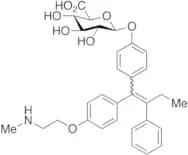
Produto ControladoFórmula:C13H17N5O4Cor e Forma:NeatPeso molecular:307.305N-Desmethyl-4-hydroxy Tamoxifen β-D-Glucuronide (E/Z Mixture)
CAS:Produto ControladoStability Hygroscopic
Applications A novel active metabolite of the anti-cancer drug Tamoxifen (T006000).
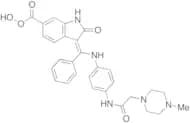
References Furr, B., et al.: Pharmacol. Ther., 25, 127 (1984), Leonessa, F., et al.: Cancer Res., 54, 441 (1994), Stearns, V., et al.: Lancet, 360, 1851 (2002), Rae, J., et al.: Pharmacogenetics, 13, 501 (2003), Zheng, Y., et al.: Drug Metab. Dispos., 35, 1942 (2007),Fórmula:C31H35NO8Cor e Forma:NeatPeso molecular:549.61N-[4-[[(Z)-(1,2-Dihydro-2-oxo-3H-indol-3-ylidene)phenylmethyl]amino]phenyl]-N,4-dimethyl-1-piperazineacetamide
CAS:Produto ControladoApplications N-[4-[[(Z)-(1,2-Dihydro-2-oxo-3H-indol-3-ylidene)phenylmethyl]amino]phenyl]-N,4-dimethyl-1-piperazineacetamide was used in the study to discover a potent inhibitor of MELK that inhibits expression of the anti-apoptotic protein Mcl-1 and TNBC cell growth. N-[4-[[(Z)-(1,2-Dihydro-2-oxo-3H-indol-3-ylidene)phenylmethyl]amino]phenyl]-N,4-dimethyl-1-piperazineacetamide is an impurity of Intedanib (I666650), which is an antitumor agent.
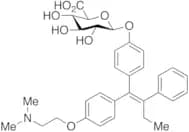
References Edupuganti, R., et al.: Bioorg. Med. Chem., 25, 2609 (2017); Sun, L., et al.: J. Med. Chem., 41, 2588 (1998); Xie, H., et al.: J. Med. Chem., 50, 4898 (2007); Hilberg, F., et al.: Cancer Res., 68, 4774 (2008); Roth, G., et al.: J. Med. Chem., 58, 1053 (2015)Fórmula:C29H31N5O2Cor e Forma:NeatPeso molecular:481.59(Z)-4-Hydroxy Tamoxifen O-beta-D-Glucuronide (~90%)
CAS:Produto ControladoApplications (Z)-4-Hydroxy Tamoxifen O-β-D-Glucuronide is an active metabolite of Tamoxifen (T006000).
References Ogura, K. et al.: Biochem. Pharmacol., 71, 1358 (2006); Nishiyama, T. et al.: Biochem. Pharmacol., 63, 1817 (2002); McCague, R. et al.: Biochem. Pharmacol., 39, 1459 (1990);Fórmula:C32H37NO8Pureza:~90%Cor e Forma:NeatPeso molecular:563.647-[9-[[9-[(4,4,5,5,5-Pentafluoropentyl)sulfinyl]nonyl]sulfinyl]nonyl]estra-1,3,5(10)-triene-3,17β
Produto ControladoApplications Fulvestrant (F862500) impurity C.
Fórmula:C41H65F5O4S2Cor e Forma:NeatPeso molecular:781.07N-[4-(Aminocarbonyl)-3-fluorophenyl]-2-methylalanine Methyl Ester
CAS:Produto ControladoFórmula:C12H15FN2O3Cor e Forma:NeatPeso molecular:254.26Zafirlukast m-Tolyl Isomer
CAS:Applications Zafirlukast m-Tolyl Isomer is a positional isomer and impurity of the cysteinyl leukotriene type 1 receptor antagonist, Zafirlukast (D226955).
References Krishnaiah, C. et al.: Anal. Chem. Ind. J., 8, 471 (2009); Madhavi, A. et al.: Chromatographia, 70, 233 (2009); Goverdhan, G. et al.: J. Pharmac. Biomed. Anal., 49, 895 (2009);Fórmula:C31H33N3O6SCor e Forma:NeatPeso molecular:575.681,3-Dibromopropane
CAS:Produto ControladoApplications Substrate specificity of haloalkane dehalogenases.
Not a dangerous good if item is equal to or less than 1g/ml and there is less than 100g/ml in the package
References Koudelakova, T., et al.: Biochem. J., 435, 345 (2011),Fórmula:C3H6Br2Cor e Forma:NeatPeso molecular:201.89N-Nitroso-1-(2-methoxyphenyl)piperazine
CAS:Produto ControladoApplications N-Nitroso-1-(2-methoxyphenyl)piperazine is a reagent used in the preparation of 9-aminoacridine-based agents that impair bovine viral diarrhea virus replication.
References Loddo, R. et al.: Bio. & Med. Chem., 26(4), 855-868, (2018)Fórmula:C11H15N3O2Cor e Forma:Off-White To Light BrownPeso molecular:221.26Nintedanib Acetyl Impurity
CAS:Produto ControladoApplications An impurity of Nintedanib, which is an antifibrotic drug.
References Holdsworth, G.; et al.: Scientific Reports, 7, 1 (2017)Fórmula:C26H23N3O4Cor e Forma:NeatPeso molecular:441.49Fast Corinth V Salt Sodium Chloride
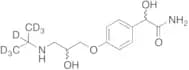
CAS:Fórmula:(C15H14N5O3•ClZn•xNaClCor e Forma:Dark Brown to Very Dark Brown SolidPeso molecular:2(312.30) + (207.19) + x(58.44)Hydroxyatenolol-d7
CAS:Produto ControladoApplications Hydroxyatenolol-d7 is the isotope labelled analog of Hydroxyatenolol (H802480); a metabolite of Atenolol (A790075) which is a cardioselective β-adrenergic blocker, antihypertensive, antianginal, and antiarrhythmic (class II).
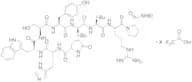
References Escher, B., et al.: Environ. Sci. Technol., 40, 7402 (2006); Caplar, V., et al.: Anal. Profiles Drug Subs., 13, 1 (1984)Fórmula:C14H15D7N2O4Cor e Forma:NeatPeso molecular:289.38(D-His2)-Leuprolide Trifluoroacetic Acid Salt
CAS:Produto ControladoImpurity Leuprolide Acetate EP Impurity B TFA salt
Applications Synthetic nonapeptide agonist analog of LH-RH. Antineoplastic (hormonal).
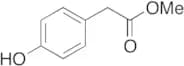
References Vilchez-Martinez, J.A., et al.: Biochem. Biophys. Res. Commun., 59, 1226 (1974), Sennello, L.T., et al.: J. Pharm. Sci., et al.: 75, 158 (1986), Wheeler, J.M., et al.: Am.J. Obstet. Gynecol., 167, 1367 (1992), Eri, L.M., et al.: J. Urol., 150, 359 (1993),Fórmula:C59H84N16O12·x(C2HF3O2)Cor e Forma:NeatPeso molecular:1209.398Methyl 4-Hydroxyphenylacetate
CAS:Applications Methyl 4-Hydroxyphenylacetate has been shown to have potent inhibitory activity against tobacco mosaic virus (TMV).
References Shen, S., Li, W., Wang, J.: Nat. Prod. Res., 27, 2286 (2013); Golovleva, L.A., et. al.:Fórmula:C9H10O3Cor e Forma:NeatPeso molecular:166.17Deschloro-Zopiclone
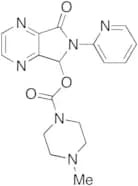
CAS:Produto ControladoApplications Deschloro-Zopiclone is a metabolite of Zopiclone (Z700500) which is a cyclopyrrolone member of a family of non-benzodiazepine GABAA receptor agonists.
References Noble, S., et al.: Drugs, 55, 277 (1998), Musch, B., et al.: Int. J. Clin. Psychopharmacol., 5, 147 (1990),Fórmula:C17H18N6O3Cor e Forma:NeatPeso molecular:354.36Tri-o-tolyl-Phosphine Oxide
CAS:Produto ControladoImpurity Eletriptan Impurity 14
Applications Tri-o-tolyl-Phosphine Oxide (Eletriptan Impurity 14) is an impurity of Eletriptan, a selective serotonin 5-HT1B and 5-HT1D receptor agonist and used to treat migraines.
References Willems, E., et al.: Arch. Pharmacol., 358, 212 (1998); Napier, C., et al.: Eur. J. Pharmacol., 368, 259 (1999); Goadsby, P.J., et al.: Neurology, 54, 156 (2000)Fórmula:C21H21OPCor e Forma:NeatPeso molecular:320.3656-(5-Chloropyridin-2-yl)- 6,7-dihydro-5H-pyrrolo[3,4-b]pyrazin-5,7-dione
CAS:Fórmula:C11H5ClN4O2Cor e Forma:NeatPeso molecular:260.64N,N-Bis-desethyl, N-Methyl Entacapone
CAS:Produto ControladoFórmula:C11H9N3O5Cor e Forma:AmberPeso molecular:263.21Desmethyl Nintedanib Carboxylic Acid (Nintedanib Impurity A)
Produto ControladoApplications Desmethyl Nintedanib Carboxylic Acid is an impurity of Intedanib (I666650), which is an indolinone derivative potently blocking VEGF-, PDGF-, and FGF-receptor kinases. it is an indolinone as triple angiokinase inhibitors and an antitumor agent.
References Sun, L., et al.: J. Med. Chem., 41, 2588 (1998); Xie, H., et al.: J. Med. Chem., 50, 4898 (2007); Hilberg, F., et al.: Cancer Res., 68, 4774 (2008); Roth, G., et al.: J. Med. Chem., 58, 1053 (2015)Fórmula:C29H29N5O5Cor e Forma:NeatPeso molecular:527.572,8-Dichloro-6,12-diphenyldibenzo[b,f][1,5]diazocine
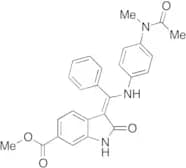
CAS:Produto ControladoFórmula:C26H16Cl2N2Cor e Forma:NeatPeso molecular:427.325(3Z)-2,3-Dihydro-3-[[[4-(methylamino)phenyl]amino]phenylmethylene]-2-oxo-1H-Indole-6-carboxylic Acid Methyl Ester
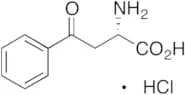
CAS:Produto ControladoFórmula:C24H21N3O3Cor e Forma:NeatPeso molecular:399.44(S)-4-Oxo-homophenylalanine Hydrochloride
CAS:Produto ControladoStability Hygroscopic
Applications (S)-4-Oxo-homophenylalanine Hydrochloride is a derivative of L-Homophenylalanine (H600500); an antitumor agent.
References Brunner, Henri., et al.: Eur. J. Med. Chem., 25, 35 (1990)Fórmula:C10H12ClNO3Cor e Forma:NeatPeso molecular:229.66Almotriptan-d6 Hydrochloride
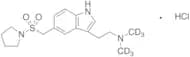
CAS:Produto ControladoApplications: Labelled Almotriptan (A575200). Almotriptan is a serotonin 5HT1B /1D-receptor agonist used for treatment of migraine.
References Fleishaker, J.C., et al.: Clin. Pharmacol. Ther., 67, 498 (2000), Kamali, F., et al.: Curr. Opin. Cent. Peripher. Nerv. Syst. Invest. Drugs, 2, 197 (2000), Dodick, D.W., et al.: Expert Opin.Pharmacother., 4, 1157 (2003)Fórmula:C172H6H19N3O2S·ClHCor e Forma:NeatPeso molecular:377.963-Amino-1,2-dihydro-6-chloro-1-methyl-4-phenylquinolin-2(1H)-one
CAS:Produto ControladoFórmula:C16H13ClN2OCor e Forma:BeigePeso molecular:284.74Tetrabutylphosphonium p-toluenesulfonate
CAS:Tetrabutylphosphonium p-toluenesulfonate is a fluorogenic substrate that is used in the diagnosis of cytochrome P450 enzymes. It is a ligand that binds to metal ions, such as copper and zinc. This compound is also used for the preparation of bioluminescent substrates for use in diagnostics and research.Fórmula:C16H36P•C7H7O3SPureza:Min. 95%Peso molecular:430.63 g/mol6-Bromo-2-naphthyl-α-D-mannopyranoside
CAS:6-Bromo-2-naphthyl-alpha-D-mannopyranoside is a strong inhibitor of alpha-mannosidase. It has been shown to inhibit the growth of Mycobacterium tuberculosis and Streptococcus pneumoniae, which are both known to cause bacterial infections in humans. 6BNA inhibits the enzyme alpha-mannosidase, which hydrolyzes terminal α-(1,4)-linked mannose residues from oligosaccharides and glycoproteins. This drug has a high affinity for the active site of alpha-mannosidase and an IC50 value of 0.2 mM, making it an effective inhibitor.
Fórmula:C16H17BrO6Pureza:Min. 98.0 Area-%Peso molecular:385.22 g/mol2-Chloro-4-nitrophenyl b-D-xylobioside
2-Chloro-4-nitrophenyl b-D-xylobioside is a chemiluminescent substrate that is used as a diagnostic agent. It has been used in the identification of gram positive and gram negative bacteria, which are differentiated by the color of the reaction. This substrate has also been used to detect the presence of certain enzymes produced by bacteria. 2-Chloro-4-nitrophenyl b-D-xylobioside has shown to be an effective enzyme substrate for detecting bacterial growth in culture media and is often used as a fluorogenic substrate in food testing.
Pureza:Min. 95%2-Bromo-4-nitrophenyl b-D-galactopyranoside
2-Bromo-4-nitrophenyl b-D-galactopyranoside is a chemiluminescent substrate that is used for the detection of β-galactosidase activity in the biochemical reaction. It has been shown to be an excellent ligand for metal ions and can be used as a reagent in the determination of metal ions in biological systems. This product is manufactured with high purity and quality, which ensures its suitability for use in culture media, environmental testing, and diagnostics. 2-Bromo-4-nitrophenyl b-D-galactopyranoside has been tested as a fluorogenic substrate for β-galactosidase. It has also been used as a chromogenic substrate for β-galactosidase and an enzyme substrate for β-galactosidase. This product can be conjugated with other molecules such as biotin to enable rapid analysis of proteins or
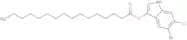
Fórmula:C12H14BrNO8Pureza:Min. 95%Peso molecular:380.15 g/mol5-Bromo-6-chloro-3-indolyl palmitate
CAS:5-Bromo-6-chloro-3-indolyl palmitate is a magenta enzyme substrate that is widely used in the study of lipase and esterase enzymes. This compound consists of an indole ring with bromine and chlorine atoms at positions 5 and 6, respectively, and a palmitate moiety esterified to the indolyl ring. The palmitate group is a long-chain fatty acid, making this substrate particularly useful for investigating enzymes that hydrolyze ester bonds in lipids. Upon cleavage by lipases or esterases, 5-Bromo-6-chloro-3-indolyl palmitate releases a magenta-colored product, which can be easily detected and quantified to measure enzyme activity.
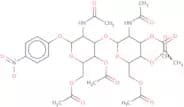
Pureza:Min. 95%Peso molecular:484.9 g/mol4-Nitrophenyl 2-acetamido-3-O-(2-acetamido-3,4,6-tri-O-acetyl-b-D-glucopyranosyl)-4,6-di-O-acetyl-2-deoxy-a-D-galactopyranoside
4-Nitrophenyl 2-acetamido-3-O-(2-acetamido-3,4,6-tri-O-acetyl-b-D-glucopyranosyl)-4,6-di-O-acetyl-2deoxy--aDgalactopyranoside is a substrate for enzymes such as beta galactosidase and alpha amylase. It can be used for the detection of these enzymes in biological samples, including culture media and body fluids. 4NPAG has also been used as a chromogenic substrate to measure the activity of NADH oxidase in neutrophils. 4NPAG is fluorescent in aqueous solution and can be used to detect bioluminescence reactions.Pureza:Min. 95%Peso molecular:755.68 g/mol4-Nitrophenyl 2,3,4,6-tetra-O-acetyl-a-D-mannopyranoside
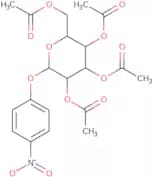
CAS:4-Nitrophenyl 2,3,4,6-tetra-O-acetyl-a-D-mannopyranoside is a highly sensitive and efficient chromogenic substrate designed for the detection and quantification of α-D-mannosidases. These enzymes play a crucial role in the degradation and metabolism of glycoproteins and glycolipids, thus having high importance in biotechnology and biochemical research. When acted upon by α-D-mannosidase, this substrate releases a bright yellow product, 4-nitrophenol, which is easily measured spectrophotometrically at 405 nm. This enables quick and accurate analysis in various applications such as enzyme kinetics, inhibitor screening, and activity assays.Pureza:Min. 95%Peso molecular:469.4 g/mol4-Nitrophenyl 6'-deoxy-6'-(2-pyridylamino)-a-D-penta-(1-4)-glucopyranoside
CAS:4-Nitrophenyl 6'-deoxy-6'-(2-pyridylamino)-a-D-penta-(1-4)-glucopyranoside is a fluorescent substrate for the enzyme beta glucosidase. It is a chemiluminescent reagent that can be used to measure beta glucosidase activity. The substrate is an excellent high quality chemical and has been tested for environmental safety, heavy metal content and staining. 4-Nitrophenyl 6'-deoxy-6'-(2-pyridylamino)-a-D-penta-(1-4)-glucopyranoside is a chromogenic substrate that can be used in diagnostic testing, such as bioluminescence or fluorogenic assay. This product can also be used as a culture media additive or food testing agent.Pureza:Min. 95%Peso molecular:1,025.91 g/mol2-Nitrophenyl 2,3,4-tri-O-acetyl-β-D-xylopyranoside
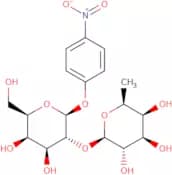
CAS:2-Nitrophenyl 2,3,4-tri-O-acetyl-beta-D-xylopyranoside is a chromogenic substrate used to detect the enzymatic activity of xylosidase. After cleavage, the nitrophenyl moiety is released exhibiting a light yellowish color. 2-Nitrophenyl 2,3,4-tri-O-acetyl-beta-D-xylopyranoside is used in bacterial hemicellulose metabolism assays.Fórmula:C17H19NO10Pureza:Min. 95%Cor e Forma:PowderPeso molecular:397.33 g/mol4-Nitrophenyl 2-O-(α-L-fucopyranosyl)-β-D-galactopyranoside
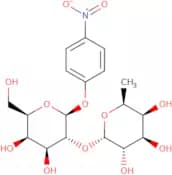
CAS:4-Nitrophenyl 2-O-(α-L-fucopyranosyl)-β-D-galactopyranoside is a chromogenic enzymatic substrate for the detection and quantification of glycosidases, such as fucosidases and galactosidases. Upon enzymatic cleavage, the substrate releases the p-nitrophenol chromophore, which can be quantified via colorimetric analysis. This pNP-conjugated compound enables the rapid, sensitive, and high-throughput detection of enzyme activity in various applications, including enzymatic assays, inhibitor screening, and mechanistic studies. Its precise specificity for α-L-fucopyranosyl and β-D-galactopyranoside moieties makes it an excellent tool for advancing research in glycobiology and related fields.Fórmula:C18H25NO12Pureza:Min. 95%Cor e Forma:White Off-White PowderPeso molecular:447.39 g/mol5-Bromo-4-chloro-3-indoxyl phosphate, p-toluidine salt - micronized
CAS:5-Bromo-4-chloro-3-indoxyl phosphate, p-toluidine salt - micronized is a chemiluminescent substrate used in diagnostic assays. It is an enzyme substrate that is commonly used to detect peroxidase activity and has been shown to be effective in detecting various types of bacteria. This product is a high quality chemical with a purity of at least 98% and has been tested for environmental safety. 5-Bromo-4-chloro-3-indoxyl phosphate, p-toluidine salt - micronized can be used as a fluorogenic substrate for the detection of proteases and aminopeptidases.Pureza:Min. 95%5-Bromo-6-chloro-3-indolyl b-D-cellobiopyranoside
5-Bromo-6-chloro-3-indolyl b-D-cellobiopyranoside is a fluorogenic substrate for the enzyme β-glucuronidase. It is used in diagnostic applications such as food testing, bacterial culture media and environmental testing. The product has CAS number: 123591-77-0.
Pureza:Min. 95%2-Nitrophenyl 2-acetamido-2-deoxy-a-D-galactopyranoside
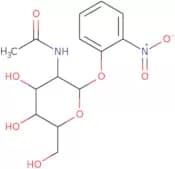
CAS:2-Nitrophenyl 2-acetamido-2-deoxy-a-D-galactopyranoside is a fluorogenic substrate that is used in enzyme assays. It can be used as a chromogenic substrate or conjugate with an enzyme to detect the presence of glucose.Pureza:Min. 95%Peso molecular:342.3 g/molAldol® 484 acetate, Biosynth Patent: EP 2427431 and US 8940909
CAS:Produto ControladoAldol® 484 acetate is a chromogenic substrate for carboxylesterases yielding a red precipitate. In contrast to classical indoxyl substrates, Aldol substrates work not only under aerobic but also under anaerobic conditionsFórmula:C22H16ClFN2O3Pureza:Min. 95.0 Area-%Peso molecular:410.83 g/mol4-Nitrophenyl hepta-O-acetyl-1-thio-b-lactoside
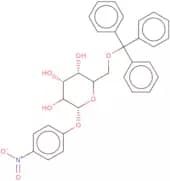
CAS:4-Nitrophenyl hepta-O-acetyl-1-thio-b-lactoside is an inorganic molecule that binds to the surface of bacteria. It has been used as a fingerprinting tool for a variety of organisms, including corynebacterium glutamicum. The molecule can be used to measure the metabolic activity of corynebacterium glutamicum with a technique called incremental acidification. This technique is based on the observation that the concentration of 4-nitrophenol decreases by one unit for each glucose metabolized by corynebacterium glutamicum. The use of 4NPHTBL and other primers can also be useful in diagnosing patients with autoimmune diseases such as celiac disease and inflammatory bowel disease.Pureza:Min. 95%4-Nitrophenyl 6-O-trityl-a-D-glucopyranoside
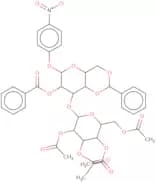
CAS:4-Nitrophenyl 6-O-trityl-a-D-glucopyranoside is a high-quality trityl pNP substrate that performs excellently in various enzymatic assays. Containing a trityl-protected sugar moiety, this substrate is perfect for investigating alpha-D-glucopyranoside-specific enzymes and providing precise data for your experiments.Pureza:Min. 95%Peso molecular:543.56 g/mol4-Nitrophenyl 3-O-(2,3,4,6-tetra-O-acetyl-a-D-mannopyranosyl)-2-O-benzoyl-4,6-O-benzylidene-a-D-mannopyranoside
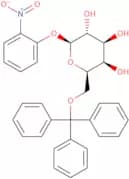
4-Nitrophenyl 3-O-(2,3,4,6-tetra-O-acetyl-a-D-mannopyranosyl)-2-O-benzoyl-4,6-O-benzylidene a -D-mannopyranoside is a synthetic substrate for glycosidases that can be used as an alternative to other substrates. It can be used in the detection of enzyme activity and in the diagnosis of diseases such as diabetes mellitus and Gaucher's disease. 4NP3ODABAB has been shown to have high quality and purity. This substrate has not been evaluated by CAS yet.Pureza:Min. 95%Peso molecular:823.75 g/mol2-Nitrophenyl 6-O-trityl-b-D-galactopyranoside
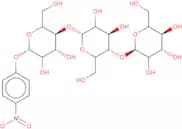
CAS:2-Nitrophenyl 6-O-trityl-b-D-galactopyranoside is a chromogenic enzyme substrate used in assays to detect galactosidase activity. It is a derivative of galactose that can be hydrolyzed by galactosidase to release the yellow-colored 2-nitrophenyl group, which can be detected spectrophotometrically. The trityl group helps to stabilize the molecule and prevent undesired hydrolysis during storage. This substrate is commonly used in the study of carbohydrate metabolism and in the detection of galactosidase activity in microorganisms.Pureza:Min. 95%Peso molecular:543.56 g/mol4-Nitrophenyl β-D-maltotrioside
CAS:Chromogenic substrate targeting amylase
Fórmula:C24H35NO18Pureza:Min. 95%Cor e Forma:PowderPeso molecular:625.53 g/mol5-Bromo-4-chloro-3-indolyl 2-acetamido-2-deoxy-a-D-glucopyranoside
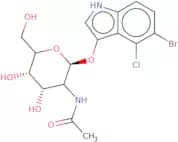
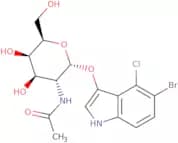
5-Bromo-4-chloro-3-indolyl 2-acetamido-2-deoxy-a-D-glucopyranoside is a fluorogenic substrate that reacts with horseradish peroxidase to produce light. It is used in the detection of β-galactosidase activity in food testing, staining, and environmental testing. This product is also used as a chromogenic substrate for the determination of β-galactosidase activity in immunological assays. 5BICAPG is a conjugate that can be used as a diagnostic ligand for the detection of β -galactosidase enzyme activity. This product has been shown to react with horseradish peroxidase and produce chemiluminescence or bioluminescence when exposed to oxygen. 5BICAPG has also been found to be an excellent enzyme substrate for various enzymes including alkaline phosphataseFórmula:C16H18BrClN2O6Pureza:Min. 95%Peso molecular:449.68 g/mol4-Nitrophenyl 2-O-(2,3,4,6-tri-O-acetyl-a-D-mannopyranosyl)-4,6-O-benzylidene-a-D-mannopyranoside
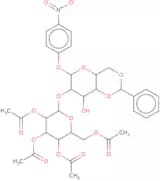
4-Nitrophenyl 2-O-(2,3,4,6-tri-O-acetyl-a-D-mannopyranosyl)-4,6-O-benzylidene-a-D-mannopyranoside is a fluorogenic substrate that is used for the detection of alpha amylase activity in food testing. It is also used as a chromogenic substrate for the detection of beta amylase activity. 4NP2ODM is a conjugate that can be used for the detection of alpha or beta amylases in environmental testing. This compound has high purity and quality and CAS No. 90105037.Pureza:Min. 95%Peso molecular:719.64 g/mol4-Nitrophenyl 2-acetamido-2-deoxy-6-O-trityl-b-D-glucopyranoside
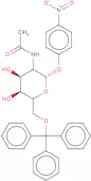
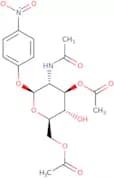
4-Nitrophenyl 2-acetamido-2-deoxy-6-O-trityl-b-D-glucopyranoside offers unmatched versatility as a chromogenic pNP substrate for detecting b-D-glucopyranosidase activity. The substrate is specifically designed to produce a yellow 4-nitrophenol product upon enzyme hydrolysis, which can be measured using absorbance spectroscopy. The unique tritylated glucopyranoside group ensures improved compound stability and selectivity while providing ease of handling. This versatile substrate is ideal for a broad range of biochemical, research, and diagnostic applications.Pureza:Min. 95%Peso molecular:584.62 g/mol4-Nitrophenyl 2-acetamido-3,4,6-tri-O-acetyl-2-deoxy-b-D-glucopyranoside
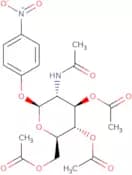
CAS:4-Nitrophenyl 2-acetamido-3,4,6-tri-O-acetyl-2-deoxy-b-D-glucopyranoside is an extracellular nucleic acid molecule that is produced by the bacterium Corynebacterium glutamicum. This compound has been shown to inhibit cancer cells by blocking the transport of glucose through the cell membrane and may be a potential drug target for cancer treatment. 4NPTAPG has also been shown to have diagnostic properties and can identify corynebacterium glutamicum strains. It is a fluorescent molecule that can be used to detect the presence of this bacterium in culture media.Pureza:Min. 95%Peso molecular:468.41 g/molAldol® 491 acetate, Biosynth Patent: EP 2427431 and US 8940909
CAS:Aldol 491 acetate is a food and environmental testing chemical, which can be used for the detection of bacteria. Aldol 491 acetate provides a chromogenic substrate for the detection of enzymes and can be used as a substrate in enzyme-linked immunosorbent assay (ELISA) procedures. Aldol 491 acetate also has chemiluminescent properties and can be used as a fluorogenic substrate.Fórmula:C22H17NO4Pureza:Min. 95 Area-%Peso molecular:359.37 g/molEspresso-Gal
Espresso-Gal (Espresso-beta-D-galactopyranoside) is a chromogenic indicator for beta-galactosidase activity. The colorless product is cleaved by lactose-utilizing bacteria in liquid media or on agar plates and yields an espresso brown colored precipitate. Espresso-Gal can also be used as detecting agent for beta-galactosidase activity in reporter gene assays or for identification of positive transformants on agar plates when using the α-complementation approach. Read more in the Application Notes.Peso molecular:495.6 g/molAldol® 458 phosphate, disodium salt, Biosynth Patent: EP 2427431 and US 8940909
CAS:Aldol® 458 phosphate is a chromogenic and fluorogenic enzyme substrate used for detection of phosphatase activity. The colorless enzyme substrate is cleaved by phosphatases secreted by bacteria grown in liquid media, yielding yellow color and green fluorescence. Aldol® 458 phosphate can also be used in assays involving phosphatase-coupled antibodies in immunoassay applications (ELISA). Aldol® 458 phosphate can be used under aerobic and anaerobic conditions.Fórmula:C16H12NNa2O6PPureza:Min. 95.0 Area-%Peso molecular:391.22 g/molPhosphoric acid, mono(4-nitrophenyl) ester
CAS:Phosphoric acid, mono(4-nitrophenyl) ester is an inhibitor that binds to the human serum albumin (HSA), thereby preventing it from binding to the transcriptional regulatory protein. This leads to a decrease in the activity of this protein and consequently less inhibition of gene expression. The structural analysis of this inhibitor has shown that it forms hydrogen bonding interactions with basic proteins, while its reactivity is mainly dependent on Michaelis–Menten kinetics. The inhibitor also inhibits enzyme activities by binding to their active sites, reducing the enzyme's ability to catalyze reactions.Fórmula:C6H6NO6PPeso molecular:219.09 g/molRef: 3D-P-6460
1kgA consultar50gA consultar100gA consultar250gA consultar500gA consultar-Unit-kgkgA consultar4-Nitrophenyl 2-acetamido-3-O-(2-O-a-L-fucopyranosyl-b-D-galactopyranosyl)-2-deoxy-a-D-galactopyranoside
CAS:4-Nitrophenyl 2-acetamido-3-O-(2-O-a-L-fucopyranosyl-b-D-galactopyranosyl)-2,6,8,10,12-pentaoxoheptaacetic acid is a chemiluminescent substrate that is used for the detection of peroxidase and other enzymes. The reaction product is a yellow fluorescent product which can be measured using a fluorometer. It is sold as an aqueous solution at 1mg/mL in phosphate buffer at pH 7.4.
Pureza:Min. 95%Peso molecular:650.58 g/molBCM® Histamine-producing bacteria Broth
Histamine (Scombrotoxin) fish poisoning is the most frequent cause of fish poisoning incidents today. Cymit Quimica's BCM®; Histamine-producingbacteria Broth (C-0450) is a growth medium for the detection of histamine-producing bacteria in food and water samples. The medium contains an indicator that turns orange to red due to metabolites released by histidine decarboxylase.4-Nitrophenyl 2-O-(b-L-fucopyranosyl)-b-D-galactopyranoside
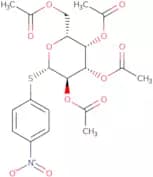
CAS:4-Nitrophenyl 2-O-(b-L-fucopyranosyl)-b-D-galactopyranoside is a high-quality chromogenic substrate with excellent sensitivity specifically designed for enzymes' activity detection. This pNP substrate enables rapid, accurate, and measurable colorimetric visualization of enzymatic hydrolysis reactions. Researchers can easily and effectively monitor the release of 4-nitrophenol as a yellow product under laboratory conditions, allowing for convenient comparative analysis and identification of enzyme levels in various samples.Pureza:Min. 95%Cor e Forma:White SolidPeso molecular:447.39 g/mol4-Nitrophenyl 2,3,4,6-tetra-O-acetyl-b-D-thiogalactopyranoside
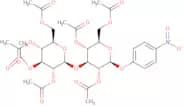
CAS:4-Nitrophenyl 2,3,4,6-tetra-O-acetyl-b-D-thiogalactopyranoside (NPG) is a fluorogenic substrate that can be used in the detection of beta-galactosidase activity. It reacts with 4-nitrophenol to form an orange product at pH 6.0. The fluorescence intensity increases with increasing concentrations of the substrate and enzyme. The reaction is inhibited by borax, which competes for the enzyme active site. This product has been used as a chromogenic substrate for beta-galactosidase and as an enzyme substrate for beta-galactosidase in diagnostic tests for galactosemia and other carbohydrate metabolism disorders. NPG has also been used in chemiluminescent assays to detect beta-galactosidase activity in culture media and as a bioluminescence substrate in the detection of bacterialPureza:Min. 95%Peso molecular:485.47 g/mol4-Nitrophenyl 2,4,6-tri-O-acetyl-3-O-(2,3,4,6-tetra-O-acetyl-b-D-glucopyranosyl)-b-D-glucopyranoside
CAS:4-Nitrophenyl 2,4,6-tri-O-acetyl-3-O-(2,3,4,6-tetra-O-acetyl-β-D-glucopyranosyl)-β-D-glucopyranoside is an advanced bifunctional chromogenic pNP substrate specifically tailored for the simultaneous detection and quantification of multiple glycosidase enzymes. This dual-action substrate undergoes cleavage by two separate enzymatic reactions, which increases the range and sensitivity of detection. The resulting 4-Nitrophenol release can be easily measured spectrophotometrically, providing rapid and reliable enzyme analysis for advanced enzymology studies, enabling new discoveries in biochemistry and biotechnology.Pureza:Min. 95%Peso molecular:757.65 g/molAldol® 496 acetate, Biosynth Patent: EP 2427431 and US 8940909
CAS:Aldol 496 acetate is a chromogenic substrate for the enzyme Aldolase. It is also used as a ligand to detect the presence of Aldolase in biological fluids and tissues. This product is designed for Food testing, Diagnostics, Chromogenic substrate, Staining, Enzyme substrate, Bioluminescence, Fluorogenic substrate, Chemiluminescence, and Culture media. Aldol 496 acetate is an organic chemical with high purity and high quality.Fórmula:C27H24N2O4Pureza:Min. 95.0 Area-%Peso molecular:440.49 g/mol4-Nitrophenyl 2-acetamido-3,6-di-O-acetyl-2-deoxy-b-D-glucopyranoside
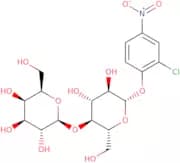
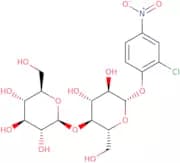
CAS:4-Nitrophenyl 2-acetamido-3,6-di-O-acetyl-2-deoxy-b-D-glucopyranoside is a versatile chromogenic pNP enzyme substrate designed to offer superior results for detecting enzyme activity in research and diagnostic applications. This substrate enables faster, more accurate, and reliable detection of hydrolase enzymes, making it ideal for various research and testing needs, such as studying enzyme kinetics, screening inhibitors, and profiling enzyme specificity.Pureza:Min. 95%Peso molecular:426.37 g/mol2-Chloro-4-nitrophenyl b-D-lactoside
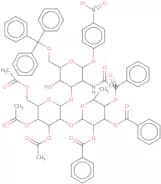
CAS:2-Chloro-4-nitrophenyl b-D-galactopyranoside is a chromogenic enzyme substrate used to study the activity of beta-lactoside. It produces a yellow color when cleaved by the enzyme, making it a useful tool in enzyme assays and screening experiments.Pureza:Min. 95%Cor e Forma:PowderPeso molecular:497.83 g/mol4-Nitrophenyl 2-acetamido-3-O-[2-O-(2,3,4-tri-O-benzoyl-a-L-fucopyranosyl)-3,4,6-tri-O-acetyl-D-galactopyranosyl]-2-deoxy-6-O-trityl -b-D-glucopyranoside
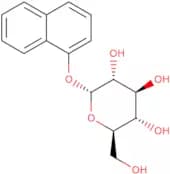
4-nitrophenyl 2-acetamido-3-O-[2-O-(2,3,4-tri-O-benzoyl-a-L-fucopyranosyl)-3,4,6-tri-O-acetyl -D -galactopyranosyl]-2 deoxy 6 O trityl b D glucopyranoside is a chemiluminescent substrate that can be used in biochemical assays. It reacts with oxygen to produce light when it is excited by a UV or blue light source. This product has been tested for purity and quality by HPLC analysis and spectroscopy.Pureza:Min. 95%Peso molecular:1,331.33 g/mol1-Naphthyl a-D-glucopyranoside
CAS:1-Naphthyl a-D-glucopyranoside is a chromogenic substrate used to detect the presence of enzymes that catalyze the hydrolysis of glycosidic bonds, such as alpha-glucosidase. When the substrate is cleaved by the enzyme, it produces a colored product that can be visualized and quantified.Pureza:Min. 95%Peso molecular:306.31 g/molb-Naphthyl-b-maltotrioside
b-Naphthyl-b-maltotrioside is a fluorogenic substrate that is used in enzymatic and chromogenic assays. It is a bifunctional substrate that reacts with enzymes to produce light. b-Naphthyl-b-maltotrioside can be used as a conjugate for immunoassays, such as ELISA. This substrate is also suitable for use in diagnostics, food testing, and environmental testing.Pureza:Min. 95%Peso molecular:630.59 g/molAldol® 484 β-D-galactopyranoside, Biosynth Patent: EP 2427431 and US 8940909
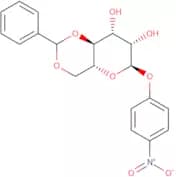
CAS:Aldol® 484 beta-D-galactopyranoside is a chromogenic enzyme substrate for beta-galactosidase activity. The colorless product is cleaved by lactose-utilizing bacteria in liquid or solid media, yielding intense red color. Aldol® 484 beta-D-galacto-pyranoside can also be used in beta-gal reporter gene assays or for identification of beta-gal positive transformants on agar. Aldol® 484 beta-D-galactopyranoside can be used under aerobic and anaerobic conditions.Fórmula:C26H24ClFN2O7Pureza:Min. 95.0 Area-%Peso molecular:530.93 g/mol4-Nitrophenyl 4,6-O-benzylidene-a-D-mannopyranoside
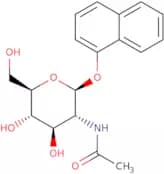
CAS:4-Nitrophenyl 4,6-O-benzylidene-a-D-mannopyranoside is a chromogenic substrate for alpha-mannosidase and beta-glucosidase. It is used as a diagnostic tool for identifying the presence of these enzymes in certain bacteria. This product is also used in food testing, environmental testing, and bioluminescence.Pureza:Min. 95%Peso molecular:389.36 g/mol1-Naphthyl 2-acetamido-2-deoxy-b-D-glucopyranoside
CAS:1-Naphthyl 2-acetamido-2-deoxy-b-D-glucopyranoside is a chromogenic substrate commonly used to assay the activity of enzymes that cleave N-acetyl-beta-D-glucosaminide, such as beta-N-acetylglucosaminidase. Upon cleavage by the enzyme of interest, the substrate releases a yellow-colored 1-naphthylamine, which can be measured spectrophotometrically. This substrate is widely used in biomedical research and drug discovery for studying lysosomal storage disorders, bacterial infections, and neurological diseases.
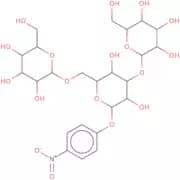
Pureza:Min. 95%Peso molecular:347.36 g/mol4-Nitrophenyl 3,6-di-O-(a-D-mannopyranosyl)-b-D-mannopyranoside
4-Nitrophenyl 3,6-di-O-(a-D-mannopyranosyl)-b-D-mannopyranoside is a chemiluminescent substrate that is used in the detection of enzymes. It is also used to measure the activity of beta-glucosidase, alpha-galactosidase, and alkaline phosphatase. The product has been tested for environmental sensitivity and has not shown any effects on bacterial growth. 4-Nitrophenyl 3,6-di-O-(a-D-mannopyranosyl)-b-D-mannopyranoside can be used as a high quality stain for histological sections and immunohistochemical studies. This product has been tested for staining properties with different dyes and has shown no interference with the staining process.Pureza:Min. 95%Peso molecular:625.53 g/mol2-Chloro-4-nitrophenyl 2,3,4,6-tetra-O-acetyl-b-D-glucopyranoside
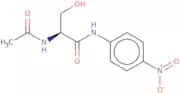
CAS:2-Chloro-4-nitrophenyl 2,3,4,6-tetra-O-acetyl-b-D-glucopyranoside is a chromogenic enzyme substrate used in the biochemical characterization of various enzymes. It produces a yellow color when cleaved by enzymes and is commonly used in assays to study enzyme kinetics and activity. It is commonly used is used to study the biochemical and physiological effects of glycosylation and acts as a substrate for glycosylation-dependent enzymes involved in carbohydrate metabolism. Glycosidases hydrolyse 2-Chloro-4-nitrophenyl-2,3,4,6-tetra-O-acetyl-beta-D-glucopyranoside, releasing 2-chloro-4-nitrophenyl moiety, and the substrate can then be further metabolized by other enzymes. It is also used in the investigate the effects and activity on glycoproteins and glycolipids.Pureza:Min. 95%Peso molecular:503.84 g/molN-Acetyl-L-serine p-nitroanilide
N-Acetyl-L-serine p-nitroanilide is a fluorescent probe used for the detection of glucose in urine. It has a high purity and is suitable for use as a substrate for many enzymes, including alkaline phosphatase, β-galactosidase, and peroxidase. N-Acetyl-L-serine p-nitroanilide has been shown to be an excellent indicator of bacterial growth in culture media.
Fórmula:C11H12N2O6Pureza:Min. 95%Cor e Forma:White powder.Peso molecular:268.22 g/mol2-Chloro-4-nitrophenyl b-D-cellobioside
CAS:2-Chloro-4-nitrophenyl b-D-cellobioside (CNPG) is a chromogenic enzyme substrate that is commonly used to detect and measure the activity of β-glucosidases. CNPG is cleaved by the enzyme into the chromogenic product, which can be detected spectrophotometrically. β-glucosidases are important enzymes in the breakdown of cellulose, and CNPG is a widely used substrate for the detection and quantification of these enzymes in various research studies.Pureza:Min. 95%Cor e Forma:PowderPeso molecular:497.83 g/mol5-Bromo-4-chloro-3-indolyl 2-acetamido-2-deoxy-a-D-galactopyranoside
CAS:Substrate for a-N-acetyl-galactosaminidaseFórmula:C16H18BrClN2O6Pureza:Min. 95%Cor e Forma:White to off-white solid.Peso molecular:449.68 g/molAbiraterone dimer impurity
CAS:Produto ControladoAbiraterone dimer impurity is a drug product that is used as an analytical standard for HPLC, as well as in research and development of drugs. It is also a metabolite of abiraterone and has been detected in the urine of patients receiving the drug. Abiraterone dimer impurity is found in trace amounts in abiraterone acetate but its pharmacological significance is not known. This impurity has been detected in the urine of patients receiving abiraterone acetate therapy.Fórmula:C43H57NO2Pureza:Min. 95%Peso molecular:619.92 g/mol2-Nitrophenyl 6-O-DMT-b-D-galactopyranoside
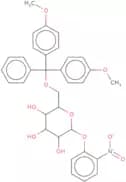
N-Acetyl-2-nitrophenyl 6-O-DMT-b-D-galactopyranoside is a fluorogenic substrate that is used in enzyme and chromogenic assays, including the determination of aminoglycoside activity. This product has been shown to be suitable for detection of bacterial contamination in food products and environmental samples. N-Acetyl-2-nitrophenyl 6-O-DMT-b-D-galactopyranoside reacts with aminoglycosides at the O4 position, forming a fluorescent product that can be measured using a fluorometer.Pureza:Min. 95%Peso molecular:603.62 g/mol6-Chloro-4-(2-chlorophenyl)-2-quinazolinecarboxylic acid
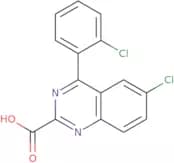
CAS:6-Chloro-4-(2-chlorophenyl)-2-quinazolinecarboxylic acid (CA) is an impurity found in the drug lorazepam. It is a chemical intermediate that is not active as a pharmaceutical agent, but has been studied for use in treating epilepsy and other neurological disorders. CA is an excipient used to manufacture other drugs such as salicylic acid and the surfactant sodium lauryl sulfate. It has been shown to have acidic properties and can be used as a surfactant, which is helpful in chromatographic methods to separate molecules by size. CA also binds to chloride ions, which are necessary for the proper functioning of many cellular processes. CA's molecular weight is 322 daltons and it exhibits no pharmacological activity.
Fórmula:C15H8Cl2N2O2Pureza:Min. 95%Cor e Forma:White PowderPeso molecular:319.14 g/mol





![2-[4-[(2RS)-2-Hydroxy-3-[(1-methylethyl)amino]propoxy]phenyl]acetonitrile; (Atenolol Impurity H)](/_next/image/?url=https%3A%2Fstatic.cymitquimica.com%2Fproducts%2FTR%2Fthumb-webp%2FH946505.webp&w=3840&q=75)

![3-[[(5-Chloro-2-pyridinyl)amino]carbonyl]-2-pyrazinecarboxylic Acid](/_next/image/?url=https%3A%2Fstatic.cymitquimica.com%2Fproducts%2FTR%2Fthumb-webp%2FC373435.webp&w=3840&q=75)

![N-[4-[[(Z)-(1,2-Dihydro-2-oxo-3H-indol-3-ylidene)phenylmethyl]amino]phenyl]-N,4-dimethyl-1-piperaz…](/_next/image/?url=https%3A%2Fstatic.cymitquimica.com%2Fproducts%2FTR%2Fthumb-webp%2FD452513.webp&w=3840&q=75)
![7-[9-[[9-[(4,4,5,5,5-Pentafluoropentyl)sulfinyl]nonyl]sulfinyl]nonyl]estra-1,3,5(10)-triene-3,17β](/_next/image/?url=https%3A%2Fstatic.cymitquimica.com%2Fproducts%2FTR%2Fthumb-webp%2FP227275.webp&w=3840&q=75)
![N-[4-(Aminocarbonyl)-3-fluorophenyl]-2-methylalanine Methyl Ester](/_next/image/?url=https%3A%2Fstatic.cymitquimica.com%2Fproducts%2FTR%2Fthumb-webp%2FA603165.webp&w=3840&q=75)







![6-(5-Chloropyridin-2-yl)- 6,7-dihydro-5H-pyrrolo[3,4-b]pyrazin-5,7-dione](/_next/image/?url=https%3A%2Fstatic.cymitquimica.com%2Fproducts%2FTR%2Fthumb-webp%2FC598525.webp&w=3840&q=75)
![2,8-Dichloro-6,12-diphenyldibenzo[b,f][1,5]diazocine](/_next/image/?url=https%3A%2Fstatic.cymitquimica.com%2Fproducts%2FTR%2Fthumb-webp%2FD434065.webp&w=3840&q=75)
![(3Z)-2,3-Dihydro-3-[[[4-(methylamino)phenyl]amino]phenylmethylene]-2-oxo-1H-Indole-6…](/_next/image/?url=https%3A%2Fstatic.cymitquimica.com%2Fproducts%2FTR%2Fthumb-webp%2FD492443.webp&w=3840&q=75)