Derivados de Purinas e Pirimidinas
As purinas possuem uma estrutura bicíclica, formada por um anel de seis membros fundido a um anel de cinco membros, ambos contendo átomos de nitrogênio em posições-chave. Os derivados das purinas, como a adenina e a guanina, são essenciais para a formação do DNA e RNA. Estes compostos possuem aplicações terapêuticas no tratamento do câncer e de doenças virais, pois inibem a replicação celular. As pirimidinas, por outro lado, possuem uma estrutura monocíclica de seis membros com dois átomos de nitrogênio. Seus derivados, como citosina, timina e uracila, também são componentes essenciais do DNA e RNA e são utilizados na quimioterapia e em tratamentos antivirais.
Na CymitQuimica, oferecemos derivados de purinas e pirimidinas para pesquisa em biologia molecular, genômica e desenvolvimento de terapias inovadoras.
Foram encontrados 8901 produtos de "Derivados de Purinas e Pirimidinas"
Ordenar por
Pureza (%)
0
100
|
0
|
50
|
90
|
95
|
100
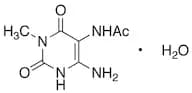
5-Acetylamino-6-amino-3-methyluracil Hydrate
CAS:Produto Controlado<p>Applications Metabolite of Caffeine (C080100).<br>References Wong, P., et al.: J. Pharm. Biomed. Anal., 28, 693 (2002), Nyeki, A., et al.: Brit. J. Clin. Pharmacol., 55, 62 (2003), Jetter, A., et al.: Eur. J. Clin. Pharmacol., 65, 411 (2009),<br></p>Fórmula:C7H12N4O4Cor e Forma:NeatPeso molecular:216.19Urea-13C,15N2
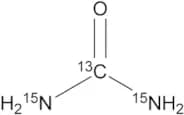
CAS:Produto Controlado<p>Applications Labelled Urea. Physiological regulator of nitrogen excretion in mammals; synthesized in the liver as an end-product of protein catabolism and excreted in urine. Also occurs normally in skin. Emollient; diuretic.<br>References Demetriou, A., et al.: Science, 233, 1190 (1986), Aebischer, P., et al.: Nat. Med., 2, 696 (1996), Prakash, S., et al.: Biotechnol. Bioeng., 46, 621 (1995),<br></p>Fórmula:CH415N2OCor e Forma:NeatPeso molecular:63.032-CHLOROPYRIMIDINE-4-CARBALDEHYDE
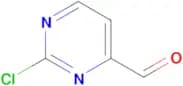
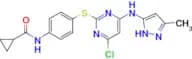
CAS:Fórmula:C5H3ClN2OPureza:95.0%Cor e Forma:Liquid, No data available.Peso molecular:142.54N-(4-((4-Chloro-6-((5-methyl-1H-pyrazol-3-yl)amino)pyrimidin-2-yl)thio)phenyl)cyclopropanecarboxamide
CAS:Pureza:95.0%Peso molecular:400.89001464843759-[(2R,3R,4R,5R)-3-fluoro-4-hydroxy-5-(hydroxymethyl)oxolan-2-yl]-6,9-dihydro-3H-purin-6-one
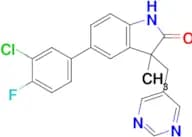
CAS:Pureza:97%Peso molecular:270.22000122070315-(3-Chloro-4-fluorophenyl)-3-methyl-3-(pyrimidin-5-ylmethyl)indolin-2-one
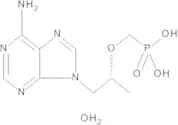
CAS:Pureza:95.0%Peso molecular:367.80999755859375Tenofovir Monohydrate
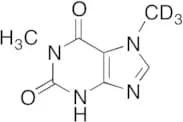
CAS:Produto Controlado<p>Stability Hygroscopic<br>Applications Tenofovir Monohydrate is an HIV-1 RT inhibitor and antiretroviral drug.<br>References Zhao, Z., et al.: Method for preparing medical salts and/or derivatives of tenofovir disoproxil, and their application for preventing and/or treating HBV and HIV/AIDS infections, CN 101574356 (2009);<br></p>Fórmula:C9H14N5O4P·H2OCor e Forma:NeatPeso molecular:305.23Paraxanthine-d3
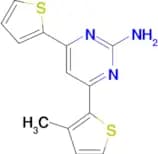
CAS:Produto Controlado<p>Applications Paraxanthine-d3, is the labeled analogue of Paraxanthine (P192500), an adenosine receptor ligand and a major metabolite of caffeine.<br>References Proc. Natl. Acad. Sci. USA 78, 3260 (1981); Cell Mol. Neurobiol., 3, 69 (1983); Eur. J. Pharmacol., 179, 295 (1990)<br></p>Fórmula:C72H3H5N4O2Cor e Forma:NeatPeso molecular:183.184-(3-methylthiophen-2-yl)-6-(thiophen-2-yl)pyrimidin-2-amine
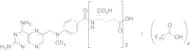
CAS:Pureza:95.0%Peso molecular:273.3699951171875Methotrexate-d3 Diglutamate Trifluoroacetate
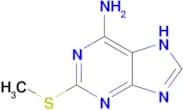
CAS:Produto Controlado<p>Applications Methotrexate-d3 Diglutamate is the isotope labelled analog of Methotrexate Diglutamate (M260720); a metabolite of Methotrexate (M260675) which is a folic acid antagonist, antineoplastic, and antirheumatic.<br>References Freeman, M.V., J. Pharmacol. Exp. Ther., 122, 154 (1958); Weinblass, M.E., et al.: N. Engl. J. Med., 312, 818 (1985)<br></p>Fórmula:C25H26D3N9O8•x(C2HF3O2)•xH2SO4Cor e Forma:NeatPeso molecular:586.58114029812-(Methylthio)-9H-purin-6-amine
CAS:Pureza:97.0%Cor e Forma:Liquid, No data available.Peso molecular:181.22000122070312(R)-Methotrexate
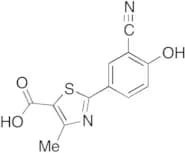
CAS:Produto Controlado<p>Stability Hygroscopic<br>Applications R-Methotrexate is an enantiomer of Methotrexate (M260675), a folic acid antagonist. Used as a antineoplastic and antirheumatic.<br> Not a dangerous good if item is equal to or less than 1g/ml and there is less than 100g/ml in the package<br>References Freeman, M.V., J. Pharmacol. Exp. Ther., 122, 154 (1958), Weinblass, M.E., et al.: N. Engl. J. Med., 312, 818 (1985),<br></p>Fórmula:C20H22N8O5Cor e Forma:Dark YellowPeso molecular:454.54Desisobutyl Febuxostat
CAS:Produto ControladoFórmula:C12H8N2O3SCor e Forma:Light Yellow SolidPeso molecular:260.27N-(5-Aminopentyl) methotrexate amide
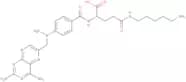
CAS:<p>N-(5-Aminopentyl) methotrexate amide is a fluorescent probe that is used to study the transport of drugs across cell membranes. It binds to the plasma membrane of cells and can be visualized with a fluorescence microscope. N-(5-Aminopentyl) methotrexate amide has been shown to bind to leukemia cells in murine leukemia models. It has a high affinity for drug-resistant cells, which makes it useful for studying drug resistance mechanisms. This probe can be used at nanomolar concentrations for imaging studies, as well as for measuring the uptake of drugs into cancer cells by flow cytometry.</p>Fórmula:C25H34N10O4Pureza:Min. 95%Cor e Forma:Yellow PowderPeso molecular:538.6 g/mol4-[2'-(7''-Deazaguanine)ethyl]benzoic acid N-hydroxysuccinimide ester
CAS:<p>4-[2'-(7''-Deazaguanine)ethyl]benzoic acid N-hydroxysuccinimide ester is a useful intermediate in the synthesis of 7''-deazaguanine, which is a key building block in the synthesis of DNA. 4-[2'-(7''-Deazaguanine)ethyl]benzoic acid N-hydroxysuccinimide ester is a versatile building block that can be used in the synthesis of complex compounds. It has been shown to react with amines, sulfonyl chlorides, and epoxides to form amides, sulfonamides, and epoxy amines respectively. The CAS number for this compound is 204257-65-8.</p>Fórmula:C19H17N5O5Pureza:Min. 95%Peso molecular:395.37 g/molMemantine impurity IV
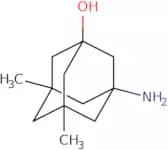
CAS:<p>Memantine impurity IV is a hydrolysis product of memantine. It appears as a white to off-white powder and has a molecular weight of 198.1 g/mol. Memantine impurity IV is an intermediate in the production of memantine and is therefore not used for any other purpose. The compound contains hydroxy groups, hydroxy, alcohols, and bridgehead groups which are efficient at hydrolyzing to form amino acids.</p>Fórmula:C12H21NO·HClPureza:Min. 95%Cor e Forma:White PowderPeso molecular:231.76 g/mol4-[[(2,4-Diamino-6-pteridinyl)methyl]methylamino]benzoic acid
CAS:<p>4-[[(2,4-Diamino-6-pteridinyl)methyl]methylamino]benzoic acid is a drug with low bioavailability. It is used to treat leishmaniasis, an infection caused by the parasite Leishmania. 4-[[(2,4-Diamino-6-pteridinyl)methyl]methylamino]benzoic acid inhibits the synthesis of folic acid by blocking the enzyme dihydrofolate reductase in the bacteria. This drug also has been shown to be effective against autoimmune diseases and inflammatory bowel disease. The terminal half-life of 4-[(2,4-diamino6 pteridinyl)methyl]methylamino benzoic acid is approximately 5 hours and it can be detected in urine for up to 12 hours after administration.</p>Fórmula:C15H15N7O2Pureza:(1H-Nmr) Min. 95 Area-%Cor e Forma:Brown Yellow PowderPeso molecular:325.33 g/molTenofovir isoproxil monoester
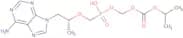
CAS:<p>Tenofovir isoproxil monoester is a prodrug of Tenofovir, which is an antiviral drug. Tenofovir prevents the growth of HIV by interfering with the synthesis of viral DNA. The process development stage involves converting Tenofovir to its disoproxil monoester form, which has been shown to have greater antiviral activity than Tenofovir alone. This conversion process involves condensing one molecule of fumarate with two molecules of tenofovir, forming tenofovir disoproxil fumarate (TFD). TFD can be converted back to Tenofovir using hydrolysis and hydrogenation. Impurities in TFD include isopropyl tenofovir and unidentified impurities that are not present in the parent drug, tenofovir. Tenofovir Disoproxil Fumarate was also shown to be more potent than TFD and is undergoing clinical trials for</p>Fórmula:C14H22N5O7PPureza:Min. 97 Area-%Cor e Forma:White/Off-White SolidPeso molecular:403.33 g/molPemetrexed related impurity 2
<p>Pemetrexed related impurity 2 is a drug product that is an analytical impurity found in the metabolite of pemetrexed. It has been shown to be naturally occurring and is not toxic at high doses. This impurity has been synthesized as an impurity standard for HPLC. Pemetrexed related impurity 2 is used in research and development studies for drug development, such as pharmacopoeia testing for high purity standards.</p>Fórmula:C20H21N5O8Pureza:Min. 95%Peso molecular:459.41 g/molMethotrexate dimethylamide
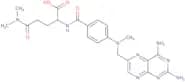
CAS:<p>Methotrexate dimethylamide is a research and development impurity standard with high purity. It is a synthetic drug product that can be custom synthesized to meet the needs of the customer. Methotrexate dimethylamide has been used as an analytical standard for HPLC analysis and as a natural metabolite in metabolism studies. This compound is also known as 71074-44-7, CAS No. 71074-44-7, or Metabolite.</p>Fórmula:C22H27N9O4Pureza:Min. 95%Peso molecular:481.51 g/molTenofovir disoproxil related compound B
CAS:<p>Tenofovir disoproxil related compound B is a peptidyl prodrug that is metabolized by esterases to tenofovir. It has been shown to be an effective agent against Mycobacterium tuberculosis and other bacterial species. Tenofovir disoproxil related compound B was also found to inhibit protein synthesis in Mycobacterium avium and Mycobacterium smegmatis, but not in Escherichia coli. This drug binds to the ribosome's 30S subunit, which blocks the binding of aminoacyl-tRNA and prevents the formation of peptide bonds. The mechanism of action for this drug is similar to that of the antibiotic erythromycin.</p>Fórmula:C8H9N5Pureza:Min. 98 Area-%Peso molecular:175.19 g/molN-Acetylmemantine
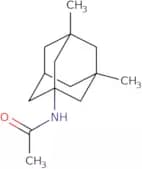
CAS:<p>N-Acetylmemantine is a drug that inhibits the activity of acetylcholinesterase in the brain. It has been shown to inhibit cancer cell growth and induce apoptosis, as well as inhibit the reaction of hydrolysis of acetonitrile with hydrochloric acid in an organic solvent. N-Acetylmemantine is synthesized by heating ethylene in the presence of hydrochloric acid. The synthesis yields a white solid that consists mainly of N-acetylmethamphetamine. This drug interacts with cellular membranes, which may be due to its ability to react with cholesterol or phospholipids. The interaction leads to changes in membrane permeability, which can result in apoptosis.</p>Fórmula:C14H23NOPureza:Min. 95%Cor e Forma:White PowderPeso molecular:221.34 g/molAllopurinol impurity C
CAS:<p>Allopurinol impurity C is a product of the reaction between allopurinol and n-butyl alcohol, which occurs in the presence of sodium hydroxide solution and dimethylformamide. The reaction condition is heated to reflux for 12 hours, after which the mixture is filtered and concentrated under reduced pressure. The resultant crude product is purified by column chromatography with ethyl acetate and then recrystallized from methanol. The synthesis scheme can be found in Figure 1.</p>Fórmula:C6H6N6OPureza:Min. 95%Cor e Forma:Slightly Yellow PowderPeso molecular:178.15 g/molEthyl 3-aminopyrazole-4-carboxylate
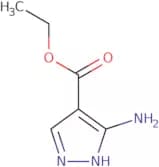
CAS:<p>Ethyl 3-aminopyrazole-4-carboxylate is an anticancer drug that inhibits the growth of cancer cells by inhibiting protein synthesis. It has been shown to inhibit the activity of dpp-iv and pde5, which are enzymes involved in cellular proliferation. Ethyl 3-aminopyrazole-4-carboxylate has also been shown to have antiinflammatory properties, which may be due to inhibition of prostaglandin synthesis. <br>Ethyl 3-aminopyrazole-4-carboxylate is a multinuclear compound that reacts with nitrogen atoms from the pyrazoles to form a stable molecule. Dimethylformamide is used as a solvent for this reaction. The synthesis of ethyl 3-aminopyrazole-4-carboxylate starts with acetylation, which converts the carboxylic acid group into an acetic acid group. The acetic acid group reacts with ammonia and hydrogen cyan</p>Fórmula:C6H9N3O2Pureza:Min. 95%Cor e Forma:PowderPeso molecular:155.16 g/mol3-Amino-4-carbamoylpyrazole hemisulfate
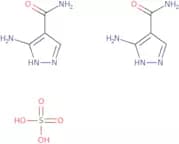
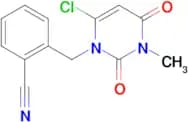
CAS:<p>3-Amino-4-carbamoylpyrazole hemisulfate is a white to yellowish crystalline powder that is soluble in water and methanol. It is a condensation product of allopurinol and ethyl orthoformate with a molecular weight of 312.4. 3-Amino-4-carbamoylpyrazole hemisulfate can be used as an anti-inflammatory agent, but it has not been approved for medical use in the United States.</p>Fórmula:C4H6N4OH2O4SPureza:Min. 95%Cor e Forma:White PowderPeso molecular:175.16 g/mol2-((6-Chloro-3-methyl-2,4-dioxo-3,4-dihydropyrimidin-1(2H)-yl)methyl)benzonitrile
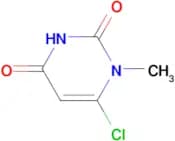
CAS:Fórmula:C13H10ClN3O2Pureza:98%Peso molecular:275.696-CHLORO-1-METHYLPYRIMIDINE-2,4(1H,3H)-DIONE
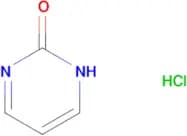
CAS:Fórmula:C5H5ClN2O2Pureza:98%Cor e Forma:Liquid, No data available.Peso molecular:160.562-Hydroxypyrimidine hydrochloride
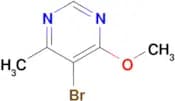
CAS:Fórmula:C4H5ClN2OPureza:97%Cor e Forma:SolidPeso molecular:132.555-BROMO-4-METHOXY-6-METHYLPYRIMIDINE
CAS:Fórmula:C6H7BrN2OPureza:98%Cor e Forma:SolidPeso molecular:203.039


![9-[(2R,3R,4R,5R)-3-fluoro-4-hydroxy-5-(hydroxymethyl)oxolan-2-yl]-6,9-dihydro-3H-purin-6-one](/_next/image/?url=https%3A%2Fstatic.cymitquimica.com%2Fproducts%2F10%2Fthumb-webp%2FF620788.webp&w=3840&q=75)


![4-[2'-(7''-Deazaguanine)ethyl]benzoic acid N-hydroxysuccinimide ester](/_next/image/?url=https%3A%2Fstatic.cymitquimica.com%2Fproducts%2F3D%2Fthumb-webp%2FFD20837.webp&w=3840&q=75)
![4-[[(2,4-Diamino-6-pteridinyl)methyl]methylamino]benzoic acid](/_next/image/?url=https%3A%2Fstatic.cymitquimica.com%2Fproducts%2F3D%2Fthumb-webp%2FID20780.webp&w=3840&q=75)