Fonte Botânica
Foram encontrados 1496 produtos de "Fonte Botânica"
Phloretin-3-hydroxy-2'-O-glucoside
CAS:Phloretin-3-hydroxy-2'-O-glucoside is a naturally occurring polyphenolic compound, specifically a type of dihydrochalcone. It is derived primarily from apples, where it is present as a glycoside form of phloretin. The compound's mode of action involves its strong antioxidant properties, scavenging free radicals, and reducing oxidative stress within biological systems. This capability plays a critical role in protecting cellular components from damage and preserving cellular integrity.
Fórmula:C21H24O11Pureza:Min. 95%Peso molecular:452.41 g/molMemantine lactose adduct
CAS:Memantine lactose adduct is a synthetic pharmaceutical compound, which is derived from memantine, a well-known NMDA receptor antagonist, conjugated with lactose. This compound is sourced through chemical synthesis processes that aim to explore alternative formulations and derivatives of memantine to enhance delivery and bioavailability.Fórmula:C24H41NO10Pureza:Min. 95%Cor e Forma:White to pale brown solid.Peso molecular:503.58 g/molClinopodiside A
CAS:Clinopodiside A is a bioactive compound, which is a natural triterpenoid saponin isolated from plants belonging to the genus Clinopodium. This compound is sourced specifically from Clinopodium chinense, a species traditionally utilized in herbal medicine. The mode of action of Clinopodiside A primarily involves modulation of cellular processes through its interaction with cell membranes and signaling pathways, leading to various biological effects.Fórmula:C48H78O19Pureza:Min. 95%Peso molecular:959.12 g/molClinopodiside G
CAS:Clinopodiside G is a natural product, specifically a triterpenoid saponin, which is derived from the plant Clinopodium chinense. This compound is extracted from the roots and aerial parts of the plant, which are traditionally used in herbal medicine. The mode of action of Clinopodiside G involves interactions with cellular membranes and proteins, which may modulate signaling pathways and exhibit various biological activities, including anti-inflammatory, antioxidant, and cytotoxic effects.Fórmula:C48H78O20Pureza:Min. 95%Peso molecular:975.12 g/molScandoside
CAS:Scandoside is a bioactive compound, classified as an iridoid glycoside, which is isolated from certain plant species, particularly those belonging to the Apocynaceae and Scrophulariaceae families. This compound is sourced from the leaves and roots of these plants and has attracted scientific interest due to its diverse range of biological activities.
Fórmula:C16H22O11Pureza:Min. 95%Peso molecular:390.34 g/molGinsenoside Rh2
CAS:Ginsenoside Rh2 is a bioactive compound, which is a triterpenoid saponin derived from the root of the Panax ginseng plant. It operates through multiple biochemical pathways, including the modulation of cell signaling cascades such as the inhibition of cell proliferation and the induction of apoptosis in cancer cells. These actions are primarily mediated through mitochondrial pathways and involve the regulation of pro-apoptotic and anti-apoptotic proteins.Fórmula:C36H62O8Pureza:Min. 95%Cor e Forma:White PowderPeso molecular:622.87 g/molGypenoside IX
CAS:Gypenoside IX is a saponin compound, which is extracted from the Gynostemma pentaphyllum plant. This source is a perennial climbing herb known for its extensive use in traditional medicine throughout Asia. The mode of action of Gypenoside IX involves modulation of various signaling pathways, such as AMPK and PI3K/Akt, which play significant roles in cellular energy homeostasis and apoptotic processes.
Pureza:Min. 95%trans-Zeatin-9-glucoside-o-glucoside
CAS:trans-Zeatin-9-glucoside-o-glucoside is a cytokinin derivative, which is a type of plant hormone involved in various growth and developmental processes. This compound is sourced from the metabolic conversion of natural cytokinins in plants. It is formed through the glycosylation of zeatin, a naturally occurring cytokinin, adding two glucose molecules.Fórmula:C22H33N5O11Pureza:Min. 95%Peso molecular:543.52 g/mol4-Hydroxy-2-methoxyphenol 1-O-(6-O-syringoyl)glucoside
CAS:4-Hydroxy-2-methoxyphenol 1-O-(6-O-syringoyl)glucoside is a phenolic glycoside, which is derived from plant sources, particularly in certain tree barks and leaves known for their rich polyphenolic content. This compound is a conjugate of glucoside and syringoyl moieties, contributing to its unique structural and functional properties. The mode of action of this compound involves its ability to act as an antioxidant, likely through electron donation that neutralizes free radicals, thereby mitigating oxidative stress within biological systems.Fórmula:C22H26O12Pureza:Min. 95%Peso molecular:482.43 g/molGypenoside I
CAS:Gypenoside I is a saponin compound, which is a natural product sourced from the medicinal plant Gynostemma pentaphyllum, also known as Jiaogulan. This plant is native to Asia and has been used in traditional medicine due to its wide range of purported health benefits.Fórmula:C46H78O18Pureza:Min. 95%Peso molecular:919.1 g/molIsorhamnetin-3-O-robinobioside
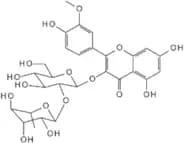
CAS:Isorhamnetin-3-O-robinobioside is a flavonoid glycoside, classified as a secondary plant metabolite. This compound is primarily sourced from various medicinal plants, where it is naturally present as a bioactive constituent. Its mode of action is predominantly based on its antioxidative properties. By scavenging free radicals and inhibiting oxidative stress, it may contribute to the stabilization of cellular environments and reduction of oxidative damage within biological systems.Fórmula:C28H32O16Pureza:Min. 95%Peso molecular:624.54 g/molQuinovic acid 3-O-(6-deoxy-b-D-glucopyranoside) 28-O-b-D-glucopyranosyl ester
CAS:Quinovic acid 3-O-(6-deoxy-b-D-glucopyranoside) 28-O-b-D-glucopyranosyl ester is a natural triterpenoid glycoside, which is derived from plants belonging to the Rubiaceae family. This compound is primarily extracted from the bark of certain species, such as those from the genus *Uncaria*. With its complex glycoside structure, it acts by modulating various biochemical pathways, including anti-inflammatory and antiviral mechanisms, possibly through the inhibition of viral replication or interference with inflammatory cytokine production.Pureza:Min. 95%4-O-(α-D-Glucopyranosyl) moranoline
CAS:4-O-(α-D-Glucopyranosyl) moranoline is an iminosugar that functions as an effective glycosidase inhibitor, specifically targeting enzymes involved in carbohydrate metabolism. It is derived from natural sources such as mulberry leaves, where it is produced as a defense compound against herbivores. This substance interferes with the activity of α-glucosidases by mimicking the transition state of the glycosidic bond cleavage, thereby preventing the breakdown of complex carbohydrates into glucose.Fórmula:C12H23NO9Pureza:Min. 95%Cor e Forma:PowderPeso molecular:325.32 g/molMomordicoside K
CAS:Momordicoside K is a triterpenoid saponin, which is derived from the bitter melon plant, scientifically known as *Momordica charantia*. This compound predominantly occurs in the fruit and leaves of the plant. As a phytochemical, Momordicoside K contributes to the plant’s defense mechanisms against pests and environmental stress.Fórmula:C37H60O9Pureza:Min. 95%Peso molecular:648.9 g/molMomordicoside L
CAS:Momordicoside L is a triterpenoid saponin, which is a class of chemical compounds predominantly found in plants. It is derived from Momordica charantia, commonly known as bitter melon, a plant which has been traditionally utilized in various medicinal practices. The mode of action of Momordicoside L involves its capacity to influence cellular pathways, particularly through the modulation of glucose metabolism and potential anti-inflammatory effects. This is achieved via the interaction with specific cellular receptors, thereby impacting signal transduction processes.
Fórmula:C36H58O9Pureza:Min. 95%Peso molecular:634.8 g/molCistanoside A
CAS:Cistanoside A is a phenylethanoid glycoside, which is a bioactive compound derived from plants of the genus Cistanche, particularly noted for their use in traditional medicine. These plants are typically found in arid regions and have been used in various cultural medicinal practices. Cistanoside A exerts its effects primarily through antioxidant and neuroprotective mechanisms. It is known to scavenge free radicals, reduce oxidative stress, and inhibit apoptosis at the cellular level, thereby offering protective benefits to neuronal cells.Fórmula:C36H48O20Pureza:Min. 95%Cor e Forma:SolidPeso molecular:800.75 g/molRebaudioside N
CAS:Rebaudioside N is a naturally occurring steviol glycoside, which is a type of molecule known for its sweetening properties. This compound is sourced from the leaves of the Stevia rebaudiana plant, a species native to South America renowned for its natural sweetness due to the presence of various glycosides. Rebaudioside N and other similar compounds are part of a broader category of non-caloric sweeteners that have gained attention due to their desirable taste profiles and natural origin.Fórmula:C56H90O32Pureza:Min. 95%Peso molecular:1,275.29 g/molEugenol rutinoside
CAS:Eugenol rutinoside is a bioactive compound, which is derived from certain plant species known for their medicinal properties. It is formed by the glycosylation of eugenol, a phenolic compound, with a rutinoside sugar moiety. This derivation typically occurs in plants such as cloves and other members of the Myrtaceae family.Fórmula:C22H32O11Pureza:Min. 95%Peso molecular:472.48 g/molAescin polysulphate sodium salt
CAS:Aescin polysulphate sodium salt is a synthetic anti-inflammatory compound, designed as an enhanced version of the natural saponin, aescin, derived from horse chestnut seeds (Aesculus hippocastanum). The modification to create the polysulphate sodium salt increases the solubility and bioavailability of the compound, facilitating its absorption and effectiveness in biological systems.
Fórmula:C53H82O36S4Pureza:Min. 95%Peso molecular:1,423.46 g/molIsorebaudioside A
CAS:Isorebaudioside A is a type of steviol glycoside sweetener, which is extracted from the leaves of the Stevia rebaudiana plant. As a product of natural origin, it functions as a high-intensity sweetener by mimicking the taste of sucrose without the caloric content. Isorebaudioside A interacts with the taste receptors on the tongue, activating the sweet taste pathways. This mode of action allows it to provide a sugar-like sweetness, often considered favorable due to its clean taste profile and lack of caloric contributions.
Fórmula:C44H70O23Pureza:Min. 95%Peso molecular:967.01 g/mol