Metais
Subcategorias de "Metais"
Foram encontrados 4495 produtos de "Metais"
Cyclopentadienyl(p-cymene)ruthenium(II) hexafluorophosphate, min. 98%
CAS:Cyclopentadienyl(p-cymene)ruthenium(II) hexafluorophosphate, min. 98%
Fórmula:Ru(C5H5)(C10H14)PF6Pureza:min. 98%Cor e Forma:off-white to pale brown pwdr.Peso molecular:445.35Dichloro[rel-[N2(S)]-N1,N1-dimethyl-N2-[2-[(R)-phenylthio-κS]ethyl]-1,2-ethanediamine-κNN1,κN2](triphenylphosphine)ruthenium(II), compd. with dichloromethane
CAS:Dichloro[rel-[N2(S)]-N1,N1-dimethyl-N2-[2-[(R)-phenylthio-κS]ethyl]-1,2-ethanediamine-κNN1,κN2](triphenylphosphine)ruthenium(II), compd. with dichloromethane
Fórmula:C30H35Cl2N2PRuSCH2Cl2Cor e Forma:burgundy xtl.Peso molecular:658.63Dichloro[rel-[N(S)]-N-[2-(diphenylphosphinyl-κO)ethyl]-2-[(R)-phenylthio-κS]ethanamine-κN](triphenylphosphine) ruthenium
Fórmula:C40H39Cl2NOP2RuSCor e Forma:dark red xtl.Peso molecular:815.74Dichloro[rel-[N(S)]-N-[2-[(R)-phenylthio-κS]ethyl]-[1-pyrrolidineethanamine-κNN1,κN1](triphenylphosphine)ruthenium(II)
CAS:Dichloro[rel-[N(S)]-N-[2-[(R)-phenylthio-κS]ethyl]-[1-pyrrolidineethanamine-κNN1,κN1](triphenylphosphine)ruthenium(II)
Fórmula:C32H37Cl2N2PRuSCor e Forma:pink pwdr.Peso molecular:684.67Chloro[hydrotris(pyrazol-1-yl)borato]bis(triphenylphosphine)ruthenium(II) ethanol adduct
CAS:Chloro[hydrotris(pyrazol-1-yl)borato]bis(triphenylphosphine)ruthenium(II) ethanol adduct
Fórmula:RuCl(C6H5)3P(C9H10BN6)·5CH3CH2OHCor e Forma:yellow pwdr.Peso molecular:874.12 (897.16)Dichlorotricarbonylruthenium(II) dimer, min. 98%
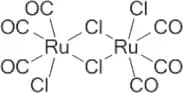
CAS:Dichlorotricarbonylruthenium(II) dimer, min. 98%
Fórmula:RuCl2(CO)3Pureza:min. 98%Cor e Forma:off-white xtl.Peso molecular:512.02Bis(ethylcyclopentadienyl)ruthenium(II), 98% (99.9%-Ru), 44-0040, contained in high-temp 50 ml Swagelok® cylinder (96-1071) for CVD/ALD
CAS:Bis(ethylcyclopentadienyl)ruthenium(II), 98% (99.9%-Ru), 44-0040, contained in high-temp 50 ml Swagelok® cylinder (96-1071) for CVD/ALD
Fórmula:(CH3CH2)C5H4RuPureza:(99.9%-Ru)Cor e Forma:pale yellow liq.Peso molecular:287.37Bis(2,2,6,6-tetramethyl-3,5-heptanedionato)magnesium, anhydrous, min. 98% [Mg(TMHD)2] , 12-0900, contained in high-temp 50 ml Swagelok® cylinder (96-1071) for CVD/ALD
CAS:Bis(2,2,6,6-tetramethyl-3,5-heptanedionato)magnesium, anhydrous, min. 98% [Mg(TMHD)2] , 12-0900, contained in high-temp 50 ml Swagelok® cylinder (96-1071) for CVD/ALD
Fórmula:Mg(C11H19O2)2Pureza:min. 98%Cor e Forma:white pwdr.Peso molecular:390.85Magnesium (N,N,N',N'-tetramethylethylenediamine)bis[BREW] (99.99+%-Mg) PURATREM
Magnesium (N,N,N',N'-tetramethylethylenediamine)bis[BREW] (99.99+%-Mg) PURATREM
Fórmula:Mg(C6H16N2)CHyC(O)CHC(O)CHy(xyxPureza:(99.99+%-Mg)Cor e Forma:pale yellow liq.Bis(N,N’-di-t-butylacetamidinato)ruthenium(II) dicarbonyl, 98% (99.99%-Ru) PURATREM
CAS:Bis(N,N-di-t-butylacetamidinato)ruthenium(II) dicarbonyl, 98% (99.99%-Ru) PURATREM
Fórmula:C22H42N4O2RuPureza:98% (99.99%-Ru)Cor e Forma:beige to yellow solidPeso molecular:495.67Copper(II) Acetate Monohydrate
CAS:Produto ControladoApplications Copper(II) Acetate Monohydrate is a versatile and cost-effective reagent that is used as a catalyst for N-monoalkylation of amino derivatives that are poor nucleophiles, and also for the synthesis of symmetrical 1,3-diynes. Copper(II) Acetate is also used as a mild caustic in the medical field.
Not a dangerous good if item is equal to or less than 1g/ml and there is less than 100g/ml in the package
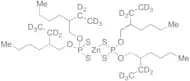
References Balaraman, K. & Kesavan, V.: Synthesis, 2010, 3461 (2010); Martinez-Ascencio, A., et al.: Tetrahedron Lett., 51, 325 (2010); Theophanides, T. & Anastassopoulou, J.: Crit. Rev. Oncol. Hematol., 42, 57 (2002)Fórmula:C4H8O4·Cu·H2OCor e Forma:NeatPeso molecular:181.63Zinc Bis(2-Ethylhexyl) Phosphorodithioate-d20
CAS:Produto ControladoApplications Isotope labelled Zinc Bis(2-Ethylhexyl) Phosphorodithioate is an analytical standard with antioxidant properties.
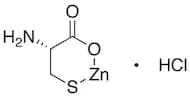
References Cermak, S. et al.: J. Am. Oil Chem. Soc., 91, 2101 (2014); Chemija. et al.: 25, 161 (2014);Fórmula:C32D20H48O4P2S4ZnCor e Forma:NeatPeso molecular:792.62Zinc Cysteinate Hydrochloride
CAS:Produto ControladoApplications Increases activity of the antioxidative enzymes Catalase and Glutathione Peroxidase, thereby protecting retinal epithelial cells from high hydrogen peroxide concentrations.
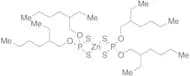
References Hanley, W., et al.: Chem-Biol. Interactions, 21, 263 (1978),Fórmula:C3H5NO2S·HCl·ZnCor e Forma:NeatPeso molecular:221.012Zinc Bis(2-Ethylhexyl) Phosphorodithioate
CAS:Produto ControladoApplications Zinc Bis(2-Ethylhexyl) Phosphorodithioate is an analytical standard with antioxidant properties.
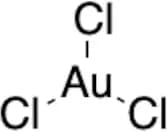
References Cermak, S. et al.: J. Am. Oil Chem. Soc., 91, 2101 (2014); Chemija. et al.: 25, 161 (2014);Fórmula:C32H68O4P2S4ZnCor e Forma:NeatPeso molecular:772.47Gold(III) Chloride
CAS:Produto ControladoApplications Gold(III) chloride (CAS# 13453-07-1) is a useful research chemical compound.
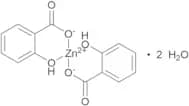
Fórmula:AuCl3Cor e Forma:NeatPeso molecular:303.326Zinc Salicylate Hydrate
CAS:Applications Zinc salicylate trihydrate (CAS# 16283-36-6) is a useful research chemical compound.
Fórmula:C14H10O6Zn·2H2OCor e Forma:NeatPeso molecular:375.665Iron Triabietate
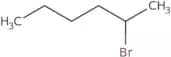
CAS:Produto ControladoFórmula:C20H30O2FeCor e Forma:NeatPeso molecular:321.06333333332-Bromohexane (contains 3-Bromohexane) (stabilized with Copper chip)
CAS:2-Bromohexane is an organic compound and a chemical building block. It is produced by the reaction of 1,3-dibromohexane with copper. 2-Bromohexane is used in the production of epoxides and other chemicals. The synthesis of 2-bromohexane starts with the addition of bromine to 1,3-dibromohexane followed by the addition of copper (II) chloride. This reaction produces 3-bromohexane as a byproduct which can be removed from the reaction mixture using a Dean–Stark trap. In this process, two moles of hydrogen are used to convert one mole of bromine into one mole of hydrogen bromide gas, which can be easily condensed into liquid form. The monoalkylation product 2-bromohexane reacts with an alkyl halide to produce a mixture containing two different alkyl halides. These
Fórmula:C6H13BrPureza:85%Peso molecular:165.07 g/molChromium(III) chloride hexahydrate
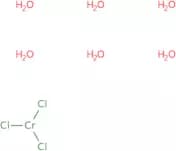
CAS:Chromium(III) chloride hexahydrate is a coordination compound with the chemical formula CrCl3·6H2O. It is soluble in water and has a basic, hexagonal crystal structure. In vitro studies have shown that this compound binds to DNA and inhibits enzymes such as tyrosinase, which plays an essential role in the biosynthesis of melanin. Chromium(III) chloride hexahydrate also inhibits the activity of other enzymes that are involved in the transfer of phosphate groups in reactions involving zirconium oxide and hydrogen fluoride. This compound also has hypoglycemic effects, leading to lower blood sugar levels in rats.Fórmula:CrCl3•(H2O)6Pureza:Min. 95%Cor e Forma:Green PowderPeso molecular:266.45 g/molZinc chloride
CAS:Zinc chloride is a salt that is used as an ingredient in the production of polymer compositions. Zinc chloride has been shown to have significant cytotoxicity for tumor cells and to inhibit leukemia inhibitory factor, which may be due to its ability to bind copper ions. It also inhibits the activity of toll-like receptors, which are involved in the angiogenic process, by binding copper ions. Zinc chloride has been shown to have a potent rate constant for inhibition of hyperproliferative diseases such as cancer and HIV. This may be due to zinc's coordination geometry and its ability to bind copper ions.Fórmula:ZnCl2Pureza:Min. 95%Peso molecular:136.29 g/mol


![Dichloro[rel-[N2(S)]-N1,N1-dimethyl-N2-[2-[(R)-phenylthio-κS]ethyl]-1,2-ethanediamine-κNN1,κN2](tr…](/_next/image/?url=https%3A%2Fstatic.cymitquimica.com%2Fproducts%2F08%2Fthumb-webp%2F44-0575.webp&w=3840&q=75)
![Dichloro[rel-[N(S)]-N-[2-(diphenylphosphinyl-κO)ethyl]-2-[(R)-phenylthio-κS]ethanamine-κN](triphen…](/_next/image/?url=https%3A%2Fstatic.cymitquimica.com%2Fproducts%2F08%2Fthumb-webp%2F44-3240.webp&w=3840&q=75)
![Dichloro[rel-[N(S)]-N-[2-[(R)-phenylthio-κS]ethyl]-[1-pyrrolidineethanamine-κNN1,κN1](triphenylpho…](/_next/image/?url=https%3A%2Fstatic.cymitquimica.com%2Fproducts%2F08%2Fthumb-webp%2F44-0570.webp&w=3840&q=75)
![Chloro[hydrotris(pyrazol-1-yl)borato]bis(triphenylphosphine)ruthenium(II) ethanol adduct](/_next/image/?url=https%3A%2Fstatic.cymitquimica.com%2Fproducts%2F08%2Fthumb-webp%2F44-0124.webp&w=3840&q=75)

![Bis(2,2,6,6-tetramethyl-3,5-heptanedionato)magnesium, anhydrous, min. 98% [Mg(TMHD)2] , 12-0900, c…](/_next/image/?url=https%3A%2Fstatic.cymitquimica.com%2Fproducts%2F08%2Fthumb-webp%2F98-4069.webp&w=3840&q=75)