Metais
Subcategorias de "Metais"
Foram encontrados 4495 produtos de "Metais"
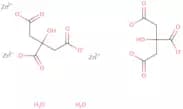
Zinc citrate dihydrate
CAS:Zinc citrate dihydrate is a photocatalyst that can be used to clean contaminated materials. It has been shown to have strong disinfectant properties, especially in the presence of sodium carbonate or citric acid. This substance is also used as a structural analysis agent for fabricating cavities and for gravimetric analysis of carbon sources. Zinc citrate dihydrate has also been found to have phototoxic effects, which are due to its ability to generate reactive oxygen species such as singlet oxygen and superoxide anion radicals. The active substances in zinc citrate dihydrate may cause genetic damage, as well as changes in the NMR spectra of rat primary hepatocytes.Fórmula:(C6H8O7)2•Zn3•(H2O)2Pureza:Min. 95%Cor e Forma:PowderPeso molecular:616.46 g/molChromium(III) chloride hexahydrate
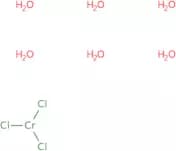
CAS:Chromium(III) chloride hexahydrate is a coordination compound with the chemical formula CrCl3·6H2O. It is soluble in water and has a basic, hexagonal crystal structure. In vitro studies have shown that this compound binds to DNA and inhibits enzymes such as tyrosinase, which plays an essential role in the biosynthesis of melanin. Chromium(III) chloride hexahydrate also inhibits the activity of other enzymes that are involved in the transfer of phosphate groups in reactions involving zirconium oxide and hydrogen fluoride. This compound also has hypoglycemic effects, leading to lower blood sugar levels in rats.Fórmula:CrCl3•(H2O)6Pureza:Min. 95%Cor e Forma:Green PowderPeso molecular:266.45 g/molNickel sulfate
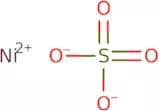
CAS:Nickel sulfate is an inorganic compound that has been shown to have a carcinogenic potential. It is also a strong reducing agent and can be used to reduce metal hydroxides. Nickel sulfate has been shown to inhibit the activity of enzymes, such as catalase, in human serum at high concentrations. This compound is not soluble in water but dissolves in acidic solutions or reacts with sodium citrate, forming nickel citrate. Nickel sulfate is structurally similar to the group p2 metals (i.e., copper, zinc) and can be used for structural analysis of these metals. Nickel sulfate is soluble in water vapor and hydrogen bonding interactions occur between nickel sulfate and other compounds containing sulfur atoms (e.g., hydrogen sulfide).
Fórmula:NiO4SPureza:Min. 95%Peso molecular:154.76 g/molCopper (II) phosphate
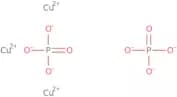
CAS:Copper (II) phosphate is a chemical compound consisting of copper and phosphate ions. It has been used for wastewater treatment, as an analytical chemistry reagent, and as an oxidation catalyst. Copper (II) phosphate is also used in the synthesis of pharmaceuticals, such as alkylating agents and antibiotics. Copper (II) phosphate is stable in the presence of acids, alkalis, and organic solvents. It can be synthesized by reacting copper chloride with sodium carbonate in water at a temperature between 40-50 degrees Celsius. This reaction produces hydrogen bonds between the hydroxyl groups on the surface of the copper ion with those on the phosphorus atom. Thermal expansion measurements have shown that copper (II) phosphate expands at a rate that is dependent on temperature. The addition of nitrogen atoms to this compound increases its thermal expansion rate.Fórmula:Cu3O8P2Pureza:Min. 95%Peso molecular:380.58 g/molCopper(II) Bis(trifluoromethanesulfonyl)imide
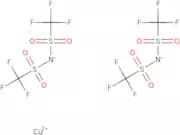
CAS:Please enquire for more information about Copper(II) Bis(trifluoromethanesulfonyl)imide including the price, delivery time and more detailed product information at the technical inquiry form on this page
Fórmula:C4CuF12N2O8S4Pureza:Min. 95%Peso molecular:623.82 g/molNeodymium(III) Chloride
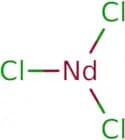
CAS:Neodymium chloride is a reactive metal compound that can be used in the preparation of other neodymium compounds. Neodymium chloride is prepared by dissolving neodymium metal in hydrochloric acid and then heating the solution to about 100 degrees Celsius. The solution is then evaporated to yield the desired product, which includes magnesium salt and several nitrates. The thermal expansion coefficient of neodymium chloride is 0.063 x 10^-6/degree C, while its matrix effect on MgCl2 at 25 degrees Celsius is -0.0032 x 10^-6/degree C. Neodymium chloride has a particle size of 1-2 microns and a density of 4.4 g/cm^3. The thermal properties of this compound are important when considering how it will react with other substances during processing, such as magnesium salts and nitrogen atoms in plasma mass spectrometry due to their similar chemical properties.Fórmula:Cl3NdPureza:Min. 95%Peso molecular:250.6 g/mol1,3-Dibromo-2-propanol (stabilized with Copper chip)
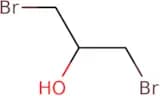
CAS:1,3-Dibromo-2-propanol (stabilized with Copper chip) is an organic compound that belongs to the group of diacids. It is a colorless liquid with a pungent odor. 1,3-Dibromo-2-propanol has been synthetically prepared from hexane and allyl bromide. The product can be used agriculturally as a halogenated hydrocarbon solvent or as an intermediate in the synthesis of other chemicals. 1,3-Dibromo-2-propanol reacts with nucleophiles such as halides and carboxylates to produce unsymmetrical aldehydes. This reaction is catalyzed by hypobromous acid (HOBr). The product also reacts with carboxylic acid chlorides to form nucleophilic carboxylates. 1,3-Dibromo-2-propanol contains chiral centers andFórmula:C3H6Br2OPureza:Min. 95%Peso molecular:217.89 g/molIron(II) ethylenediammonium sulfate tetrahydrate
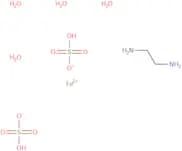
CAS:Please enquire for more information about Iron(II) ethylenediammonium sulfate tetrahydrate including the price, delivery time and more detailed product information at the technical inquiry form on this pageFórmula:FeSO4·NH3CH2CH2NH3SO4·4H2OPureza:Min. 95%Peso molecular:382.15 g/molNickel bis(dimethyldithiocarbamate)
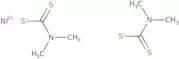
CAS:Nickel bis(dimethyldithiocarbamate) is an inorganic compound that inhibits the growth of bacteria and other microorganisms. It is a thuringiensis, strain, antibacterial and nematicide. Nickel bis(dimethyldithiocarbamate) has been shown to be effective against subtilis, a mutant strain of subtilis that is resistant to many antibiotics. Nickel bis(dimethyldithiocarbamate) also has an effect on nicotinic acetylcholine receptor-mediated transmission in acarids.Fórmula:C6H12N2NiS4Pureza:Min. 95%Peso molecular:299.13 g/molCopper turnings
CAS:Copper turnings are used in analytical chemistry as a chemical biology reagent. They can be used to measure enzyme activities and thermodynamic data of water vapor and copper chloride. Copper turnings have been shown to inhibit the growth of Hl-60 cells, which is a type of human leukemia. Copper turnings also have an electrochemical impedance spectroscopy (EIS) response that can be used for the determination of phase transition temperature.Fórmula:CuPureza:Min. 95%Peso molecular:63.55 g/molCopper(II) nitrate hydrate
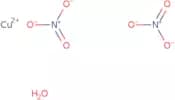
CAS:Copper nitrate hydrate is an isomeric mixture of copper(II) nitrate and copper(I) nitrate. It is a diazonium salt that contains two aminoterephthalate ligands. The reaction mechanism of this compound involves the formation of a copper complex with sodium hydroxide. The product is an insoluble hydrated copper oxide, which can be precipitated from the solution by adding an acid or base. Copper nitrate hydrate can also be obtained by reacting copper(II) chloride with sodium hydroxide in water. This compound has been shown to have antimicrobial properties against Escherichia coli and Staphylococcus aureus, although it does not show any significant activity against Bacillus subtilis or Pseudomonas aeruginosa. Copper nitrate hydrate has been used as a precursor for the synthesis of nanotubes and polycarboxylic acids with molecular weights up to 6 kDa.Fórmula:Cu•(HNO3)2•(H2O)xPureza:Min. 95%Cor e Forma:PowderNickel(II) bromide ethylene glycol dimethyl ether complex
CAS:Nickel(II) bromide ethylene glycol dimethyl ether complex is a coordination compound that contains a chelate ring, which is composed of two bidentate ligands and one monodentate ligand. In this compound, the coordination geometry is octahedral with an axial ratio of 1:2:1. The ligands are bound to the metal through their nitrogen atoms. One of the bidentate ligands binds to the metal through a chloride ion and the other through an alkoxy radical. The functional groups on the ligands are hydroxyls for one of them and amines for the other. Nickel(II) bromide ethylene glycol dimethyl ether complex can be synthesized by activating nickel (II) chloride with hydrogen chloride or by reacting sodium salts with nickel (II) chloride in ethanol solution. This compound can also be obtained from salt metathesis reactions between nickel (II) bromide ethylene glycol dimethyl etherFórmula:NiBr2·CH3OCH2CH2OCH3Pureza:Min. 95%Peso molecular:308.62 g/molZinc (II) Protoporphyrin IX
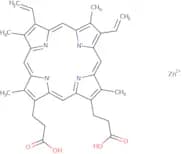
CAS:Zinc protoporphyrin is a heme-based biochemical compound that is used as a calibration standard for spectrophotometric analysis. It has been shown to have an adverse effect on the cardiovascular system, such as atherosclerotic lesion formation in response to oxidative injury. Zinc protoporphyrin also has an effect on brain functions and bowel disease, which may be due to its ability to inhibit iron absorption and promote iron homeostasis.Fórmula:C34H32N4O4ZnPureza:Min. 95%Peso molecular:626.03 g/molErbium(III) acetate hydrate
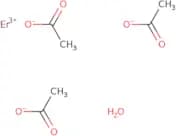
CAS:Erbium(III) acetate hydrate is a crystal form of erbium. It is a rare earth metal which has been used as an optical material and in the production of optic fibers, lasers, and amplifiers. Erbium is also used in the treatment of cancer, where it can be used to destroy tumor cells by heating them with laser light. Erbium(III) acetate hydrate is typically obtained by reacting erbium oxide with acetic acid or acetic anhydride. The crystal has a linear range from 0.5-1.5 micrometers and diffraction peaks at 1.0 and 2.2 micrometers. Erbium(III) acetate hydrate has been shown to have fluorescence resonance energy transfer (FRET) properties, which may be useful in the development of aptasensors for biomolecule detection systems such as antibody-antigen interactions or DNA hybridization reactions.br>br>Fórmula:C6H9ErO6•(H2O)xPureza:Min. 95%Peso molecular:362 g/molRubidium (99.9+%) (breakseal ampoule)
CAS:Rubidium (99.9+%) (breakseal ampoule)
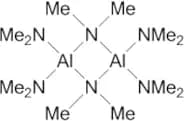
Fórmula:RbPureza:(99.9+%)Cor e Forma:under argonPeso molecular:85.47Hexakis(dimethylamino)dialuminum 98% (99.9%-Al) TDMAA
CAS:Hexakis(dimethylamino)dialuminum 98% (99.9%-Al) TDMAA
Fórmula:C12H36Al2N6Pureza:98% (99.9%-Al)Cor e Forma:white to yellow pwdr.Peso molecular:318.42Nickel acetylacetonate
CAS:Nickel acetylacetonate is a biocompatible polymer that is used as an oxidation catalyst. It reacts with H2O2 to form hydroxyl radicals, which react with organic molecules and other compounds. Nickel acetylacetonate can be used in the chemical ionization process to measure the concentration of reactive oxygen species in aqueous solutions. The reaction mechanism of nickel acetylacetonate is similar to that of other metal-based catalysts such as platinum and palladium. This substance binds to the receptor site on the CCR5 protein on T lymphocytes, thereby inhibiting HIV infection. Nickel acetylacetonate has been shown to have a bound form and an unbound form. The unbound form is more reactive than the bound form due to its increased surface area for binding. The unbound form also has higher catalytic activity for hydrogen abstraction from water molecules or hydroxide ions than does the bound form.Fórmula:C10H14NiO4Pureza:Min. 95%Peso molecular:256.91 g/molNickel(II) bromide trihydrate
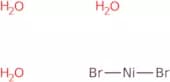
CAS:Nickel(II) bromide trihydrate is an inorganic compound that is soluble in water and alcohol. It has been shown to be a good acceptor for both electron-rich and electron-deficient systems, which makes it useful for cross-coupling reactions. Nickel(II) bromide trihydrate is also a good catalyst for the synthesis of polymers with various functional groups. In addition, it can be used to synthesize ketones from imines and anions. Nickel(II) bromide trihydrate has been shown to have potential applications in cancer therapy as well as magnetic resonance imaging (MRI). The magnetic properties of this compound are due to the presence of unpaired electrons on nickel ions. X-ray crystal structures have revealed that the molecule consists of two nickel ions that are coordinated by six bromide ligands arranged in a trigonal bipyramid shape. This structure gives the molecule a dipole moment, which may be responsible for
Fórmula:NiBr2·3H2OPureza:Min. 95%Peso molecular:272.55 g/molCopper(I) Trifluoromethanesulfonate
CAS:Produto ControladoCopper(I) Trifluoromethanesulfonate (Cu(OTf)) is a diazo compound that reacts with alkyl halides to form terminal alkynes. It can be used in the synthesis of thioacetals, which are important intermediates for the synthesis of milbemycin A4. Cu(OTf) also undergoes reversible binding to chloride ions and undergoes a number of reactions including alkylation, aziridination, and acetonitrile. Copper(I) Trifluoromethanesulfonate has been shown to have antibiotic properties and binds tightly to bacterial ribosomes. Copper(I) Trifluoromethanesulfonate has also been shown to bind x-ray crystal structures of Milbemycin A4.Fórmula:C9H8Cu2F6O6S2Pureza:Min. 95%Peso molecular:517.37 g/molNiobium disulphide
CAS:Niobium disulphide is a low-energy solid that has been shown to have a high surface area and good thermal expansion. It can be synthesized by reacting niobium oxide with ethylene diamine in the presence of boron nitride. Niobium disulphide reacts with water to form hydrogen sulphide, which can be detected by infrared spectroscopy. This material is used as an additive for polymers and coatings, as well as in filaments for light bulbs.
Fórmula:NbS2Pureza:Min. 95%Cor e Forma:PowderPeso molecular:157.04 g/mol