Monossacáridos
Subcategorias de "Monossacáridos"
- Aloses(11 produtos)
- Arabinoses(21 produtos)
- Eritroses(11 produtos)
- Frutoses(9 produtos)
- Fucoses(36 produtos)
- Galactosamina(41 produtos)
- Galactoses(262 produtos)
- Glucoses(365 produtos)
- Ácidos Glucurónicos(52 produtos)
- Glico-substratos para enzimas(78 produtos)
- Guloses(6 produtos)
- Idoses(4 produtos)
- Inositóis(15 produtos)
- Lixoses(4 produtos)
- Mannoses(65 produtos)
- O-Glicanos(48 produtos)
- Psicoses(3 produtos)
- Ramnoses(10 produtos)
- Riboses(61 produtos)
- Ácidos siálicos(100 produtos)
- Sorboses(4 produtos)
- Açúcares(173 produtos)
- Tagatoses(4 produtos)
- Taloses(8 produtos)
- Xiloses(20 produtos)
Foram encontrados 6089 produtos de "Monossacáridos"
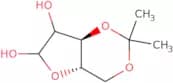
3,5-O-Isopropylidene-L-arabinose
3,5-O-Isopropylidene-L-arabinose is used as a synthetic sugar that is often used in the production of glycoproteins. It is also a component of complex carbohydrates and polysaccharides. 3,5-O-Isopropylidene-L-arabinose may be modified with methylation or fluorination to create derivatives that are more reactive than the parent compound. This product is available in high purity and can be custom synthesized to meet your specifications.Pureza:Min. 95%1,2:5,6-Di-O-isopropylidene-3-O-p-toluenesulfonyl-a-D-gulofuranose
1,2:5,6-Di-O-isopropylidene-3-O-p-toluenesulfonyl-a-D-gulofuranose is a custom synthesis with a CAS number. It is a complex carbohydrate that has been modified with methylation and glycosylation. This product is also fluorinated and has been synthesized using the Click modification. The 1,2:5,6-Di-O-isopropylidene-3-O-p-toluenesulfonyl-a -D -gulofuranose is an Oligosaccharide that is highly pure and of high purity.Fórmula:C19H26O8SPureza:Min. 95%Peso molecular:414.47 g/molBenzyl 4,6-O-benzylidene-b-D-glucopyranoside
CAS:Benzyl 4,6-O-benzylidene-b-D-glucopyranoside is a synthetic monosaccharide. It is an oligosaccharide that has undergone glycosylation and polysaccharide modifications. Benzyl 4,6-O-benzylidene-b-D-glucopyranoside can be used for the preparation of various carbohydrates with customized structures. This product can be synthesized in high purity.Fórmula:C20H22O6Pureza:Min. 95%Cor e Forma:PowderPeso molecular:358.39 g/molO-(2-Azido-4,6-O-benzylidene-2-deoxy-a-D-galactopyranosyl)-N-[(9H-fluoren-9-ylmethoxy)carbonyl]-L-threonine tert-Butyl Ester
CAS:The compound is an O-linked glycosylation site-specifically modified oligosaccharide. The modification is a methylation of the hydroxyl group on the 2-position of the sugar moiety. The carbohydrate is a polysaccharide that has been fluorinated at one or more positions. It has CAS No. 195976-07-9 and was synthesized by glycosylation and methylation of L-threonine tert-butyl ester with D-galactopyranosyl chloride in presence of 4,6-O-(2,3,4,6-tetraisopropoxybenzoyl)-D-galactopyranosyl chloride (TIPB) and sodium hydrogen carbonate (NaHCO).Fórmula:C36H40N4O9Pureza:Min. 95%Peso molecular:672.72 g/mol(4R,5R)-5-(Methoxycarbonyl)-2,2-dimethyl-1,3-dioxolane-4-carboxylic acid
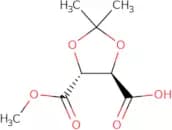
CAS:(4R,5R)-5-(Methoxycarbonyl)-2,2-dimethyl-1,3-dioxolane-4-carboxylic acid is a synthetic monosaccharide that can be used in the synthesis of oligosaccharides and polysaccharides. This chemical is also known as Fluorination, Monosaccharide, Synthetic, Oligosaccharide, complex carbohydrate. It is a high purity product with CAS No. 67812-33-3 and Methylation sugar Carbohydrate Modification.Pureza:Min. 95%4-Methylphenyl 2-acetamido-3,4,6-tri-O-acetyl-2-deoxy-b-D-glucopyranoside
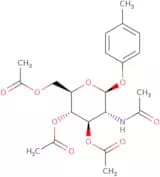
CAS:4-Methylphenyl 2-acetamido-3,4,6-tri-O-acetyl-2-deoxy-b-D-glucopyranoside is a custom synthesis. It is an Oligosaccharide that is a Polysaccharide with a Modification of saccharide and Methylation. Carbohydrate is the most abundant organic molecule on earth. Sugars are carbohydrates and they are classified by their number of carbon atoms. 4MPTAGdG has a Glycosylation and Click modification, which suggests Fluorination and Synthetic. This carbohydrate has high purity and is made up of just one type of sugar: glucose.Fórmula:C21H27NO9Pureza:Min. 95%Peso molecular:437.44 g/mol8-Methoxycarbonyloctyl 2-deoxy-2-phthalimido-b-D-glucopyranoside
CAS:8-Methoxycarbonyloctyl 2-deoxy-2-phthalimido-b-D-glucopyranoside is a glycoconjugate that is used as an anti-tumor agent. It is a synthetic glycosaminoglycan with a polysaccharide backbone and fluorinated saccharide branches. The monosaccharides are linked by methylene bridges, and the oligosaccharides are modified with methoxycarbonyl groups. This compound has been shown to have activity against tumor cells in vitro and in vivo, and it may be useful for the treatment of cancer. 8-Methoxycarbonyloctyl 2-deoxy-2-phthalimido-b-D-glucopyranoside can be synthesized on request.Fórmula:C24H33NO9Pureza:Min. 95%Peso molecular:479.52 g/molα-D-Galactose
CAS:α-D-Galactose is a monosaccharide that is found in the human serum. It is a potent inducer of liver lesions and mitochondrial membrane potential, which may be due to its ability to stimulate the synthesis of proinflammatory cytokines. α-D-Galactose also has anti-inflammatory properties, as well as structural analysis properties that can be used for diagnosis. α-D-Galactose has been used as a model system for studying oligosaccharides, which are carbohydrates with more than one sugar unit. α-D-Galactose binds to sephadex g-100 by hydrogen bonds and can be detected by laser ablation mass spectrometry.Fórmula:C6H12O6Pureza:Min. 95%Peso molecular:180.16 g/mol2,6-Di-O-acetyl-3,4-di-O-benzyl-a-D-mannopyranosyl trichloroactimidate
CAS:2,6-Di-O-acetyl-3,4-di-O-benzyl-a-D-mannopyranosyl trichloroactimidate is a synthetic, glycosylate sugar that can be used in the synthesis of oligosaccharides and polysaccharides. This molecule has been fluorinated to increase its lipophilicity and stability. It has been modified with methyl groups to improve its reactivity with other molecules. The purity of 2,6-Di-O-acetyl-3,4-di-O-benzyl-a-D-mannopyranosyl trichloroactimidate is greater than 98%.Fórmula:C26H28Cl3NO8Pureza:Min. 95%Peso molecular:588.86 g/molMethyl 3-O-benzyl-2-deoxy-2-phthalimido-b-D-glucopyranoside
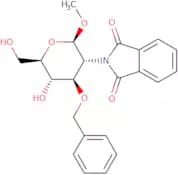
CAS:Methyl 3-O-benzyl-2-deoxy-2-phthalimido-b-D-glucopyranoside is a synthetic, fluorinated saccharide that can be used as a glycosylation or Click modification reagent. It can be used for the synthesis of oligosaccharides and polysaccharides and has been shown to be capable of introducing methyl groups in saccharides. Methyl 3-O-benzyl-2-deoxy-2-phthalimido-b-D-glucopyranoside is also a potent inhibitor of bacterial RNA polymerase.Fórmula:C22H23NO7Pureza:Min. 95%Peso molecular:413.42 g/molD-Glucose-1,2,3-13C3
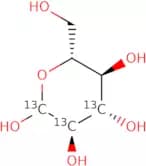
CAS:D-Glucose-1,2,3-13C3 is a synthetic monosaccharide that has been fluorinated at the 1, 2 and 3 positions. The 13C isotope has been used to study the glycosylation of this compound. This product is available in custom synthesis quantities.Fórmula:C3C3H12O6Pureza:Min. 95%Peso molecular:183.16 g/mol(2S- trans) -4- Hydroxy- N- methyl 2- pyrrolidinecarboxami de
CAS:(2S- trans)-4-Hydroxy-N-methyl 2-pyrrolidinecarboxamide is a modification of the sugar molecule. It is a complex carbohydrate that belongs to the group of oligosaccharides. It has CAS number 143035-54-5 and can be synthesized in high purity with a glycosylation process. This chemical can also be fluorinated and saccharide substituted to create a wide range of products with different properties.Pureza:Min. 95%a-L-Arabinopyranosylnitromethane
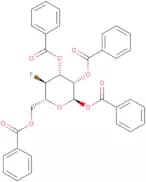
CAS:a-L-Arabinopyranosylnitromethane is a synthetic, complex carbohydrate that can be used for glycosylation and methylation reactions. It is also an intermediate in the synthesis of other carbohydrates, such as oligosaccharides. This compound has been shown to be resistant to fluorination and alkylation reactions. The purity of this product is greater than 98%.Fórmula:C6H11NO6Pureza:Min. 95%Peso molecular:193.2 g/mol1,2,3,6-Tetra-O-benzoyl-4-deoxy-4-fluoro-a-D-mannopyranose
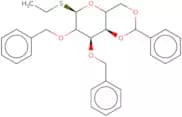
CAS:1,2,3,6-Tetra-O-benzoyl-4-deoxy-4-fluoro-a-D-mannopyranose is a high purity synthetic carbohydrate that has been modified with methylation and glycosylation. It is an Oligosaccharide that belongs to the Polysaccharide group. This complex carbohydrate is a saccharide with a CAS number of 1309463-38-4. The 1,2,3,6-Tetra-O-benzoyl-4-deoxy--4--fluoro--aD--mannopyranose is a sugar that can be used for Click modification.Fórmula:C34H27FO9Pureza:Min. 95%Peso molecular:598.57 g/molEthyl 2,3-di-O-benzyl-4,6-O-benzylidene-a-D-thiomannopyranoside
CAS:Ethyl 2,3-di-O-benzyl-4,6-O-benzylidene-a-D-thiomannopyranoside is a custom synthesis of an oligosaccharide with a complex carbohydrate structure. It can be modified to suit customer specifications. This product has been fluorinated and is available in high purity. Ethyl 2,3-di-O-benzyl-4,6-O-benzylidene-a-D-thiomannopyranoside is a sugar that can be used for the synthesis of polysaccharides and saccharides. It has been synthesized by methylation and Click modification.Fórmula:C29H32O5SPureza:Min. 95%Peso molecular:492.63 g/molp-Methoxyphenyl 1-thio-b-D-galactopyranoside
CAS:p-Methoxyphenyl 1-thio-β-D-galactopyranoside is a synthetic carbohydrate that has been modified with fluorine. It is a complex carbohydrate and an oligosaccharide that can be synthesized using a custom synthesis. This product is high purity, methylated, glycosylated, and click modified.Pureza:Min. 95%L-Galactose-6-O-sulphate sodium salt
L-Galactose-6-O-sulphate sodium salt is a modified carbohydrate that is synthesized by modifying the chemical structure of L-galactose. This modification can be accomplished using chemical reactions such as methylation, saccharide, polysaccharide, and click modification. The CAS number for this product is 68891-70-8.
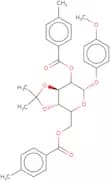
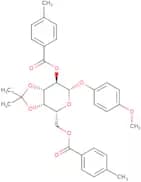
Fórmula:C6H11O9SNaPureza:Min. 95%Peso molecular:282.2 g/mol4-Methoxyphenyl 3,4-O-isopropylidene-2,6-bis-O-(4-methylbenzoyl)-β-D-galactopyranoside
CAS:4-Methoxyphenyl 3,4-O-Isopropylidene-2,6-bis-O-(4-methylbenzoyl)-b-D-galactopyranoside is a galactoside that acts as an inhibitor of calcium ion influx. It inhibits actin filament assembly and expression by binding to the N terminus of proteins in the actin filament regulatory complex. 4MPBIG has been shown to have anti-cancer effects through microstructural changes in cancer cells. This compound also inhibits cation channels and prevents the release of neurotransmitters from nerve cells. 4MPBIG has strong thermodynamic and kinetic profiles that can be used for profiling and identification purposes. The irreversible oxidation of the hydroxy group at C2 is a sequence specific process that can be used for identification purposes. The kinase domain contains carbides, which are useful for sequencing purposes due to their stability under acidic conditions.Fórmula:C32H34O9Pureza:Min. 95%Peso molecular:562.61 g/mol1,4-Dibenzoyl-2,3:5,6-di-O-isopropylidene myo-inositol
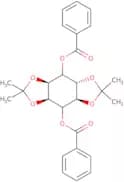
CAS:1,4-Dibenzoyl-2,3:5,6-di-O-isopropylidene myo-inositol is a synthetic saccharide with the chemical formula C8H12FO4. It is a white crystalline solid that is soluble in water and methanol. This product can be used for custom synthesis of complex carbohydrates and as a reagent for fluoroquinolone resistance. It has been shown to inhibit bacterial growth by binding to DNA gyrase and topoisomerase IV, which are enzymes that maintain the integrity of bacterial DNA.Pureza:Min. 95%3,4,6-Tri-O-benzyl-2-deoxy-D-glucopyranose
CAS:3,4,6-Tri-O-benzyl-2-deoxy-D-glucopyranose is a sugar moiety that consists of 3,4 and 6 triacetate groups. It is used as a glycosylation agent to increase the stability of glycoprotein drugs and in the synthesis of chemical reagents such as perchlorate. In addition, it has been shown to be an effective catalyst for the synthesis of various alcohols. This sugar moiety also has high stereoselectivity and yields when used in reactions with acetyl or benzyl alcohols. Finally, this moiety may be substituted with other functional groups such as flavonoids or alcohols in order to change its characteristics.Fórmula:C27H30O5Pureza:Min. 95%Peso molecular:434.52 g/mol1-Deoxy-L-erythrulose
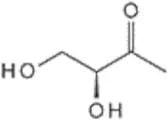
CAS:1-Deoxy-L-erythrulose is an electron acceptor that is a non-essential cofactor for the enzyme reductoisomerase. It binds to the active site of the enzyme and stabilizes its conformation, which leads to the formation of a dianion. 1-Deoxy-L-erythrulose also acts as an activator for phosphite, which is a transition state analog. This activation leads to the formation of ATP and NADPH as products.Fórmula:C4H8O3Pureza:Min. 95%Peso molecular:104.1 g/molAmyl 2-acetamido-2-deoxy-b-D-glucopyranoside
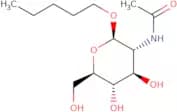
CAS:Amyl 2-acetamido-2-deoxy-b-D-glucopyranoside is a chemical compound that is used as an additive for industrial purposes. It is soluble in n-butanol, ethylene glycol, ferrocene, and methanol. The molecular weight of this chemical compound is 542.07 g/mol.Fórmula:C13H25NO6Pureza:Min. 95%Peso molecular:291.34 g/mol1,6-Anhydro-β-D-cellotetraose
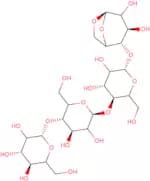
CAS:1,6-Anhydro-b-D-glucopyranose is a 6-carbon sugar that can be found in small quantities in the human body. It is a type of glycosidic compound and has been used as a food additive for animals. This sugar is also used for analytical methods to measure the quantity of cellotriose in cells. 1,6-Anhydro-b-D-glucopyranose is an oligosaccharide that has been shown to have prebiotic properties due to its ability to be digested by bacteria and promote their growth. Quantifying this sugar is done by measuring the amount of glycosidic bonds present.Fórmula:C24H40O20Pureza:Min. 95%Cor e Forma:White To Off-White SolidPeso molecular:648.56 g/molUDP-4-azido-4-deoxy-D-glucose
CAS:UDP-4-azido-4-deoxy-D-glucose is an analogue of UDP-glucose with an azide group at the 4 position. In the presence of α-lactalbumin, UDP-4-azido-4-deoxy-D-glucose show pronounced inhibition of lactose synthesis in a concentration dependent manner.Pureza:Min. 95%β-D-Glucopyranosyl taraxinic ester
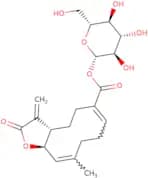
CAS:β-D-Glucopyranosyl taraxinic ester is a cytotoxic natural product that has been shown to inhibit the growth of tumor cells in vitro. β-D-Glucopyranosyl taraxinic ester inhibits the synthesis of nucleic acids, proteins, and lipids. It also inhibits the proliferation of lymphoid cells in vitro. The IC50 values for β-D-glucopyranosyl taraxinic ester are 0.04 mM for mouse tumor cells and 0.07 mM for human tumor cells. β-D-Glucopyranosyl taraxinic ester has been shown to inhibit the growth of tumor cell lines in vitro, such as K562 and P388 leukemia cell lines, HeLa cervical carcinoma, and A549 lung carcinoma cell lines. This compound induces apoptosis by increasing caspase activity and decreasing bcl2 levels in these cancer cells.Fórmula:C21H28O9Pureza:Min. 95%Peso molecular:424.44 g/mol4-Iodophenyl 2-acetamido-2-deoxy-b-D-glucopyranoside
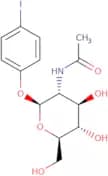
CAS:4-Iodophenyl 2-acetamido-2-deoxy-b-D-glucopyranoside is a modification of an oligosaccharide. It is synthesized using custom chemistry and purified to high purity. This compound is a monosaccharide that is methylated and glycosylated. CAS No. 38229-81-1Fórmula:C14H18INO6Pureza:Min. 95%Peso molecular:423.2 g/mol1,6-Di-O-acetyl-2,3,4-tri-O-benzyl-α-D-mannopyranose
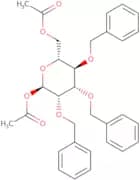
CAS:1,6-Di-O-acetyl-2,3,4-tri-O-benzyl-a-D-mannopyranose is a carbohydrate that has been synthetically prepared. The sugar was synthesized by the solid phase synthesis of an acetate derivative of 2,3,4-tri-O-benzylglucal and 1,6 diacetate benzil. The conformation of the sugar was determined from X-ray crystallography to be anomeric. The structure consists of a six membered ring with two oxygen atoms on opposite sides. This hexagonal ring is composed of four methylene groups and two oxygens. One oxygen atom is bonded to one carbon atom in the adjacent six membered ring with a single bond and the other oxygens are bonded to carbons in the adjacent six membered rings with double bonds. This results in three rings that are not fully interlocked as they have different degrees of freedomFórmula:C31H34O8Pureza:Min. 95%Peso molecular:534.6 g/molPhenyl-α-D-glucopyranoside
CAS:Phenyl-alpha-D-glucopyranoside is a molecule that is found in the β-cell of the pancreas. It is thought to be involved in the biosynthesis of oligosaccharides and interacts with other molecules to form glycosidic bonds. The interaction between phenyl-alpha-D-glucopyranoside and other molecules has been analysed by gas chromatography, which showed that it was hydrophobic, but also interacted with carbohydrates. Phenyl-alpha-D-glucopyranoside has also been shown to inhibit gram negative bacteria, such as Escherichia coli or Salmonella enterica.
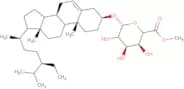
Fórmula:C12H16O6Peso molecular:256.25 g/molb-Sitosterol b-D-glucuronide methyl ester
b-Sitosterol b-D-glucuronide methyl ester is a carbohydrate that is a modification of saccharides. It is a sugar with the molecular formula C23H36O11 and molecular weight of 594.71. It has CAS No. 64432-41-7 and was first synthesized in the laboratory by custom synthesis in 2007. This compound is highly pure and has been shown to have high purity. It has been modified using fluorination, glycosylation, and methylation reactions. The carbohydrate has been shown to have anti-inflammatory activities, which may be due to its ability to inhibit prostaglandin synthesis.
Fórmula:C36H60O7Pureza:Min. 95%Peso molecular:604.86 g/molPhenyl 4,6-O-benzylidene-a-D-thioglucopyranoside
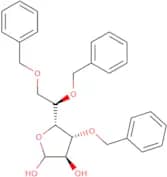
Phenyl 4,6-O-benzylidene-a-D-thioglucopyranoside is a custom synthesized compound with CAS No. This chemical is an alpha,alpha,alpha-trifluoroacetamido derivative of the natural carbohydrate thioglucose. Phenyl 4,6-O-benzylidene-a-D-thioglucopyranoside is a complex carbohydrate that can be modified by fluorination to produce a simple sugar. Modification of this compound can also produce monosaccharides with various levels of purity.Fórmula:C19H20O5SPureza:Min. 95%Peso molecular:360.42 g/mol3,4,6-Tri-O-benzyl-D-glucofuranose
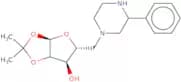
CAS:3,4,6-Tri-O-benzyl-D-glucofuranose is a modification of the natural sugar D-glucose. This modification has been found to be stable against hydrolysis by esterases and other enzymes. It is synthesized in a custom synthesis. 3,4,6-Tri-O-benzyl-D-glucofuranose has been shown to be an effective inhibitor of glycosylation and polysaccharide formation in vitro. It can be used for the preparation of high purity sugars for use in research or as a polymer precursor or monosaccharide. 3,4,6-Tri-O-benzyl-D-glucofuranose is found on the CAS registry with the number 35958-64-6.Pureza:Min. 95%5-Deoxy-1,2-O-isopropylidene-5-(3-phenylpiperizin-1-yl)-a-D-xylofuranose
CAS:5-Deoxy-1,2-O-isopropylidene-5-(3-phenylpiperizin-1-yl)-a-D-xylofuranose is a methylated and fluorinated sugar that was synthesized by the click reaction. The synthesis of this compound required the use of an oligosaccharide coupled with a polysaccharide for the attachment of the piperazine moiety. This product has been shown to be stable in water and other solvents. 5DIOXFURANOSE is a white to off white crystalline powder that appears as needle crystals. It is soluble in water, methanol, ethanol, acetonitrile, acetone and chloroform.
Fórmula:C18H26N2O5Pureza:Min. 95%Peso molecular:334.32 g/molMoxifloxacin acyl D-glucuronide
Moxifloxacin acyl D-glucuronide is a fluorinated, synthetic compound that inhibits bacterial growth by binding to the 16S ribosomal RNA. This drug has been shown to have a broad spectrum of activity against Gram-positive and Gram-negative bacteria. Moxifloxacin acyl D-glucuronide is not active against acid-fast bacteria such as Mycobacterium tuberculosis or Mycobacterium avium complex. The most common adverse effect associated with this drug is nausea.Pureza:Min. 95%1,2,3,4,5,6-Hexa-O-acetyl-L-iditol
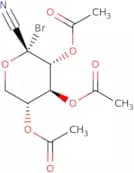
CAS:1,2,3,4,5,6-Hexa-O-acetyl-L-iditol is a synthetic compound that is used as a reagent in the synthesis of oligosaccharides and polysaccharides. It is also used to modify the saccharide chains of complex carbohydrates. 1,2,3,4,5,6-Hexa-O-acetyl-L-iditol has been shown to react with both DNA and RNA. The methylation reaction can be achieved by treatment with formaldehyde or sodium cyanoborohydride. This compound has been modified by fluorination to create monosaccharides such as fluorohexitol and fluoroarabitol.Fórmula:C18H26O12Pureza:Min. 95%Peso molecular:434.4 g/mol2,3,4-Tri-O-acetyl-1-cyano-a-D-xylopyranosyl bromide
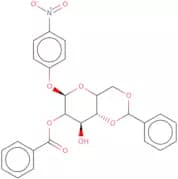
CAS:2,3,4-Tri-O-acetyl-1-cyano-a-D-xylopyranosyl bromide is a custom synthesis of a sugar. It is fluorinated, methylated, and acetylated. 2,3,4-Tri-O-acetyl-1-cyano-a-D-xylopyranosyl bromide can be used for the modification of glycosides and oligosaccharides as well as for the synthesis of saccharides and polysaccharides. This product is CAS No. 8349743 -2.Fórmula:C12H14BrNO7Pureza:Min. 95%Peso molecular:364.15 g/mol4-Nitrophenyl 2-benzoyl-4,6-O-benzylidene-a-D-mannopyranoside
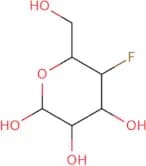
CAS:4-Nitrophenyl 2-benzoyl-4,6-O-benzylidene-a-D-mannopyranoside is a glycosylated sugar that has been modified with methyl groups and fluorine atoms. It is a synthetic, monosaccharide oligosaccharide that can be custom synthesized to suit your needs. This product is CAS No. 94063-92-0 and it is available in high purity.Fórmula:C26H23NO9Pureza:Min. 95%Peso molecular:493.46 g/mol4-Deoxy-4-fluoro-a-D-glucopyranose
CAS:4-Deoxy-4-fluoro-a-D-glucopyranose is a carbohydrate that belongs to the group of carbohydrates. It has enthalpy and entropy values of -1,865.2 kJ/mol and -3,363.6 J/(mol·K) at 298 K, respectively. This compound has been shown to interact with water molecules in solution phase. 4-Deoxy-4-fluoro-a-D-glucopyranose is soluble in water and interacts with other carbohydrate molecules at an intermolecular level. 4DFA has an extrapolated melting point of about 216 degrees Celsius.
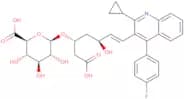
Fórmula:C6H11FO5Pureza:Min. 95%Peso molecular:182.15 g/molPitavastatin 3-O-glucuronide
CAS:Pitavastatin 3-O-glucuronide is a synthetic, water soluble glycosylate prodrug of pitavastatin, a third generation HMG-CoA reductase inhibitor. Pitavastatin 3-O-glucuronide has been shown to be effective in lowering serum cholesterol and triglycerides in humans. This drug is metabolized by hydrolysis of the glucuronide moiety and cleavage of the sugar moiety to form active pitavastatin. Pitavastatin 3-O-glucuronide also has an increased stability against oxidation compared to pitavastatin.Fórmula:C31H31FNO10Pureza:Min. 95%Peso molecular:596.58 g/mol2,3:5,6-Di-O-isopropylidene-L-gulofuranose
CAS:2,3:5,6-Di-O-isopropylidene-L-gulofuranose is a stable sugar that has been shown to undergo interconversion with aluminium oxide. The reaction rate of this conversion is influenced by the presence of pyridine and other aldehydes or ketones. This transformation can be used in the preparation of 2,3:5,6-Di-O-isopropylidene-D-gulofuranose (2,3:5,6 DPG) from 2,3:5,6 DiO-(1'-methylpyrrolidinium)propane.Pureza:Min. 95%Methyl 4,6-di-O-acetyl-2,3-didehydro-2,3-dideoxy-a-D-galactopyranoside
CAS:Methyl 4,6-di-O-acetyl-2,3-didehydro-2,3-dideoxy-a-D-galactopyranoside is a carbohydrate that is synthesized by glycosylation with methyl 4,6-di-O-acetyl-2,3-didehydrohexahydropyranose. It is used as a synthetic intermediate in the production of saccharides and oligosaccharides. This product has high purity and custom synthesis can be requested.Fórmula:C11H16O6Pureza:Min. 95%Peso molecular:244.24 g/mol3,6-Di-O-benzoyl-D-galactal
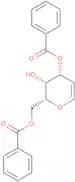
CAS:3,6-Di-O-benzoyl-D-galactal is a complex carbohydrate with CAS No. 130323-36-3 and a molecular weight of 538. It is an oligosaccharide that can be modified by methylation, glycosylation, or carbamylation. This product can also be fluorinated to form 3,6-di-O-(4'-fluoro)benzoyl-D-[2]galactal.Pureza:Min. 95%2-Acetamido-3,4,6-tri-O-acetyl-2-deoxy-a-D-glucopyranosyl fluoride
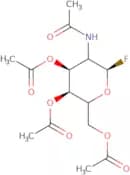
2-Acetamido-3,4,6-tri-O-acetyl-2-deoxy-a-D-glucopyranosyl fluoride (ATAG) is a modified oligosaccharide that belongs to the category of complex carbohydrates. ATAG is synthesized by custom synthesis and has a high purity. This compound has been shown to have antiinflammatory properties, which may be due to its inhibition of prostaglandin synthesis.Pureza:Min. 95%2-Imino-2-methoxyethyl-1-deoxy-1-thio-a-D-mannopyranoside
CAS:2-Imino-2-methoxyethyl-1-deoxy-1-thio-a-D-mannopyranoside is a carbohydrate that belongs to the group of sugar. It can be custom synthesized and is available in high purity. This compound has been fluorinated and methylated, which means it has been modified with fluorine and methyl groups respectively. Click modification refers to a type of chemical modification to a molecule that occurs through the addition of a thiol group at the alpha carbon of an alcohol or amine group. 2-Imino-2-methoxyethyl-1-deoxy-1-thio-a-Dmannopyranoside can be glycosylated, which means it is able to undergo the process of glycosylation by transferring its saccharide unit onto another saccharide.Fórmula:C9H17NO6SPureza:Min. 95%Peso molecular:267.3 g/mol2,5-Dideoxystreptamine dihydrochloride
CAS:2,5-Dideoxystreptamine dihydrochloride is a compound that has been investigated as an antibiotic. This chemical inhibits the growth of microorganisms by inhibiting their protein synthesis, which is required for cell division. 2,5-Dideoxystreptamine dihydrochloride was first isolated from Streptomyces griseus and has been shown to have high levels of activity against Bacillus subtilis and Micrococcus lysodeikticus.
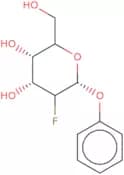
Pureza:Min. 95%Phenyl 2-deoxy-2-fluoro-a-D-glucopyranoside
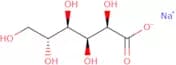
Phenyl 2-deoxy-2-fluoro-a-D-glucopyranoside is a sugar that belongs to the group of saccharides. It is a synthetic compound and is often used as an intermediate in the synthesis of complex carbohydrates, such as glycosides. Phenyl 2-deoxy-2-fluoro-a-D-glucopyranoside has been shown to have high purity, which makes it suitable for custom synthesis. This compound can be methylated and glycosylated, which increases its biological activity. The structure of this sugar can also be modified by fluorination, making it suitable for use in fluorescence studies.Fórmula:C12H15FO5Pureza:Min. 95%Peso molecular:258.24 g/molD-Gluconic acid sodium salt
CAS:D-Gluconic acid sodium salt - USP grade is a biochemical reagent that is used in the synthesis of nucleotides and various other biomolecules. It is also used as an antimicrobial agent, with broad-spectrum activity against bacteria, fungi, and viruses. In addition to its antimicrobial activity, D-gluconic acid has been shown to inhibit carcinoma cell lines in vitro. This inhibition may be due to the inhibition of enzymes involved in phosphorylation reactions such as adenylate kinase, glyceraldehyde 3-phosphate dehydrogenase (GAPDH) and hexokinase. X-ray diffraction data on wild-type strains of E. coli have shown that D-gluconic acid binds to the enzyme phosphogluconate dehydrogenase (PGD), which catalyzes a reaction between D-gluconic acid and NAD+ or NADP+. The matrix effect for this reaction wasFórmula:C6H11NaO7Pureza:Min. 95%Peso molecular:218.14 g/mol(1R,4R,5S)-4-tert-Butyldimethylsiloxymethyl-5-tert-butyldimethylsilyloxycyclohex-2en-1-ol
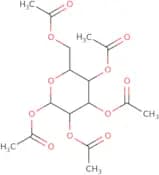
(1R,4R,5S)-4-tert-Butyldimethylsiloxymethyl-5-tert-butyldimethylsilyloxycyclohex-2en-1-ol is a custom synthesis of a monosaccharide with a fluorine atom at the 4 position. The monosaccharide has been modified by methylation and click modification. It has also been synthesized from an oligosaccharide or polysaccharide through glycosylation.Pureza:Min. 95%1,2,3,4,6-Penta-O-acetyl-a-D-talopyranose
CAS:1,2,3,4,6-Penta-O-acetyl-a-D-talopyranose is a fluorinated monosaccharide that belongs to the class of synthetic oligosaccharides. It can be used in glycosylation and polysaccharide synthesis. The chemical structure of this compound has been modified by methylation and click chemistry. 1,2,3,4,6-Penta-O-acetyl-a-D-talopyranose is available in high purity and custom synthesis.Pureza:Min. 95%1,2-Dideoxy-2'-piperidin-1-yl-a-D-glucopyranoso-[2,1-d]-2'-thiazoline
1,2-Dideoxy-2'-piperidin-1-yl-a-D-glucopyranoso-[2,1-d]-2'-thiazoline is a synthetic glycosylation reagent that is used in the synthesis of oligosaccharides and polysaccharides. This product is also used for click modification of complex carbohydrates and for fluoroination. 1,2-Dideoxy-2'-piperidin-1-yl-a-D-glucopyranoso-[2,1-d]-2'-thiazoline can be used to fluorinate saccharides or monosaccharides with high purity. It has a CAS number and can be custom synthesized.Pureza:Min. 95%2-O-Methyl-D-galactopyranose
2-O-Methyl-D-galactopyranose is a synthetic, fluorinated carbohydrate that is used in the synthesis of oligosaccharides and polysaccharides. This product has a CAS number of 65722-97-8 and a molecular weight of 192.17. 2-O-Methyl-D-galactopyranose has been modified with click chemistry to increase its reactivity for glycosylation reactions.Fórmula:C7H14O6Pureza:Min. 95%Peso molecular:194.18 g/molAllyl 4,6-O-benzylidene-a-L-glucopyranoside
Allyl 4,6-O-benzylidene-a-L-glucopyranoside is a glycosylation agent that is used in the synthesis of oligosaccharides. It is a synthetic compound that can be modified to produce complex carbohydrates. Allyl 4,6-O-benzylidene-a-L-glucopyranoside has been shown to be effective for the fluorination and methylation of sugar chains. It also has high purity and CAS number, which makes it an excellent choice for custom synthesis.
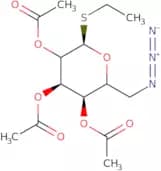
Pureza:Min. 95%Ethyl 2,3,4-tri-O-acetyl-6-azido-6-deoxy-a-D-thiomannopyranoside
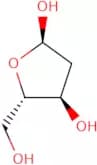
Ethyl 2,3,4-tri-O-acetyl-6-azido-6-deoxy-a-D-thiomannopyranoside is a synthetic sugar that is fluorinated with trifluoromethanesulfonic acid. It has been used in glycosylation reactions, as well as modifications of complex carbohydrates and polysaccharides. This product can be custom synthesized to meet the needs of our customers. Ethyl 2,3,4-tri-O-acetyl-6-azido-6-deoxy -a D -thiomannopyranoside is a high purity chemical with CAS number 181454.Fórmula:C14H21N3O7SPureza:Min. 95%Peso molecular:375.4 g/mol2-Deoxy-a-L-ribofuranose
CAS:2-Deoxy-a-L-ribofuranose is a monosaccharide that can be modified by either fluorination or methylation. It is an important building block in the synthesis of complex carbohydrates and saccharides, such as oligosaccharides and polysaccharides. 2-Deoxy-a-L-ribofuranose has been shown to have excellent purity, high quality, and custom synthesis for use in pharmaceuticals.
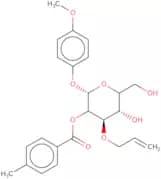
2-Deoxy-a-L-ribofuranose can be used in the production of nucleotides, which are essential for DNA replication and transcription. These nucleotides are also involved in protein synthesis, as they contain nitrogenous bases which provide the amino acids needed for proteins.Fórmula:C5H10O4Pureza:Min. 95%Peso molecular:134.13 g/mol4-Methoxyphenyl 3-O-allyl-2-O-toluoyl-b-D-galactopyranoside
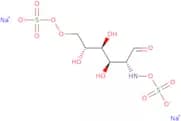
4-Methoxyphenyl 3-O-allyl-2-O-toluoyl-b-D-galactopyranoside is a modified sugar. It is a white to off-white powder that is soluble in water and ethanol. This product has not been evaluated by the FDA, and the safety and efficacy have not been determined.Fórmula:C24H28O8Pureza:Min. 95%Peso molecular:444.49 g/molD-Glucosamine-2-N,6-O-disulphate disodium
CAS:D-Glucosamine-2-N,6-O-disulphate disodium salt is a methylated glucosamine derivative. It is a sugar that is typically found in the form of an oligosaccharide or polysaccharide. D-Glucosamine can be synthesized from glucose and ammonia, which are both natural compounds. This compound has been modified with fluorine atoms to create a high purity product that can be used in research or industrial applications. In addition, this product is available with custom synthesis modifications.Fórmula:C6H13NO11S2•Na2Pureza:(Paper Electrophoresis. Ph 5) Single SpotCor e Forma:PowderPeso molecular:385.28 g/mol3'-(5'-Deoxy-a-D-ribofuranoyl capecitabine
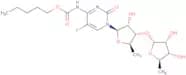
CAS:3'-(5'-Deoxy-a-D-ribofuranoyl capecitabine is a modified form of the anticancer drug capecitabine, which is used in the treatment of breast cancer and metastatic colorectal cancer. 3'-(5'-Deoxy-a-D-ribofuranoyl capecitabine is synthesized by modification of the sugar moiety with a fluorinated methyl group, followed by glycosylation with a saccharide. The fluorination increases the lipophilicity and enhances the solubility of this compound, while retaining its cytotoxic activity. It has been shown to have an IC50 value of 0.1 μM against human colon carcinoma cells.Fórmula:C20H30FN3O9Pureza:Min. 95%Peso molecular:475.47 g/molN-(1-Deoxy-D-fructos-1-yl)-L-serine
CAS:The N-glycation of proteins is a process that occurs when protein reacts with glucose, which is called glycation. This process can lead to the formation of reactive oxygen species and subsequent oxidative stress. The oxidation of proteins can also lead to the formation of advanced glycation end products (AGEs), which are associated with complications such as diabetes, atherosclerosis, and cataracts. This product is an example of a protein that has undergone glycation. It has been shown to react with glucose in an enzymatic reaction and form glucose-derivatives called fructosamines, which are used for monitoring the level of glycation in humans. Fructosamines have been correlated with basic treatments such as medications or insulin therapy.Fórmula:C9H17NO8Pureza:Min. 95%Peso molecular:267.23 g/mol3,5-O-Benzylidene-L-lyxono-1,4-lactone
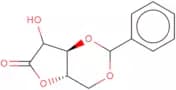
3,5-O-Benzylidene-L-lyxono-1,4-lactone is a custom synthesis that has been modified with fluorination, methylation and monosaccharide. This product is also synthesized from a saccharide and may be modified with glycosylation. These modifications will create an oligosaccharide or complex carbohydrate. 3,5-O-Benzylidene-L-lyxono-1,4-lactone can be found in the CAS registry number 177538-08-3.Fórmula:C11H10O5Pureza:Min. 95%Peso molecular:222.2 g/molDipyridamole mono-O-b-D-glucuronide
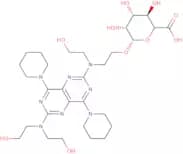
CAS:Dipyridamole is a synthetic fluorinated sugar that is used in research as a model for natural oligosaccharides. It has been shown to be useful for investigating the glycosylation reactions of polysaccharides and proteins, as well as for studying carbohydrate-protein interactions. Dipyridamole mono-O-b-D-glucuronide is an example of a product that can be custom synthesized by our laboratory. The product has purity of >99% and CAS No. 63912-02-7.
Fórmula:C30H48N8O10Pureza:Min. 95%Cor e Forma:Yellow solid.Peso molecular:680.75 g/molN-b-D-Glucopyranosyl-L-Asn
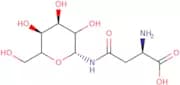
CAS:N-b-D-Glucopyranosyl-L-Asn is a complex carbohydrate that is modified by glycosylation and methylation. It is an Oligosaccharide, Polysaccharide, Modification, saccharide that can be synthesized from D-Glucose or D-Mannose. N-b-D-Glucopyranosyl-L-Asn has high purity and can be fluorinated for modification. This product can be used as a sugar and is also used in Click chemistry for modification.Fórmula:C10H18N2O8Pureza:Min. 95%Peso molecular:294.26 g/molβ-D-Galactose pentaacetate
CAS:1,2,3,4,6-Penta-O-acetyl-b-D-galactopyranose, also known as beta-D-galactose pentaacetate, has high chemical stability and long shelf life. This protected form of galactose is a key building block of any chemical synthesis of galactose-containing oligosaccharides or glycoconjugates. In the presence of Lewis acids it can be used as a glycosyl donor to make simple glycosides. In order to perform more complex galactosylations it can be converted into more reactive donors, such as glycosyl halides or thioglycosides.
Fórmula:C16H22O11Pureza:Min. 95.0 Area-%Peso molecular:390.35 g/molRef: 3D-G-1781
-Unit-kgkgA consultar1kgA consultar5kgA consultar10kgA consultar500gA consultar2500gA consultarMethyl 3-amino-3,6-dideoxy-a-L-taloside
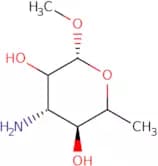
Methyl 3-amino-3,6-dideoxy-a-L-taloside is a custom synthesis of a monosaccharide. It is modified with fluorine and methyl groups and may be used in click chemistry. The CAS number for this compound is 103614-34-8. Methyl 3-amino-3,6-dideoxy-a-L-taloside is an oligosaccharide that can be glycosylated or complexed with sugar. This compound has properties of a carbohydrate and can be classified as a saccharide or polysaccharide.Fórmula:C7H15NO4Pureza:Min. 95%Peso molecular:177.2 g/mol2,3,4,6 -Tetra-O-benzyl-D-glucitol
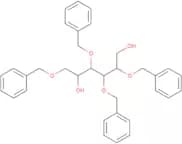
CAS:2,3,4,6 -Tetra-O-benzyl-D-glucitol is an atypical compound with a spectrum of activities. It has been shown to inhibit the synthesis of alditols and aldosides in vitro, and it also inhibits miglustat which is the first drug for Gaucher's disease approved by the FDA. 2,3,4,6 -Tetra-O-benzyl-D-glucitol is synthetically produced from D-glucose and benzyl chloride. The compound crystallizes as a chiral form that can exist as either (S) or (R) conformation. The (S) form has been observed to be more active than the (R) form against showdomycin and cyclic peptidase A.Fórmula:C34H38O6Pureza:Min. 95%Cor e Forma:liquid.Peso molecular:542.66 g/mol6-(4-Azido-2-hydroxybenzamido)-6-deoxy-D-glucopyranose
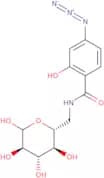
CAS:6-(4-Azido-2-hydroxybenzamido)-6-deoxy-D-glucopyranose (AGB) is a potential photoaffinity label that can be used to identify and characterize the transporter. The photoaffinity label is synthesized by reacting 2,4-dinitrophenylhydrazine with 6-(4-azido-2-hydroxybenzamido)-6-deoxy-D-glucopyranose in the presence of sodium bicarbonate or potassium carbonate. The photolysis of AGB produces an azide radical cation that reacts with amino acid residues on the protein surface, forming a covalent bond. This labeling process is irreversible.Fórmula:C13H16N4O7Pureza:Min. 95%Peso molecular:340.29 g/molO-(2-Azido-4,6-O-benzylidene-2-deoxy-a-D-galactopyranosyl)-N-[(9H-fluoren-9-ylmethoxy)carbonyl]-L-serine tert-Butyl Ester
CAS:O-(2-Azido-4,6-O-benzylidene-2-deoxy-a-D-galactopyranosyl)-N-[(9H-fluoren-9-ylmethoxy)carbonyl]-L-serine tert butyl ester (Fluoride) is a modified carbohydrate that has been synthesized from a sugar. The fluorination step of the synthesis has replaced the hydroxyl group at C1 with fluorine. The glycosylation and methylation steps have added a new saccharide to the existing carbohydrate chain. The modification step has introduced an oligosaccharide which has been linked to the monosaccharides by an amide bond. This synthetic carbohydrate was designed to be used as a fluorescent probe for glycoproteins and glycolipids in biomedical research.Fórmula:C35H38N4O9Pureza:Min. 95%Peso molecular:658.7 g/mol6-O-Benzoyl-3-O-triisopropylsilyl-D-galactal
This is a synthetic sugar that can be custom synthesized based on the customer's specifications. 6-O-Benzoyl-3-O-triisopropylsilyl-D-galactal is a monosaccharide and an oligosaccharide that can be modified with a click modification, methylation, and glycosylation. It is a complex carbohydrate that has been shown to have anti-inflammatory properties. The glycosylation of this sugar can also be customized for specific purposes. This product has CAS number 132702-24-2 and is available at 95% purity or higher.Fórmula:C22H34O5SiPureza:Min. 95%Peso molecular:406.59 g/molPhenyl-2,3,5-tri-O-benzoyl-D-thioribofuranoside
Phenyl-2,3,5-tri-O-benzoyl-D-thioribofuranoside is an Oligosaccharide that is prepared by the modification of a complex carbohydrate. It has a carbonyl group at the C6 position and a benzoyl group at the C2 position. Phenyl-2,3,5-tri-O-benzoyl-D-thioribofuranoside can be custom synthesized and is available in high purity. The CAS number for this product is 97111-10-1. Phenyl-2,3,5-tri-O-benzoyl -D -thioribofuranoside is a monosaccharide that can be methylated or glycosylated to form polysaccharides or sugars. This product has been fluorinated and saccharides have been modified with fluorine.Pureza:Min. 95%trans-Resveratrol 4'-O-b-D-glucuronide
CAS:Trans-resveratrol 4'-O-b-D-glucuronide is a natural compound that is found in red wine and other foods. It has been shown to inhibit the growth of cancer cells through the activation of adenosine receptors, which are found on cancer cells and are responsible for apoptosis. Trans-resveratrol 4'-O-b-D-glucuronide has been shown to be an agonist of the adenosine a3 receptor, with high concentrations leading to apoptosis in human colon cancer cells. This compound also inhibits colon carcinogenesis by inhibiting cell proliferation and inducing apoptosis.Fórmula:C20H20O9Pureza:Min. 95%Peso molecular:404.37 g/molUDP-D-galactosamine disodium salt
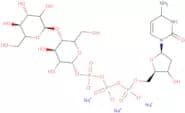
CAS:UDP-D-galactosamine disodium salt is a type of sugar that is a substrate for UDP-glucuronosyltransferase (UGT), which catalyzes the transfer of galactose from UDP-D-galactose to other molecules. The product of this reaction is UDP-D-galacturonic acid. It is produced in the liver, where it participates in the synthesis of glycoproteins, glycolipids, and glycosaminoglycans. In addition, it can be found in the distal tubule of the kidney and in leukemia cells. The histological analysis of rat liver tissue showed that UDP-D-galactosamine disodium salt is present in hepatocytes. This sugar also helps with protein synthesis and activates uridine, which can be used as a carbon source. Histological analysis also revealed that UDP-D-galactosamine disodium salt plays an important role in glucose metabolism, as well as
Fórmula:C15H23N3O16P2Na2Pureza:Min. 95%Cor e Forma:PowderPeso molecular:609.28 g/mol1,2,4,6-Tetra-O-acetyl-3-deoxy-3-phthalimido-D-galactopyranoside
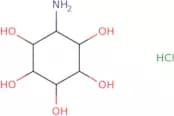
This product is a custom synthesis of 1,2,4,6-Tetra-O-acetyl-3-deoxy-3-phthalimido-D-galactopyranoside. It is a sugar that is synthesized from 4 acetyl groups and 6 hydroxyl groups. The compound has a CAS number of 71034-05-4 and can be modified by fluorination, glycosylation, methylation, or modification. This product is an oligosaccharide that contains a saccharide with more than one monosaccharide unit. It is a complex carbohydrate with the formula C12H20O11.Fórmula:C22H23NO11Pureza:Min. 95%Peso molecular:477.42 g/molscyllo-Inosamine hydrochloride
CAS:Scyllo-inosamine is a synthetic compound that is used as an oxime for the treatment of ascites tumors. It is synthesized from benzyl cyanide and cyclohexane. The benzyl groups are removed by catalytic hydrogenation, and the resulting product is hydrolyzed to scyllo-inosamine. Scyllo-inosamine has been shown to have a stereogenic center at C3, which allows it to act as an aminocyclitol, with the nitrogen atom acting as a nucleophile in the ring opening reaction. Scyllo-inosamine has been shown to be active against a number of tumor cells in culture and has been investigated as chemotherapeutic agent for cancer treatment.Fórmula:C6H13NO4·HClPureza:Min. 95%Peso molecular:199.63 g/mol4-O-Acetyl-3,6-di-O-tert-butyldimethylsilyl-D-glucal
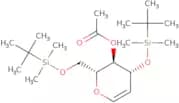
CAS:4-O-Acetyl-3,6-di-O-tert-butyldimethylsilyl-D-glucal is a methylated derivative of D-glucal which has been synthesized by the click reaction using acetyl chloride, triethylamine, and dimethyl sulfate. 4OATBDMSDG is a high purity sugar with a CAS number of 132891-79-3. This sugar can be used in the synthesis of polysaccharides or as an intermediate for custom synthesis.Pureza:Min. 95%Maltopyranosyl-CTP
Maltopyranosyl-CTP is a high purity, custom synthesis, sugar modified with Click chemistry. The modification includes fluorination, glycosylation and methylation. Maltopyranosyl-CTP is synthesized by the reaction of maltoheptaose with 3-chloro-2-fluoroaniline. Maltopyranosyl-CTP has CAS No.: 6791-87-0 and molecular weight: 592.28. Maltopyranosyl-CTP is an oligosaccharide that consists of six monosaccharides linked together in a linear chain by alpha (1→4) glycosidic bonds. Maltopyranosyl-CTP has the following chemical formula: C6H14O6F3Cl2N3O6S2. Maltopyranosyl-CTP is a complex carbohydrate that can be found in plants and yeast.Fórmula:C21H32N2Na3O24P3Pureza:Min. 95%Peso molecular:858.37 g/mol3-Methylflavone-8-carboxylic acid acyl-b-D-glucuronide
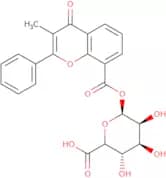
CAS:3-Methylflavone-8-carboxylic acid acyl-b-D-glucuronide is a fluorinated synthetic compound that has been custom synthesized with a high purity. It is an oligosaccharide, monosaccharide, and complex carbohydrate. This chemical can be used for glycosylation, methylation, or click modification. The product is stable at room temperature and does not require any special storage conditions.Fórmula:C23H20O10Pureza:Min. 95%Peso molecular:456.4 g/mol4-O-Acetyl-2,5-anhydro-1,3-O-isopropylidene-6-O-trityl-D-glucitol
CAS:4-O-Acetyl-2,5-anhydro-1,3-O-isopropylidene-6-O-trityl-D-glucitol is a custom synthesis of an oligosaccharide. It is a complex carbohydrate that has been modified by methylation and glycosylation. 4OATG has been fluorinated with 1,4 difluorobenzene and then reacted with Ac 2 O to make the glycosylate form. The compound was obtained in high purity and as a white solid.Fórmula:C30H32O6Pureza:Min. 95%Peso molecular:488.57 g/molrac N,O-didesmethyl venlafaxine b-D-glucuronide hydrochloride
CAS:RacN,O-didesmethylvenlafaxine b-D-glucuronide hydrochloride is a synthetic glycosylated active metabolite of venlafaxine. It is an N-desmethyl derivative of racemic venlafaxine, which has been modified by oxygenation and fluorination of the methyl group at the nitrogen atom. RacN,O-didesmethylvenlafaxine b-D-glucuronide hydrochloride is a complex carbohydrate with high purity. It is also a saccharide that can be modified with click chemistry for desired modifications. The CAS No. for this compound is 1021933-99-2.Fórmula:C21H32ClNO8Pureza:Min. 95%Peso molecular:461.93 g/mol3,4-Dideoxyglucosone-3-ene
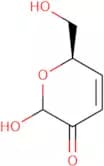
CAS:3,4-di-deoxyglucosone-3-ene is a bioreactive glucose degradation product which can be formed during heat sterilisation of glucose containing peritoneal dialysis solutions. Chemically, 3,4-Dideoxyglucosone-3-ene is an α,β-unsaturated carbonyl compound which increases its reactivity with cellular sulfhydryl, amino groups, proteins, and DNA. 3,4-Dideoxyglucosone-3-ene induces apoptosis in neutrophils, renal cells and peripheral blood mononuclear cells. Such induction leads to impaired peritoneal antibacterial defence.Fórmula:C6H8O4Pureza:Min. 95 Area-%Cor e Forma:Colorless PowderPeso molecular:144.13 g/mol2,3,4-Tri-O-benzoyl-L-fucopyranosyl bromide
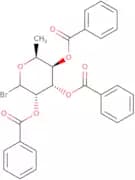
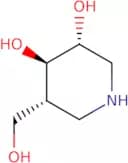
CAS:2,3,4-Tri-O-benzoyl-L-fucopyranosyl bromide is a synthetic compound that is used as a reagent in the synthesis of complex carbohydrates. It is also an intermediate in the synthesis of oligosaccharides and polysaccharides. This product can be modified by methylation, glycosylation and fluorination to generate desired products. The CAS number for this product is 855662-12-3.Fórmula:C27H23BrO7Pureza:Min. 95%Peso molecular:539.37 g/molIsofagomine hydrochloride
CAS:Inhibitor of lysosomal acid β-glucosidase (GlcCerase/glucocerebrosidase) with IC50 in nanomolar range for wildtype and mutant enzyme. It behaves as pharmacological chaperon by binding to instable GlcCerase active site at neutral pH values and facilitating the protein folding. In acidic lysosomes, isofagomine gets release from the enzyme active site. This results in increased levels of functional glucocerebrosidase and brings therapeutic benefits to patients with Gaucher disease.
Fórmula:C6H13NO3·HClPureza:Min. 95%Cor e Forma:PowderPeso molecular:183.63 g/mol3,4,6-Tri-O-benzyl-2-deoxy-2-phthalimdo-b-D-glucopyranosyl fluoride
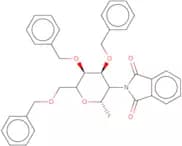
3,4,6-Tri-O-benzyl-2-deoxy-2-phthalimdo-b-D-glucopyranosyl fluoride is a modified sugar that is synthesized by the addition of a benzyl group to the 3' hydroxyl group. It's a white powder that is soluble in water and ethanol. This product has been shown to be stable in acid environments and can be used in glycosylation reactions.Fórmula:C35H32FNO6Pureza:Min. 95%Peso molecular:581.63 g/molAnhydro-4-azido-5,6,8-tri-O-benzyl-1,2,4-trideoxy-D-glycero-D-gulo-oct-1-ynitol
CAS:Anhydro-4-azido-5,6,8-tri-O-benzyl-1,2,4-trideoxy -D-glycero-D-gulo-oct 1 -ynitol is a methylated saccharide. It is a fluorinated sugar that can be used as an intermediate in the synthesis of oligosaccharides and polysaccharides. This compound has been modified by click chemistry to allow for the incorporation of azide groups at the 3′ position of the sugar moiety. The modification allows for the synthesis of complex carbohydrates with high purity and high yield. The product is a white powder that is soluble in water.Fórmula:C29H29N3O4Pureza:Min. 95%Cor e Forma:Colourless syrupPeso molecular:483.56 g/mol1,2,3-Tri-O-benzyl-4,6-O-benzylidene-a-D-galactopyranoside
CAS:The 1,2,3-Tri-O-benzyl-4,6-O-benzylidene-a-D-galactopyranoside is a synthetic glycoside that can be used as a saccharide in the synthesis of complex carbohydrates. This compound has been shown to have high purity and can be custom synthesized. It has been modified with methylation and fluorination. The CAS No. for this compound is 53929-36-5.Fórmula:C34H34O6Pureza:Min. 95%Peso molecular:538.63 g/molMethyl-5-O-benzoyl-2-chloro-2,3-dideoxy-3-fluoro-D-ribofuranoside
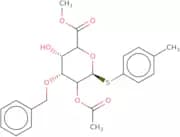
Methyl-5-O-benzoyl-2-chloro-2,3-dideoxy-3-fluoro-D-ribofuranoside is a custom synthesis of Methylation. It is also known as methyl 5-(benzoyl)furanosyl 2,3-dideoxyfuroate. This compound is used in the preparation of oligosaccharides and polysaccharides. It has a CAS number of 90627-95-6 and an Oligosaccharide molecular weight of 380. Methylation is the addition of a methyl group to a molecule. The result is an alkyl group with one less hydrogen atom (CH3). Methyl groups are often used in organic chemistry to modify other molecules, such as sugars or carbohydrates, by adding them to the molecule's structure. Methylation occurs most often in two ways: 1) In chemical synthesis, for exampleFórmula:C13H14ClFO4Pureza:Min. 95%Peso molecular:288.7 g/mol4-Methylphenyl 2-O-acetyl-3-O-benzyl-b-D-thioglucuronide methyl ester
CAS:4-Methylphenyl 2-O-acetyl-3-O-benzyl-b-D-thioglucuronide methyl ester is a custom synthesis of an oligosaccharide. It has been modified with fluorination and methylation, which are chemical reactions that alter the structure of the substance. Click modification is also a type of chemical reaction involving this substance.Fórmula:C23H26O7SPureza:Min. 95%Peso molecular:446.51 g/mol6-O-Benzoyl-3-O-tert-butyldiphenylsilyl-D-glucal
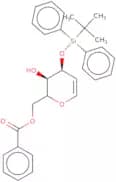
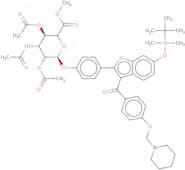
6-O-Benzoyl-3-O-tert-butyldiphenylsilyl-D-glucal is a modification of the oligosaccharide, 6-O-(benzoyloxy)hexyl glucal. The product is used as a synthetic intermediate in the synthesis of complex carbohydrates. It is also used in the production of high purity monosaccharides and polysaccharides. This product has been shown to be effective in methylation reactions, glycosylation reactions, and fluorination reactions.Pureza:Min. 95%Methyl 1-(6-tert-butylmethylsilyl-4'-hydroxyraloxifene)-2,3,4,-tri-O-acetyl-b-D-glycopyranuronate
CAS:This is a complex carbohydrate, which is a modification of an oligosaccharide. The structure of this carbohydrate is based on the sugar methyl 1-(6-tert-butylmethylsilyl-4'-hydroxyraloxifene)-2,3,4,-tri-O-acetyl-b-D-glycopyranuronate. This modification has been shown to be useful for glycosylation and polysaccharide synthesis. This compound can be synthesized by click chemistry and has high purity with little or no impurities.Fórmula:C46H55NO13SSiPureza:Min. 95%Peso molecular:890.08 g/mol2,3-O-Cyclohexylidene-b-D-ribofuranose
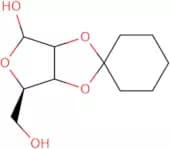
CAS:2,3-O-Cyclohexylidene-b-D-ribofuranose is a monosaccharide that is used in the synthesis of complex carbohydrates. This compound possesses a cyclic structure that contains an oxygen atom at the 2 position and a hydroxyl group at the 3 position. It has been modified by fluorination, methylation, glycosylation, and click chemistry. The chemical name for this compound is 2,3-O-Cyclohexylideneb-D-ribofuranose.
Fórmula:C11H18O5Pureza:Min. 95%Peso molecular:230.26 g/mol1-O-tert-Butyldimethylsilyl-2-azido-2-deoxy-b-D-glucopyranoside
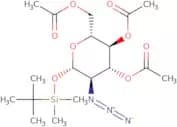
CAS:1-O-tert-Butyldimethylsilyl-2-azido-2-deoxy-b-D-glucopyranoside is a Carbohydrate, Modification, saccharide, Oligosaccharide, sugar that has been fluorinated and methylated. It is a custom synthesis. The CAS No. 99049-65-7 is 9904965.Fórmula:C12H25N3O5SiPureza:Min. 95%Peso molecular:319.43 g/molVanillic acid 4-beta-D-glucoside
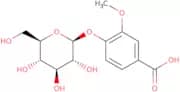
CAS:Vanillic acid 4-beta-D-glucoside is a Custom synthesis that is used as an Oligosaccharide. It is Polysaccharide and Modification of the natural product vanillin. Vanillic acid 4-beta-D-glucoside has CAS No. 32142-31-7, Methylation, Glycosylation, Carbohydrate, Click modification, saccharide, sugar, High purity and Fluorination. It is also Synthetic.Fórmula:C14H18O9Pureza:Min. 95%Peso molecular:330.29 g/mol2-(L-Arabino-tetrahydroxybutyl)-4(R)-1,3-thiazolidine-4-carboxylic acid
CAS:2-(L-Arabino-tetrahydroxybutyl)-4(R)-1,3-thiazolidine-4-carboxylic acid is a synthetic compound that has been modified to include sugar groups. It can be used for the synthesis of oligosaccharides and monosaccharides. The carbohydrate group has been modified with fluorination, glycosylation, and methylation. This modification can be useful in the production of complex carbohydrates.Fórmula:C8H15NO6SPureza:Min. 95%Peso molecular:253.27 g/mol2-Acetamido-1,3,4,6-tetra-O-acetyl-2-deoxy-D-gluconhydroximo-1,5-lactone
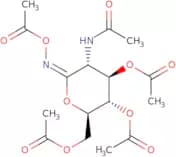
CAS:2-Acetamido-1,3,4,6-tetra-O-acetyl-2-deoxy-D-gluconhydroximo-1,5-lactone is a custom synthesis. It is a modification of natural sugars. It has fluorination and methylation to make the product more stable. The product is an oligosaccharide that is a saccharide with two monosaccharides attached together. It is made up of complex carbohydrates.Fórmula:C16H22N2O10Pureza:Min. 95%Peso molecular:402.35 g/mol4-Methoxyphenyl 3,4-O-isopropylidene-2,6-di-O-toluoyl-b-D-galactopyranoside
4-Methoxyphenyl 3,4-O-isopropylidene-2,6-di-O-toluoyl-b-D-galactopyranoside is a custom synthesis that is a complex carbohydrate. It is an oligosaccharide that has been modified with methylation and glycosylation. It also has been fluorinated and has undergone a click modification reaction. This product is of high purity and has been synthesized from saccharides and sugars.Fórmula:C32H34O9Pureza:Min. 95%Peso molecular:562.62 g/mola-D-Glucosyl hesperidin
CAS:a-D-Glucosyl hesperidin is a water-soluble drug that has been shown to have antioxidant properties. It inhibits the activity of certain enzymes, such as phospholipase A2 and lipoxygenase, which are involved in inflammation. The compound has also been shown to inhibit cancer cells in vitro by inducing apoptosis and inhibiting cell proliferation. Glibenclamide, the active form of a-D-glucosyl hesperidin, is an orally active hypoglycemic agent used to treat diabetes mellitus type 2 and gestational diabetes. It works by stimulating insulin release from beta cells in the pancreas and promoting insulin sensitivity in peripheral tissues. This compound also inhibits annexin V binding to phosphatidylserine, which leads to apoptosis.
Fórmula:C34H44O20Pureza:75%Cor e Forma:Off-White To Yellow SolidPeso molecular:772.7 g/mol5-Azido-5-deoxy-2,3-O-isopropylidene-D-lyxono-1,4-lactone
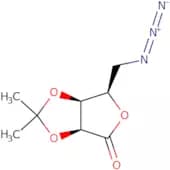
CAS:5-Azido-5-deoxy-2,3-O-isopropylidene-D-lyxono-1,4-lactone is a synthetic monosaccharide. It is used in the synthesis of glycosylated saccharides and oligosaccharides. This product can be custom synthesized at high purity.Fórmula:C8H11N3O4Pureza:Min. 95%Cor e Forma:PowderPeso molecular:213.19 g/molMethyl 2,3,4,6-tetra-O-acetyl-b-D-thiogalactopyranoside
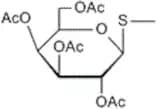
CAS:Methyl 2,3,4,6-tetra-O-acetyl-b-D-thiogalactopyranoside is a synthetic carbohydrate with the CAS number 55722-48-0. Methyl 2,3,4,6-tetra-O-acetyl-b-D-thiogalactopyranoside is used in the synthesis of oligosaccharides and monosaccharides. This product can be custom synthesized to meet your specifications. Methyl 2,3,4,6-tetra-O-acetyl-b -D -thiogalactopyranoside has been fluorinated and glycosylated for the synthesis of complex carbohydrates and saccharides. This product has high purity and can be customized to meet your specifications.Fórmula:C15H22O9SPureza:Min. 95%Peso molecular:378.4 g/molMethyl 2-deoxy-a-D-ribofuranoside
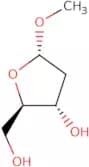
CAS:Methyl 2-deoxy-a-D-ribofuranoside is an atypical nucleoside, which is a component of the thiourea cofactors. It can be synthesized from chloroacetic acid and hydantoin, which are used as starting materials for the production of this compound. The methyl group in this compound is obtained from the methylation of glucose. Methyl 2-deoxy-a-D-ribofuranoside can be identified by its chromatographic properties, such as dimethylformamide (DMF) and chloride. It also contains anomeric substituents that are necessary for nucleosidation reactions. This nucleoside has been shown to have antiinflammatory activity against carrageenan in mice and rats.Fórmula:C6H12O4Pureza:Min. 95%Peso molecular:148.16 g/molBenzyl 2-acetamido-2-deoxy-3-O-methyl-a-D-glucopyranoside
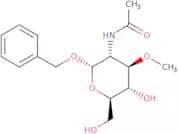
CAS:Benzyl 2-acetamido-2-deoxy-3-O-methyl-a-D-glucopyranoside is a fluorinated monosaccharide that has been synthesized and Oligosaccharides. It is a complex carbohydrate and can be used in the synthesis of glycosylation, polysaccharide, or click modification. The CAS No. 93215-41-9 is custom synthesis with high purity and good quality.Fórmula:C16H23NO6Pureza:Min. 95%Peso molecular:325.36 g/mol1,2,3,6-Tetra-O-benzoyl-a-D-talose
1,2,3,6-Tetra-O-benzoyl-a-D-talose is a modified sugar that can be used as a saccharide or oligosaccharide. It can be synthesized by the Click reaction with 1,2,3,6-tetra-O-benzoyl-D-talose and methyl iodide. The product can also be obtained from the reaction of methyl acetate with glycerol in the presence of hydrochloric acid. This compound has been shown to have good solubility and is available in high purity.Fórmula:C34H28O10Pureza:Min. 95%Peso molecular:596.58 g/mol1-O -Acetyl-2,5-di-O-benzoyl-3-fluoro-3-deoxy-b-D-ribofuranoside
CAS:1-O -Acetyl-2,5-di-O-benzoyl-3-fluoro-3-deoxy-b-D-ribofuranoside is a synthetic sugar that belongs to the class of saccharides. It is a modification of fluorinated sugar that has been modified with acetylation and benzoylation. This compound can be used as an intermediate in the synthesis of oligosaccharides and glycosylations.Pureza:Min. 95%O-Butanoyl-2,3-O-isopropylidene-a-D-mannofuranoside
CAS:O-Butanoyl-2,3-O-isopropylidene-a-D-mannofuranoside is a high purity sugar with CAS No. 177562-15-1. It is synthesized by the modification of saccharides with methyl groups, glycosylation, and click chemistry. This chemical has a complex structure and can be used as a raw material for the production of complex carbohydrates.
Fórmula:C14H26O7Pureza:Min. 95%Peso molecular:304.38 g/mol


![O-(2-Azido-4,6-O-benzylidene-2-deoxy-a-D-galactopyranosyl)-N-[(9H-fluoren-9-ylmethoxy)carbonyl]-L-…](/_next/image/?url=https%3A%2Fstatic.cymitquimica.com%2Fproducts%2F3D%2Fthumb-webp%2FMA60609.webp&w=3840&q=75)











![1,2-Dideoxy-2'-piperidin-1-yl-a-D-glucopyranoso-[2,1-d]-2'-thiazoline](/_next/image/?url=https%3A%2Fstatic.cymitquimica.com%2Fproducts%2F3D%2Fthumb-webp%2FMD15732.webp&w=3840&q=75)



![O-(2-Azido-4,6-O-benzylidene-2-deoxy-a-D-galactopyranosyl)-N-[(9H-fluoren-9-ylmethoxy)carbonyl]-L-…](/_next/image/?url=https%3A%2Fstatic.cymitquimica.com%2Fproducts%2F3D%2Fthumb-webp%2FMA60610.webp&w=3840&q=75)