Monossacáridos
Monossacarídeos são a forma mais simples de carboidratos e servem como building blocks fundamentais para açúcares mais complexos e polissacarídeos. Essas moléculas de açúcar único desempenham papéis críticos no metabolismo energético, na comunicação celular e nos componentes estruturais das células. Nesta seção, você encontrará uma ampla variedade de monossacarídeos essenciais para pesquisas em bioquímica, biologia molecular e glicociência. Esses compostos são cruciais para estudar vias metabólicas, processos de glicosilação e desenvolvimento de agentes terapêuticos. Na CymitQuimica, oferecemos monossacarídeos de alta qualidade para apoiar suas necessidades de pesquisa, garantindo precisão e confiabilidade em suas investigações científicas.
Subcategorias de "Monossacáridos"
- Aloses(11 produtos)
- Arabinoses(21 produtos)
- Eritroses(11 produtos)
- Frutoses(9 produtos)
- Fucoses(36 produtos)
- Galactosamina(41 produtos)
- Galactoses(260 produtos)
- Glucoses(365 produtos)
- Ácidos Glucurónicos(51 produtos)
- Glico-substratos para enzimas(77 produtos)
- Guloses(6 produtos)
- Idoses(4 produtos)
- Inositóis(15 produtos)
- Lixoses(4 produtos)
- Mannoses(65 produtos)
- O-Glicanos(48 produtos)
- Psicoses(3 produtos)
- Ramnoses(10 produtos)
- Riboses(61 produtos)
- Ácidos siálicos(100 produtos)
- Sorboses(4 produtos)
- Açúcares(173 produtos)
- Tagatoses(4 produtos)
- Taloses(8 produtos)
- Xiloses(20 produtos)
Exibir 17 mais subcategorias
Foram encontrados 6088 produtos de "Monossacáridos"
Ordenar por
Pureza (%)
0
100
|
0
|
50
|
90
|
95
|
100
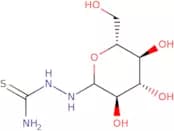
D-Glucopyranosyl thiosemicarbazide
CAS:<p>D-Glucopyranosyl thiosemicarbazide is a synthetic molecule that reacts with halides to produce regiospecifically substituted aldehydes. It has been used in the synthesis of glycosylated heterocycles and for the conversion of amines into reactive intermediates. D-Glucopyranosyl thiosemicarbazide can be prepared by reacting 2,3-dichloro-5,6-dicyanobenzoquinone with sodium nitrite in methanol followed by hydrolysis with water. This reaction produces an intermediate that reacts with sulfur dioxide to form the desired product. The structure of this molecule was determined using X-ray crystallography on crystals obtained from aspergillus mold.</p>Fórmula:C7H15N3O5SPureza:Min. 95%Cor e Forma:White to off-white powder.Peso molecular:253.28 g/molCalcium lactate gluconate
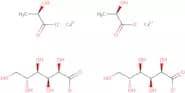
CAS:<p>Calcium lactate gluconate is an antacid and a calcium supplement. It is a salt of calcium with lactic acid, which is often used to treat or prevent kidney stones and periodontal disease. Calcium lactate gluconate also helps to form new bone by stimulating osteoblasts, the cells responsible for bone formation. This drug can be used therapeutically to increase bone growth in people with osteoporosis or to repair bones after injury. It also helps heal fractures, relieves pain from arthritis, and treats cancer by preventing cell proliferation. Calcium lactate gluconate is a white powder that dissolves in water and can be mixed with other liquids such as fruit juice or milk.</p>Fórmula:(C3H5O3)2Ca•(C6H11O7)2CaPureza:Min. 95%Cor e Forma:PowderPeso molecular:648.59 g/mol4-Formylphenyl β-D-glucopyranoside
CAS:<p>4-Formylphenyl β-D-glucopyranoside is a natural compound that is found in human serum and has the ability to form stable complexes with p-hydroxybenzoic acid. This drug has been shown to regulate transcription through its interaction with the nucleotide sequence of DNA, which may be due to its ability to form stable complexes with p-hydroxybenzoic acid. 4-Formylphenyl β-D-glucopyranoside has been reported as having biological properties such as gland cells, matrix effect, and locomotor activity. The surface methodology used on this drug can be used for sample preparation, which can be beneficial for the chinese herb industry. It has also been shown to have synchronous fluorescence when mixed with other compounds.</p>Fórmula:C13H16O7Pureza:Min. 98 Area-%Cor e Forma:PowderPeso molecular:284.26 g/molα-D-Mannose-1-phosphate sodium
CAS:<p>α-D-Mannose-1-phosphate sodium is a synthetically made mannose phosphate. This compound is used in the synthesis of oligosaccharides and glycoproteins.</p>Fórmula:C6H11Na2O9PPureza:Min. 98 Area-%Cor e Forma:White PowderPeso molecular:304.1 g/mol2-Iodoethyl 2,3,4,6-tetra-O-acetyl-α-D-mannopyranoside
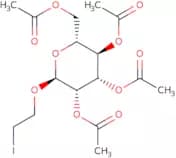
CAS:<p>2-Iodoethyl 2,3,4,6-tetra-O-acetyl-a-D-mannopyranoside is a high purity custom synthesis that can be modified with Click chemistry. It can be synthesized by modification of methylated glycosides and saccharides. This product has been shown to have a wide range of applications in the areas of fluorination, glycosylation, and methylation. The sugar moiety is an oligosaccharide made up of one or more monosaccharides (simple sugars) joined together by glycosidic bonds. This product is often found in complex carbohydrates such as glycogen and starch.</p>Fórmula:C16H23IO10Pureza:Min. 95%Cor e Forma:White to off-white solid.Peso molecular:502.25 g/mol2-Deoxy-2-fluoro-L-fucose
CAS:<p>2-Deoxy-2-fluoro-L-fucose (2FF) is a fluorinated analogue of fucose that can be converted to GDP (Guanosine Diphosphate)-2FF in vitro, a competitive inhibitor of alpha-1,3-fucosyltransferase V. It can also be metabolised inside the cell to a substrate-based inhibitor of fucosyltransferases. 2FF reduces fucosylation of IgG in antibodies, which increases therapeutic efficacies of antibodies that cause antibody-dependent cellular cytotoxicity.</p>Fórmula:C6H11FO4Pureza:Min. 98.0 Area-%Cor e Forma:White PowderPeso molecular:166.15 g/mol1,2,3-Tri-O-acetyl-4,6-O-benzylidene-b-D-galactopyranose
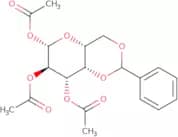
CAS:<p>1,2,3-Tri-O-acetyl-4,6-O-benzylidene-b-D-galactopyranose is a high purity and custom synthesis sugar. This product has been modified with fluorination, glycosylation, methylation, and modifications. It is also known by the CAS number 78962-43-3. 1,2,3-Tri-O-acetyl-4,6-O-benzylidene b -D -galactopyranose is an oligosaccharide that can be used as a monosaccharide or saccharide. It is a complex carbohydrate that has many uses in the food industry.</p>Fórmula:C19H22O9Pureza:Min. 95%Cor e Forma:White PowderPeso molecular:394.37 g/mol(2R, 3S, 4S) -3-Fluoro- 4- (fluoromethyl])- 1- (phenylmethyl) -2- azetidinecarboxylic acid methyl ester
<p>(2R, 3S, 4S) -3-Fluoro-4-(fluoromethyl)-1-(phenylmethyl)-2-azetidinecarboxylic acid methyl ester is a synthetic compound that is used in the preparation of modified saccharides and oligosaccharides. These compounds are used in the synthesis of complex carbohydrates. This product also has fluoroquinolone resistance and has been shown to be an inhibitor of RNA polymerase II transcription and DNA topoisomerase I.</p>Pureza:Min. 95%2’-(N-Hexadecanoylamino)-4’-nitrophenyl-β-D-galactopyranoside
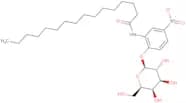
CAS:<p>2’-(N-Hexadecanoylamino)-4’-nitrophenyl-b-D-galactopyranoside is a synthetic substrate that is used to diagnose and monitor brain diseases. It can be used in the diagnosis of Alzheimer's disease by measuring the amount of amniotic fluid that leaks into the brain. The rate of hydrolysis of this substrate has been shown to be higher in patients with Alzheimer's disease than in healthy controls. This synthetic substrate is also useful for monitoring the activity of taurocholate galactohydrolase, which is an enzyme that breaks down bile salts and plays a role in cholesterol metabolism. The rate of hydrolysis has been found to be increased in patients with Parkinson's disease, but not in those with Alzheimer's disease or healthy controls. 2’-(N-Hexadecanoylamino)-4’-nitrophenyl-b-D-galactop</p>Fórmula:C28H46N2O9Pureza:Min. 95%Cor e Forma:PowderPeso molecular:554.67 g/mol3,5-((R)-Benzylidene)-6-deoxy-L-glucono-1,4-lactone
<p>3,5-((R)-Benzylidene)-6-deoxy-L-glucono-1,4-lactone is a synthesized sugar that can be modified to include fluorination, glycosylation, methylation and other modifications. It is an oligosaccharide with a saccharide backbone made up of glucose units. The monosaccharides are galactose and glucuronic acid. 3,5-(R) Benzylidene)-6-deoxy-L-glucono-1,4-lactone is used in the synthesis of complex carbohydrates for research purposes.</p>Pureza:Min. 95%1,2,3,4-Tetra-O-benzoyl-6-O-tert-butyldiphenylsilyl-a-D-mannopyranose
CAS:<p>1,2,3,4-Tetra-O-benzoyl-6-O-tert-butyldiphenylsilyl-a-D-mannopyranose is a custom synthesis. It is a fluorinated monosaccharide that can be used as a glycosylation or polysaccharide modification reagent. This product has been modified with methyl groups at the 2 and 3 positions of the phenolic ring and tetra-(1,2,3,4)-benzoate groups at the 4 position. The purity of this product is >98%.</p>Fórmula:C40H42O10SiPureza:Min. 95%Peso molecular:710.86 g/molPhenyl b-L-thiofucopyranoside
<p>Phenyl b-L-thiofucopyranoside is a custom-synthesized, fluorinated, modified sugar that is used in the synthesis of oligosaccharides and polysaccharides. This compound is an excellent choice for methylation reactions due to its high reactivity and stability under harsh conditions. Phenyl b-L-thiofucopyranoside can be used as a precursor for the synthesis of saccharide derivatives, such as monosaccharides and complex carbohydrates. It has been shown to be stable to heat and pH extremes, making it ideal for use in organic syntheses.</p>Fórmula:C12H16O4SPureza:Min. 95%Cor e Forma:PowderPeso molecular:256.32 g/mol1-O-Benzyl-2C-methyl-3,4-isopropylidine-D-ribopyranoside
CAS:<p>1-O-Benzyl-2C-methyl-3,4-isopropylidine-D-ribopyranoside (1) is a fluorinated monosaccharide that is used as an intermediate in the synthesis of oligosaccharides. 1 can be used for glycosylation and polysaccharide modification. It has been shown to be useful as a building block in the synthesis of complex carbohydrates and it can also be methylated (2). 1 is a high purity chemical with a CAS number of 569661-37-6.</p>Fórmula:C16H22O5Pureza:Min. 95%Peso molecular:294.35 g/mol2,3,4-Tri-O-acetyl-a-D-xylopyranosyl bromide - Stabilised with 2.5% CaCO3
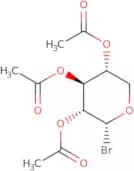
CAS:<p>2,3,4-Tri-O-acetyl-a-D-xylopyranosyl bromide - Stabilised with 2.5% CaCO3 is a chiral compound that is a drug for the treatment of estrogen deficiency in postmenopausal women. It is synthesized from D-xylose and acetone by reductive elimination using an organotin catalyst. The resulting product has a nitro group at the 4 position and can be activated as a priming agent for DNA synthesis. This compound has been shown to be effective in treating intestinal disorders such as ulcerative colitis.<br>2,3,4-Tri-O-acetyl-a-D-xylopyranosyl bromide - Stabilised with 2.5% CaCO3 has been used to conjugate estrogens with various drugs to create new compounds that are more potent than free estrogens alone. Bioavailability of these conjugates has</p>Fórmula:C11H15BrO7Pureza:(%) Min. 85%Cor e Forma:PowderPeso molecular:339.14 g/molb-D-Glucose - 85%
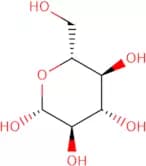
CAS:<p>Glycol ethers are compounds that are used as solvents and plasticizers. They have been shown to inhibit the activity of enzymes, such as glucose-6-phosphate dehydrogenase, which is involved in the conversion of glucose to phosphate. Glycol ethers also promote sugar transport by inhibiting the sodium-dependent glucose transporter (SGLT). This transport mechanism is important for maintaining normal blood sugar levels and preventing diabetic neuropathy. Glycol ethers are also anti-diabetic agents that can increase insulin sensitivity by stimulating insulin release from pancreatic beta cells and improving the response of peripheral tissues to insulin stimulation.</p>Fórmula:C6H12O6Pureza:Min. 95%Cor e Forma:White PowderPeso molecular:180.16 g/molL-Galactono-1,4-lactone
CAS:<p>L-Galactono-1,4-lactone is a biochemical compound that is found in plants and some living cells. It is an intermediate in the Krebs cycle and can be used as a nutrient solution for plant science research. L-Galactono-1,4-lactone has been shown to have enzyme activities on chronic exposure to sephadex g-100. This compound also has an optimum pH of 5.2 and shows acid formation with titration calorimetry. L-Galactono-1,4-lactone is also used in vitro assays for polymerase chain reactions (PCR).</p>Fórmula:C6H10O6Pureza:Min. 98%Cor e Forma:White Off-White PowderPeso molecular:178.14 g/molmyo-Inositol 1,3,4,5,6-pentakisphosphate decasodium salt
CAS:<p>Myo-inositol 1,3,4,5,6-pentakisphosphate decasodium salt is a complex carbohydrate that has been modified with fluorine. This modification has been shown to increase the solubility of myo-inositol 1,3,4,5,6-pentakisphosphate decasodium salt in organic solvents. Myo-inositol 1,3,4,5,6-pentakisphosphate decasodium salt is used in the synthesis of oligosaccharides and polysaccharides. It also serves as a substrate for methylation and glycosylation reactions. The synthesis of this compound can be achieved by a Click reaction.</p>Fórmula:C6H17O21P5·10NaPureza:Min. 95%Cor e Forma:PowderPeso molecular:809.95 g/mol2-C-Methyl- D- arabinonic acid g- lactone
<p>2-C-Methyl- D- arabinonic acid g- lactone is a sugar that is custom synthesized to provide high purity. It can be modified by fluorination, glycosylation, and methylation. This compound is used as a synthetic sugar in the synthesis of oligosaccharides and monosaccharides. 2-C-Methyl- D- arabinonic acid g- lactone can also be used in carbohydrate complex analysis. CAS No.: 135187-29-5</p>Pureza:Min. 95%2,3,4,6-Tetra-O-acetyl-α-D-glucopyranosyl fluoride
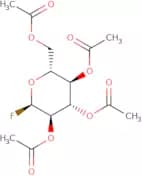
CAS:<p>2,3,4,6-Tetra-O-acetyl-a-D-glucopyranosyl fluoride is a halide with the chemical formula of F. It has an axial conformation and is a crystalline solid at room temperature. 2,3,4,6-Tetra-O-acetyl-a-D-glucopyranosyl fluoride reacts with water to form hydrofluoric acid (HF). This compound is an important reagent in carbohydrate analysis because its presence or absence can be used to distinguish between the two anomers of maltose: α-(1→2) and β-(1→4). It also reacts with sodium chloride to give the chloride salt sodium tetrafluoroborate. The molecule has three substituents: a hydroxymethyl group (-OH), a glycosidic oxygen atom (O), and a glucosyl group (-CHO). Watanabe's numbering system for</p>Fórmula:C14H19FO9Pureza:Min. 95%Cor e Forma:PowderPeso molecular:350.29 g/mol1,3,4,6-Tetra-O-acetyl-2-deoxy-2-fluoro-D-galactopyranose
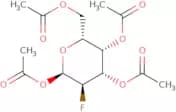
CAS:<p>1,3,4,6-Tetra-O-acetyl-2-deoxy-2-fluoro-D-galactopyranose is a fluorinated sugar that is used in the synthesis of glycosides. It is a synthetic compound that is prepared by reacting 1,3,4,6-tetraacetyl galactose with potassium bifluoride and diethyl oxalate in presence of anhydrous sodium sulfate. The product obtained has the following structural formula: The chemical name for this compound is 1,3,4,6-Tetraacetyl -2-[(1R)-1-(ethoxycarbonyl)propyl]-2-(fluorooxymethyl) -D-galactopyranose. The CAS number for this compound is 83697–45–4.</p>Fórmula:C14H19FO9Pureza:(As Sum Of Anomers) Min. 98 Area-%Cor e Forma:White PowderPeso molecular:350.3 g/mol




![(2R, 3S, 4S) -3-Fluoro- 4- (fluoromethyl])- 1- (phenylmethyl) -2- azetidinecarboxylic acid methyl …](/_next/image/?url=https%3A%2Fstatic.cymitquimica.com%2Fproducts%2F3D%2Fthumb-webp%2FMF163470.webp&w=3840&q=75)