Monossacáridos
Monossacarídeos são a forma mais simples de carboidratos e servem como building blocks fundamentais para açúcares mais complexos e polissacarídeos. Essas moléculas de açúcar único desempenham papéis críticos no metabolismo energético, na comunicação celular e nos componentes estruturais das células. Nesta seção, você encontrará uma ampla variedade de monossacarídeos essenciais para pesquisas em bioquímica, biologia molecular e glicociência. Esses compostos são cruciais para estudar vias metabólicas, processos de glicosilação e desenvolvimento de agentes terapêuticos. Na CymitQuimica, oferecemos monossacarídeos de alta qualidade para apoiar suas necessidades de pesquisa, garantindo precisão e confiabilidade em suas investigações científicas.
Subcategorias de "Monossacáridos"
- Aloses(11 produtos)
- Arabinoses(21 produtos)
- Eritroses(11 produtos)
- Frutoses(9 produtos)
- Fucoses(36 produtos)
- Galactosamina(41 produtos)
- Galactoses(261 produtos)
- Glucoses(365 produtos)
- Ácidos Glucurónicos(51 produtos)
- Glico-substratos para enzimas(77 produtos)
- Guloses(6 produtos)
- Idoses(4 produtos)
- Inositóis(15 produtos)
- Lixoses(4 produtos)
- Mannoses(65 produtos)
- O-Glicanos(48 produtos)
- Psicoses(3 produtos)
- Ramnoses(10 produtos)
- Riboses(61 produtos)
- Ácidos siálicos(100 produtos)
- Sorboses(4 produtos)
- Açúcares(173 produtos)
- Tagatoses(4 produtos)
- Taloses(8 produtos)
- Xiloses(20 produtos)
Exibir 17 mais subcategorias
Foram encontrados 6088 produtos de "Monossacáridos"
Ordenar por
Pureza (%)
0
100
|
0
|
50
|
90
|
95
|
100
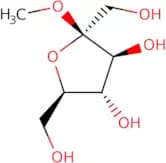
Methyl b-D-fructofuranoside
CAS:<p>Methyl b-D-fructofuranoside is a chemical compound that is used in the production of esters and fatty acids. Methyl b-D-fructofuranoside is produced by a dehydration reaction between two molecules of acetone. The product of this reaction, methyl b-D-fructopyranoside, can be broken down into two molecules of acetone and one molecule each of methyl alcohol and carbon dioxide. This process is called alkylation. Furanocoumarin derivatives are often found in plants such as asperulosidic acid and quinquefasciatus. These compounds are found in many species of plant, but they are most concentrated in the roots of these plants because they are more metabolically active there than other parts of the plant. Environmental pollution can lead to high concentrations of furanocoumarins in plants, which can have toxic effects on organisms that come into contact with them.</p>Fórmula:C7H14O6Pureza:Min. 98 Area-%Cor e Forma:Clear LiquidPeso molecular:194.18 g/molRef: 3D-MM15655
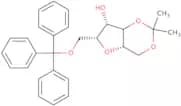
2mg420,00€5mg662,00€10mg885,00€25mg607,00€50mg863,00€100mg1.084,00€250mg1.896,00€500mg2.639,00€2,5-Anhydro-1,3-O-isopropylidene-6-O-trityl-D-glucitol
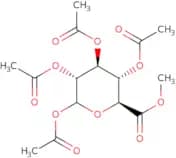
CAS:<p>2,5-Anhydro-1,3-O-isopropylidene-6-O-trityl-D-glucitol is a complex carbohydrate that is synthesized by the modification of glucose. This product has been modified with methylation and glycosylation.<br>2,5-Anhydro-1,3-O-isopropylidene-6-O-trityl--D--glucitol is a white powder that is soluble in water and ethanol. <br>It can be used for fluoroquinolone resistance studies, which are important for developing new antibiotics to combat bacterial infections.</p>Fórmula:C28H30O5Pureza:Min. 95%Peso molecular:446.53 g/mol1,2,3,4-Tetra-O-acetyl-D-glucuronide methyl ester
CAS:<p>1,2,3,4-Tetra-O-acetyl-D-glucuronide methyl ester is a lactone that can be used as a precursor for the synthesis of various types of compounds. The chemical structure was determined by high-resolution x-ray diffraction to be a planar molecule with two conformations: one where the four acetyl groups are on different sides and another where they are all on the same side. The latter conformation is more stable due to the dihedral angle between the hydroxyl group and carbonyl group. This compound is an intermediate in synthesizing 2-(4'-hydroxybenzoyl)-1,2,3,4-tetra-O-acetyl-.alpha.-D-.beta.-D glucopyranoside methyl ester by reacting with 3-(3'-azido)benzaldehyde. The single crystal x-ray diffraction study revealed that this compound has a conformation</p>Fórmula:C15H20O11Pureza:Min. 97 Area-%Cor e Forma:White PowderPeso molecular:376.31 g/molN-Propionyl-D-glucosamine
CAS:<p>N-Propionyl-D-glucosamine is a sugar used in the synthesis of peptidoglycan, a structural component of bacterial cell walls. N-Propionyl-D-glucosamine is synthesized from formaldehyde and propionic acid. It is used as an antibiotic to treat bacterial infections caused by Gram-positive bacteria such as streptococci and staphylococci. N-Propionyl-D-glucosamine has also been shown to have anti-fungal properties against Candida albicans and Saccharomyces cerevisiae. The biosynthesis of this compound takes place through phosphorylation of the amide group on the sugar residue, which is catalyzed by a number of enzymes including phosphotransacetylase, acetate kinase, and phosphoenolpyruvate synthase. This process requires ATP, phosphate ions, ammonium ion, and water molecules.</p>Fórmula:C9H17NO6Pureza:Min. 95%Cor e Forma:White PowderPeso molecular:235.23 g/mol1,2,3,4,6-Penta-O-acetyl-D-galactopyranose
CAS:<p>1,2,3,4,6-Penta-O-acetyl-D-galactopyranose is an analog of the natural pentoses that binds to the mitochondrial membrane and inhibits the production of pro-inflammatory cytokines. This drug has been shown to inhibit the binding of lysophosphatidic acid (LPA) to its receptor by substituting for LPA in this binding site. 1,2,3,4,6-Penta-O-acetyl-D-galactopyranose also inhibits the expression of proinflammatory cytokines such as interleukin 6 (IL6) and IL1β in a dose dependent manner. This drug is also capable of inhibiting phosphotungstic acid from binding to a monolayer surface and can be used as a glycopolymer for cell culture. It has been shown that 1,2,3,4,6-Penta-O-acetyl</p>Fórmula:C16H22O11Pureza:Min. 95%Cor e Forma:PowderPeso molecular:390.34 g/molD-Mannose tablets
CAS:<p>Please enquire for more information about D-Mannose tablets including the price, delivery time and more detailed product information at the technical inquiry form on this page</p>Fórmula:C6H12O6Pureza:Min. 95%Cor e Forma:PowderPeso molecular:180.16 g/molL-Lyxosamine HCl
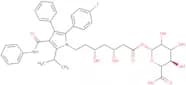
<p>L-Lyxosamine HCl is a synthetic monosaccharide that has been modified to contain a fluorine atom. L-Lyxosamine HCl is a methyl donor in the Methylation reaction and can be used as an intermediate for the synthesis of oligosaccharides and polysaccharides. This product is available in high purity, with an average yield of 97%. The CAS No. for this product is 590-81-6.</p>Fórmula:C5H10NO4HClPureza:Min. 95%Peso molecular:184.6 g/molAtorvastatin acyl-b-D-glucuronide
CAS:<p>Atorvastatin acyl-b-D-glucuronide is a synthetic compound that has been modified with fluorine and methyl groups. It is a glycosylated molecule with a carbohydrate moiety. It has been shown to be active against Saccharide-producing bacteria, such as the genus Clostridium, which are responsible for the production of polysaccharides and glycans.</p>Fórmula:C39H45FN2O11Pureza:90%MinPeso molecular:736.8 g/molMethyl 1-C-[4-chloro-3-[[4-[[(3S)-tetrahydro-3-furanyl]oxy]phenyl]methyl]phenyl]-a-D-glucopyranoside
CAS:<p>Intermediate in the synthesis of empagliflozin</p>Fórmula:C24H29ClO8Pureza:Min. 95%Peso molecular:480.94 g/molUDP-b-L-arabinofuranose
CAS:<p>UDP-b-L-arabinofuranose is a custom synthesis product that is used to modify polysaccharides. It is a high purity sugar nucleotide. UDP-b-L-arabinofuranose has CAS number 331001-44-6.</p>Fórmula:C14H22N2O16P2Pureza:Min. 95%Cor e Forma:PowderPeso molecular:536.28 g/molFerulic acid acyl-b-D-glucoside
CAS:<p>Ferulic acid acyl-b-D-glucoside is a flavonoid compound that has been shown to have antioxidant properties. It is found in plants and can be synthesized by the enzyme phenylalanine ammonia-lyase. Ferulic acid acyl-b-D-glucoside is insoluble in water, but soluble in organic solvents such as ethanol and acetone. The chemical composition of ferulic acid acyl-b-D-glucoside is not well understood, but it has been shown to contain chalcone, chlorogenic acids, aldehydes, celosianin, and betanidin.</p>Pureza:Min. 95%2-Aminophenyl β-D-glucuronide hydrochloride
CAS:<p>2-Aminophenyl b-D-glucuronide HCl is a custom synthesis chemical. It is a white to pale yellow crystalline powder. This compound has a molecular weight of 363.2 and it's chemical formula is C8H10N2O7Glucuronic acid. 2-Aminophenyl b-D-glucuronide HCl is used in the modification of oligosaccharides, polysaccharides, saccharides, carbohydrates, fluorination and complex carbohydrate. The purity of this chemical is high and it can be modified with monosaccharide or sugar.</p>Fórmula:C12H15NO7•HClPureza:Min. 95%Peso molecular:321.71 g/mol2-Deoxy-D-glucono-1,5-lactone
CAS:<p>2-Deoxy-D-glucono-1,5-lactone is a crystalline compound that is isolated from the hydrolysis of D-gluconic acid. This compound has been found to be a diastereoisomeric product with a lactone ring and an epimerization process. It can also be synthesized by reacting epichlorohydrin with potassium hydroxide in the presence of a hydroxy group. 2DG is an elimination product of 2-deoxyglucose and has been shown to have antihyperglycemic effects due to its ability to inhibit glucose synthesis in the liver and muscle cells. This compound also inhibits protein synthesis in bacteria, which may lead to cell death.</p>Fórmula:C6H10O5Pureza:Min. 95%Peso molecular:162.14 g/molBenzyl 2,3-O-isopropylidene-α-D-mannofuranoside
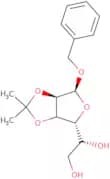
CAS:<p>Benzyl 2,3-O-isopropylidene-a-D-mannofuranoside is a fluorinated monosaccharide that is synthesized using glycosylation and polysaccharide modification. This product has a CAS number of 20689-03-6 and can be used for complex carbohydrate synthesis. It has been shown to have high purity.</p>Fórmula:C16H22O6Pureza:Min. 95%Cor e Forma:PowderPeso molecular:310.34 g/mola-D-Glucoheptonic acid calcium salt hydrate
CAS:<p>a-D-Glucoheptonic acid calcium salt hydrate is a modification of a glycosylation reaction that is typically used in the synthesis of oligosaccharides. The modification is called Click chemistry, and it occurs through a copper-catalyzed reaction between an azide and an alkyne. This type of modification can be used to produce complex carbohydrates by linking together different monosaccharides or polysaccharides. It is also used for the production of high-purity monosaccharides and polysaccharides with custom syntheses. The methylation, glycosylation, fluorination, and saccharide modifications are all variations on this process.</p>Fórmula:C14H26CaO16·xH2OCor e Forma:White PowderPeso molecular:490.42 g/molMethyl 2-deoxy-L-ribofuranoside
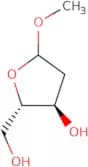
CAS:<p>Methyl 2-deoxy-L-ribofuranoside is an intermediate in the synthesis of l-arabinose. It can be obtained by the reaction of methyl 2,3-dideoxy-D-ribofuranoside with pivaloyl chloride. The antiviral activity of this compound has been shown by its ability to inhibit the replication of influenza A virus. Methyl 2-deoxy-L-ribofuranoside is a fluorinating agent that can be used for the synthesis of oligosaccharides and nucleosides. This intermediate also serves as a substrate for a number of organic reactions, including regioselective and stereoselective chlorination.</p>Fórmula:C6H12O4Pureza:Min. 95%Cor e Forma:PowderPeso molecular:148.16 g/molGlycosylceramide - from plant origin
CAS:<p>Glucosylceramide (Glc-Cer) is the common precursor in the biosynthesis of most glycosphingolipids, with exception of some Gal-Cer derivatives, such as, GM4. Glucosylceramide consists of a glucosyl moiety which is β-O-glycosydically linked to ceramide, which itself, consists of the long-chain aminoalcohol sphingosine and a fatty acid. Glucosylceramide (also called glucocerebroside) is synthesised enzymatically, by the glucosylceramide synthase-catalysed with the addition of a glucose residue to ceramide. Glucosylceramide is involved in the regulation of various cellular events and also serves as a main constituent in liposome formulations.</p>Fórmula:C40H75NO9Pureza:Min. 95%Peso molecular:714.02 g/molN-Benzoyl-D-glucosamine
CAS:<p>Lectins are carbohydrate-binding proteins that can be classified into different types based on their specificities for glycan structures. One of the most common types is the N-acetyl-D-glucosamine (NAG) lectin, which binds to oligomers of NAG and related sugars. Lectins are used to activate cells and induce cell death. The dodecyl NAG lectin has been shown to bind to glucocerebrosides in a reductively irreversible manner and has been used as a model for such interactions. This lectin is also inexpensively produced from a synthetic benzylidene acetal, which can be made from commercially available materials. It has been shown that this lectin binds to polyacrylamide gels in an SDS-polyacrylamide gel electrophoresis, with a pH optimum at 7.0 and an amino acid composition that includes glutamic acid, glutamine, asparagine, ser</p>Fórmula:C13H17NO6Pureza:Min. 95%Cor e Forma:White PowderPeso molecular:283.28 g/mol6-Deoxy-6-iodo-D-glucose
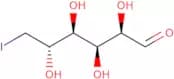
CAS:<p>6-Deoxy-6-iodo-D-glucose is a glucose analog that can be used as a bypassed substrate for the study of d-glucose metabolism in diabetic patients. 6-Deoxy-6-iodo-D-glucose has been shown to be an acceptable substrate for animal cells and can be used for the study of glucose uptake in the pancreas. This analog does not require insulin for uptake, which may help to elucidate the role of insulin resistance in diabetes. The use of 6-deoxy-6-[18F]fluoroethyl D-[1,2]-glucose ([18F]FDG) as an optical imaging agent has also been studied.</p>Fórmula:C6H11IO5Pureza:Min. 95 Area-%Cor e Forma:PowderPeso molecular:290.05 g/molβ-Galactosylceramide, from bovine brain
CAS:<p>Inducer of cytochine and chemochine production in blood cells</p>Pureza:Min. 95%Cor e Forma:White PowderPeso molecular:c.a. 750



![Methyl 1-C-[4-chloro-3-[[4-[[(3S)-tetrahydro-3-furanyl]oxy]phenyl]methyl]phenyl]-a-D-glucopyranosi…](/_next/image/?url=https%3A%2Fstatic.cymitquimica.com%2Fproducts%2F3D%2Fthumb-webp%2FMM137435.webp&w=3840&q=75)