Monossacáridos
Monossacarídeos são a forma mais simples de carboidratos e servem como building blocks fundamentais para açúcares mais complexos e polissacarídeos. Essas moléculas de açúcar único desempenham papéis críticos no metabolismo energético, na comunicação celular e nos componentes estruturais das células. Nesta seção, você encontrará uma ampla variedade de monossacarídeos essenciais para pesquisas em bioquímica, biologia molecular e glicociência. Esses compostos são cruciais para estudar vias metabólicas, processos de glicosilação e desenvolvimento de agentes terapêuticos. Na CymitQuimica, oferecemos monossacarídeos de alta qualidade para apoiar suas necessidades de pesquisa, garantindo precisão e confiabilidade em suas investigações científicas.
Subcategorias de "Monossacáridos"
- Aloses(11 produtos)
- Arabinoses(21 produtos)
- Eritroses(11 produtos)
- Frutoses(9 produtos)
- Fucoses(36 produtos)
- Galactosamina(41 produtos)
- Galactoses(261 produtos)
- Glucoses(365 produtos)
- Ácidos Glucurónicos(51 produtos)
- Glico-substratos para enzimas(77 produtos)
- Guloses(6 produtos)
- Idoses(4 produtos)
- Inositóis(15 produtos)
- Lixoses(4 produtos)
- Mannoses(65 produtos)
- O-Glicanos(48 produtos)
- Psicoses(3 produtos)
- Ramnoses(10 produtos)
- Riboses(61 produtos)
- Ácidos siálicos(100 produtos)
- Sorboses(4 produtos)
- Açúcares(173 produtos)
- Tagatoses(4 produtos)
- Taloses(8 produtos)
- Xiloses(20 produtos)
Exibir 17 mais subcategorias
Foram encontrados 6088 produtos de "Monossacáridos"
Ordenar por
Pureza (%)
0
100
|
0
|
50
|
90
|
95
|
100
4-Methylphenyl 4,6-O-[bis(1,1-dimethylethyl)silylene]-1-thio-β-D-galactopyranoside
CAS:<p>4-Methylphenyl 4,6-O-[bis(1,1-dimethylethyl)silylene]-1-thio-β-D-galactopyranoside is a synthetic sugar that is used in the glycosylation of proteins. It is synthesized from 4-methylphenol and 1,1'-dimethylethylsilylene in the presence of trichlorosilane, followed by silylation with trimethylchlorosilane. The fluorinated site can be modified to suit your needs by following a Click chemistry protocol. This product has CAS No. 1242144-05-3 and is available for custom synthesis upon request.</p>Fórmula:C21H34O5SSiPureza:Min. 95%Peso molecular:426.64 g/molMethyl 2,3,4,6-tetra-O-benzyl-α-D-glucopyranoside
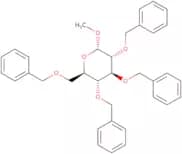
CAS:<p>Methyl 2,3,4,6-tetra-O-benzyl-α-D-glucopyranoside is a benzylated glycoside that inhibits the activity of β-glucosidases and glycoside hydrolases. It is used as an inhibitor in ecological studies to investigate the effects of benzyl groups on biotic and abiotic stressors. Methyl 2,3,4,6-tetra-O-benzyl-α-D-glucopyranoside has been shown to have inhibitory potency against the transition state in enzymatic reactions. This compound also has been shown to be effective in treating diabetes.</p>Fórmula:C35H38O6Pureza:Min. 95%Cor e Forma:PowderPeso molecular:554.67 g/mol1,3,5-Tri-O-benzoyl-a-D-ribofuranose
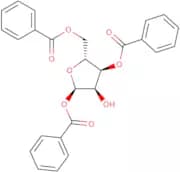
CAS:<p>1,3,5-Tri-O-benzoyl-a-D-ribofuranose is a modified carbohydrate. It is synthesized by the methylation of 1,3,5-tri-O-benzoyl-a-D-arabinopyranose followed by glycosylation with 3,6-dideoxyhexose. This compound has been used as a substrate in enzymatic studies to investigate the modification of carbohydrates by glycosylation and methylation and can be used for the synthesis of other saccharides.</p>Fórmula:C26H22O8Pureza:Min. 95%Cor e Forma:White PowderPeso molecular:462.45 g/mol2-Amino-b-L-arabinofurano[1,2:4,5]oxazoline
CAS:<p>2-Amino-b-L-arabinofurano[1,2:4,5]oxazoline is a custom synthesis. It is a white to off-white powder with a molecular weight of 264.50 and a melting point of about 160°C. The purity of this compound is >98% by HPLC analysis. This product has been modified with glycosylation, methylation, click modification, fluorination, saccharide modification, sugar modification, and oligosaccharide modification.</p>Fórmula:C6H10N2O4Pureza:Min. 95%Cor e Forma:PowderPeso molecular:174.15 g/molD-Mannitol 1-phosphate lithium salt
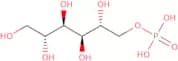
CAS:<p>D-Mannitol 1-phosphate lithium salt (DMPL) is a bacterial growth-inhibiting agent that inhibits the ribitol dehydrogenase enzyme that converts mannitol to ribitol. The wild-type strain of bacteria is more sensitive to DMPL than the mutant strains, which lack this enzyme. This compound has been shown to be active against Aerobacter aerogenes, and it can be used as an antimicrobial agent in plant physiology, where it prevents cell lysis. DMPL is also effective against wild-type strains of E. coli K-12 and has a broad range of pH optima with a maximum at pH 6.0 to 7.0. The reaction mechanism for this drug is not well understood, but it may involve inhibition of the polymerase chain reaction or other enzyme activities.</p>Fórmula:C6H15O9P·xLiPureza:Min. 95 Area-%Cor e Forma:White Off-White PowderPeso molecular:262.15 g/molStreptozocin
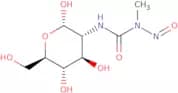
CAS:<p>A toxic glucosamine derivative, widely used for the induction of diabetes in experimental animals. The compound enters the pancreatic β cells in Langerhans islets via glucose transporter GLUT2. It has the ability to alkylate DNA and trigger the production of ROS and nitric oxide, which contribute to DNA and mitochondrial damage. Moreover, streptozocin inhibits N-acetyl-β-D-glucosaminidase and disrupts O-GlcNAc cycling. This molecule has also been used as antimicrobial compound and chemotherapeutic agent for some types of pancreatic cancer.</p>Fórmula:C8H15N3O7Pureza:Min. 98 Area-%Cor e Forma:Off-White PowderPeso molecular:265.2 g/mol4-Methoxyphenyl 2,3,6-tri-O-benzoyl-b-D-galactopyranoside
CAS:<p>The 4-methoxyphenyl 2,3,6-tri-O-benzoyl-b-D-galactopyranoside (4MP) is a coagulation factor that inhibits the activity of coagulation factors Xa and IIa. The compound has been shown to be reactive with the detection methods used for other coagulation factors. The sensitivity of 4MP to detection was assessed using a battery of detection methods. 4MP was found to be more reactive than other compounds studied with regard to the use of an immunoassay for detection. This compound has hepatotoxic effects and can cause cell death in vitro. Cell culture studies show that 4MP causes membrane permeabilization and cellular uptake by bacteria.</p>Fórmula:C34H36O7Pureza:Min. 95%Cor e Forma:White to off-white solid.Peso molecular:556.2461Benzyl D-glucuronate
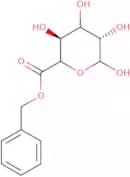
CAS:<p>Used for the synthesis of 1β-O-acyl glucuronides</p>Fórmula:C13H16O7Pureza:Min. 95%Cor e Forma:White PowderPeso molecular:284.26 g/mol2,3,5-Tri-O-benzoyl-2-C-methyl-D-ribonic acid-1,4-lactone
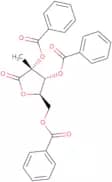
CAS:<p>2,3,5-Tri-O-benzoyl-2-C-methyl-D-ribonic acid-1,4-lactone is a glutamate receptor agonist that has been shown to have pharmacological properties. It binds to the GluR2/3 family of glutamate receptors and is an agonist at these receptors. The experiments with this drug have been conducted on both animals and humans. 2,3,5-Tri-O-benzoyl-2-C-methyl D ribonic acid lactone has also been shown to be an effective probe for the identification of glutamate receptor sequences in the brain and spinal cord.</p>Fórmula:C27H22O8Pureza:Min. 95%Cor e Forma:White PowderPeso molecular:474.46 g/molCochineal
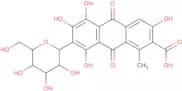
CAS:<p>Cochineal is a natural dye that is extracted from the female cochineal insect. Cochineal is used in food and cosmetics, and as a red colorant in some pharmaceutical products. The carminic acid present in cochineal forms a stable complex with the anionic groups present in wool or silk, so it is not soluble in water. Cochineal has been shown to have genotoxic activity and can cause mutations at both the base-pairing level and at protein level. Cochineal has also been shown to be cytotoxic against human serum cells and disrupt mitochondrial membrane potential. Its optimum concentration for signal peptide detection by electrochemical impedance spectroscopy (EIS) was found to be 0.1 mM.</p>Fórmula:C22H20O13Pureza:Min. 95%Cor e Forma:Red PowderPeso molecular:492.392,3:4,6-Di-O-isopropylidene-2-keto-L-gulonic acid sodium salt
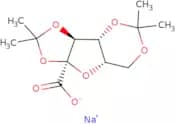
CAS:<p>2,3:4,6-Di-O-isopropylidene-2-keto-L-gulonic acid sodium salt is a fatty acid that has been used as an antipsychotic drug. It is the active metabolite of clozapine and has been shown to have similar efficacy to other first generation antipsychotics such as chlorpromazine and haloperidol. 2,3:4,6-Di-O-isopropylidene-2-keto-L-gulonic acid sodium salt also has a low energy content and can be audited for its locomotor activity. This drug is a metabolic product of clozapine and has been shown to have similar efficacy to other first generation antipsychotics such as chlorpromazine and haloperidol. 2,3:4,6-Di-O-isopropylidene-2-keto--L--gulonic acid</p>Fórmula:C12H17NaO7Cor e Forma:White Off-White PowderPeso molecular:296.25 g/mol2-Acetamido-2-deoxy-D-glucopyranose 6-sulphate sodium salt
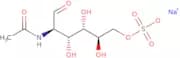
CAS:<p>2-Acetamido-2-deoxy-D-glucopyranose 6-sulphate sodium salt is an Oligosaccharide which is a carbohydrate. It has a CAS No. 108321-79-5 and is available for custom synthesis. 2-Acetamido-2-deoxy-D-glucopyranose 6 sulphate sodium salt can be modified with methylation, saccharide, polysaccharide, click modification, or modification. It can also be glycosylated and fluorinated. The chemical formula of this compound is C6H11NO4SNaO6</p>Fórmula:C8H14NNaO9SPureza:(%) Min. 95%Cor e Forma:White PowderPeso molecular:323.25 g/molGinsenoside F1
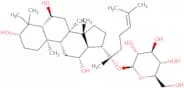
CAS:<p>Ginsenoside F1 is a natural compound found in ginseng. It is believed to have anti-cancer properties. Ginsenoside F1 has been shown to inhibit the proliferation of HL-60 cells and have an apoptotic effect by regulating mitochondrial membrane potential and activating the apoptotic pathway. The mechanism of action for the anti-cancer activity of Ginsenoside F1 may be due to its ability to inhibit angiogenesis, which is needed for cancer cell proliferation. Ginsenoside F1 also inhibits the growth of skin cancer cells in mice by regulating microvessel density. This compound has been found in foods such as soybeans, rice, peanuts, and kiwifruit.</p>Fórmula:C36H62O9Pureza:Min. 95%Cor e Forma:PowderPeso molecular:638.87 g/molSedoheptulose anhydride monohydrate
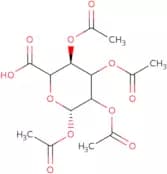
CAS:<p>Sedoheptulose anhydride is a derivative of sedoheptulose, a seven-carbon atoms carbohydrate.</p>Fórmula:C7H12O6·H2OPureza:Min. 90 Area-%Cor e Forma:White PowderPeso molecular:210.18 g/mol1,2,3,4-Tetra-O-acetyl-b-D-glucuronide
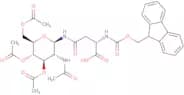
CAS:<p>1,2,3,4-Tetra-O-acetyl-b-D-glucuronide is a chemical compound that is used as an acetylating agent in organic synthesis. It is produced by the reaction of pyridine and acetic anhydride with sodium hydroxide as a catalyst. The acetylation process takes place in two steps: first, the pyridine reacts with the acetic anhydride to form 4-(pyridinium) acetate; second, this intermediate reacts with sodium hydroxide to form 1,2,3,4-tetra-O-acetyl-b-D-glucuronide. Acetylation reactions are important because they can be used to introduce functional groups onto molecules that would not otherwise have them. Acetylated compounds are also often more soluble in water than nonacetylated compounds. This product is used in medicines and other chemical processes.</p>Fórmula:C14H18O11Pureza:Min. 95 Area-%Cor e Forma:White Clear LiquidPeso molecular:362.29 g/mol2-Acetamido-3,4,6-tri-O-acetyl-2-deoxy-β-D-glucopyranosyl-Fmoc-asparagine
CAS:<p>2-Acetamido-3,4,6-tri-O-acetyl-2-deoxy-β-D-glucopyranosyl-Fmoc-asparagine is a synthetic oligosaccharide that has been modified with a fluorine atom at the 6 position. The acetamido group has been methylated and the sugar moiety is attached to an Fmoc group. The molecular weight of this compound is 1,000. It can be used for the synthesis of saccharides and polysaccharides by click chemistry or as a monosaccharide in carbohydrate research. 2AATGFFmocAsp can also be used for modification purposes with different reagents such as hydrazine, NIS, and TEMPO.</p>Fórmula:C33H37N3O13Pureza:Min. 95 Area-%Cor e Forma:PowderPeso molecular:683.66 g/molPhenyl 3,4-di-O-benzoyl-2-O-benzyl-β-L-thiofucopyranoside
<p>Phenyl 3,4-di-O-benzoyl-2-O-benzyl-b-L-thiofucopyranoside is a fluorinated sugar that is used in the synthesis of oligosaccharides and polysaccharides. The modification of phenyl 3,4-di-O-benzoyl-2-O-benzyl-b-L -thiofucopyranoside with a methoxy group at the C1 position is done by a click reaction. The product is purified to greater than 99% purity using an ion exchange column.</p>Fórmula:C33H30O6SPureza:Min. 95%Cor e Forma:White to off-white solid.Peso molecular:554.65 g/mol1,2-Dideoxy-D-ribofuranose
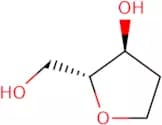
CAS:<p>Precursor for the preparation of abasic nucleoside analogues</p>Fórmula:C5H10O3Pureza:Min. 98 Area-%Cor e Forma:Clear LiquidPeso molecular:118.13 g/mol1-Octylamino-1-deoxy-D-glucitol
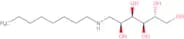
CAS:<p>1-Octylamino-1-deoxy-D-glucitol is a natural product that is extracted from the bark of the tree Streptomyces griseorubens. It has been shown to have a diastereomeric ratio of 97:3 and an optical purity of 98%. The thermodynamic properties of this compound are determined by the reaction time, which can vary from 1 to 24 hours. The enantiomers are separated by chromatography or crystallization, and the solubility data is determined at 25°C.</p>Fórmula:C14H31NO5Pureza:Min. 95%Cor e Forma:PowderPeso molecular:293.4 g/molUDP-b-L-arabinopyranose
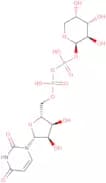
CAS:<p>UDP-b-L-arabinopyranose is a nucleotide sugar that is used in the synthesis of proteins and other macromolecules. It is synthesized from uridine and d-ribulose 5-phosphate by the enzyme ribulokinase. The reaction between UDP, b-L-arabinofuranose, and ATP, catalyzed by arabinofuranosyl transferase, produces UDP-b-L-arabinopyranose. This nucleotide sugar can be converted to UDP-b-(1→4)-glucuronate by the enzyme glucuronosyltransferase. This process plays an important role in plant physiology as well as in cell wall biosynthesis. The optimal pH for this conversion is 7.5 to 8.2.</p>Fórmula:C14H22N2O16P2Pureza:Min. 95%Cor e Forma:PowderPeso molecular:536.28 g/mol
![4-Methylphenyl 4,6-O-[bis(1,1-dimethylethyl)silylene]-1-thio-β-D-galactopyranoside](/_next/image/?url=https%3A%2Fstatic.cymitquimica.com%2Fproducts%2F3D%2Fthumb-webp%2FMM182806.webp&w=3840&q=75)

![2-Amino-b-L-arabinofurano[1,2:4,5]oxazoline](/_next/image/?url=https%3A%2Fstatic.cymitquimica.com%2Fproducts%2F3D%2Fthumb-webp%2FMA06535.webp&w=3840&q=75)