Monossacáridos
Subcategorias de "Monossacáridos"
- Aloses(11 produtos)
- Arabinoses(21 produtos)
- Eritroses(11 produtos)
- Frutoses(9 produtos)
- Fucoses(36 produtos)
- Galactosamina(41 produtos)
- Galactoses(261 produtos)
- Glucoses(365 produtos)
- Ácidos Glucurónicos(52 produtos)
- Glico-substratos para enzimas(78 produtos)
- Guloses(6 produtos)
- Idoses(4 produtos)
- Inositóis(15 produtos)
- Lixoses(4 produtos)
- Mannoses(65 produtos)
- O-Glicanos(48 produtos)
- Psicoses(3 produtos)
- Ramnoses(10 produtos)
- Riboses(61 produtos)
- Ácidos siálicos(100 produtos)
- Sorboses(4 produtos)
- Açúcares(173 produtos)
- Tagatoses(4 produtos)
- Taloses(8 produtos)
- Xiloses(20 produtos)
Foram encontrados 6088 produtos de "Monossacáridos"
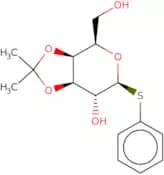
Phenyl 3,4-O-isopropylidene-b-D-thiogalactopyranoside
CAS:Phenyl 3,4-O-isopropylidene-b-D-thiogalactopyranoside is a custom synthesis of the complex carbohydrate Oligosaccharide, Polysaccharide. It belongs to Modification, saccharide, Methylation, Glycosylation, Carbohydrate. Phenyl 3,4-O-isopropylidene-b-D-thiogalactopyranoside can be used for Click modification, sugar and High purity. This compound is Fluorinated and Synthetic.
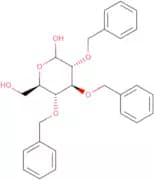
Fórmula:C15H20O5SPureza:Min. 95%Cor e Forma:PowderPeso molecular:312.38 g/mol2,3,4-Tri-O-benzyl-D-glucopyranose
CAS:2,3,4-Tri-O-benzyl-D-glucopyranose is a thioglucoside that can be synthesized from D-glucose and benzyl bromide. This compound is a protonated nucleophile with a hydroxyl group that can interact with the sulfur of a thiol or disulfide group. The interaction between 2,3,4-tri-O-benzyl-D-glucopyranose and S. aureus has been shown to be dependent on the concentration of 2,3,4 tri O benzyl glucopyranose. The reaction between this compound and oligosaccharides led to the formation of dioxane ring structures that were hydrophobic.Fórmula:C27H30O6Pureza:Min. 95%Cor e Forma:PowderPeso molecular:450.52 g/molMethyl-2,3,4-tri-O-benzoyl-6-deoxy-alpha-D-glucopyranoside
CAS:Methyl-2,3,4-tri-O-benzoyl-6-deoxy-alpha-D-glucopyranoside is a modification of the sugar molecule. It is a monosaccharide that has been modified with methylation and fluorination. This product can be used in the synthesis of saccharides, polysaccharides, oligosaccharides and complex carbohydrates. Methyl 2,3,4-tri-O-benzoyl 6 deoxy alpha D -glucopyranoside is one of many compounds that can be used to synthesize glycosylations.
Fórmula:C28H26O8Pureza:Min. 95%Peso molecular:490.5 g/mol2-Amino-1,6-anhydro-2-deoxy-β-D-glucopyranose
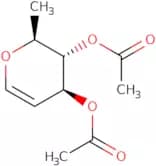
CAS:Please enquire for more information about 2-Amino-1,6-anhydro-2-deoxy-β-D-glucopyranose including the price, delivery time and more detailed product information at the technical inquiry form on this pageFórmula:C6H11NO4Pureza:Min. 95%Peso molecular:161.16 g/mol3,4-Di-O-acetyl-L-rhamnal
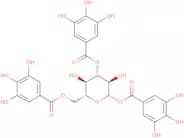
CAS:DNA-binding agentFórmula:C10H14O5Cor e Forma:Clear LiquidPeso molecular:214.22 g/mol1,3,6-Tri-O-galloylglucose
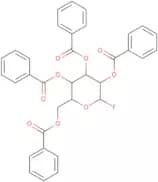
CAS:1,3,6-Tri-O-galloylglucose is an extract of the fruit of Terminalia catappa and Terminalia citrina. It has been shown to have antimicrobial activity against a variety of bacteria and fungi. The antimicrobial activity may be due to its ability to chelate metal ions or inhibit their activities. Punicalagin also has tannin content, which may contribute to its antimicrobial properties.Fórmula:C27H24O18Pureza:Min. 95%Cor e Forma:PowderPeso molecular:636.47 g/mol2,3,4,6-Tetra-O-benzoyl-β-D-glucopyranosyl fluoride
CAS:Synthetic carbohydrate building block
Fórmula:C34H27FO9Pureza:Min. 95%Cor e Forma:PowderPeso molecular:598.59 g/mol3,4,6-Tri-O-acetyl-D-glucal
CAS:3,4,6-Tri-O-acetyl-D-glucal, also called 1,5-anhydro-2-deoxy-D-arabino-hex-1-enitol triacetate, is the acetate protected cyclic enol-ether (glycal) of D-glucose. 3,4,6-Tri-O-acetyl-D-glucal is a building block useful in the synthesis of a range of carbohydrates with the glucal double bond allowing other functional groups to be introduced. As an alkene, a glycal can undergo electrophilic addition across the double bond to introduce halogens and epoxides or be used to generate deoxy monosaccharides. 3,4,6-Tri-O-acetyl-D-glucal can undergo a Ferrier rearrangement with an alcohol and Lewis acid to give a 2,3-unsaturated product.
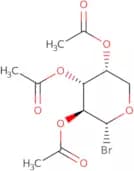
Fórmula:C12H16O7Pureza:Min. 98 Area-%Cor e Forma:White Off-White PowderPeso molecular:272.25 g/mol2,3,4-Tri-O-acetyl-D-arabinopyranosyl bromide - Stabilised with 2% CaCO3
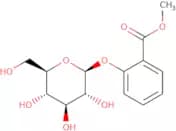
CAS:2,3,4-Tri-O-acetyl-D-arabinopyranosyl bromide - Stabilised with 2% CaCO3 is an organic compound that belongs to the group of glycosylations. It is a sugar derivative of arabinose and has been fluorinated with trifluoromethanesulfonic acid. This product is custom synthesized and can be used for Glycosylation reactions as well as methylations and click modifications. It is also a complex carbohydrate and can be used in the production of polysaccharides. The CAS number for this compound is 113889-50-2 and it has a monosaccharide content of 100%. This product is available for purchase at high purity.Fórmula:C11H15BrO7Pureza:Min. 95%Cor e Forma:PowderPeso molecular:339.14 g/mol2-Methoxycarbonylphenyl β-D-glucopyranoside
CAS:2-Methoxycarbonylphenyl b-D-glucopyranoside is a modification that can be used to synthesize complex carbohydrates. It is an oligosaccharide, which consists of a series of monosaccharides linked together by glycosidic bonds. The synthesis of this compound requires the use of methylation and fluorination reactions. This product has high purity and can be used for a variety of purposes, including as a sugar or as a polysaccharide.
Fórmula:C14H18O8Pureza:Min. 95%Cor e Forma:PowderPeso molecular:314.29 g/mol2,3,4-Tri-O-acetyl-1,6-anhydro-b-D-galactopyranose
CAS:2,3,4-Tri-O-acetyl-1,6-anhydro-b-D-galactopyranose is a sugar that has been modified with fluorination. This modification is done in an effort to increase the solubility of this product. It is also used as the backbone for other sugars in order to create complex carbohydrates or polysaccharides. In addition, 2,3,4-Tri-O-acetyl-1,6-anhydro-b-D-galactopyranose can be methylated and glycosylated in order to modify its properties. This product is available for custom synthesis and has a purity level of 99%.
Fórmula:C12H16O8Pureza:Min. 95%Cor e Forma:PowderPeso molecular:288.25 g/mol3,4,6-Tri-O-benzyl-D-galactal
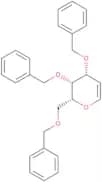
CAS:3,4,6-Tri-O-benzyl-D-galactal is a hydrogen bond donor and has been shown to have physiological activities. It was found to increase the number of lymphocytes in unimmunized mice. It also inhibits the growth of psoralea virus. The glycosidic bond between 3,4,6-tri-O-benzyl-D-galactal and glucose produces a product with an acetylated hydroxyl group and an aldehyde group. This type of bond is stereoselective and benzofuran derivatives are formed from the reaction. 3,4,6-Tri-O-benzyl-D-galactal has been shown to have anticancer activity against cancer cells in laboratory experiments.Fórmula:C27H28O4Pureza:Min. 95%Cor e Forma:White PowderPeso molecular:416.51 g/molL-Talitol
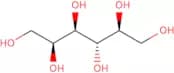
CAS:L-Talitol is a naturally occurring sugar alcohol that is found in the human body and in many vegetables, fruits, and grains. It has been shown to be a potent inhibitor of the bacterium Klebsiella aerogenes. L-talitol has been used as a model system to study the effect of matrix on the growth of cells. It has also been shown to have chronic pulmonary effects and to be effective for treating selenium deficiency. L-talitol can inhibit b-raf by binding to the hydroxyl group on its kinase domain and inhibiting downstream signaling pathways. This inhibition leads to reduced levels of transcriptional regulation in cells, which may be due to decreased protein synthesis or increased degradation of mRNA. L-Talitol also inhibits d-talitol dehydrogenase, which results in an increase in d-talitol concentrations in cells.Fórmula:C6H14O6Pureza:Min. 95%Cor e Forma:PowderPeso molecular:182.17 g/mol3-Deoxypentulose
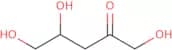
CAS:3-Deoxypentulose is a kinetic, reactive and chromatographic compound that belongs to the family of glycolysis. It is present in small amounts in the blood and is derived from pentose sugars. The reaction mechanism of 3-deoxypentulose can be divided into two steps: glyoxal formation and hydroxide solution modification. In the first step, 3-deoxypentulose reacts with glucose to form glyoxal. In the second step, 3-deoxypentulose reacts with hydroxide solution to form galactose, which can further react with other compounds or be modified by enzymatic reactions. This compound has been used as a tagatose substitute in food products and as an oligosaccharide modifier. Recently, it has been shown that 3-deoxypentulose may be used as a chemical probe for studying glycolic acid synthesis in bacteria.Fórmula:C5H10O4Pureza:Min. 95%Cor e Forma:PowderPeso molecular:134.13 g/mol6-Chloro-6-deoxy-D-glucose
CAS:6-Chloro-6-deoxy-D-glucose is a sugar that is used as a carbon source in the process of spermatozoa production. It has been shown to increase the fertility of animals by increasing the uptake of phosphorus pentachloride and ganglion cells in the testes. This drug also has contraceptive and antifertility effects, which may be due to its ability to inhibit the uptake of adenine nucleotide in cells. 6-Chloro-6-deoxy-D-glucose may have a role in ATP levels, with intracellular levels being higher than those in control analysis.Fórmula:C6H11ClO5Pureza:Min. 95%Cor e Forma:White Off-White PowderPeso molecular:198.6 g/molL-Allono-1,4-lactone
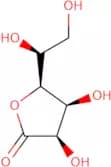
CAS:L-Allono-1,4-lactone is a molecule with a stereocenter. It has been shown to be a target molecule for glycosidase inhibitors. The inhibition of the enzyme by L-allono-1,4-lactone may be due to its ability to form a hydrogen bond with the oxygen atom in the active site of the enzyme and its hydroxyl group that can form an additional hydrogen bond with water molecules. This inhibition prevents the transfer of glucose from one substrate to another, which leads to inefficient glycosidase activity. The synthesis of L-allono-1,4-lactone has been studied using piperidine as a starting material.Fórmula:C6H10O6Pureza:Min. 95%Cor e Forma:PowderPeso molecular:178.14 g/mol2-Acetamido-2,6-dideoxy-D-galactose
CAS:2-Acetamido-2,6-dideoxy-D-galactose (2ADG) is a structural analogue of the natural monosaccharide 2,6-dideoxy-D-galactose. It has been shown to have an antimicrobial effect against aerobacter aerogenes in vitro. 2ADG is metabolized by glycosidases and methyl glycosides to form 1,4-anhydro-2,3,4,6 tetraacetamido-2,4,6 dideoxy D galactose. This compound inhibits the growth of bacterial strains that are resistant to polymyxin b., such as Pseudomonas aeruginosa. The inhibition of these bacteria is due to the inhibition of the synthesis of their outer membrane lipopolysaccharides by 2ADG. The antibacterial activity is also attributed to its ability to inhibit the metabolism of glycan molecules in some bacteria
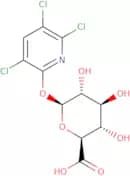
Fórmula:C8H15NO5Pureza:Min. 95%Cor e Forma:White PowderPeso molecular:205.21 g/mol3,5,6-Trichloro-2-pyridinol β-D-glucuronide
CAS:3,5,6-Trichloro-2-pyridinol b-D-glucuronide is a synthetic glycosylate that has been modified by fluorination and methylation. It is used as an intermediate in the manufacture of a variety of saccharides and oligosaccharides. The sugar has been synthesized to have a high purity. 3,5,6-Trichloro-2-pyridinol b-D-glucuronide is a complex carbohydrate that can be modified using click chemistry. Click chemistry is a modification technique that uses copper (II) ions as catalysts for the formation of carbon–carbon bonds. This process can be used to modify saccharides and oligosaccharides with functional groups such as amines, thiols, alcohols, carboxylic acids, or nitriles.Fórmula:C11H10Cl3NO7Pureza:Min. 95%Cor e Forma:White PowderPeso molecular:374.56 g/molUDP-D-glucuronide trisodium salt
CAS:Substrate for glucuronosyltransferases
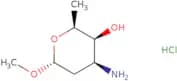
Fórmula:C15H19N2Na3O18P2Pureza:Min. 98 Area-%Cor e Forma:White Off-White PowderPeso molecular:646.24 g/molMethyl α-L-daunosamide hydrochloride
CAS:Methyl α-L-daunosamide hydrochloride is a drug that inhibits the production of DNA. It is used to treat infectious diseases such as malaria, in which it can inhibit the growth of the parasite by preventing DNA replication and transcription. The methyl α-L-daunosamide hydrochloride molecule is a polymerase chain inhibitor that binds to the enzyme adriamycin synthetase, which catalyzes the conversion of daunosamine into adriamycin. This binding prevents the formation of stable complexes with the target enzymes and blocks their activity, leading to inhibition of DNA synthesis and transcription. Methyl α-L-daunosamide hydrochloride has been shown to inhibit glycan biosynthesis in rat liver microsomes and does not have significant interactions with other drugs or with glycan in human serum.Fórmula:C7H15NO3•HClPureza:Min. 85 Area-%Cor e Forma:PowderPeso molecular:197.66 g/mol