Monossacáridos
Monossacarídeos são a forma mais simples de carboidratos e servem como building blocks fundamentais para açúcares mais complexos e polissacarídeos. Essas moléculas de açúcar único desempenham papéis críticos no metabolismo energético, na comunicação celular e nos componentes estruturais das células. Nesta seção, você encontrará uma ampla variedade de monossacarídeos essenciais para pesquisas em bioquímica, biologia molecular e glicociência. Esses compostos são cruciais para estudar vias metabólicas, processos de glicosilação e desenvolvimento de agentes terapêuticos. Na CymitQuimica, oferecemos monossacarídeos de alta qualidade para apoiar suas necessidades de pesquisa, garantindo precisão e confiabilidade em suas investigações científicas.
Subcategorias de "Monossacáridos"
- Aloses(11 produtos)
- Arabinoses(21 produtos)
- Eritroses(11 produtos)
- Frutoses(9 produtos)
- Fucoses(36 produtos)
- Galactosamina(41 produtos)
- Galactoses(261 produtos)
- Glucoses(365 produtos)
- Ácidos Glucurónicos(51 produtos)
- Glico-substratos para enzimas(77 produtos)
- Guloses(6 produtos)
- Idoses(4 produtos)
- Inositóis(15 produtos)
- Lixoses(4 produtos)
- Mannoses(65 produtos)
- O-Glicanos(48 produtos)
- Psicoses(3 produtos)
- Ramnoses(10 produtos)
- Riboses(61 produtos)
- Ácidos siálicos(100 produtos)
- Sorboses(4 produtos)
- Açúcares(173 produtos)
- Tagatoses(4 produtos)
- Taloses(8 produtos)
- Xiloses(20 produtos)
Exibir 17 mais subcategorias
Foram encontrados 6090 produtos de "Monossacáridos"
Ordenar por
Pureza (%)
0
100
|
0
|
50
|
90
|
95
|
100
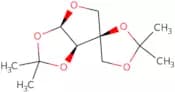
1,2:3,5-Di-O-isopropylidene-a-D-apiose
CAS:<p>1,2:3,5-Di-O-isopropylidene-a-D-apiose is a monosaccharide that is synthesized from D-apiose by methylation of the C1 hydroxyl group with formaldehyde and sodium methoxide in methanol. This carbohydrate has been shown to be a good substrate for glycosylation reactions and click chemistry.<br> 1,2:3,5-Di-O-isopropylidene-a-D-apiose is a white powder that can be dissolved in water or ethanol. It has no odor and is stable at pH 2 to pH 10. The compound does not react with other carbohydrates or proteins under normal conditions.</p>Fórmula:C11H18O5Pureza:Min. 95%Cor e Forma:PowderPeso molecular:230.26 g/mol3,4-O-Isopropylidene-D-galactal
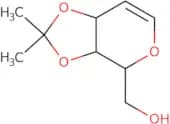
CAS:<p>3,4-O-Isopropylidene-D-galactal is a modified form of galactal. This compound is a methylated derivative of D-galactal that has been synthesized by the click reaction. It can be used in the synthesis of oligosaccharides and polysaccharides. 3,4-O-Isopropylidene-D-galactal is a high purity compound with a CAS number of 124477-12-9.</p>Pureza:Min. 95%Benzyl 5-amino-5-deoxy-2,3-O-isopropylidene-a-D-mannofuranoside
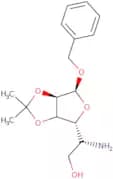
CAS:<p>Benzyl 5-amino-5-deoxy-2,3-O-isopropylidene-a-D-mannofuranoside is custom synthesized to order and can be modified with Click chemistry. It can be fluorinated or glycosylated. It is a sugar that has been synthesized from a monosaccharide and saccharide. The CAS number for this compound is 91364-19-1. This compound is an oligosaccharide and complex carbohydrate.</p>Fórmula:C16H23NO5Pureza:Min. 95%Peso molecular:309.36 g/mol(2S,5S)-Bishydroxymethyl-(3R,4R)-bishydroxypyrrolidine
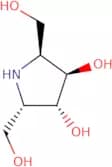
CAS:<p>(2S,5S)-Bishydroxymethyl-(3R,4R)-bishydroxypyrrolidine is a cytotoxic agent that can be used as a reagent to hydrogenolyze chloride. It is also a nucleophilic anion that can react with cisplatin to form the corresponding platinum complex. This anion has been shown to be cytotoxic against Mcf-7 cells in vitro and can inhibit DNA synthesis. (2S,5S)-Bishydroxymethyl-(3R,4R)-bishydroxypyrrolidine may also inhibit protein synthesis by reacting with anthraquinone or benzylidenation products of azasugar. The synthesis of the latter product is catalyzed by the enzyme benzylidene-pyridine dioxygenase which activates carbonyls and azasugars to form benzylic hydrazones. These reactions are sequential and have been shown to occur in</p>Fórmula:C6H13NO4Pureza:Min. 95%Peso molecular:163.17 g/mol2,3,4,6-Tetra-O-pivaloyl-a-D-mannopyranosyl bromide
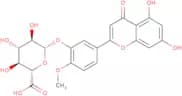
CAS:<p>2,3,4,6-Tetra-O-pivaloyl-a-D-mannopyranosyl bromide is a synthetic glycosylation reagent that is used in the synthesis of oligosaccharides and polysaccharides. It has been fluorinated to give 2,3,4,6-Tetra-O-pivaloyl-a-D-(2'-fluoroethyl)mannopyranosyl bromide (CAS No. 1360879-08). This compound can be methylated to give 2,3,4,6-Tetra-O-(2'-methoxy)pivaloylmannopyranosyl bromide (CAS No. 1360879-09). It is also a click modification agent for complex carbohydrates. This chemical has high purity and can be modified with other groups.</p>Fórmula:C26H43BrO9Pureza:Min. 95%Peso molecular:579.52 g/molDiosmetin-d3-3'-O-glucuronide
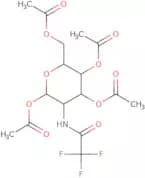
CAS:<p>Diosmetin-d3-3'-O-glucuronide is a synthetic sugar derivative that is used as a building block for the synthesis of oligosaccharides and polysaccharides. Diosmetin-d3-3'-O-glucuronide can be fluorinated and methylated, which makes it useful for click chemistry reactions, because it can be easily modified to create new structures. This product is available in high purity with custom synthesis options.</p>Fórmula:C22H17D3O12Pureza:Min. 95%Peso molecular:479.4 g/mol1,3,4,6-Tetra-O-acetyl-2-deoxy-2-trifluoroacetamido-D-glucopyranose
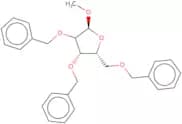
CAS:<p>1,3,4,6-Tetra-O-acetyl-2-deoxy-2-trifluoroacetamido-D-glucopyranose is a carbohydrate that has been modified with fluorine and acetyl groups. It is used as a precursor to other saccharides. The compound is synthesized by the reaction of 1,3,4,6-tetra -O-acetyl glucose with trifluoroacetic anhydride in methylene chloride. It can be custom synthesized for research purposes. This product has high purity and is sold in both liquid and powder form.</p>Fórmula:C16H20F3NO10Pureza:Min. 95%Peso molecular:443.33 g/molMethyl 2,3,5-tri-O-benzyl-a-D-arabinofuranoside
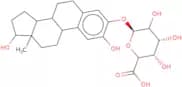
<p>Methyl 2,3,5-tri-O-benzyl-a-D-arabinofuranoside is a methylated sugar that belongs to the group of saccharides. It is often used as a Click modification and in custom synthesis of oligosaccharides. This product is also used for glycosylation and high purity modifications. Methyl 2,3,5-tri-O-benzyl-a-D-arabinofuranoside can be synthesized from arabinose and benzaldehyde with fluorination. The CAS number for this product is 51469-61-1.</p>Fórmula:C27H30O5Pureza:Min. 95%Peso molecular:434.52 g/mol2-Hydroxyestradiol 3-O-b-D-glucuronide
CAS:<p>2-Hydroxyestradiol 3-O-b-D-glucuronide is a high purity, custom synthesis compound. It is a fluorinated modification of estradiol and has been shown to have immunomodulatory properties. This compound can be used in the treatment of cancer cells and is an excellent candidate for methylation or click modification.</p>Fórmula:C24H32O9Pureza:Min. 95%Peso molecular:464.51 g/mol6-O-Benzyl-D-mannose
6-O-Benzyl-D-mannose is a methylated monosaccharide. It is an important intermediate in the synthesis of oligosaccharides and polysaccharides. 6-O-Benzyl-D-mannose can be used for modification of saccharides, carbohydrates and sugars. This product has high purity and a custom synthesis.Fórmula:C13H18O6Pureza:Min. 95%Peso molecular:270.28 g/molLasofoxifene b-D-glucuronide
CAS:<p>Lasofoxifene b-D-glucuronide is a synthetic, nonsteroidal estrogen that was developed to avoid the side effects of other estrogens. It is a prodrug that is hydrolyzed in vivo to lasofoxifene and then undergoes methylation and glucuronidation. Lasofoxifene b-D-glucuronide has been shown to inhibit tumor growth in animals by reducing the number of cancer cells and blocking their spread. This drug also prevents bone loss by inhibiting the production of osteoclasts, which are cells that break down bone tissue.</p>Fórmula:C34H39NO8Pureza:Min. 95%Peso molecular:589.68 g/molMetronidazole b-D-glucuronide
CAS:<p>Metronidazole b-D-glucuronide is a glycosylated form of metronidazole that is rapidly hydrolyzed by esterases or glucuronidases to the parent drug. Metronidazole b-D-glucuronide has been shown to be an effective inhibitor of bacterial growth, which may be due to its inhibition of DNA synthesis. The drug also has anti-inflammatory and antiproliferative activity in vitro. Metronidazole b-D-glucuronide is a water soluble prodrug that is used as an antimicrobial agent for the treatment of infections caused by susceptible bacteria. It can be custom synthesized with high purity and good yield.</p>Fórmula:C12H17N3O9Pureza:Min. 95%Peso molecular:347.28 g/mol3-O-Toluoyl decitabine
CAS:<p>3-O-Toluoyl decitabine is a synthetic, high purity drug that is custom synthesized to order. The synthesis of 3-O-Toluoyl decitabine involves the modification of sugar molecules with fluorination, glycosylation, and methylation. This compound has CAS No. 183016-21-9 and is used in the treatment of cancer by inhibiting ribonucleic acid (RNA) synthesis. 3-O-Toluoyl decitabine inhibits RNA polymerase II and III, which are enzymes that catalyze the transcription of DNA into RNA. It also inhibits protein kinase C, which leads to cell death and tumor shrinkage.</p>Fórmula:C16H18N4O5Pureza:Min. 95%Peso molecular:346.34 g/mol3-O-Acetyl-1,2-O-isopropylidine-6-O-trityl-a-D-galactofuranose
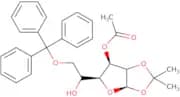
CAS:<p>3-O-Acetyl-1,2-O-isopropylidine-6-O-trityl-a-D-galactofuranose is a synthetic compound with a molecular weight of 514.5. It is an oligosaccharide with a glycosylation modification and fluorination. The compound can be used as a research tool in the study of glycosylation, methylation, click modification, polysaccharide synthesis, fluorination, saccharide modifications and sugar modifications. 3-O-Acetyl-1,2-O-isopropylidine-6-[trityl]-a-[D]galactofuranose can also be used for custom synthesis; this product is available in high purity.</p>Fórmula:C30H32O7Pureza:Min. 95%Peso molecular:504.57 g/molThioglucosides
<p>Thioglucosides are a type of sugar that is modified with a thiol group at the C-3 position. A thioglucose can be synthesized by methylation, click modification, and fluorination. Thioglucoses have been used in the past for the production of oligosaccharides and polysaccharides, as well as in complex carbohydrate research. They are also used in the production of high purity monosaccharide sugars. This product is available for custom synthesis to meet your needs.</p>Pureza:Min. 95%Cladinose
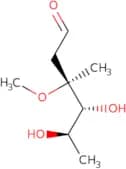
CAS:<p>Cladinose is a natural compound that has been shown to have potent inhibitory properties against microorganisms, such as bacteria and fungi. Cladinose has been shown to inhibit the growth of bacteria by reacting with the ribosomes of cells in the bacterial cytoplasm. It inhibits bacterial protein synthesis by binding to the ribosomal RNA and blocking access to the mRNA template. Cladinose also inhibits fungal growth by inhibiting ergosterol biosynthesis, which prevents fungal cell membrane formation. Cladinose has been shown to have antiinflammatory activity in mice with induced inflammation. This is due to its ability to bind to cyclooxygenase-2 (COX-2) and prevent its activation, thereby preventing prostaglandin synthesis.</p>Fórmula:C8H16O4Pureza:Min. 95%Peso molecular:176.21 g/mol3,2',3',4'-Tetra-O-acetyl-6,6'-di-O-tert-butyldimethylsilyl-lactal
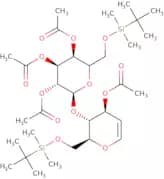
CAS:<p>3,2',3',4'-Tetra-O-acetyl-6,6'-di-O-tert-butyldimethylsilyl-lactal is a glycosylation agent that can be used in the synthesis of oligosaccharides and polysaccharides. It can be fluorinated to create a reactive site for methylation and click modification. 3,2',3',4'-Tetra-O-acetyl-6,6'-di-O-tert-butyldimethylsilyl-lactal is an acetylated lactal with a silyl ether protecting group. This product has been custom synthesized and is available in high purity.</p>Pureza:Min. 95%2-Octyldodecyl-D-xylopyranoside
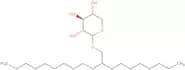
CAS:<p>2-Octyldodecyl-D-xylopyranoside is a synthetic, fluorinated glycosylated monosaccharide. The chemical name for this compound is 2-octyldodecyl-D-xylopyranoside and the CAS number is 423772-95-6. It is a white to off white solid that has Glycosylation and Methylation. This compound can be modified with Click modification and Polysaccharide. It has a molecular weight of 400.25 g/mol and it's molecular formula is C32H62O14F2N2O8S2. 2-Octyldodecyl-D-xylopyranoside can be used as a methyl donor in the synthesis of glycoproteins, glycolipids, glycopeptides, polysaccharides, oligosaccharides, or other complex carbohydrates. It is also used in fluor</p>Fórmula:C25H50O5Pureza:Min. 95%Cor e Forma:White solid.Peso molecular:430.66 g/moltrans-Cinnamoyl b-D-glucoside
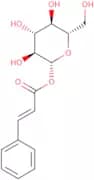
CAS:<p>Trans-Cinnamoyl b-D-glucoside is a plant tissue that can be used as a natural chemical transformation agent. Trans-Cinnamoyl b-D-glucoside is also a chemical catalyst in the synthesis of medicines. The structure of trans-Cinnamoyl b-D-glucoside has been shown to have a high degree of stereoselectivity and sensitivity to tissue culture conditions, which are due to its aldehydic group. This molecule is also able to form gels when combined with other molecules and exhibits endogenous activity.</p>Fórmula:C15H18O7Pureza:Min. 95%Peso molecular:310.3 g/mol2-Chloro-2-deoxy-D-mannose
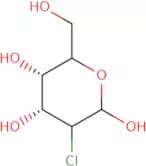
CAS:<p>2-Chloro-2-deoxy-D-mannose is a synthetic sugar that can be used as a fluoride substrate. It has been shown to bind to the active site of bacterial enzymes and inhibit them. 2-Chloro-2-deoxy-D-mannose is a conformationally constrained analogue of 3-deoxyglucose, which binds to the same active site on bacterial enzymes. This sugar also inhibits nitrate reductase, an enzyme involved in the reductive dehalogenation of nitrates. 2-Chloro-2-deoxy-D-mannose has been shown to inhibit the growth of Mycobacterium tuberculosis and Mycobacterium avium complex by binding with high affinity to the ligand binding site on these bacteria's glycolytic enzymes.</p>Fórmula:C6H11ClO5Pureza:Min. 95%Cor e Forma:White PowderPeso molecular:198.6 g/mol