Monossacáridos
Monossacarídeos são a forma mais simples de carboidratos e servem como building blocks fundamentais para açúcares mais complexos e polissacarídeos. Essas moléculas de açúcar único desempenham papéis críticos no metabolismo energético, na comunicação celular e nos componentes estruturais das células. Nesta seção, você encontrará uma ampla variedade de monossacarídeos essenciais para pesquisas em bioquímica, biologia molecular e glicociência. Esses compostos são cruciais para estudar vias metabólicas, processos de glicosilação e desenvolvimento de agentes terapêuticos. Na CymitQuimica, oferecemos monossacarídeos de alta qualidade para apoiar suas necessidades de pesquisa, garantindo precisão e confiabilidade em suas investigações científicas.
Subcategorias de "Monossacáridos"
- Aloses(11 produtos)
- Arabinoses(21 produtos)
- Eritroses(11 produtos)
- Frutoses(9 produtos)
- Fucoses(36 produtos)
- Galactosamina(41 produtos)
- Galactoses(261 produtos)
- Glucoses(365 produtos)
- Ácidos Glucurónicos(51 produtos)
- Glico-substratos para enzimas(77 produtos)
- Guloses(6 produtos)
- Idoses(4 produtos)
- Inositóis(15 produtos)
- Lixoses(4 produtos)
- Mannoses(65 produtos)
- O-Glicanos(48 produtos)
- Psicoses(3 produtos)
- Ramnoses(10 produtos)
- Riboses(61 produtos)
- Ácidos siálicos(100 produtos)
- Sorboses(4 produtos)
- Açúcares(173 produtos)
- Tagatoses(4 produtos)
- Taloses(8 produtos)
- Xiloses(20 produtos)
Exibir 17 mais subcategorias
Foram encontrados 6090 produtos de "Monossacáridos"
Ordenar por
Pureza (%)
0
100
|
0
|
50
|
90
|
95
|
100
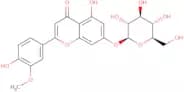
Thermopsoside
CAS:<p>Thermopsoside is an organic acid that has been isolated from the plant species Vitex agnus-castus. Thermopsoside has shown antibacterial activity against a variety of bacteria and fungi, including Escherichia coli, Staphylococcus aureus, and Candida albicans. It is thought to act by inhibiting the synthesis of fatty acids and vitexin in the bacterial cell membrane or by binding to the bacterial ribosome. Thermopsoside also shows anti-inflammatory effects on skin cells and is used in some cosmetic products as an ingredient in skin-conditioning lotions.<br>Thermopside inhibits prostaglandin production by blocking cyclooxygenase (COX) enzymes.</p>Fórmula:C22H22O11Pureza:Min. 98 Area-%Cor e Forma:PowderPeso molecular:462.4 g/mol4'-Hydroxypropanolol D-glucuronide D5
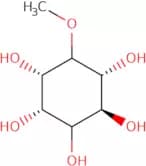
Produto Controlado<p>4'-Hydroxypropanolol D-glucuronide D5 is a custom synthesis.</p>Fórmula:C22H24NO9D5Pureza:Min. 95%Peso molecular:456.51 g/mol1-D-4-O-Methyl-myo-inositol
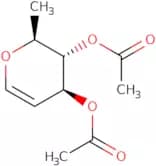
CAS:<p>1-D-4-O-Methyl-myo-inositol is a compound that belongs to the group of biological compounds. It has been shown to have hypoglycemic effects in a model system and to inhibit 3t3-l1 preadipocyte differentiation. This compound also inhibits the activity of enzymes involved in metabolic pathways, and has an effect on lipid metabolism in kidney beans. 1-D-4-O-Methyl-myo-inositol has been shown to have antiobesity properties as well as antihyperglycemic activities.</p>Fórmula:C7H14O6Pureza:Min. 95%Cor e Forma:White Off-White PowderPeso molecular:194.18 g/mol3,4-Di-O-acetyl-L-rhamnal
CAS:<p>DNA-binding agent</p>Fórmula:C10H14O5Cor e Forma:Clear LiquidPeso molecular:214.22 g/molD-Glucuronic acid, sodium salt monohydrate
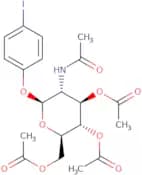
CAS:D-Glucuronic acid, sodium salt monohydrate is a chromatographic standard. It is used to measure the hydrophilicity of a sample and its interaction with proteins. In addition, it can be used as an immunomodulator. D-Glucuronic acid, sodium salt monohydrate has been shown to have anti-inflammatory effects by inhibiting the production of prostaglandins and leukotrienes. The acidic nature of this compound may play a role in its membrane system interactions with lysine residues on protein surfaces.Fórmula:C6H11NaO8Peso molecular:234.14 g/mol4-Iodophenyl 2-acetamido-3,4,6-tri-O-acetyl-2-deoxy-b-D-glucopyranoside
CAS:4-Iodophenyl 2-acetamido-3,4,6-tri-O-acetyl-2-deoxy-b-D-glucopyranoside is a white crystalline powder. It is a glycosylation product of 4-(iodophenyl)-2-(acetamido)-3,4,6,-triacetylaminohexose. This compound can be used for the synthesis of complex carbohydrates and saccharides. This compound is also used in the modification of polysaccharides and oligosaccharides. The purity of this compound is greater than 98%.Fórmula:C20H24INO9Pureza:Min. 95%Cor e Forma:PowderPeso molecular:549.31 g/mol3'-Sialyl-N-acetyllactosamine-β-ethylamine
<p>Please enquire for more information about 3'-Sialyl-N-acetyllactosamine-β-ethylamine including the price, delivery time and more detailed product information at the technical inquiry form on this page</p>Fórmula:C27H47N3O19Pureza:Min. 95%Peso molecular:717.67 g/mol5-Thio-D-glucose-6-phosphate diammonium salt
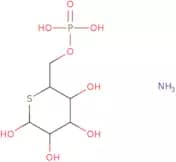
CAS:Glucose 6-phosphatase substrateFórmula:C6H11O8PS·N2H8Pureza:Min. 95%Cor e Forma:PowderPeso molecular:310.26 g/mol1-Octylamino-1-deoxy-D-glucitol
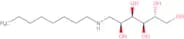
CAS:1-Octylamino-1-deoxy-D-glucitol is a natural product that is extracted from the bark of the tree Streptomyces griseorubens. It has been shown to have a diastereomeric ratio of 97:3 and an optical purity of 98%. The thermodynamic properties of this compound are determined by the reaction time, which can vary from 1 to 24 hours. The enantiomers are separated by chromatography or crystallization, and the solubility data is determined at 25°C.Fórmula:C14H31NO5Pureza:Min. 95%Cor e Forma:PowderPeso molecular:293.4 g/molD-Tagatose
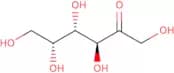
CAS:<p>Low-calorie sweetener; additive in detergents, cosmetics, and pharmaceuticals</p>Fórmula:C6H12O6Pureza:Min. 99 Area-%Cor e Forma:PowderPeso molecular:180.16 g/mol1,2,3,4-Tetra-O-acetyl-L-fucopyranose
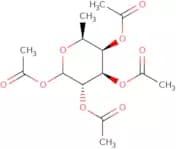
CAS:<p>Intermediate for the anomeric modification of Fuc, including fucosylation</p>Fórmula:C14H20O9Pureza:Min. 97 Area-%Cor e Forma:White PowderPeso molecular:332.3 g/mol4-Methoxyphenyl 3,4,6-tri-O-acetyl-2-deoxy-2-phthalimido-b-D-glucopyranoside
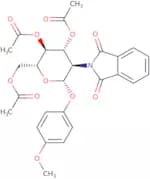
CAS:4-Methoxyphenyl 3,4,6-tri-O-acetyl-2-deoxy-2-phthalimido-b-D-glucopyranoside (MPEG) is a monoclonal antibody that binds to the glycoprotein MART1 on melanoma cells. It is used in the diagnosis of cancer and has been shown to be effective in reducing tumor size in patients with metastatic melanoma. MPEG has also been shown to have a therapeutic effect against chronic lymphocytic leukemia (CLL). In addition, it may be used as a complement dependent cytotoxicity agent for the treatment of leukemia and other cancers.Fórmula:C27H27NO11Pureza:Min. 95%Peso molecular:541.52 g/molD-Lyxose
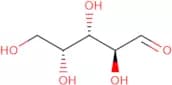
CAS:<p>Starting material for chiral-pool based synthesis of modified nucleosides</p>Fórmula:C5H10O5Pureza:Min. 99 Area-%Cor e Forma:White PowderPeso molecular:150.13 g/molPhenyl b-D-galactopyranoside
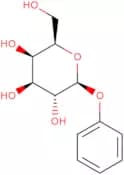
CAS:<p>Phenyl b-D-galactopyranoside is a glycoside of galactose. It is used as an antigen and cross-linking agent in the preparation of monoclonal antibodies to human serum proteins. Phenyl b-D-galactopyranoside has been shown to be a potent inhibitor of protein synthesis in cells from primary tumors, and it has been found to decrease the rate of tumor growth in mice. This compound also inhibits the growth of certain bacteria, including methicillin-resistant Staphylococcus aureus (MRSA), Mycobacterium tuberculosis, and Mycobacterium avium complex. The mechanism by which phenyl b-D-galactopyranoside inhibits bacterial growth is not well understood.</p>Fórmula:C12H16O6Pureza:Min. 98 Area-%Cor e Forma:PowderPeso molecular:256.25 g/mol1,3,4,6-Tetra-O-acetyl-a-D-glucopyranose
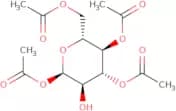
CAS:1,3,4,6-Tetra-O-acetyl-a-D-glucopyranose is a synthon that is used as a synthetic intermediate for the synthesis of other compounds. It is also a reactive compound that can be used to synthesize carboxylic acids and hydroxy ketones by reaction with water or alcohols. 1,3,4,6-Tetra-O-acetyl-a-D-glucopyranose can also be converted into esters by reaction with alcohols.Fórmula:C14H20O10Pureza:Min. 93 Area-%Cor e Forma:White Off-White PowderPeso molecular:348.3 g/mol2,3,4,6-Tetra-O-benzyl-D-glucopyranose
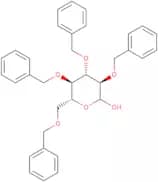
CAS:<p>2,3,4,6-Tetra-O-benzyl-D-glucopyranose is a selectively protected intermediate, where the anomeric 1-O-hydroxyl group is free. This hemiacetal has been used successfully as an intermediate for glucosylation couplings, where it was converted into 2,3,4,6-tetra-O-benzyl-D-glucopyranose trichloroacetimidate using trichloroacetonitrile in the presence of a base such as potassium carbonate and DBU. Importantly, this imidate donor with no neighbouring participating groups is commonly used for the selective formation of α-glucosides. 2,3,4,6-tetra-O-benzyl-D-glucopyranose can also be oxidized to the lactone, or reduced to give the open chain form. Additionally, 2,3,4,6-tetra-O-benzyl-D-glucopyranose can be used for the preparation of glucono-1,5-lactone hydrazine, which was used, in-turn, to form a glucosylidene-spirocyclopropane.</p>Fórmula:C34H36O6Pureza:Min. 97 Area-%Cor e Forma:White PowderPeso molecular:540.65 g/molIsopropyl 2-acetamido-2-deoxy-α-D-glucopyranoside
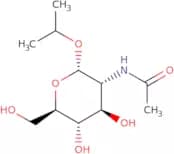
CAS:<p>Isopropyl 2-acetamido-2-deoxy-α-D-glucopyranoside is a modification of an oligosaccharide. It has been synthesized and characterized by NMR spectroscopy. This carbohydrate is custom synthesized as a complex carbohydrate. It is also a synthetic carbohydrate. Isopropyl 2-acetamido-2-deoxy-α-D-glucopyranoside is used as a monosaccharide, in glycosylation, methylation, polysaccharides, and other sugar chemistry reactions. Isopropyl 2-acetamido-2-deoxy-α-D-glucopyranoside can be used for fluorination or saccharides.</p>Fórmula:C11H21NO6Pureza:Min. 95%Cor e Forma:PowderPeso molecular:263.29 g/molN-Glycolylneuraminic acid
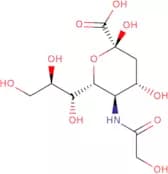
CAS:Regulates N-glycolylneuraminic acid biosynthesis in murine liverFórmula:C11H19NO10Pureza:Min. 95 Area-%Cor e Forma:White Off-White PowderPeso molecular:325.27 g/mol4-Acetamidophenyl b-D-glucuronide sodium salt
CAS:<p>4-Acetamidophenyl b-D-glucuronide sodium salt is a pharmaceutical drug that is a metabolite of acetaminophen. It can be detected in the urine by biochips, which are microarrays that contain immobilized binding sites for specific analytes. The analysis of 4-acetamidophenyl b-D-glucuronide sodium salt in urine is used to screen for the use of acetaminophen and to identify cytochrome P450 2C19 (CYP2C19) activity. This drug can also be detected by spectrometric methods using biochemical assays on plates or hepatocytes and mass spectrometric detection methods using liquid chromatography/mass spectrometry (LC/MS). Acetaminophen has been shown to have toxic effects on the liver, kidneys, and lungs in humans, as well as on diode photoluminescence.</p>Fórmula:C14H16NNaO8Pureza:Min. 95%Cor e Forma:PowderPeso molecular:349.27 g/molPropyl b-D-glucuronide
CAS:Propyl b-D-glucuronide is a synthetic compound that belongs to the family of carbohydrates. It has a fluorinated hydroxyl group at the C3 position and an esterified carboxylic acid at the C1 position. This compound can be used as a building block for oligosaccharides and polysaccharides, which are complex carbohydrates. Propyl b-D-glucuronide is soluble in water and has a molecular weight of 176.Fórmula:C9H16O7Pureza:Min. 95%Cor e Forma:Tan To Brown SolidPeso molecular:236.22 g/mol