Açúcares
Os açúcares são moléculas fundamentais no armazenamento de energia e desempenham funções estruturais nos organismos vivos. Eles são utilizados em uma ampla gama de campos de pesquisa, incluindo bioquímica, biologia celular e nutrição. Na CymitQuimica, oferecemos uma coleção abrangente de açúcares para atender às necessidades dos pesquisadores que trabalham com estudos relacionados aos carboidratos.
Foram encontrados 173 produtos de "Açúcares"
Ordenar por
Pureza (%)
0
100
|
0
|
50
|
90
|
95
|
100
Guaiacol-β-D-glucopyranoside
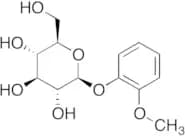
CAS:Produto Controlado<p>Applications Guaiacol-beta-D-glucopyranoside, is a Guaiacol Conjugate, that has shown to present in fermentation of grapes that had been exposed to bushfire smoke and can potentially yield unpalatable, smoke-affected wine.<br>References Hayasaka, Y.m et al.: J. Arg. Food Chem., Vol. 58, Issue 4, P: 2076; 2081 (2010);<br></p>Fórmula:C13H18O7Cor e Forma:NeatPeso molecular:286.28D-Galactal
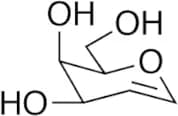
CAS:<p>Stability Hygroscopic, Moisture Sensitive<br>Applications D-Galactal is an important building block for both solution- and solid-phase synthesis of oligosaccharides.<br></p>Fórmula:C6H10O4Cor e Forma:NeatPeso molecular:146.14α-D-Galactose-13C6 1-Phosphate Dipotassium Salt
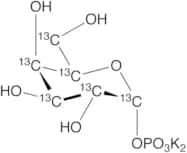
CAS:<p>Applications Isotope labelled analog of α-D-Galactose 1-Phosphate, the phosphate conjugate of α-D-Galactose (G155260), a natural aldohexose which is ubiquitous in bacteria, plants, and animals, including human brains.<br>References Sang, J.L., et al.: J. Bacteriol., 190, 7932 (2008);<br></p>Fórmula:C6H11O9PKCor e Forma:NeatPeso molecular:342.272(2-Hydroxypropyl)-γ-cyclodextrin (Technical Grade)
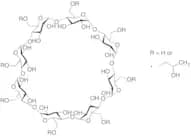
CAS:<p>Applications (2-Hydroxypropyl)-γ-cyclodextrin is used in the solubilization of macromolecules and in cell culture applications. Similar to β-Cyclodextrin (C987830), however can work with larger molecules.<br>References Motoyama, A. et al.: J. Pharmac. Biomed. Anal., 28, 97 (2002); Nakamura, N. et al. Biotechnol. Bioeng., 19, 87 (1977); Riddle, L. A. et al.: J. Chrom. Sci., 45, 330 (2007);<br></p>Fórmula:C6H8N2OCor e Forma:NeatN-Acetyl-D-galactosamine
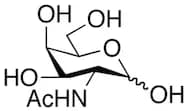
CAS:Produto Controlado<p>Applications N-Acetyl-D-galactosamine (cas# 1811-31-0) is a compound useful in organic synthesis.<br>References Nakajima, M., et al.: App. Microbiol. Biotechnol., 83, 109 (2009), Singh, S., et al.: Mol. Immunol., 46, 1240 (2009),<br></p>Fórmula:C8H15NO6Cor e Forma:NeatPeso molecular:221.2078γ-Cyclodextrin
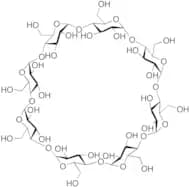
CAS:<p>Stability Hygroscopic<br>Applications γ-Cyclodextrin is used as nanomolecular encapsulation for drug delivery and pharmaceuticals. Used in the synthesis of unilamellar vesicles.<br>References Ikeda, A. et al.: Chem. Comm., 50, 1288 (2014); Gudmundsdottir, B. et al.: J. Ocular Pharm. Ther., 30, 35 (2014);<br></p>Fórmula:C48H80O40Cor e Forma:WhitePeso molecular:1297.12Methyl 2,3,4-Tri-O-isobutyryl-D-glucopyranuronate
CAS:Produto Controlado<p>Stability Temperature Sensitive<br>Applications Methyl 2,3,4-Tri-O-isobutyryl-D-glucopyranuronate (cas# 1190403-86-1) is a compound useful in organic synthesis.<br></p>Fórmula:C19H30O10Cor e Forma:NeatPeso molecular:418.44Guaiacol-β-D-glucopyranoside-d3
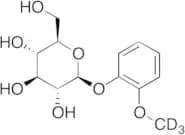
CAS:Produto Controlado<p>Stability Hygroscopic<br>Applications Guaiacol-beta-D-glucopyranoside-d3, is a labeled analogue of Guaiacol-beta-D-glucopyranoside (G245565), a Guaiacol Conjugate, that has shown to present in fermentation of grapes that had been exposed to bushfire smoke and can potentially yield unpalatable, smoke-affected wine.<br>References Hayasaka, Y.m et al.: J. Arg. Food Chem., Vol. 58, Issue 4, P: 2076; 2081 (2010);<br></p>Fórmula:C13H15D3O7Cor e Forma:NeatPeso molecular:289.3Raspberry Ketone Glucoside
CAS:Produto Controlado<p>Applications Raspberry ketone glucoside (cas# 38963-94-9) is a useful research chemical.<br></p>Fórmula:C16H22O7Cor e Forma:White To Off-WhitePeso molecular:326.34Calcium D-gluconate monohydrate
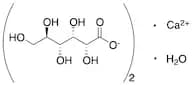
CAS:Produto Controlado<p>Applications Calcium D-gluconate monohydrate (cas# 66905-23-5) is a useful research chemical.<br></p>Fórmula:C6H11O7·Ca·H2OCor e Forma:NeatPeso molecular:448.39Galactinol Hydrate
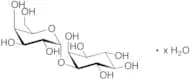
CAS:<p>Applications Galactinol Hydrate is an α-galactoside of Inositol (I665995), which is the structural basis for a number of signaling and secondary messenger molecules including; insulin signal transduction, cytoskeleton assembly, nerve guidance, membrane potentials, serotonin activity and the breaking down of fats and reducing cholesterol.<br>References Graca, G., et al.: J. Prot. Res., 9, 6016 (2010); Rovio, S., et al.: Food Chem., 124, 1194 (2010);<br></p>Fórmula:C12H22O11•x(H2O)Cor e Forma:Off-WhitePeso molecular:342.30 + x(18.02)Dextrin
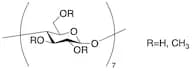
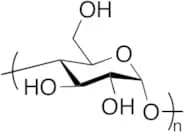
CAS:<p>Applications Dextrin (cas# 9004-53-9) is a versatile polymer used in a variety of applications such as in the preparation of probiotic beer and polymer solar cells.<br>References Senkarcinova, B.; et al.: LWT, 100, 362 (2019); Lin, P.; et al.: ACS Sustainable Chem. Eng., 6, 14621 (2018).<br></p>Fórmula:(C14H26O10)nCor e Forma:NeatPeso molecular:(162.14)nCalcium-D-galactonate hydrate
CAS:<p>Calcium-D-galactonate hydrate is a reagent that is used in organic synthesis as a complex compound. It can also be used as an intermediate for the synthesis of calcium-D-galactonate, which is a useful scaffold for the construction of bioactive molecules. Calcium-D-galactonate hydrate has been shown to have many uses in the pharmaceutical and fine chemical industries. This compound is also an important reactant in research, due to its versatility and usefulness in organic synthesis.</p>Fórmula:C12H22CaO14·5H2OPureza:Min. 98%Cor e Forma:White PowderPeso molecular:520.45 g/molMono-2-O-(p-toluenesulfonyl)-gamma-cyclodextrin
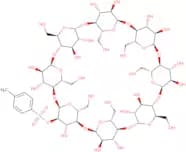
CAS:<p>This gamma-cyclodextrin (γ-CD) derivative is a modified cyclic oligosaccharide composed of eight glucose units, featuring a larger cavity size than α- and β-cyclodextrins. This structural characteristic allows γ-CDs to form inclusion complexes with a wider range of guest molecules, making it particularly versatile in various industries. In the food sector, it is used as a carrier and stabilizer for flavors, fat-soluble vitamins, and polyunsaturated fatty acids, protecting volatile compounds from evaporation. In pharmaceuticals, it enhances the solubility and bioavailability of poorly water-soluble drugs and, thanks to its larger ring size, allows for the encapsulation of larger molecules or even entire drug molecules. γ-CDs and derivatives are also used for environmental remediation and, in analytical chemistry, for the extraction and concentration of target substances.</p>Pureza:Min. 95 Area-%Cor e Forma:Powder20-Deoxo-23-deoxy-5-O-[3,6-dideoxy-3-(dimethylamino)-beta-D-glucopyranosyl]-20,23-di-1-piperidinyltylonolide
CAS:<p>20-Deoxo-23-deoxy-5-O-[3,6-dideoxy-3-(dimethylamino)-beta-D-glucopyranosyl]-20,23-di-1-piperidinyltylonolide is an antimicrobial agent that belongs to the group of chemotherapeutic agents. It is a fluorinated analog of tilmicosin. The low dose group was treated with this drug for five days, and the high dose group received 20 times the amount of drug. Fluorescence spectrometry showed that there was no significant difference in the fluorescence intensity between these two groups after 24 hours. This drug has been shown to have pharmacokinetic properties in rats and mice, but further optimization may be required to improve its process.</p>Fórmula:C41H71N3O8Pureza:Min. 95%Cor e Forma:Off-White PowderPeso molecular:734.02 g/molChlorhexidine digluconate - 20% aqueous solution
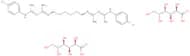
CAS:Bisbiguanide antiseptic and disinfectant used in topical antibacterial productsFórmula:C34H54Cl2N10O14Pureza:190 To 210 G/LCor e Forma:Clear LiquidPeso molecular:897.76 g/molSodium stibogluconate
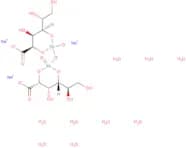
CAS:<p>Sodium stibogluconate is a drug that has been widely used in the treatment of leishmaniasis. It is administered as an intramuscular injection or intravenous infusion, depending on the severity of the infection. The drug targets the parasite by inhibiting its DNA topoisomerase, which disrupts DNA replication and transcription. Clinical data have shown that this drug is effective against infantum and other strains of leishmania.</p>Fórmula:C12H20O17Sb2•(Na)3•(H2O)9Pureza:Min. 95%Cor e Forma:PowderPeso molecular:910.9 g/molD-Gluconic acid zinc (II) salt
CAS:<p>D-Gluconic acid zinc salt is an inorganic compound that is used to treat deficiencies of D-gluconate. It is a salt of zinc and D-gluconic acid, which is a natural metabolite found in the human body. This compound can be used to maintain healthy levels of D-gluconate in the tissues and help control symptoms related to deficiencies. The efficiency of this method has been demonstrated by an in vitro test on human femur cells. A profile analysis showed that D-gluconic acid zinc salt was able to minimize the severity of symptoms associated with deficiencies caused by gluconate deficiency, such as tissue sensitivity and bone degradation.</p>Fórmula:C12H22O14ZnPureza:Min. 95%Cor e Forma:White PowderPeso molecular:455.68 g/molKinetin-9-glucoside
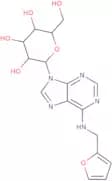
CAS:<p>Kinetin-9-glucoside is a conjugate of kinetin and glucose. It has been shown to inhibit the growth of several types of bacteria, including Pseudomonas aeruginosa, Staphylococcus aureus, and Streptococcus pyogenes. Kinetin-9-glucoside also has anti-inflammatory properties that may be due to its ability to inhibit prostaglandin synthesis. Kinetin-9-glucoside is used in tissue culture for the induction of plant regeneration from callus tissue or from excised root tissues. Kinetin-9-glucoside has been shown to stimulate the formation of apical roots in plantlets and promote cell division in neuronal cells.</p>Fórmula:C16H19N5O6Pureza:Min. 95 Area-%Cor e Forma:PowderPeso molecular:377.35 g/mol





![20-Deoxo-23-deoxy-5-O-[3,6-dideoxy-3-(dimethylamino)-beta-D-glucopyranosyl]-20,23-di-1-piperidinyl…](/_next/image/?url=https%3A%2Fstatic.cymitquimica.com%2Fproducts%2F3D%2Fthumb-webp%2FFT137728.webp&w=3840&q=75)